Odor Removal Guide: How to Remove Household Smells
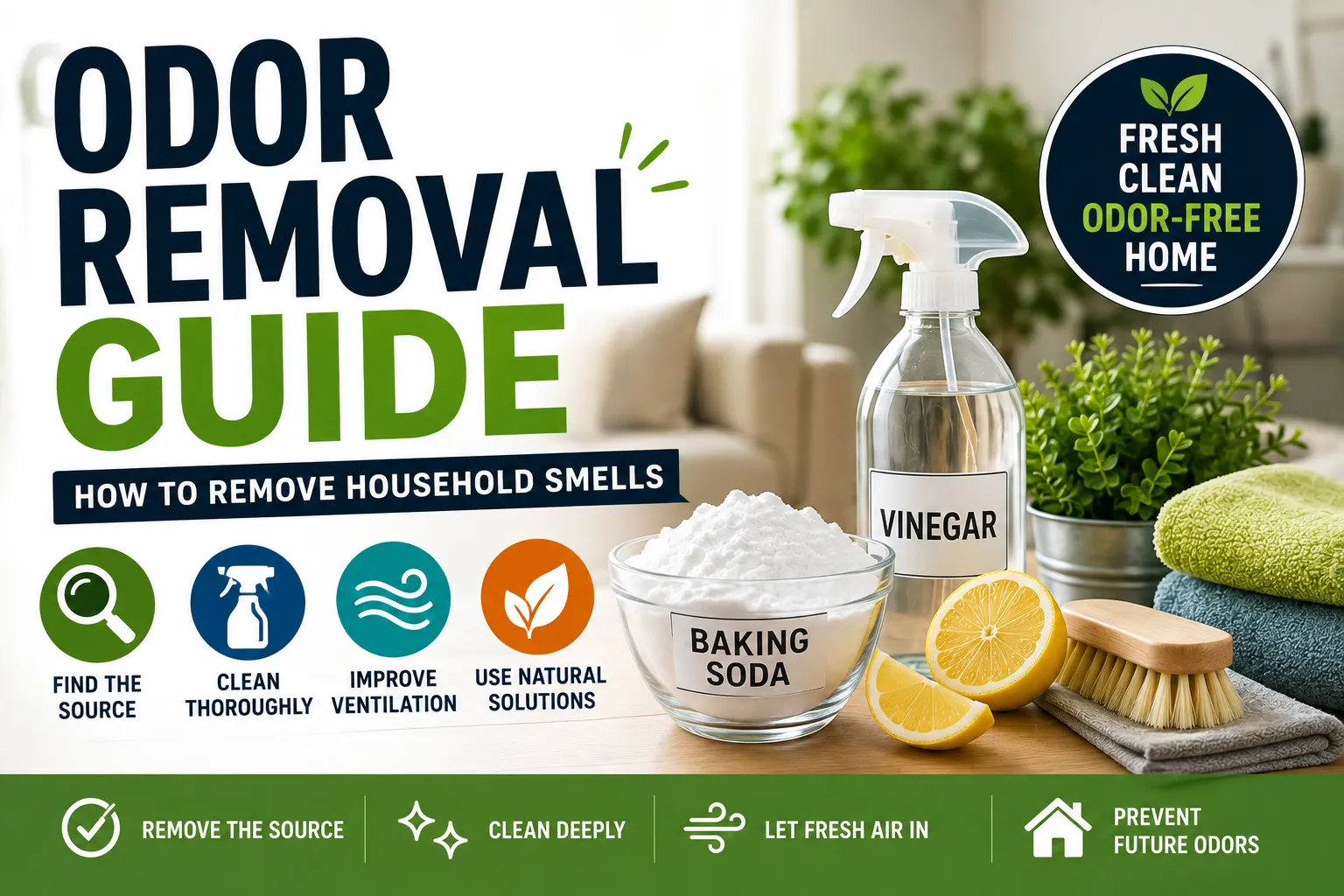
Odor Removal Guide: How to Remove Household Smells
Household odors have a way of announcing themselves long before you figure out where they’re coming from. A musty bedroom, sour-smelling kitchen sponge, lingering cooking odor or unexplained bathroom smell can make an otherwise clean home feel unpleasant.
The key to getting rid of household smells is not simply covering them with air freshener. Effective odor removal starts with identifying the source, removing the material causing the smell, cleaning the affected area and improving ventilation.
Different odors require different approaches. Food smells may respond to thorough cleaning and ventilation, while persistent mustiness can point to excess moisture. Pet odors can become embedded in fabrics, carpets and upholstery, and sewage-like smells may indicate a plumbing problem that requires professional attention.
For a broader approach to cleaning and maintaining the different areas and surfaces throughout your home, see The Ultimate Guide to Cleaning Your Home.
This guide explains how to identify common household odors, remove them safely and prevent them from returning.
Important: If an odor suggests gas, sewage, burning electrical equipment, significant mold growth or another potentially hazardous condition, leave the area if necessary and contact the appropriate professional rather than attempting to mask the smell.
Why Household Odors Develop
Odors are produced when airborne molecules reach the smell receptors in your nose. In a home, those molecules can come from a wide range of sources.
Common causes include:
- Food residue
- Garbage
- Pet accidents
- Sweat and body oils
- Mold and mildew
- Damp fabrics
- Dirty drains
- Smoke
- Cooking oils
- Spoiled food
- Poor ventilation
- Moisture trapped in carpets or upholstery
- Dirty appliances
- Plumbing problems
Some odors disappear once the source is removed. Others linger because odor-producing substances have penetrated porous materials.
That is why spraying a room freshener can provide only temporary relief.
Start by Finding the Source
Before reaching for cleaning products, try to locate where the smell is coming from.
Walk through the room slowly and check:
- Trash cans
- Food storage areas
- Sinks and drains
- Dishwashers
- Refrigerators
- Ovens and stovetops
- Carpets and rugs
- Upholstered furniture
- Curtains
- Bedding
- Pet areas
- Shoes and clothing
- Bathrooms
- Laundry hampers
- Areas with visible moisture
Pay particular attention to places that are dark, damp or poorly ventilated.
If the odor is strongest near a wall, ceiling, floor or cabinet and you cannot identify an obvious source, moisture could be involved.
How to Remove Kitchen Odors
Kitchens are among the most odor-prone areas of a home because they contain food, grease, moisture and waste.
Clean Food Residue
Small amounts of food can produce surprisingly strong smells.
Clean:
- Countertops
- Cutting boards
- Cabinet handles
- Stovetops
- Microwave interiors
- Refrigerator shelves
- Trash-can lids
- Floors around cooking areas
Pay special attention to spills that may have dried underneath appliances or inside cabinets.
When food residue is mixed with grease, ordinary wiping may not be enough. Cleaning greasy kitchen surfaces promptly can help prevent both sticky buildup and lingering cooking odors. For more targeted grease-removal techniques, see How to Remove Kitchen Grease Buildup.
Clean the Garbage Can
Even after taking out the garbage, the bin itself can retain odors.
Wash the interior with warm water and an appropriate household cleaner, then rinse and dry it thoroughly.
Do not simply place a new bag inside an unwashed container if the previous garbage leaked.
Clean the Refrigerator
A refrigerator can develop persistent odors when food spills or spoiled items remain hidden.
Remove expired food and inspect:
- Produce drawers
- Door shelves
- Under containers
- Refrigerator seals
- Shelves
- Drip areas, where applicable
Clean removable components according to the manufacturer’s instructions.
Keeping food properly sealed can also reduce the transfer of strong smells between items.
For a more detailed cleaning process, see How to Clean Refrigerator Interiors.
How to Remove Cooking Smells
Cooking odors can linger because oils and aromatic compounds can settle on surfaces and fabrics.
If you have just cooked something particularly strong, start with ventilation.
Try these steps:
- Open windows when outdoor conditions allow.
- Turn on the range hood.
- Run kitchen ventilation fans.
- Clean greasy surfaces.
- Wash nearby dish towels.
- Remove food waste.
- Clean reusable cooking equipment.
- Wash fabrics that absorbed the odor.
If cooking odors continue appearing long after meals are finished, inspect the range hood and surrounding surfaces for grease buildup.
How to Remove Bathroom Odors
Bathroom odors can come from several sources, including waste, drains, damp towels, dirty surfaces and poor ventilation.
Start by cleaning:
- Toilet bowl and exterior
- Floor around the toilet
- Sink
- Shower or bathtub
- Drain covers
- Towels
- Bath mats
- Trash containers
Ventilation is equally important.
A bathroom that stays damp for long periods can develop a persistent musty smell and create conditions that encourage mold growth.
What If the Bathroom Smells Like Sewage?
A persistent sewage-like smell should not automatically be treated as a cleaning problem.
Possible causes can include plumbing or drainage issues, such as problems with a trap or sewer connection.
If the smell remains after normal cleaning, contact a qualified plumber for assessment.
Do not attempt to permanently mask a strong sewage odor with fragrance products.
How to Remove Musty Smells
Musty odors are often associated with moisture and poor ventilation.
They can appear in:
- Basements
- Closets
- Bathrooms
- Bedrooms
- Garages
- Under sinks
- Around windows
- Behind furniture
- Damp carpets
The most important question is not simply, “How do I remove the smell?”
It is:
Why is this area staying damp?
Check for:
- Leaking pipes
- Roof leaks
- Condensation
- Poor bathroom ventilation
- Damp foundations
- Wet carpets
- Water intrusion around windows
- Furniture blocking airflow
If moisture continues, the odor is likely to return.
How to Remove Pet Odors
Pet odors can be especially difficult because urine and other organic residues can penetrate porous materials.
The first step is locating the affected area.
Check:
- Carpets
- Rugs
- Upholstery
- Pet bedding
- Floors
- Walls near litter boxes
- Areas beneath furniture
For washable fabrics, follow the care instructions and wash them appropriately.
For carpets and upholstery, an enzyme-based cleaner designed for the specific type of pet stain can be useful because these products are formulated to break down organic residues rather than simply perfume the surface.
Always follow the product label and test cleaning products on an inconspicuous area when appropriate.
For fabrics and furniture that have absorbed persistent odors, Upholstery Cleaning Guide provides additional cleaning guidance.
How to Remove Smoke Odors
Smoke can be particularly persistent because odor-causing compounds can settle on walls, ceilings, upholstery, curtains and other surfaces.
For a mild odor:
- Ventilate the room.
- Wash washable fabrics.
- Clean hard surfaces.
- Vacuum carpets and upholstery.
- Replace or clean appropriate air filters.
- Wash curtains according to their care instructions.
Persistent smoke contamination may require more extensive cleaning or professional remediation, particularly after prolonged exposure.
Simply spraying fragrance over smoke odors generally creates a mixture of smells rather than removing the source.
How to Remove Odors From Carpets
Carpets can absorb moisture, food particles, pet accidents and other odor-producing substances.
Start by vacuuming thoroughly.
If the odor remains, identify whether it comes from:
- A surface spill
- Pet urine
- Moisture
- Mold
- Food
- Dirt trapped deep in the carpet
Use only cleaning products suitable for your carpet’s material and follow the manufacturer’s recommendations.
If a carpet has become significantly wet, drying it quickly is particularly important because prolonged moisture can contribute to microbial growth and persistent odors.
How to Remove Odors From Upholstery
Sofas, chairs and cushions can absorb body oils, food smells, smoke and pet odors.
Before cleaning, check the manufacturer’s care instructions.
Depending on the fabric, you may be able to:
- Vacuum thoroughly
- Wash removable covers
- Spot-clean appropriate areas
- Improve room ventilation
- Use a suitable upholstery cleaner
Avoid saturating upholstery unless the material and cleaning method specifically allow it.
Excess moisture can create a new problem if the material does not dry properly.
How to Remove Odors From Clothing
Clothing can retain odors from sweat, smoke, cooking and damp storage.
For washable clothing:
- Do not leave sweaty clothes sitting in a closed hamper indefinitely.
- Follow the garment’s care instructions.
- Wash using the recommended detergent and water temperature.
- Dry the clothing completely.
- Avoid storing clothing while it is still damp.
If clothing develops a persistent musty smell, inspect the washing machine and storage area as well.
Sometimes the problem is not the clothing itself.
For broader fabric-care guidance, see Guide to Laundry Care.
How to Remove Odors From Shoes
Shoes can develop odors because sweat and moisture create a favorable environment for odor-producing microorganisms.
Helpful habits include:
- Allowing shoes to dry completely between uses.
- Wearing clean socks.
- Rotating footwear rather than wearing the same pair continuously.
- Cleaning shoes according to manufacturer instructions.
- Keeping footwear in a ventilated location.
If shoes become wet, dry them thoroughly before storing them.
How to Remove Mattress Odors
Mattresses absorb sweat, skin oils and moisture over time.
To keep a mattress fresher:
- Use a washable mattress protector.
- Wash bedding regularly.
- Vacuum the mattress surface periodically.
- Allow the bedroom to ventilate.
- Keep moisture under control.
- Follow the mattress manufacturer’s cleaning instructions.
Avoid soaking a mattress because trapped moisture can be difficult to remove.
How to Remove Drain Odors
Drains can accumulate food particles, grease, hair and other organic material.
For a slow or smelly drain, first determine whether the problem is something you can safely address with routine cleaning.
Clean removable drain components and remove visible debris where appropriate.
Avoid mixing chemical drain cleaners with other household products. Never combine bleach, ammonia, acids or different drain-cleaning chemicals, as dangerous gases or chemical reactions can occur.
If a persistent odor comes with repeated blockages, slow drainage or sewage smells, professional plumbing assistance may be necessary.
How to Remove Odors From a Washing Machine
Washing machines can develop unpleasant smells when moisture, detergent residue and organic material accumulate inside the machine.
Depending on the model:
- Leave the door or lid open between cycles when appropriate.
- Remove and clean detergent compartments.
- Clean accessible seals.
- Run the manufacturer’s recommended cleaning cycle.
- Avoid using excessive detergent.
- Follow the appliance manufacturer’s maintenance instructions.
Front-loading machines can be particularly prone to moisture remaining around door seals, making regular cleaning and drying important.
For broader appliance-maintenance advice, see How to Clean and Maintain Common Household Appliances.
How to Remove Odors From a Dishwasher
Dishwashers can smell when food particles accumulate inside the filter, drain area or other components.
Check the manufacturer’s instructions before cleaning.
A basic maintenance routine may include:
- Removing food debris.
- Cleaning the filter if the model has a removable one.
- Wiping the door seals.
- Cleaning the interior surfaces.
- Running the manufacturer’s recommended cleaning cycle.
If the dishwasher smells strongly despite cleaning, a drainage problem may require professional attention.
Baking Soda, Vinegar and Other Home Odor Remedies
Household ingredients such as baking soda are frequently recommended for odor control.
Baking soda can be useful in certain situations because it can help neutralize or absorb some odors.
However, it is not a universal solution.
What about vinegar?
Vinegar is acidic and can be useful for certain cleaning tasks, but it should not be treated as a cure-all.
Most importantly:
Never mix vinegar with bleach.
The combination can produce dangerous chlorine gas.
Likewise, never mix household cleaning chemicals unless the product instructions specifically say that doing so is safe.
Why Air Fresheners Don’t Always Solve Odors
Air fresheners can make a room smell better temporarily, but they do not necessarily remove the source of an odor.
Think of odor control as a four-step process:
1. Remove
Remove the garbage, spoiled food, dirty fabric or other source.
2. Clean
Clean the surface or material where odor-producing substances remain.
3. Dry
Remove excess moisture and allow affected materials to dry completely.
4. Ventilate
Allow fresh air to circulate when practical.
Only after these steps should fragrance be considered an optional finishing touch.
How Ventilation Helps Control Household Odors
Fresh-air exchange can help reduce airborne odors, particularly after cooking, cleaning or using products that produce strong fumes.
Whenever appropriate:
- Open windows.
- Use exhaust fans.
- Run kitchen ventilation.
- Keep bathroom ventilation functioning properly.
- Avoid blocking air vents.
- Maintain HVAC filters according to manufacturer recommendations.
Ventilation becomes especially important in homes where moisture accumulates easily.
When an Odor Could Indicate a Bigger Problem
Not every household smell is simply an inconvenience.
Some odors can signal potentially serious problems.
Rotten Egg or Sulfur-Like Gas Smell
A smell resembling rotten eggs can be associated with natural gas leaks because odorants are added to natural gas to make leaks easier to detect.
If you suspect a gas leak:
- Do not operate electrical switches.
- Do not use flames.
- Leave the area if necessary.
- Contact the appropriate emergency or gas service from a safe location.
Do not attempt to diagnose or repair a suspected gas leak yourself.
Burning Electrical Smell
A burning-plastic or electrical odor can indicate overheating wiring or equipment.
Turn off the affected appliance if it can be done safely and seek qualified assistance if the smell persists or the source is unclear.
Persistent Moldy Smell
A persistent musty smell may indicate hidden moisture or mold growth.
Look for water damage around:
- Ceilings
- Walls
- Floors
- Windows
- Pipes
- HVAC systems
Significant or hidden moisture problems may require professional assessment.
The Best Way to Prevent Household Odors
Odor prevention is much easier than repeatedly trying to remove smells after they develop.
Keep Moisture Under Control
Repair leaks promptly and ventilate damp rooms.
Clean High-Touch and High-Residue Areas
Regularly clean:
- Kitchen surfaces
- Garbage bins
- Refrigerator interiors
- Drains
- Bathroom fixtures
- Pet areas
- Floors
Using suitable cleaning products and tools for each surface can make regular maintenance easier. Cleaning Products Explained covers the different categories of household cleaning products and where they may be appropriate.
Wash Fabrics Regularly
Curtains, bedding, towels, rugs and upholstery can all collect odor-producing substances.
Empty Garbage Frequently
Do not allow food waste to remain in indoor bins longer than necessary.
Maintain Appliances
Follow manufacturer-recommended cleaning and maintenance schedules for washing machines, dishwashers, refrigerators and other appliances.
Improve Air Circulation
Keep ventilation systems functioning properly and avoid unnecessarily blocking airflow.
A Simple Household Odor Removal Checklist
| Problem | First Step | Long-Term Solution |
|---|---|---|
| Cooking smell | Ventilate and clean greasy surfaces | Improve kitchen ventilation |
| Garbage smell | Empty and wash bin | Use appropriate liners and clean regularly |
| Musty smell | Find moisture source | Fix leaks and improve ventilation |
| Pet odor | Identify contaminated area | Clean thoroughly with suitable products |
| Smoke odor | Wash fabrics and clean surfaces | Remove smoke source and ventilate |
| Bathroom odor | Clean fixtures and drains | Improve ventilation and investigate persistent odors |
| Refrigerator smell | Remove spoiled food | Clean spills promptly |
| Carpet odor | Vacuum and identify source | Address stains and moisture |
| Shoe odor | Dry footwear | Rotate shoes and improve ventilation |
| Washing machine smell | Clean seals and cycle | Keep machine dry between uses |
Common Odor Removal Mistakes
Masking the Smell Instead of Removing It
Fragrance can hide an odor temporarily while the underlying problem continues.
Ignoring Moisture
If a room smells musty, simply cleaning surfaces may not solve the problem if water continues entering the area.
Using Too Many Cleaning Chemicals
More chemicals do not necessarily mean better cleaning. Some combinations can be dangerous.
Over-Wetting Fabrics
Excess moisture can make odors worse if carpets, mattresses or upholstery cannot dry quickly.
Forgetting Hidden Areas
Odors can originate under appliances, behind furniture, inside cabinets or beneath rugs.
Cleaning Without Ventilation
Some cleaning products produce fumes. Follow the label instructions and provide appropriate ventilation.
When to Call a Professional
Consider professional help when:
- You cannot identify the source of a persistent odor.
- There is significant water damage.
- You suspect hidden mold.
- A sewage smell keeps returning.
- You suspect a gas leak.
- You notice a persistent burning electrical smell.
- Pet urine has deeply contaminated flooring or subflooring.
- Smoke has extensively contaminated the home.
- An HVAC system appears to be distributing a persistent odor.
Professional intervention can be especially important when the odor is a symptom of a structural, plumbing, electrical or moisture problem.
A Fresher Home Starts With the Source
Getting rid of household smells is less about finding the strongest air freshener and more about understanding why the odor exists in the first place.
Find the source. Remove the contamination. Clean the affected material. Control moisture. Improve ventilation. Then take preventative steps to keep the problem from returning.
For everyday odors, this approach can make a noticeable difference without filling the home with layers of artificial fragrance. And when an unusual smell points to gas, sewage, electrical problems or significant moisture damage, treating it as a potential warning rather than merely an unpleasant scent can help protect both the home and the people living in it.