Cleaning Products Explained: Types, Uses, Ingredients, and Safe Cleaning Tips
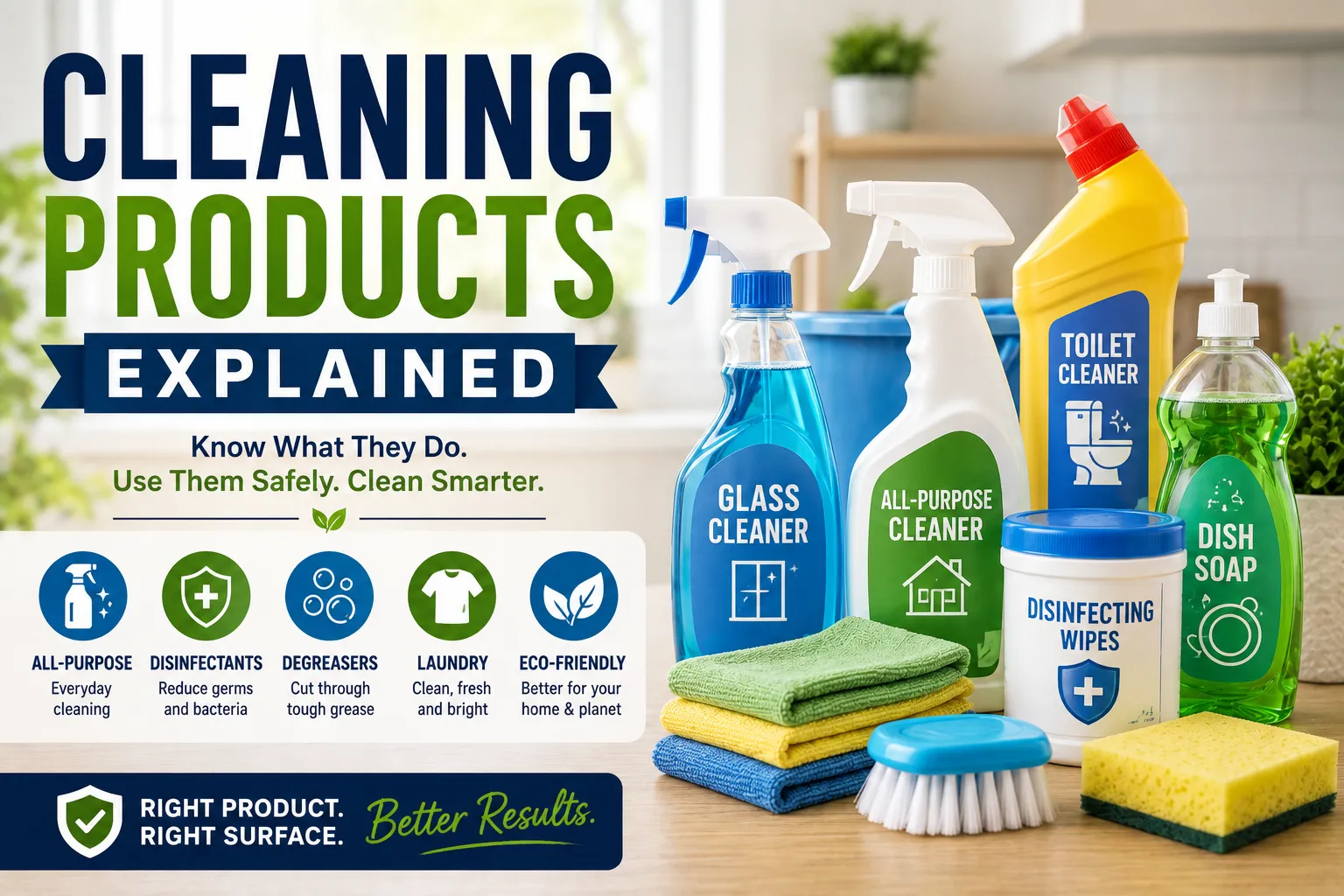
Cleaning Products Explained
Cleaning products are essential tools for maintaining healthy, hygienic, and comfortable homes. From removing everyday dirt and grease to disinfecting high-touch surfaces, modern cleaning products are designed to tackle a wide variety of household cleaning tasks efficiently. However, with so many sprays, powders, liquids, and specialty cleaners available, understanding what each product does—and how to use it safely—can help consumers make smarter purchasing decisions.
Today’s cleaning products range from all-purpose cleaners and disinfectants to eco-friendly formulas and specialized solutions for kitchens, bathrooms, glass, floors, and fabrics. Choosing the right product not only improves cleaning results but also helps protect surfaces, reduce waste, and support a safer home environment.
This guide explains the different types of cleaning products, how they work, common ingredients, safety tips, and how to choose the best products for your household. For a broader overview of household cleaning routines, methods, and schedules, see The Ultimate Guide to Cleaning Your Home.
Note: Always read and follow the manufacturer’s instructions before using any cleaning product. Never mix cleaning chemicals unless specifically directed by the product label.
What Are Cleaning Products?
Cleaning products are substances formulated to remove dirt, stains, grease, dust, microorganisms, and unpleasant odors from surfaces and household items.
They are commonly used to clean:
- Kitchens
- Bathrooms
- Floors
- Windows
- Furniture
- Laundry
- Carpets
- Appliances
Different products are designed for different cleaning purposes and surface types.
Why Cleaning Products Matter
Proper cleaning helps create healthier living spaces.
Cleaning products can help:
- Remove dirt
- Eliminate grease
- Reduce germs
- Improve hygiene
- Protect surfaces
- Reduce odors
- Improve indoor appearance
- Support overall household cleanliness
Choosing the correct product often improves both effectiveness and efficiency.
Common Types of Cleaning Products
Many households use several different types of cleaners.
Common categories include:
- All-purpose cleaners
- Glass cleaners
- Bathroom cleaners
- Kitchen degreasers
- Floor cleaners
- Laundry detergents
- Dishwashing liquids
- Furniture polish
Each product is formulated for specific cleaning tasks.
All-Purpose Cleaners
All-purpose cleaners are designed for a wide variety of everyday surfaces.
They are commonly used on:
- Countertops
- Tables
- Cabinets
- Doors
- Shelving
- Appliances
- Tile
- Plastic surfaces
Always confirm that the cleaner is suitable for the surface being cleaned.
Disinfectants vs. Cleaners
Cleaning and disinfecting are related but different processes.
Cleaning generally involves:
- Removing dirt
- Washing away debris
- Reducing visible grime
Disinfecting typically involves using products intended to reduce certain microorganisms on appropriate surfaces according to the manufacturer’s instructions.
In many situations, surfaces should be cleaned before applying a disinfectant.
Kitchen Cleaning Products
Kitchen areas often require specialized cleaning products.
Common kitchen cleaners include:
- Degreasers
- Oven cleaners
- Stainless steel cleaners
- Dish soap
- Countertop cleaners
- Appliance cleaners
- Sink cleaners
- Garbage disposal cleaners
These products help remove food residue and cooking-related buildup. For particularly stubborn cooking residue, see this guide to removing kitchen grease buildup.
Bathroom Cleaning Products
Bathrooms often require products designed to remove soap residue and mineral deposits.
Popular products include:
- Toilet bowl cleaners
- Tile cleaners
- Shower cleaners
- Mold and mildew removers
- Glass cleaners
- Surface disinfectants
- Grout cleaners
- Mirror cleaners
Different bathroom surfaces may require different cleaning solutions. For a complete room-specific cleaning routine, see how to clean a bathroom properly.
Laundry Products
Laundry care involves several specialized products.
Common options include:
- Liquid detergent
- Powder detergent
- Fabric softener
- Stain removers
- Bleach alternatives
- Laundry sanitizers
- Color-safe products
- Dryer sheets
Always follow garment care labels before washing clothing. For broader guidance on detergents, washing methods, drying, and fabric care, see this guide to laundry care.
Eco-Friendly Cleaning Products
Many consumers now seek products with reduced environmental impact.
Eco-conscious options may feature:
- Plant-based ingredients
- Biodegradable formulas
- Recyclable packaging
- Refillable containers
- Reduced fragrances
- Concentrated solutions
- Lower volatile organic compounds (VOCs)
- Sustainable manufacturing practices
Performance varies by product, so compare ingredients and intended uses carefully.
Understanding Product Labels
Reading labels helps consumers use products safely and effectively.
Important information includes:
- Directions for use
- Safety warnings
- Surface compatibility
- Storage instructions
- Dilution recommendations
- First-aid information
- Active ingredients
- Expiration or shelf-life guidance
Following label instructions improves both safety and cleaning performance.
Cleaning Tools Matter Too
The right tools enhance the effectiveness of cleaning products.
Useful cleaning supplies include:
- Microfiber cloths
- Sponges
- Scrub brushes
- Mops
- Buckets
- Spray bottles
- Rubber gloves
- Vacuum cleaners
Using clean tools prevents dirt from spreading between surfaces. Choosing the right equipment for each job is equally important, so this complete guide to household cleaning tools and their uses can help.
Safe Storage
Cleaning products should be stored responsibly.
Helpful storage practices include:
- Keeping products in original containers
- Locking them away from children and pets
- Storing in cool, dry locations
- Keeping lids tightly closed
- Separating incompatible chemicals
- Checking expiration dates
- Avoiding direct sunlight
- Following manufacturer recommendations
Proper storage helps reduce accidents and preserve product effectiveness. Keeping cleaning supplies organized can also make everyday maintenance easier; see this guide to organizing and storing household cleaning supplies efficiently.
Common Cleaning Mistakes
Some cleaning habits reduce effectiveness or create unnecessary risks.
Avoid:
- Using too much product
- Ignoring label instructions
- Using the wrong cleaner on delicate surfaces
- Forgetting to rinse when required
- Reusing dirty cloths
- Skipping regular maintenance
- Mixing cleaning chemicals
- Neglecting ventilation when recommended
Simple, consistent cleaning practices are often more effective than occasional deep cleaning.
Common Myths About Cleaning Products
Several misconceptions continue to circulate.
Myth: More Cleaner Means Better Results
Using excessive amounts may leave residue and does not necessarily improve cleaning performance.
Myth: Every Surface Can Be Cleaned with One Product
Different materials require different cleaning solutions to prevent damage.
Myth: Stronger Smells Mean Better Cleaning
Fragrance does not indicate cleaning effectiveness.
Myth: Natural Products Are Always Safer
Even naturally derived ingredients should be used according to product instructions and safety guidelines.
Tips for Choosing Cleaning Products
Choose products by:
- Matching cleaners to the surface.
- Reading product labels carefully.
- Following safety instructions.
- Considering fragrance preferences.
- Looking for refill options when available.
- Checking compatibility with household materials.
- Purchasing only what you need.
- Keeping products properly stored.
- Replacing expired products when appropriate.
- Using products according to manufacturer recommendations.
Thoughtful product selection helps maintain both cleanliness and safety.
The Future of Household Cleaning
Cleaning technology continues evolving to meet changing consumer needs.
Emerging trends include:
- Concentrated refill systems
- Smart cleaning devices
- Robotic cleaning equipment
- Sustainable packaging
- Plant-based formulations
- Water-saving products
- AI-assisted home cleaning systems
- Low-waste household solutions
These innovations aim to improve convenience while reducing environmental impact.
Choosing Products That Work for Your Home
Cleaning products play an essential role in maintaining healthy, organized, and comfortable homes. Understanding the purpose of different cleaners, reading product labels carefully, and following safe usage practices allows homeowners to achieve better cleaning results while protecting household surfaces and reducing unnecessary risks.
Whether selecting an all-purpose cleaner, laundry detergent, or specialized kitchen product, informed choices help create a cleaner, safer, and more efficient home. Combined with regular cleaning routines and proper storage, the right products can make everyday household maintenance easier and more effective.