Cleaning Tools: Complete Guide to Household Tools & Uses
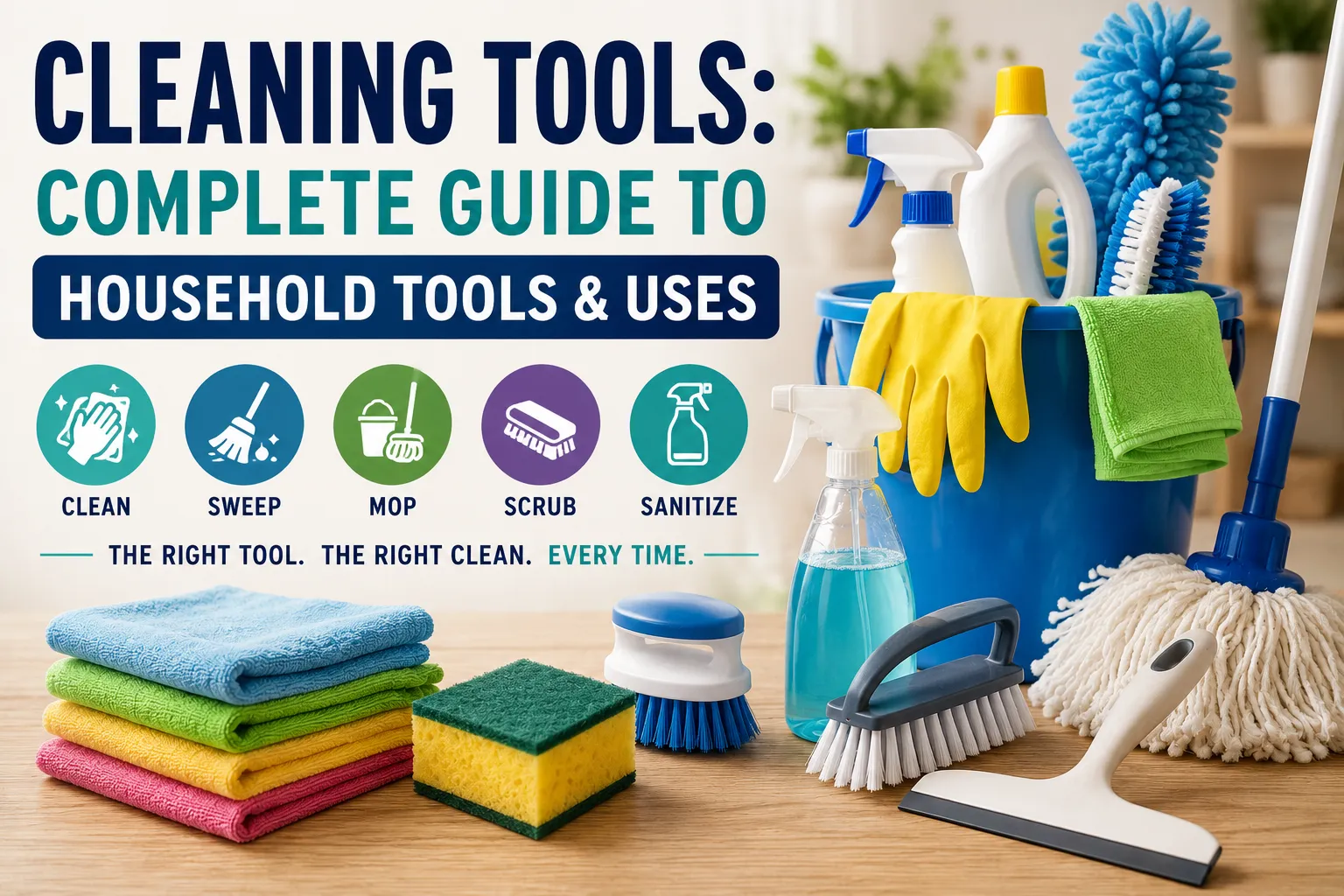
Cleaning Tools: Complete Guide to Household Tools & Uses
Keeping a home clean is not simply about having the right cleaning products. The tools you use can make a major difference in how quickly, safely, and effectively you clean different surfaces and spaces.
A good mop can make floors easier to maintain. A microfiber cloth can remove dust without leaving behind much lint. A properly chosen brush can reach corners that a vacuum cannot, while a squeegee can make glass and shower cleaning considerably easier.
The best approach is not to fill a cupboard with every cleaning gadget available. It is to understand what different household cleaning tools are designed to do and choose the right tool for each job.
This complete guide explains the most useful household cleaning tools, what they are used for, how to choose them, and how to keep them clean and effective. For a broader overview of household cleaning routines, schedules, and techniques, see The Ultimate Guide to Cleaning Your Home.
Why the Right Cleaning Tool Matters
Cleaning tools are designed for different types of dirt, surfaces, and tasks.
Using the wrong tool can make a job harder or even damage a surface. For example, an abrasive scrubber that works well on a durable sink may scratch delicate glass or a polished surface.
The right tool can help you:
- Remove dirt more efficiently
- Reduce the amount of cleaning product needed
- Reach difficult areas
- Protect delicate surfaces
- Save time
- Improve hygiene
- Reduce physical effort
- Keep cleaning more organized
A practical cleaning routine therefore begins with matching the tool to the task.
The Essential Household Cleaning Toolkit
Most homes do not need dozens of specialized products.
A basic toolkit can cover a surprisingly large number of cleaning jobs.
Useful essentials include:
- Microfiber cloths
- Sponges
- Scrub brushes
- Brooms
- Dustpans
- Mops
- Buckets
- Vacuum cleaners
- Squeegees
- Dusters
- Toilet brushes
- Cleaning gloves
- Spray bottles
- Small detailing brushes
- Floor brushes
- Extendable dusters
The exact combination depends on the size of your home, flooring, furniture, appliances, and cleaning routine.
Microfiber Cloths
Microfiber cloths are among the most versatile cleaning tools in a household.
Their fine synthetic fibers can pick up dust, dirt, and moisture effectively, making them useful for both dry and damp cleaning.
Common Uses
Microfiber cloths can be used for:
- Dusting furniture
- Cleaning countertops
- Wiping appliances
- Cleaning mirrors
- Polishing surfaces
- Cleaning electronics when used appropriately
- Wiping windows
- Drying surfaces
- Removing fingerprints
Different cloths can be assigned to different areas of the home.
For example, keeping separate cloths for bathrooms, kitchens, and general dusting can reduce the chance of transferring unwanted dirt between areas.
How to Use Them Effectively
For dusting, use a dry microfiber cloth.
For general surface cleaning, slightly dampen the cloth.
Avoid soaking it unnecessarily. Excess water can spread dirt instead of collecting it.
Wash reusable microfiber cloths according to their care instructions and avoid products that can coat the fibers and reduce their effectiveness.
Sponges
Sponges are useful for cleaning dishes, sinks, countertops, and other washable surfaces.
They are particularly effective when you need to combine water and cleaning solution with light scrubbing.
Different Sponge Types
Household sponges come in several forms:
- Soft sponges
- Cellulose sponges
- Scrubbing sponges
- Non-scratch sponges
- Melamine foam products
- Specialty kitchen sponges
The correct choice depends on the surface.
Always check whether an abrasive sponge is safe for the material you are cleaning.
Sponge Hygiene Matters
A damp sponge can become a place where microorganisms multiply if it is not cleaned and dried properly.
Rinse sponges thoroughly after use and allow them to dry between cleaning sessions.
Replace them when they become worn, develop an odor, or can no longer be cleaned effectively.
Scrub Brushes
Scrub brushes provide more aggressive cleaning than a cloth.
They are particularly useful for removing stubborn dirt from durable surfaces.
Common applications include:
- Bathroom floors
- Tile
- Grout
- Sinks
- Outdoor surfaces
- Shoes
- Utility areas
- Certain kitchen surfaces
Brushes come with different bristle stiffness.
Soft bristles are better for delicate surfaces, while stiff bristles are more appropriate for durable materials.
Small Detailing Brushes
Small brushes are invaluable for cleaning places that larger tools cannot reach.
They can help clean:
- Around taps
- Window tracks
- Appliance seams
- Grout lines
- Keyboard edges
- Vent openings
- Door tracks
- Small crevices
- Around fixtures
An old toothbrush can sometimes work for small detailing jobs, provided it is clearly separated from personal-use items.
Dedicated detailing brushes are generally more convenient for regular household cleaning.
Brooms
The broom remains one of the simplest and most useful cleaning tools.
It is ideal for quickly collecting:
- Dust
- Hair
- Dirt
- Leaves
- Food crumbs
- Small debris
Different brooms are designed for different surfaces.
Indoor Brooms
Indoor brooms generally have softer bristles designed to collect fine dust without being unnecessarily abrasive.
Outdoor Brooms
Outdoor brooms typically have stronger, stiffer bristles that can move heavier debris across concrete, patios, garages, and other rough surfaces.
Using an outdoor broom indoors can be unnecessarily harsh, while a soft indoor broom may struggle with outdoor debris.
Dustpans
A dustpan works with a broom to collect debris after sweeping.
Look for a dustpan with:
- A comfortable handle
- A wide collection area
- A relatively flat edge
- A sturdy construction
Some designs include long handles, allowing users to sweep debris without repeatedly bending down.
Mops
Mops are designed primarily for cleaning floors with water or cleaning solutions.
They come in several styles, including:
- String mops
- Flat mops
- Sponge mops
- Spray mops
- Spin mops
- Microfiber mops
Flat Mops
Flat microfiber mops are convenient for everyday cleaning and can be particularly useful on smooth hard floors.
String Mops
Traditional string mops can absorb substantial amounts of liquid and are useful for larger or heavily soiled areas.
Spray Mops
Spray mops combine a mop head with an integrated spray mechanism, making them convenient for quick cleaning.
Spin Mops
Spin mops use a bucket mechanism to help remove excess water from the mop head.
The best mop depends on the flooring material and the amount of cleaning required.
Choosing a Mop for Different Floors
Different flooring materials require different cleaning approaches. For a more detailed look at cleaning methods for specific materials, see this guide to cleaning different flooring types.
Tile
Tile generally tolerates damp cleaning well, although excessive water can still cause problems around grout and underneath certain installations.
Vinyl
Vinyl flooring usually benefits from gentle cleaning and avoiding excessive water.
Hardwood
Hardwood requires greater caution.
Excess water can damage some wood floors, so follow the flooring manufacturer’s cleaning recommendations.
Laminate
Laminate flooring can also be sensitive to excess moisture.
A lightly damp mop is often preferable to soaking the floor.
When in doubt, follow the manufacturer’s instructions for the specific flooring.
Buckets
A bucket may seem basic, but it remains an important part of many cleaning systems.
Buckets are useful for:
- Mixing cleaning solutions
- Carrying water
- Rinsing mop heads
- Washing outdoor surfaces
- Cleaning windows
- Soaking washable items
A bucket with a sturdy handle and a stable base is generally more practical for household use.
Avoid mixing incompatible cleaning chemicals in a bucket.
Vacuum Cleaners
Vacuum cleaners are particularly useful for removing dry debris and dust from carpets, rugs, upholstery, floors, and other surfaces.
Modern vacuum cleaners come in many forms:
- Upright vacuums
- Canister vacuums
- Stick vacuums
- Handheld vacuums
- Robot vacuums
- Wet-and-dry vacuums
Upright Vacuums
Upright models are often designed for larger carpeted areas and can provide strong floor cleaning performance.
Stick Vacuums
Stick vacuums are lightweight and convenient for quick everyday cleaning.
Handheld Vacuums
These are useful for:
- Furniture
- Cars
- Stairs
- Crumbs
- Small spills of dry debris
- Tight spaces
Robot Vacuums
Robot vacuums can automate routine floor cleaning.
They are particularly useful for maintaining floors between deeper cleaning sessions.
However, they still have limitations. They may struggle with stairs, clutter, narrow spaces, or certain types of debris.
Vacuum Attachments Matter
The vacuum itself is only part of the cleaning system.
Attachments can make it much more versatile.
Common attachments include:
- Crevice tools
- Upholstery tools
- Dusting brushes
- Floor heads
- Motorized brush heads
- Extension wands
A crevice tool is useful for narrow gaps, while an upholstery attachment can help remove dust and debris from furniture.
Dusting Tools
Traditional feather dusters are still available, but modern microfiber dusters are often more practical for routine household dusting.
Long-handled dusters are particularly useful for:
- Ceiling fans
- High shelves
- Light fixtures
- Corners
- Wall surfaces
- Tall furniture
An extendable handle can reduce the need to climb on chairs or other unstable surfaces.
Squeegees
A squeegee is one of the simplest tools for cleaning glass and smooth wet surfaces.
It is useful for:
- Shower doors
- Windows
- Mirrors
- Bathroom walls
- Smooth tiles
After cleaning a shower, quickly removing water from glass and walls can help reduce water spots and mineral buildup.
Window Cleaning Tools
A basic window-cleaning setup can include:
- Microfiber cloth
- Squeegee
- Bucket
- Window-cleaning solution
- Extension pole for high windows
For larger windows, a good squeegee can significantly reduce streaking and speed up the process.
Use a clean rubber blade and wipe it between passes when necessary.
Toilet Brushes
Toilet brushes are designed specifically for cleaning the inside of toilets.
A good toilet brush should have:
- Durable bristles
- A comfortable handle
- A holder that allows the brush to dry
- A design that reaches under the rim
After use, allow the brush to drain and dry properly.
Do not use a toilet brush on other household surfaces.
Cleaning Gloves
Cleaning gloves protect hands from:
- Cleaning chemicals
- Dirty water
- Grease
- Irritating substances
- Certain microorganisms
Reusable household gloves can be washed externally after use and allowed to dry.
Replace gloves when they become cracked, torn, or difficult to clean.
People with sensitive skin may want to choose materials that are less likely to cause irritation.
Spray Bottles
Reusable spray bottles can be convenient for storing properly labeled cleaning solutions.
A good spray bottle should:
- Produce a consistent spray
- Have a secure trigger
- Resist the cleaning product inside
- Be clearly labeled
Never put an unidentified chemical into a bottle.
Most importantly, never reuse a cleaning-product container for another chemical or food-related purpose.
Cleaning Caddies
A cleaning caddy can make household cleaning more organized.
Instead of repeatedly walking back and forth to a cupboard, you can keep commonly used tools together.
A basic caddy might contain:
- Microfiber cloths
- Sponge
- Small brush
- Gloves
- Approved cleaning products
- Scraper where appropriate
- Trash bags
For larger homes, separate caddies for bathrooms and general cleaning can make routines more efficient.
Floor Scrubbers
For homes with large hard-floor areas, a floor scrubber can reduce physical effort.
These machines can be particularly useful in:
- Large kitchens
- Garages
- Commercial-style spaces
- Workshops
- Large tiled areas
For ordinary household use, however, a mop and appropriate floor-cleaning solution may be sufficient.
Steam Cleaners
Steam cleaners use heated water to produce steam that can loosen dirt from certain surfaces.
Depending on the machine and manufacturer instructions, they may be useful for:
- Some tile surfaces
- Grout
- Certain hard floors
- Glass
- Bathroom surfaces
But steam is not appropriate for every material.
Some wood, laminate, painted, waxed, or moisture-sensitive surfaces can be damaged by heat or excessive moisture.
Always check the manufacturer’s instructions before using steam.
Scrapers
Plastic scrapers can be useful for removing:
- Dried food
- Adhesive residue
- Wax
- Sticky deposits
- Certain hardened materials
Plastic is generally preferable to metal when working on surfaces that could easily scratch.
For glass, specialized razor scrapers may be appropriate in specific situations, but they should be used carefully and according to the surface manufacturer’s recommendations.
Grout Brushes
Grout lines can collect dirt because they are recessed and often more textured than surrounding tiles.
A narrow grout brush can focus cleaning action directly on these areas.
For routine maintenance:
- Remove loose dirt.
- Apply an appropriate cleaner.
- Allow the product to work according to its instructions.
- Scrub the grout.
- Rinse or wipe the area as directed.
- Allow it to dry.
Avoid using unnecessarily harsh chemicals on grout unless the material and manufacturer’s instructions allow it.
Dish Brushes
Dish brushes can be useful for cleaning plates, pots, pans, bottles, and other kitchenware.
They provide more leverage than a sponge and can be easier to hold for people who prefer not to put their hands directly into soapy water.
Choose different tools for dishes and household surfaces.
A brush used for toilets or floors should never be reused for food-contact surfaces.
Bottle Brushes
Bottle brushes are designed to reach inside containers that are difficult to clean with ordinary sponges.
They are useful for:
- Reusable water bottles
- Narrow jars
- Vases
- Baby bottles where appropriate
- Other narrow containers
Choose a brush that reaches the bottom and sides without damaging the container.
Laundry Cleaning Tools
Laundry involves more than a washing machine.
Useful tools can include:
- Laundry baskets
- Stain-removal brushes
- Mesh laundry bags
- Drying racks
- Lint rollers
- Clothes brushes
- Garment steamers
A lint roller is particularly useful for removing hair, dust, and fibers from clothing and upholstery.
A small stain brush can help work appropriate laundry products into durable fabrics.
Always check garment-care labels before treating stains. For broader laundry guidance, including washing, drying, and fabric care, see this guide to laundry care.
Lint Rollers
Lint rollers are simple but extremely useful.
They can remove:
- Pet hair
- Human hair
- Lint
- Dust
- Loose fibers
They are especially helpful for dark clothing, sofas, bedding, and car interiors.
Reusable versions are available for people who want to reduce disposable waste.
Furniture Cleaning Tools
Furniture requires a softer approach than floors.
Useful tools include:
- Microfiber cloths
- Soft-bristle brushes
- Vacuum upholstery attachments
- Lint rollers
- Specialized leather or wood-care tools
Avoid using the same abrasive cleaning tools on furniture that you would use on floors or tile.
Cleaning Electronics
Electronics require special care.
Useful tools include:
- Soft microfiber cloths
- Appropriate screen-cleaning cloths
- Small soft brushes
- Compressed-air products where recommended
Avoid spraying liquid directly onto electronic devices unless the manufacturer specifically permits it.
Instead, follow the manufacturer’s cleaning instructions.
Cleaning Fans and Vents
Ceiling fans and ventilation grilles can collect considerable dust.
Useful tools include:
- Extendable dusters
- Microfiber cloths
- Vacuum cleaner brush attachments
- Small detailing brushes
Turn off electrical equipment before cleaning it.
For ceiling fans, secure the area and avoid standing on unstable furniture.
Cleaning Tools for the Kitchen
A practical kitchen toolkit might include:
- Microfiber cloths
- Dish sponges
- Dish brushes
- Bottle brushes
- Scrub brushes
- Non-scratch pads
- Spray bottles
- Cleaning gloves
- Small detailing brushes
- Squeegee for certain surfaces
The kitchen benefits from dedicated cleaning tools because food residue, grease, and spills can create different cleaning challenges from those found elsewhere in the home.
Cleaning Tools for the Bathroom
Bathrooms often require tools that can handle moisture, soap residue, mineral deposits, and grime.
Useful options include:
- Toilet brush
- Grout brush
- Scrub brush
- Microfiber cloths
- Sponge
- Squeegee
- Small detailing brush
- Cleaning gloves
- Extendable duster
Keeping a bathroom-specific set of tools can reduce the chance of transferring bathroom dirt into kitchens or other living spaces.
Cleaning Tools for Bedrooms
Bedrooms generally require less aggressive cleaning.
Useful tools include:
- Vacuum cleaner
- Microfiber cloth
- Duster
- Lint roller
- Upholstery attachment
- Soft brush
Regular dust removal is particularly useful around beds, furniture, shelves, and other areas where dust accumulates.
Cleaning Tools for Living Rooms
A living-room cleaning kit can include:
- Vacuum cleaner
- Upholstery attachment
- Microfiber cloths
- Duster
- Lint roller
- Soft brush
- Glass-cleaning tools
Pay attention to areas that are frequently touched, including remote controls, door handles, light switches, and tables.
Cleaning Outdoor Areas
Outdoor cleaning often requires stronger tools.
Useful options include:
- Stiff outdoor broom
- Garden hose
- Outdoor brush
- Bucket
- Scrub brush
- Pressure washer where appropriate
- Outdoor dustpan
Pressure washers can be powerful, but they should be used carefully.
Excessive pressure can damage wood, paint, mortar, certain paving materials, and other surfaces.
Pressure Washers
Pressure washers use pressurized water to remove dirt from outdoor surfaces.
They can be useful for:
- Patios
- Driveways
- Outdoor furniture
- Certain walls
- Decks
- Fences
- Vehicles when appropriate
The pressure setting should match the material.
Starting with excessive pressure can cause permanent damage.
Choosing the Right Cleaning Tool
Before buying a cleaning tool, ask four questions:
What Surface Am I Cleaning?
Glass, wood, tile, fabric, metal, and stone can require different approaches.
What Type of Dirt Am I Removing?
Dust requires a different tool from grease, dried food, soap residue, or outdoor mud.
How Often Will I Use It?
A specialized tool may be worthwhile if you use it regularly.
If it will be used once a year, renting or borrowing may make more sense.
Is It Safe for the Surface?
Always check manufacturer recommendations for delicate materials.
Quality vs. Quantity
A cupboard packed with cleaning tools does not necessarily make cleaning easier.
A smaller collection of durable, versatile tools is often more useful.
For example, a household may get considerable use from:
- Several microfiber cloths
- One good vacuum
- One indoor broom
- One dustpan
- One versatile mop
- A few appropriately chosen brushes
- A squeegee
- A duster
- A toilet brush
- Cleaning gloves
The goal is not to own every tool.
The goal is to have the right tool when you need it.
How to Store Cleaning Tools
Proper storage keeps tools cleaner and extends their useful life.
Let Wet Tools Dry
Do not leave wet mop heads, brushes, or cloths in sealed containers.
Allow them to dry properly.
Store Brushes Bristle-Up When Appropriate
Depending on the design, storing brushes so that bristles are not constantly compressed can help preserve their shape.
Keep Chemicals Separate
Store cleaning products safely and according to their labels.
Keep them away from food and out of reach of children and pets.
Separate Tools by Area
Consider keeping bathroom tools separate from kitchen tools.
Color-coding cloths and brushes can make this system easier.
How to Clean Your Cleaning Tools
Cleaning tools can themselves become dirty.
A dirty mop, cloth, sponge, or brush can spread contamination rather than remove it.
After use:
- Remove visible debris.
- Rinse washable tools thoroughly.
- Wash reusable cloths according to their care instructions.
- Allow tools to dry completely.
- Store them in a clean, ventilated location.
Replace tools that cannot be cleaned effectively.
When to Replace Cleaning Tools
There is no universal replacement schedule for every household tool.
Instead, look for signs of deterioration.
Replace a cleaning tool when:
- Bristles have become permanently flattened
- The material has cracked
- It develops a persistent unpleasant odor
- It can no longer be cleaned properly
- It is shedding material
- It has become structurally weak
- It is no longer effective
A worn-out tool can make cleaning harder and may spread dirt.
Avoid Mixing Cleaning Chemicals
One of the most important cleaning-safety rules is simple:
Never mix cleaning chemicals unless the product instructions explicitly say that doing so is safe.
Some combinations can produce dangerous gases or chemical reactions.
In particular, products containing bleach should never be mixed with incompatible cleaners.
Use one product at a time and follow its label.
Read the Label
Cleaning products are not interchangeable.
The label may provide instructions about:
- Dilution
- Contact time
- Ventilation
- Protective equipment
- Surfaces that should be avoided
- Storage
- Disposal
Following these instructions improves both safety and effectiveness.
Using more product than recommended does not necessarily produce better cleaning.
Don’t Use Abrasive Tools Everywhere
Abrasive tools can be excellent for stubborn dirt on appropriate surfaces.
But they can scratch:
- Glass
- Stainless steel
- Polished surfaces
- Some plastics
- Painted surfaces
- Certain stone materials
When unsure, start with the gentlest effective method.
You can increase cleaning intensity if necessary, but repairing a scratched surface may be much harder.
Build a Simple Cleaning System
The most effective household cleaning routine is one that is easy to repeat.
Instead of waiting until the entire home becomes dirty, divide cleaning into manageable tasks.
Daily
Focus on:
- Kitchen surfaces
- Dishes
- Food spills
- High-use areas
- Visible clutter
Weekly
Focus on:
- Floors
- Bathrooms
- Dusting
- Bedding
- Furniture
- Frequently touched surfaces
Monthly
Consider:
- Deep-cleaning appliances
- Cleaning vents
- Washing less frequently cleaned surfaces
- Cleaning windows
- Organizing cleaning supplies
Seasonally
Consider:
- Deep-cleaning carpets
- Cleaning behind furniture
- Washing curtains where appropriate
- Cleaning outdoor spaces
- Reviewing damaged or expired cleaning products
A Basic Cleaning Toolkit for Small Homes
If storage space is limited, start with:
- Microfiber cloths
- Multipurpose sponge
- Soft scrub brush
- Indoor broom
- Dustpan
- Mop
- Bucket
- Vacuum or handheld vacuum
- Squeegee
- Duster
- Toilet brush
- Cleaning gloves
This compact collection can handle most routine household tasks.
A More Complete Toolkit for Larger Homes
A larger home may benefit from additional tools such as:
- Multiple microfiber cloth sets
- Separate bathroom and kitchen brushes
- Upholstery vacuum attachments
- Extendable dusters
- Grout brushes
- Window-cleaning equipment
- Outdoor brooms
- Outdoor scrub brushes
- Steam cleaner where appropriate
- Pressure washer where appropriate
- Cleaning caddies
- Specialized stain-removal tools
The key is to add tools based on actual needs rather than buying them simply because they are available.
Cleaning Tools Can Make Housework Easier
The right cleaning tools do not have to be expensive or complicated.
A well-maintained microfiber cloth can be more useful than a cupboard full of unnecessary gadgets. A good brush can save time when cleaning grout. A squeegee can make bathroom maintenance faster. A vacuum attachment can turn an ordinary vacuum into a useful upholstery and crevice-cleaning system.
The most effective household cleaning setup is therefore not necessarily the largest one.
It is the one that matches the surfaces in your home, the types of dirt you regularly encounter, and the amount of time you can realistically devote to cleaning.
Start with versatile essentials, add specialized tools only when they solve a recurring problem, keep every tool clean and dry, and always match the cleaning method to the surface.
A smarter collection of tools can turn cleaning from a frustrating chore into a faster, more organized part of maintaining a comfortable home.