How to Clean Different Flooring Types
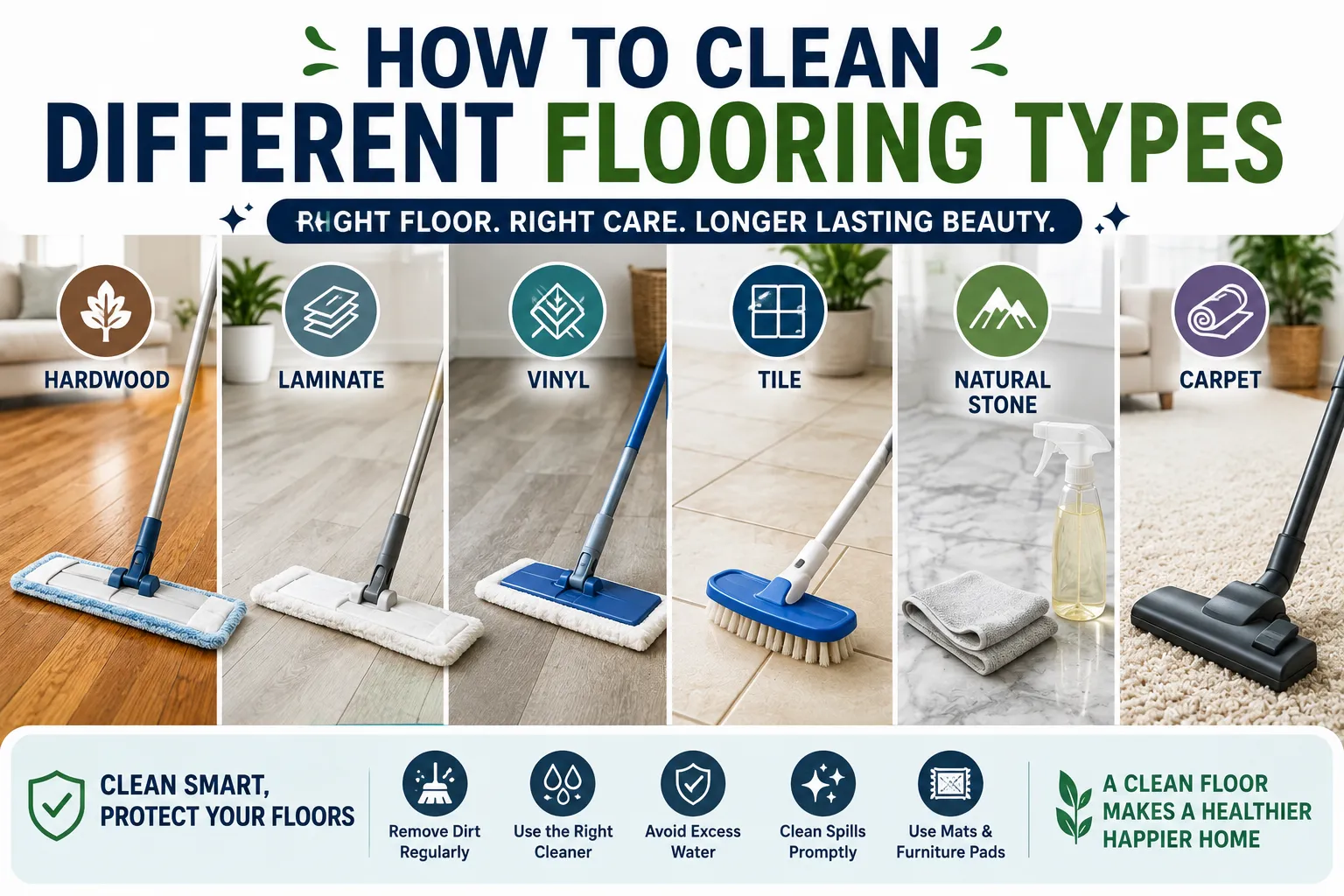
How to Clean Different Flooring Types
Floors take a beating every day. They collect dirt from shoes, food crumbs, dust, pet hair, spills and everything else that enters a home. Yet the right way to clean a floor depends heavily on what it is made of.
A cleaning method that works well on ceramic tile can damage hardwood. A product that is safe for vinyl may be unsuitable for natural stone. Even within the same flooring category, manufacturers can recommend different care methods.
Understanding the basic characteristics of each flooring type makes it easier to clean effectively without causing unnecessary wear.
For a broader household cleaning routine that covers different rooms, surfaces and maintenance tasks, see The Ultimate Guide to Cleaning Your Home.
Why the Right Flooring Cleaning Method Matters
Flooring is more than a surface that needs to look clean.
Regular cleaning helps remove abrasive particles that can gradually scratch finishes. It can also prevent spills from becoming stains and keep dirt from accumulating in seams, grout lines and textured surfaces.
At the same time, excessive moisture, harsh chemicals and abrasive tools can damage certain floors.
The goal is therefore not simply to clean as aggressively as possible.
It is to use the least aggressive method that effectively removes the dirt.
Start by Identifying the Flooring
Before reaching for a mop or cleaning solution, determine what type of flooring you have.
Common residential flooring materials include:
- Hardwood
- Laminate
- Vinyl
- Ceramic tile
- Porcelain tile
- Natural stone
- Concrete
- Carpet
- Bamboo
- Cork
If you’re unsure, check the flooring manufacturer’s care instructions. Knowing whether a floor is sealed, finished, waterproof or moisture-sensitive can significantly change the cleaning approach.
How to Clean Hardwood Floors
Hardwood flooring can be durable, but excessive water and inappropriate cleaning products can damage the wood or its finish.
Step 1: Remove Loose Dirt
Start with a soft-bristled broom, dust mop or vacuum designed for hard floors.
Removing grit first is important because small particles can act like sandpaper when walked across the surface.
Pay particular attention to:
- Entryways
- Under furniture
- Hallways
- Around dining tables
- Areas where pets spend time
Step 2: Deal With Spills Quickly
Liquid should not be allowed to sit on hardwood for long periods.
Blot spills with a clean, absorbent cloth rather than spreading them across the floor.
Standing moisture can seep into seams or damage certain finishes.
Step 3: Damp-Mop Carefully
When the flooring manufacturer’s instructions permit damp mopping, use a well-wrung microfiber mop rather than a soaking-wet mop.
The floor should not be left visibly wet.
Avoid flooding hardwood floors with water.
What to Avoid on Hardwood
Depending on the finish and manufacturer’s recommendations, avoid:
- Excessive water
- Abrasive scrubbers
- Steam cleaners unless specifically approved
- Harsh household chemicals
- Wax products on floors that do not require them
A cleaner formulated specifically for the type of hardwood finish can be a safer choice than a generic household cleaner.
How to Clean Laminate Flooring
Laminate flooring can resemble hardwood or stone, but its construction is different.
Many laminate floors have a moisture-resistant surface while the underlying material can be vulnerable to water.
Regular Laminate Cleaning
Begin by removing dust, hair and loose debris with a vacuum or dry microfiber mop.
For routine cleaning, use a slightly damp microfiber mop and a cleaner recommended for laminate flooring.
Avoid leaving standing water on the surface.
Deal With Spills Promptly
Laminate flooring is particularly vulnerable to moisture entering through seams.
Wipe up:
- Water
- Juice
- Coffee
- Food spills
- Pet accidents
as soon as possible.
Avoid Excessive Scrubbing
Aggressive scrubbing can wear the decorative surface or finish.
If a stubborn mark appears, try a manufacturer-approved cleaning solution and a soft cloth rather than immediately using an abrasive pad.
How to Clean Vinyl Flooring
Vinyl is popular because it is relatively easy to maintain and is available in many styles.
Regular cleaning usually begins with removing loose dirt.
Routine Vinyl Cleaning
Sweep or vacuum the floor regularly.
Then use a damp microfiber mop with a cleaner suitable for vinyl flooring.
Many vinyl floors tolerate more moisture than hardwood or laminate, but that does not mean they need to be soaked.
Remove Stains Carefully
For stubborn marks, use a soft cloth or non-abrasive sponge with an appropriate cleaner.
For additional guidance on treating different types of household stains without damaging the underlying material, see this stain removal guide.
Avoid harsh abrasive powders or tools that could dull or scratch the surface.
Protect Vinyl From Scratches
Dirt is not the only threat to vinyl flooring.
Furniture legs and sharp objects can cause scratches or dents.
Using suitable furniture pads and avoiding dragging heavy objects across the floor can help protect the surface.
How to Clean Ceramic Tile
Ceramic tile is generally resilient and relatively easy to maintain.
The challenge is often not the tile itself but the grout surrounding it.
Clean the Surface First
Sweep or vacuum to remove loose dirt.
Then mop using warm water and a tile-appropriate cleaning solution.
For routine maintenance, excessive amounts of detergent are unnecessary.
Too much cleaner can leave a residue that attracts additional dirt.
Pay Attention to Grout
Grout is porous unless it has been properly sealed and maintained.
Dirt can become trapped in its texture, making the floor look dirty even when the tile itself is clean.
For grout that needs deeper cleaning, use a suitable grout cleaner and a soft or moderately firm brush.
Avoid assuming that stronger chemicals will automatically produce better results.
How to Clean Porcelain Tile
Porcelain tile is dense and durable, making it a common choice for kitchens, bathrooms and high-traffic areas.
Routine cleaning is usually straightforward.
Daily or Regular Maintenance
Remove loose dirt first.
Then mop with warm water and an appropriate neutral cleaner when needed.
For textured porcelain, use a microfiber mop or soft brush capable of reaching the surface contours.
Avoid Residue
Porcelain can show streaks or residue when too much cleaning product is used.
Using the recommended concentration and rinsing when necessary can help keep the surface looking clean.
How to Clean Natural Stone Floors
Natural stone requires more care because different stones have different levels of porosity and chemical resistance.
Common natural stone flooring includes:
- Marble
- Granite
- Limestone
- Travertine
- Slate
- Sandstone
Use a Stone-Safe Cleaner
A cleaner designed for the specific type of natural stone is generally preferable.
Many natural stone surfaces can be damaged by acidic substances.
Depending on the stone, products containing acids or other harsh chemicals may cause etching, dullness or surface damage.
Clean Spills Quickly
Stone can be porous.
Substances such as wine, coffee, oils and acidic foods can cause staining or surface changes if left sitting on susceptible materials.
Blot spills rather than aggressively rubbing them.
Consider Sealing
Some natural stone floors benefit from periodic sealing.
Sealing can help reduce the penetration of liquids and stains, although it does not make stone completely impervious.
The appropriate sealing schedule depends on the stone, finish and manufacturer’s recommendations.
How to Clean Marble Flooring
Marble deserves special attention because it is particularly sensitive to acidic substances.
Avoid using vinegar, lemon juice or other acidic household ingredients as general-purpose marble cleaners.
Even substances that are commonly recommended as natural cleaning solutions can damage marble.
For routine care:
- Remove dust and grit.
- Wipe spills promptly.
- Use a pH-neutral cleaner designed for stone.
- Use soft cleaning tools.
- Dry the floor when appropriate.
If marble becomes etched or deeply stained, professional stone restoration may be more appropriate than repeated household cleaning.
How to Clean Slate Flooring
Slate has a naturally textured surface that can collect dust and debris.
Regular vacuuming or sweeping is particularly important.
A damp mop with a suitable stone cleaner can handle routine cleaning.
For heavily textured slate, a soft brush may help reach recessed areas.
Avoid harsh cleaning products unless the manufacturer or stone-care professional confirms they are appropriate.
How to Clean Concrete Floors
Concrete flooring has become increasingly popular in modern interiors, garages and utility spaces.
The cleaning method depends on whether the concrete is sealed, polished, stained or otherwise treated.
Sealed Concrete
Sealed concrete is generally easier to maintain because the protective coating reduces the absorption of liquids.
Sweep or vacuum regularly, then damp-mop with a suitable cleaner.
Unsealed Concrete
Unsealed concrete is more porous and can absorb liquids and stains.
Oil, grease and other substances may require specialized treatment.
For indoor decorative concrete, follow the care instructions associated with the particular finish.
How to Clean Bamboo Flooring
Bamboo flooring looks similar to hardwood but has its own construction and finish characteristics.
As with wood flooring, excessive water should generally be avoided.
Start with dry cleaning to remove dirt and grit.
Then use a lightly damp microfiber mop with a cleaner approved for the particular bamboo flooring.
Do not leave standing water on the surface.
How to Clean Cork Flooring
Cork flooring is relatively soft and can be sensitive to moisture and physical damage.
Regularly remove dust and grit with a vacuum or soft broom.
For routine cleaning, use a lightly damp mop and a product recommended for cork flooring.
Avoid soaking the floor.
Furniture pads can also help prevent dents caused by heavy furniture.
How to Clean Carpeted Floors
Carpet requires a different approach from hard flooring.
Regular vacuuming is the foundation of carpet maintenance because dust, hair and grit can become embedded in the fibers.
Vacuum Regularly
High-traffic areas generally need more frequent vacuuming than rooms that are rarely used.
Move slowly enough for the vacuum to collect debris effectively.
Pay attention to:
- Edges
- Under furniture
- Stairways
- Entry areas
- Pet resting areas
Treat Spills Quickly
When a spill occurs, blot rather than aggressively rubbing the carpet.
Rubbing can push liquid deeper into the fibers or spread the stain.
Use a carpet-safe spot cleaner appropriate for the material.
Deep Cleaning
Carpet may eventually require deeper cleaning.
Depending on the carpet and manufacturer’s recommendations, this can involve hot-water extraction or professional carpet cleaning.
For guidance on when different areas and surfaces need more intensive attention, see How Often Should You Deep Clean?.
Always check the carpet’s care instructions before using a new cleaning method.
How to Handle Pet Hair on Floors
Pet hair can accumulate quickly on both hard floors and carpets.
For hard flooring, a microfiber dust mop or vacuum can collect loose hair effectively.
For carpets, a vacuum designed to handle pet hair can be useful.
Regular cleaning is generally easier than allowing large amounts of hair and debris to accumulate.
Washing pet bedding and regularly grooming pets can also reduce the amount of hair deposited around the home.
How to Deal With Greasy Kitchen Floors
Kitchen floors often need different treatment from bedroom or living-room floors because cooking produces grease and food residue.
Start by removing loose crumbs and debris.
Then use a floor-safe cleaner designed to cut through grease without damaging the flooring material.
Avoid applying a strong degreaser simply because the floor feels greasy. Some powerful products can damage finishes.
Always check whether the cleaner is compatible with the flooring.
How to Remove Mud From Floors
Mud can be particularly challenging because attempting to mop it immediately can spread it across a larger area.
If possible, allow heavy mud to dry enough to become easier to remove.
Then vacuum or sweep away loose material.
After that, clean the remaining residue using a flooring-appropriate method.
An entryway mat can significantly reduce the amount of mud and dirt brought indoors.
How to Handle Floor Stains
Different stains require different approaches.
Common examples include:
- Coffee
- Wine
- Oil
- Grease
- Ink
- Pet accidents
- Food coloring
- Mud
Before using a stain remover, determine the flooring material.
A method that is effective on ceramic tile could damage hardwood or natural stone.
When using a new product, following the manufacturer’s instructions and testing it on an inconspicuous area can help reduce the risk of visible damage.
Don’t Forget the Edges and Corners
Mopping the center of a room can create the impression that the entire floor is clean while dirt remains along the edges.
Dust and hair often collect:
- Along baseboards
- Behind doors
- Under cabinets
- Around furniture legs
- In corners
Use an appropriate attachment or microfiber cloth to reach these areas periodically.
Clean Floors From Dry to Wet
A useful general rule is to remove dry debris before introducing moisture.
A basic sequence is:
- Declutter the floor.
- Sweep, dust-mop or vacuum.
- Treat specific stains.
- Damp-mop with the appropriate cleaner.
- Allow the floor to dry according to its care requirements.
Starting with wet cleaning can turn loose dirt into a muddy residue and make the job harder.
Use the Right Amount of Cleaning Product
More cleaning solution does not necessarily mean a cleaner floor.
Excess detergent can leave behind a sticky film.
That residue can attract dirt and create streaks.
Use the concentration recommended by the manufacturer.
For some floors, plain water or a minimally diluted appropriate cleaner may be sufficient for routine maintenance.
Be Careful With Steam Cleaners
Steam cleaners can be useful for certain flooring materials, but they are not universally appropriate.
High heat and moisture can damage some flooring finishes, seams, adhesives or materials.
Before using steam, confirm that the flooring manufacturer specifically permits it.
This is particularly important for:
- Hardwood
- Laminate
- Certain vinyl products
- Cork
- Floors with vulnerable finishes
A cleaning method that works well in one room can cause permanent damage in another.
Vinegar Is Not a Universal Floor Cleaner
Vinegar is often promoted as a natural household cleaning solution.
However, its acidity makes it unsuitable for some flooring materials, particularly certain natural stones.
It may also affect some finishes over time.
Instead of assuming that a homemade solution is safe because it is natural, check the flooring manufacturer’s recommendations first.
Bleach Is Not a General-Purpose Floor Solution
Bleach is powerful, but stronger does not automatically mean better.
Using bleach on an incompatible floor can cause discoloration or damage.
It should never be mixed with other cleaning chemicals, particularly products containing ammonia or acids, because dangerous fumes can result.
For routine floor cleaning, a flooring-specific product is generally a more appropriate choice.
Microfiber Can Be a Useful All-Purpose Cleaning Tool
Microfiber cleaning tools are popular because they can collect dust and dirt effectively while using relatively little moisture.
They are useful for many types of flooring when used appropriately.
A microfiber mop can also help reduce the amount of water applied to moisture-sensitive surfaces.
Keep cleaning pads reasonably clean. A dirty mop head can simply redistribute dirt around the room.
For more information about choosing and using household cleaning equipment, see this complete guide to household cleaning tools and their uses.
Establish a Simple Floor-Cleaning Routine
A practical cleaning schedule does not have to involve deep-cleaning every floor every day.
Daily
Focus on obvious spills, crumbs and high-traffic areas.
Several Times a Week
Vacuum, sweep or dust-mop areas that collect significant amounts of dirt.
Weekly
Damp-clean floors according to their material and household traffic.
Periodically
Perform deeper cleaning, address grout, inspect finishes and clean difficult-to-reach areas.
The ideal frequency depends on the household.
Homes with children, pets, allergies or heavy foot traffic may require more frequent cleaning.
Protect Floors Before They Get Dirty
Cleaning is only part of floor maintenance.
Preventive measures can reduce the amount of dirt and wear that floors experience.
Useful strategies include:
- Place mats at entrances.
- Remove outdoor shoes when practical.
- Use furniture pads.
- Clean spills promptly.
- Keep pet nails appropriately trimmed.
- Avoid dragging heavy furniture.
- Use rugs in high-traffic areas when suitable.
- Keep cleaning products designed for each flooring material.
Prevention can significantly reduce the amount of intensive cleaning required.
For additional advice on preserving household finishes while cleaning and maintaining them, see this guide to protecting household surface finishes.
When Professional Floor Cleaning Makes Sense
Some flooring problems are difficult to address with ordinary household equipment.
Professional help may be appropriate for:
- Deep carpet cleaning
- Hardwood refinishing
- Stone restoration
- Severe grout staining
- Large water damage
- Persistent odors
- Deeply embedded stains
- Damaged or deteriorating finishes
Professionals can also identify whether a floor needs cleaning, refinishing, resealing or repair.
A Cleaner Floor Starts With Knowing What It Is
There is no single cleaning method that works perfectly for every floor in a home.
Hardwood generally benefits from minimal moisture and gentle cleaning. Laminate requires particular attention to water around seams. Vinyl is relatively easy to maintain but can be damaged by abrasive methods. Ceramic and porcelain tile are durable, while grout often requires extra attention. Natural stone needs material-specific care, especially when the surface is porous or sensitive to acids.
The most reliable approach is simple: identify the flooring, remove loose dirt first, use an appropriate cleaner, avoid unnecessary moisture and follow the manufacturer’s care instructions.
With the right routine, homeowners can keep floors looking cleaner while reducing the risk of scratches, stains, discoloration and premature wear. The goal is not to scrub harder—it is to clean smarter for the material beneath your feet.