The Ultimate Guide to Stain Removal
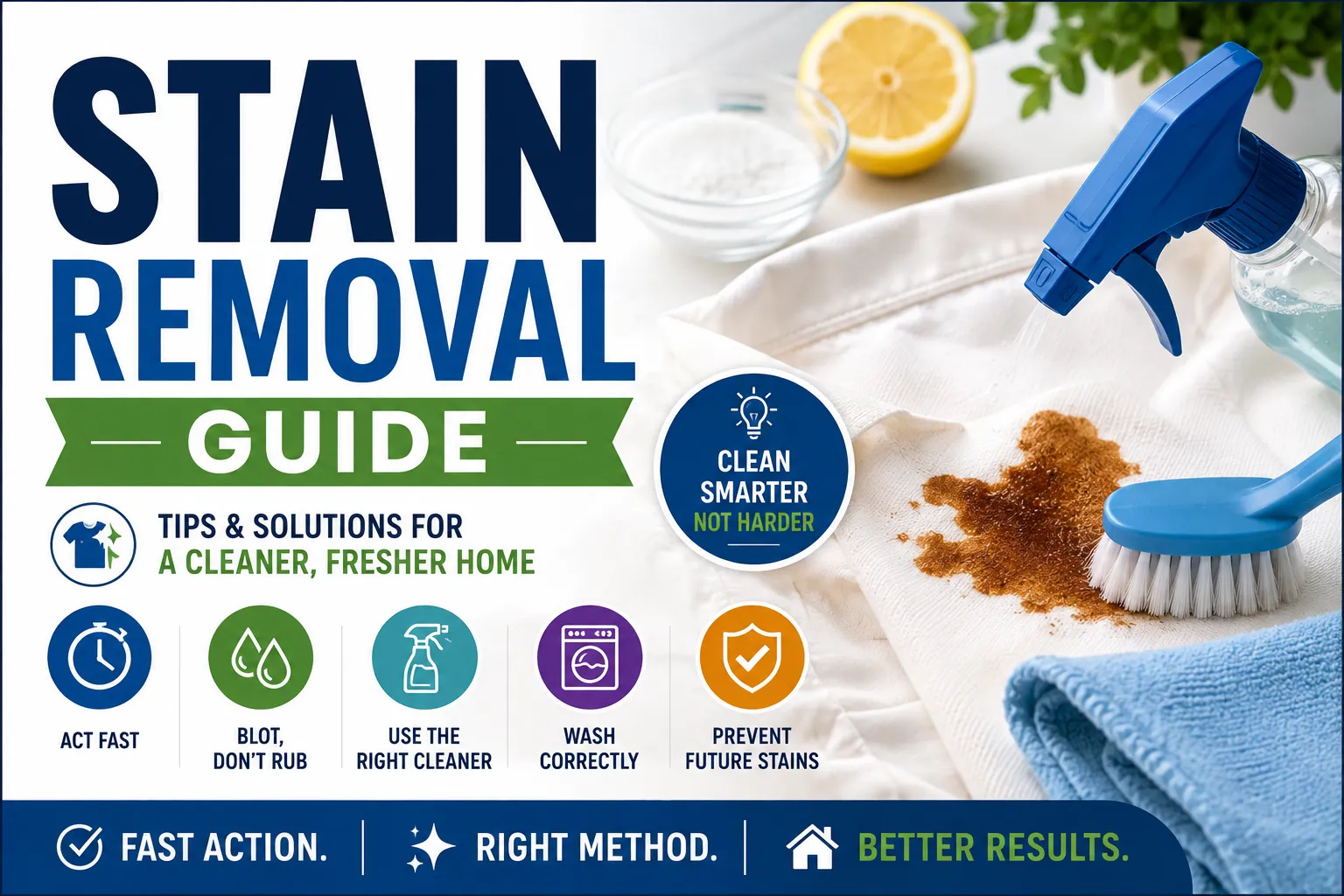
Stain Removal Guide
Spills and stains are an unavoidable part of everyday life. Whether it’s coffee on a favorite shirt, grease on the kitchen counter, ink on office furniture, or mud tracked across the carpet, knowing how to respond quickly and correctly can make the difference between a permanent stain and a spotless surface.
While no single method works for every type of stain, understanding the basics of stain removal can help protect clothing, furniture, carpets, upholstery, and household surfaces. Acting promptly, using appropriate cleaning products, and treating different materials carefully can improve the chances of successful stain removal without causing damage.
This guide explains how stains form, effective cleaning techniques, common household stain treatments, and practical tips for keeping your home looking its best. For a broader approach to maintaining a clean and well-maintained home, see The Ultimate Guide to Cleaning Your Home.
Why Stains Are Difficult to Remove
A stain occurs when a substance bonds to the fibers or surface of a material.
Several factors affect how difficult a stain is to remove:
- Type of stain
- Material affected
- Time before cleaning
- Temperature
- Cleaning method
- Cleaning products used
Fresh stains are generally easier to remove than stains that have dried or set.
The Golden Rule: Act Quickly
The sooner a stain is treated, the greater the chance of removing it completely.
When a spill happens:
- Blot excess liquid immediately.
- Avoid rubbing the stain.
- Remove as much residue as possible.
- Follow the care instructions for the material.
- Test any cleaning solution on a hidden area first.
Quick action often prevents stains from becoming permanent.
Blot, Don’t Rub
One of the most common cleaning mistakes is rubbing a stain aggressively.
Rubbing may:
- Spread the stain
- Push it deeper into fibers
- Damage fabrics
- Wear down delicate materials
Instead, gently blot using a clean cloth or paper towel until the excess liquid is absorbed.
Common Types of Household Stains
Different stains require different cleaning approaches.
Examples include:
- Coffee
- Tea
- Red wine
- Grease
- Cooking oil
- Chocolate
- Tomato sauce
- Ink
- Mud
- Grass
- Makeup
- Blood
- Pet accidents
Understanding the source of the stain helps determine the most appropriate cleaning method.
Cleaning Clothing Stains
Before washing stained clothing:
- Read the garment’s care label.
- Treat the stain as soon as possible.
- Use cool or lukewarm water when appropriate.
- Avoid machine drying until the stain is fully removed, as heat can make some stains more difficult to remove.
Different fabrics require different levels of care, especially delicate materials such as silk or wool.
For broader guidance on washing, drying, fabric care, and maintaining clothing, see the Guide to Laundry Care.
Carpet Stain Removal
Carpets can trap stains deep within their fibers.
Helpful techniques include:
- Blot spills immediately.
- Work from the outside toward the center.
- Use minimal moisture.
- Avoid oversaturating the carpet.
- Allow the area to dry completely.
Proper drying also helps reduce odors and mold growth.
Upholstery Cleaning
Furniture fabrics should be cleaned carefully to avoid discoloration or damage.
Best practices include:
- Vacuum regularly.
- Check manufacturer cleaning codes.
- Test cleaning solutions in an inconspicuous area.
- Use soft cloths or sponges.
- Avoid excessive scrubbing.
Professional cleaning may be appropriate for valuable or delicate furniture.
For more detailed guidance on caring for sofas, chairs, cushions, and other fabric-covered furniture, see the Upholstery Cleaning Guide.
Kitchen Surface Stains
Kitchen stains often involve grease, food, and beverages.
Frequently affected surfaces include:
- Countertops
- Cabinets
- Stovetops
- Tile
- Stainless steel
- Cutting boards
Cleaning promptly helps prevent buildup that becomes harder to remove over time.
Grease deserves particular attention because repeated cooking can leave a sticky residue on cabinets, walls, appliances, and other surfaces. The How to Remove Kitchen Grease Buildup guide provides more detailed advice for dealing with greasy kitchen surfaces.
Bathroom Stains
Bathrooms commonly experience:
- Soap scum
- Hard water deposits
- Toothpaste residue
- Rust stains
- Mold and mildew
Routine cleaning helps prevent stains from becoming deeply embedded.
Natural Cleaning Solutions
Some homeowners prefer simple household ingredients for routine cleaning.
Common options include:
- White vinegar
- Baking soda
- Lemon juice
- Mild dish soap
- Warm water
While these ingredients can be useful for certain cleaning tasks, they are not suitable for every surface. Always verify manufacturer recommendations before use.
Commercial Stain Removers
Many stains may require specialized cleaning products.
Commercial cleaners are available for:
- Laundry stains
- Carpets
- Upholstery
- Wood
- Stone
- Glass
- Stainless steel
Always follow product instructions carefully and use cleaners only on recommended surfaces.
Choosing an appropriate product is important because a cleaner that removes a stain effectively can still damage the material underneath. For a broader explanation of household cleaners and what different products are designed to do, see Cleaning Products Explained.
Preventing Permanent Stains
Simple habits can reduce long-term staining.
Helpful practices include:
- Clean spills immediately.
- Use placemats and coasters.
- Apply fabric protectors when appropriate.
- Remove shoes indoors.
- Vacuum frequently.
- Wash linens regularly.
- Clean kitchen surfaces after cooking.
- Wipe bathroom surfaces routinely.
Preventive care often reduces the need for intensive cleaning later.
Organizing Cleaning Supplies
Keeping cleaning products organized makes stain removal faster and more efficient.
A basic cleaning kit might include:
- Microfiber cloths
- Soft sponges
- Paper towels
- Spray bottles
- Mild dish soap
- Laundry stain remover
- Soft-bristle brush
- Rubber gloves
Store cleaning supplies safely and out of reach of children and pets.
Common Cleaning Mistakes
Avoid these common errors:
- Waiting too long before cleaning
- Rubbing instead of blotting
- Mixing incompatible cleaning products
- Using excessive water
- Ignoring care labels
- Applying too much cleaning solution
- Skipping a spot test
Using the wrong technique can sometimes worsen a stain or damage the material.
Sustainable Cleaning Practices
Many homeowners are adopting environmentally friendly cleaning habits.
Examples include:
- Reusable microfiber cloths
- Concentrated cleaning products
- Refillable spray bottles
- Plant-based cleaning solutions
- Reduced paper towel use
- Proper disposal of cleaning chemicals
These practices help reduce household waste while maintaining cleanliness.
When Professional Cleaning Is Best
Some stains require professional attention.
Consider professional cleaning for:
- Antique furniture
- Valuable rugs
- Delicate fabrics
- Large upholstery pieces
- Extensive water damage
- Persistent odors
- Stains that resist repeated cleaning attempts
Professional services often have specialized equipment and cleaning methods designed for difficult situations.
Tips for Successful Stain Removal
For the best results:
- Treat stains immediately.
- Identify the stain before cleaning.
- Read care labels.
- Test cleaning products first.
- Blot gently instead of rubbing.
- Use the correct cleaner for the surface.
- Avoid excessive heat until stains are removed.
- Keep cleaning supplies readily available.
- Follow manufacturer recommendations.
- Be patient and repeat treatments if necessary.
Consistency and proper technique often produce the best results.
Keeping Stains Under Control
Effective stain removal begins with quick action, the right cleaning approach, and an understanding of the material being treated. While every stain is different, simple habits such as blotting spills immediately, using appropriate cleaning products, and following care instructions can significantly improve cleaning success.
Whether dealing with clothing, carpets, furniture, or household surfaces, a well-organized cleaning routine helps maintain a fresh, attractive home while extending the life of your belongings. With the right techniques and a little preparation, most everyday stains can be managed safely and effectively.