How to Protect Household Surface Finishes
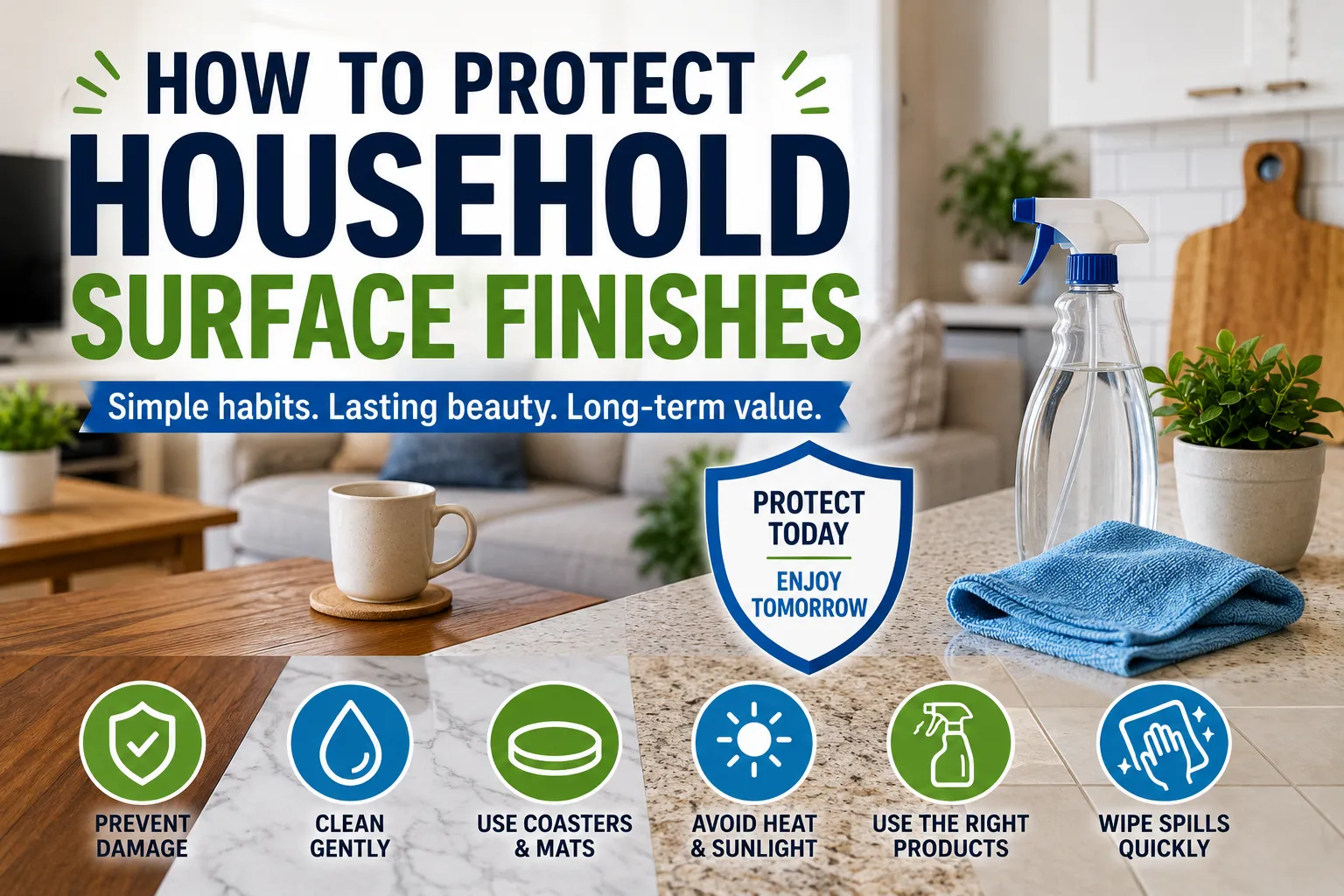
How to Protect Household Surface Finishes
Household surfaces do more than make a home look attractive. Floors, countertops, cabinets, furniture, appliances, fixtures, and painted walls all have finishes designed to protect the underlying material from moisture, stains, scratches, dirt, and everyday wear.
Over time, however, even durable finishes can become dull, scratched, discolored, or damaged. Sometimes the cause is obvious, such as a harsh cleaning product or a hot pan placed directly on a countertop. In other cases, gradual exposure to moisture, sunlight, dust, and repeated friction is responsible.
Protecting household surface finishes does not require complicated maintenance. In many cases, the most effective approach is to understand what a surface is made from, use appropriate cleaning methods, deal with spills promptly, and avoid unnecessary exposure to conditions that can damage its protective layer.
For a broader approach to maintaining clean and well-cared-for surfaces throughout the home, see The Ultimate Guide to Cleaning Your Home.
Why Surface Finishes Matter
A surface finish is the outer layer or treatment that gives a material its appearance and, often, its protection.
Depending on the material, a finish may provide:
- Resistance to moisture
- Protection against stains
- Improved durability
- Easier cleaning
- Resistance to scratches
- Color enhancement
- A particular level of shine or texture
- Protection from ultraviolet light
Wood furniture, for example, may have a clear protective coating, oil, wax, paint, or stain. A countertop might have a polished, honed, sealed, laminated, or manufactured surface.
The finish is often the first line of defense between the material and the environment.
Start by Identifying the Surface
One of the biggest mistakes in household cleaning is treating every surface the same way.
A cleaner that works well on ceramic tile may be inappropriate for natural stone. A product designed for glass may damage a painted cabinet. An abrasive scrubber that removes stubborn grime from a durable sink could leave permanent marks on a delicate finish.
Before cleaning or treating a surface, identify its material and finish.
Common household surfaces include:
- Solid wood
- Veneer
- Laminate
- Painted surfaces
- Natural stone
- Engineered stone
- Ceramic
- Porcelain
- Glass
- Stainless steel
- Aluminum
- Vinyl
- Plastic
- Finished concrete
When manufacturer instructions are available, they should take priority over generic cleaning advice.
Use the Mildest Effective Cleaning Method
A useful rule for household maintenance is to start with the least aggressive method that can solve the problem.
For routine cleaning, that may simply mean:
- Remove loose dust and debris.
- Use a soft cloth or appropriate cleaning tool.
- Apply a small amount of mild cleaning solution when necessary.
- Wipe away residue.
- Dry the surface when appropriate.
There is rarely a benefit to using the strongest cleaner available for ordinary dirt.
Aggressive chemicals and abrasive tools can gradually wear away finishes even when the surface appears durable.
For more guidance on choosing suitable cleaning solutions, Cleaning Products Explained covers the different types of household cleaners and how they are commonly used.
Read Cleaning Product Labels
Cleaning products are formulated for particular purposes.
Before using one, check the label for information about suitable and unsuitable surfaces.
Pay attention to warnings involving:
- Natural stone
- Wood
- Painted surfaces
- Aluminum
- Stainless steel
- Plastics
- Finished floors
- Laminates
A product that is effective against grease or mineral deposits may also affect a protective coating.
If the label does not indicate that a product is suitable for a particular material, avoid assuming that it is safe.
Test New Products in an Inconspicuous Area
When trying a new cleaner or treatment, test it first in a small, hidden area.
For example, a product can be tested underneath a piece of furniture, inside a cabinet, or in another location that is not normally visible.
Wait long enough to observe whether the product causes:
- Discoloration
- Cloudiness
- Swelling
- Streaking
- Loss of shine
- Softening
- Peeling
- Other changes
A small test can prevent a cleaning experiment from becoming an expensive repair.
Avoid Excessive Scrubbing
Scrubbing harder does not necessarily mean cleaning better.
Repeated aggressive scrubbing can gradually wear away a finish, especially on:
- Painted furniture
- Wood
- Laminates
- Coated metals
- Acrylic surfaces
- Certain plastics
Start with gentle wiping and increase cleaning intensity only when necessary.
For stubborn stains, allowing an appropriate cleaning solution to loosen the material may be more effective than applying additional force.
Choose the Right Cleaning Cloth
The cleaning tool itself can affect a surface.
Microfiber cloths are useful for many household cleaning tasks because they can remove dust and grime without requiring highly abrasive action.
Soft cotton cloths can also be suitable for certain surfaces.
Avoid using rough or damaged cloths that may contain particles capable of scratching delicate finishes.
Reusable cleaning cloths should also be washed properly so they do not accumulate grit that could scratch surfaces during the next cleaning session.
For additional guidance on selecting and using household cleaning equipment, see Cleaning Tools: Complete Guide to Household Tools & Uses.
Be Careful With Abrasive Sponges
Scouring pads and abrasive sponges can be useful for certain durable surfaces, but they should not be treated as universal cleaning tools.
Depending on the surface, abrasive materials can:
- Dull gloss
- Create fine scratches
- Remove coatings
- Alter texture
- Leave visible marks
If a surface has a glossy or polished finish, assume that aggressive abrasion could affect its appearance unless the manufacturer specifically recommends it.
Deal With Spills Quickly
One of the simplest ways to protect household surfaces is to clean spills before they have time to cause damage.
Liquids can penetrate porous materials or seep into joints and edges.
Certain substances are particularly likely to stain or damage finishes, including:
- Coffee
- Tea
- Wine
- Cooking oils
- Tomato-based foods
- Fruit juices
- Ink
- Cosmetics
- Cleaning chemicals
Blot or wipe spills promptly rather than allowing them to sit on the surface.
Protect Wood From Moisture
Wood is naturally vulnerable to moisture.
Even when wood has a protective finish, prolonged exposure to water can eventually cause problems.
Moisture can contribute to:
- Swelling
- Warping
- Discoloration
- Finish deterioration
- Mold growth
- Joint damage
Use coasters under drinks and wipe up spills promptly.
In kitchens and bathrooms, pay particular attention to water around seams, edges, sinks, and plumbing fixtures.
Use Coasters and Mats
Small protective accessories can prevent considerable wear.
Coasters can protect tables and other surfaces from:
- Water rings
- Heat
- Condensation
- Staining
Mats and trays can protect cabinets and countertops from items that might leak or scratch.
The goal is not to cover every surface in the home. Instead, use protective barriers where repeated exposure is likely.
Protect Wood From Heat
Heat can damage certain wood finishes and other household surfaces.
Hot cookware should not be placed directly on finished furniture, countertops, dining tables, or other surfaces unless they are specifically designed for that use.
Use:
- Trivets
- Heat-resistant mats
- Pot holders
- Protective pads
Even when a surface does not visibly burn, repeated exposure to high temperatures can cause discoloration or finish deterioration.
Protect Surfaces From Direct Sunlight
Sunlight can gradually change the appearance of household materials.
Ultraviolet radiation can contribute to fading or discoloration in:
- Wood finishes
- Painted furniture
- Fabrics
- Flooring
- Artwork
- Plastics
- Cabinets
Where practical, use curtains, blinds, shades, or UV-filtering window treatments to reduce prolonged exposure.
Furniture can also be repositioned periodically so that one section does not receive substantially more sunlight than another.
Keep Dust From Becoming Abrasive
Dust may appear harmless, but accumulated particles can contribute to surface wear.
When dust is dragged across a surface during cleaning, tiny particles can act like an abrasive.
Regular dusting can therefore help reduce unnecessary friction.
Use a soft microfiber cloth, duster, or another tool appropriate for the surface.
Avoid pressing heavily while dusting delicate finishes.
Protect Floors From Grit
Floor finishes experience considerable wear because people walk across them every day.
Small particles of sand, dirt, and grit can become trapped beneath shoes and act like abrasives.
Entry mats can help reduce the amount of debris brought indoors.
It can also help to:
- Sweep or vacuum regularly
- Clean spills promptly
- Use appropriate floor-cleaning products
- Place protective pads beneath furniture
- Avoid dragging heavy objects
These simple habits can extend the appearance and useful life of finished floors.
For more surface-specific floor-care advice, see How to Clean Different Flooring Types.
Use Furniture Pads
Furniture legs can scratch floors and other surfaces when chairs, tables, and cabinets are moved.
Felt or other suitable protective pads can reduce friction between furniture and the floor.
Check the pads periodically.
A worn or dirty pad can become less effective and may even trap grit against the surface.
Replace damaged pads when necessary.
Be Careful When Moving Furniture
Dragging furniture across a floor can damage both the furniture and the flooring.
Whenever possible, lift furniture rather than dragging it.
For heavy items that cannot easily be lifted, use appropriate moving equipment or protective furniture-moving pads.
Even a single careless movement can leave a deep scratch in a finished floor.
Protect Countertops From Scratches
Countertops are exposed to knives, cookware, food containers, appliances, and frequent cleaning.
The best protection depends on the material.
As a general practice:
- Use cutting boards rather than cutting directly on countertops.
- Use trivets for hot cookware.
- Clean spills promptly.
- Avoid dragging heavy objects.
- Use appropriate cleaning products.
- Follow manufacturer care instructions.
Even materials marketed as highly durable can be damaged by misuse.
Natural Stone Requires Special Care
Natural stone countertops and surfaces can include materials such as granite, marble, limestone, and slate.
Different stones have different properties.
Some are relatively resistant to staining, while others are more porous or sensitive to acidic substances.
Acidic substances can damage certain stone surfaces, particularly those containing minerals that react with acids.
Common examples include:
- Vinegar
- Lemon juice
- Some bathroom cleaners
- Certain descaling products
Do not assume that a natural stone surface can tolerate every household cleaner.
Use a product specifically recommended for the stone.
Sealing Can Protect Porous Surfaces
Some porous materials benefit from periodic sealing.
A sealant can reduce the ability of liquids and contaminants to penetrate the surface.
However, sealing does not make a material completely impervious to damage.
The correct sealant, application method, and maintenance schedule depend on the specific material.
Always follow the manufacturer’s recommendations.
Take Care With Engineered Stone
Engineered stone products can have different compositions and care requirements.
They may be resistant to many everyday stains and scratches, but that does not make them indestructible.
Avoid exposing them to unsuitable chemicals, excessive heat, or abrasive cleaning methods.
The manufacturer’s care instructions should determine which products and techniques are appropriate.
Keep Stainless Steel Looking Its Best
Stainless steel is common in kitchens because it is durable and relatively easy to maintain.
However, it can still develop scratches, water spots, fingerprints, and discoloration.
For routine cleaning:
- Use a soft cloth.
- Follow the manufacturer’s cleaning recommendations.
- Wipe with the grain where applicable.
- Remove residue rather than allowing it to dry.
- Avoid harsh abrasives unless specifically approved.
Steel wool and other aggressive abrasives can leave scratches or introduce particles that may contribute to corrosion.
Avoid Chlorine-Based Cleaners When Inappropriate
Some household surfaces and metals can be damaged by chlorine-containing products.
Stainless steel, for example, can be affected by prolonged exposure to certain chlorine-based cleaners.
Never assume that a powerful disinfectant is suitable for every surface.
Use products according to their labels and the manufacturer’s recommendations for the material being cleaned.
Protect Painted Walls
Painted walls can accumulate fingerprints, dust, cooking residue, and other marks.
However, aggressive cleaning can remove paint or create shiny patches.
Before cleaning painted walls:
- Check the paint manufacturer’s recommendations when available.
- Dust the surface gently.
- Test your cleaning method in an inconspicuous location.
- Use a mild solution when appropriate.
- Avoid excessive scrubbing.
- Dry the surface carefully.
Flat or matte paints can be particularly sensitive to aggressive cleaning.
For a detailed surface-safe approach, see How to Clean Painted Walls and Ceilings Without Damage.
Clean Cabinets Carefully
Kitchen and bathroom cabinets can be exposed to moisture, grease, steam, and frequent handling.
Grease can gradually accumulate around:
- Cabinet doors
- Handles
- Drawer fronts
- Areas near cooking appliances
Use a cleaner appropriate for the cabinet’s finish.
Avoid saturating wooden or veneered surfaces with water.
Pay particular attention to edges and joints, where moisture can penetrate more easily.
Protect Cabinet Edges
Edges are often more vulnerable than large flat surfaces.
Repeated exposure to moisture can cause some materials to swell or separate.
Dry spills promptly, especially around:
- Sinks
- Dishwashers
- Countertops
- Bathroom vanities
If an edge begins peeling, swelling, or separating, addressing the problem early may prevent more extensive damage.
Take Care With Glass
Glass is generally resistant to many household conditions, but it can still be scratched or damaged.
Use appropriate glass-cleaning products and soft cloths.
Avoid using abrasive materials that may scratch the surface.
Also be cautious when cleaning glass that has special coatings, such as protective films or treatments.
Protect Bathroom Surfaces From Moisture
Bathrooms are naturally high-moisture environments.
Regular ventilation can help reduce condensation and moisture accumulation.
After showers or baths, allowing moisture to escape can help protect:
- Painted walls
- Cabinets
- Wood trim
- Metal fixtures
- Grout
- Sealants
- Flooring
Leaks should be addressed promptly because hidden moisture can cause much more damage than visible water on a surface.
Maintain Grout and Sealants
Grout and caulking are important parts of many tiled surfaces.
They help prevent water from reaching areas behind the tile.
Inspect them periodically for:
- Cracks
- Missing sections
- Mold growth
- Separation
- Discoloration
- Deterioration
Damaged caulking or grout may need repair or replacement.
Simply cleaning deteriorated material will not restore its protective function.
Don’t Ignore Silicone Caulking
Silicone and other sealants are commonly used around sinks, bathtubs, showers, and countertops.
If sealant begins separating from the surface, water can penetrate behind it.
Replacing damaged caulking can help prevent moisture from reaching vulnerable areas.
Proper surface preparation is important when replacing old sealant.
Use the Right Vacuum Attachments
Vacuum cleaners are useful for protecting floors and upholstery, but the wrong attachment can damage delicate surfaces.
Use appropriate soft-brush or upholstery attachments where necessary.
Avoid dragging hard plastic components directly across surfaces that can scratch.
For delicate finishes, gentle cleaning is usually preferable to maximum suction or aggressive brushing.
Keep Cleaning Tools Clean
A dirty cleaning tool can spread grime rather than remove it.
Mops, brushes, cloths, and sponges can accumulate:
- Dirt
- Grease
- Hair
- Sand
- Cleaning residue
- Bacteria
Wash or replace cleaning tools regularly.
A cloth that contains trapped grit can cause scratches when used on a polished surface.
Avoid Mixing Cleaning Chemicals
Mixing household cleaning products can create dangerous chemical reactions.
Never combine products unless the manufacturer’s instructions specifically state that doing so is safe.
In particular, avoid experimenting with combinations of disinfectants, acids, bleach-containing products, and ammonia-based cleaners.
Use one appropriate product at a time and follow its instructions.
Give Cleaning Products Time to Work
Some cleaners are designed to remain on a surface for a specified period.
Immediately scrubbing harder is not always the best solution.
Following the product’s instructions can allow the active ingredients to loosen dirt without requiring excessive physical force.
However, do not leave a cleaning product on a surface longer than recommended.
Extended exposure can damage certain finishes.
Protect Surfaces During Home Projects
Painting, drilling, sanding, assembling furniture, and other home-improvement activities can create dust, spills, scratches, and chemical exposure.
Before starting a project:
- Cover floors.
- Protect countertops.
- Move furniture where possible.
- Use drop cloths.
- Mask areas that should not be painted.
- Clean tools before placing them on finished surfaces.
- Store chemicals safely.
A few minutes of preparation can prevent hours of cleanup or costly repairs.
Don’t Place Sharp Objects Directly on Finished Surfaces
Knives, scissors, tools, metal objects, and other sharp items can scratch surfaces quickly.
Use appropriate work surfaces, trays, organizers, or protective mats.
This is particularly important for:
- Wooden tables
- Finished countertops
- Glass
- Polished stone
- Painted furniture
Protect Furniture During Everyday Use
Furniture finishes can deteriorate from repeated contact.
Common sources of wear include:
- Keys
- Buckles
- Jewelry
- Pet claws
- Children’s toys
- Food
- Drinks
- Shoes
- Cleaning products
Using trays, coasters, placemats, and appropriate protective coverings in high-use areas can reduce unnecessary wear.
Pets Need Surface Protection Too
Pets can unintentionally damage household finishes.
Dogs may scratch floors with their claws, while cats can scratch furniture.
Food and water bowls can also leave moisture or residue on flooring.
Protective mats beneath bowls and regular nail or claw care can help reduce damage.
Choose pet-related cleaning products carefully, particularly around animals that may lick surfaces.
Children and Surface Finishes
Children can be particularly hard on household surfaces.
Crayons, markers, food, drinks, toys, and furniture movement can all create wear.
Rather than relying entirely on stronger cleaning products, it can be helpful to establish simple household habits:
- Use washable placemats.
- Keep art activities in designated areas.
- Clean spills quickly.
- Use protective mats under play equipment.
- Store markers and paints appropriately.
- Protect furniture corners where necessary.
Prevention is often easier than removing a permanent stain.
Protect Floors During Moving and Renovation
Whenever large objects are moved through a home, finished floors are vulnerable.
Use appropriate floor protection during:
- Furniture moves
- Appliance installation
- Painting
- Remodeling
- Plumbing work
- Construction
Heavy equipment can scratch, dent, or crack flooring even when the damage is not immediately visible.
Know When Refinishing Is Better Than Cleaning
Some finishes eventually reach the end of their useful life.
Repeated cleaning cannot restore a finish that has been worn away.
Depending on the material, restoration might involve:
- Recoating
- Polishing
- Refinishing
- Resealing
- Repainting
- Replacing damaged sections
If a surface has widespread deterioration, consult someone experienced with that particular material before attempting a DIY restoration.
Avoid DIY Repairs Based on Internet Hacks
Household cleaning advice spreads quickly online, but not every viral cleaning trick is safe.
A method that works on one material may permanently damage another.
Before trying an unusual cleaning method, ask:
- What is the surface made from?
- What is its finish?
- Is the technique recommended by the manufacturer?
- Could the chemical react with the surface?
- Could abrasion cause permanent damage?
A five-minute internet hack is not worth sacrificing an expensive countertop or piece of furniture.
Follow Manufacturer Instructions
Manufacturer recommendations are especially valuable for specialty finishes.
Look for care instructions when purchasing:
- Flooring
- Countertops
- Appliances
- Furniture
- Cabinets
- Fixtures
- Windows
- Outdoor surfaces
Keep product manuals and care information where they can be found later.
Digital copies can also be useful.
Create a Surface-Care Routine
Protecting finishes becomes easier when maintenance is incorporated into regular cleaning.
A simple routine could include:
Daily
- Wipe spills promptly.
- Remove obvious dirt.
- Keep wet areas dry.
- Use coasters and mats where appropriate.
Weekly
- Dust furniture.
- Clean floors using suitable methods.
- Wipe kitchen and bathroom surfaces.
- Check high-use areas for developing damage.
Monthly
- Inspect cabinets and furniture.
- Check caulking and sealants.
- Clean difficult-to-reach areas.
- Inspect floors and countertops for scratches or wear.
Periodically
- Reseal surfaces when recommended.
- Refinish worn materials.
- Replace damaged protective pads.
- Review manufacturer maintenance requirements.
The exact schedule depends on the material and how heavily the surface is used.
A Little Prevention Goes a Long Way
Surface finishes are often damaged not by one dramatic event but by thousands of small interactions.
A cup leaves condensation on a wooden table.
A chair is dragged across a floor.
A cleaning cloth contains a little sand.
A spill sits on a countertop for several hours.
A harsh cleaner is used repeatedly.
Each incident may seem insignificant, but repeated exposure can gradually change the appearance and condition of a surface.
Preventive habits interrupt that process.
Preserve the Finish, Not Just the Cleanliness
Keeping household surfaces clean and keeping them protected are related but different goals.
A surface can look spotless while its finish is slowly being damaged by excessive chemicals, abrasive cleaning, moisture, heat, or friction.
The best maintenance strategy is therefore not simply to clean more aggressively. It is to clean appropriately and prevent unnecessary wear.
Identify the material before choosing a cleaner. Start with gentle methods. Wipe spills quickly. Use coasters, mats, cutting boards, and furniture pads where they provide meaningful protection. Keep moisture under control, protect surfaces from excessive heat and sunlight, and follow manufacturer recommendations for specialized materials.
Most importantly, treat a household finish as a protective investment rather than an obstacle to be scrubbed away. The goal of good cleaning is not merely to make a surface look clean today—it is to help that surface remain attractive, functional, and durable for years to come.