How to Clean and Maintain Common Household Appliances
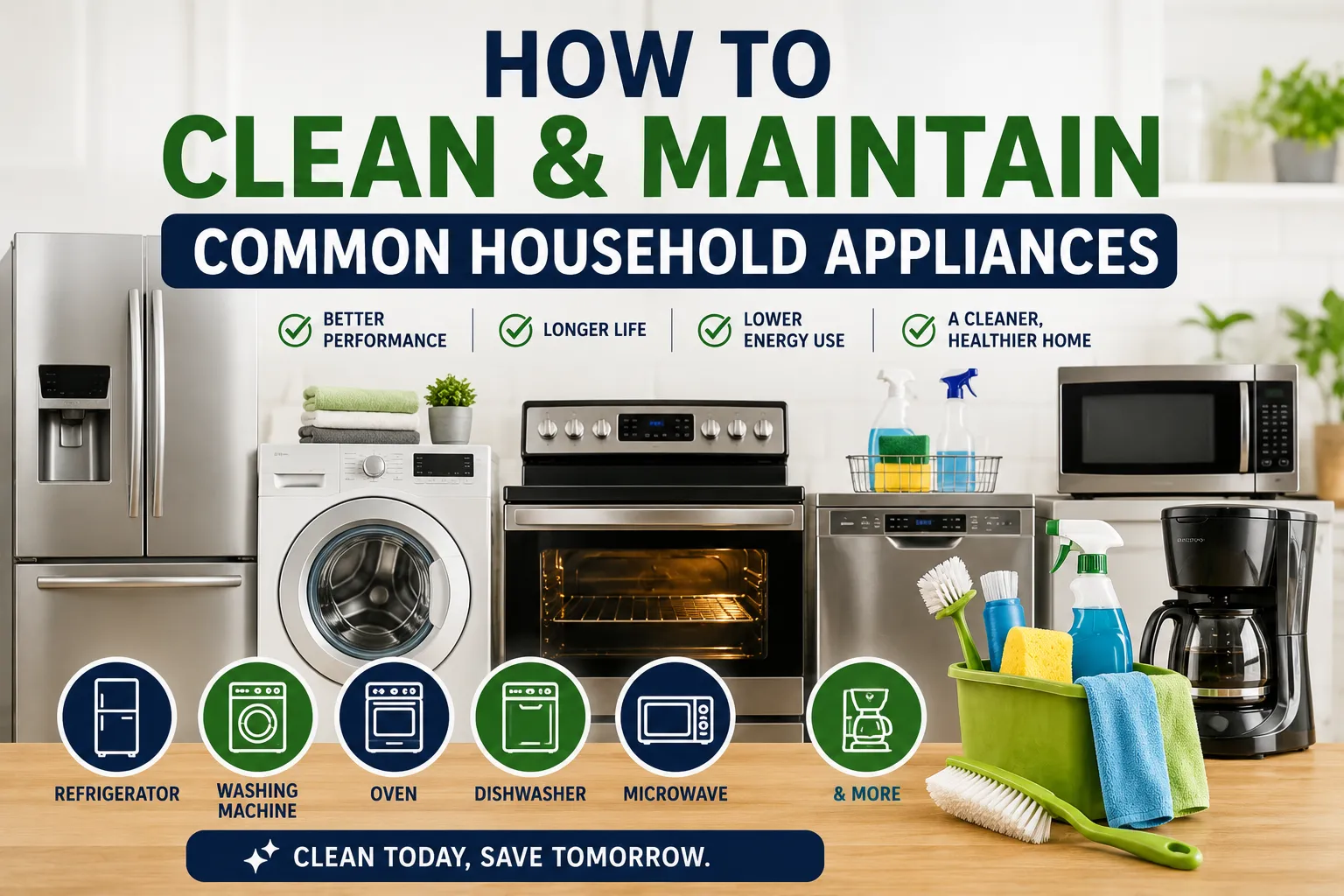
How to Clean and Maintain Common Household Appliances
Household appliances make everyday life easier, but they also require regular care to keep working efficiently. Refrigerators, washing machines, ovens, dishwashers, microwaves and other appliances are constantly exposed to food residue, grease, moisture, dust and everyday wear.
Without routine cleaning and maintenance, buildup can affect performance, create unpleasant odors and contribute to premature wear. In some cases, neglecting basic care can also create avoidable safety problems.
The good news is that maintaining most household appliances does not require complicated procedures. A consistent cleaning routine, the right materials and attention to manufacturer instructions can go a long way toward keeping appliances in good working condition.
For a broader approach to household cleaning and maintenance, see The Ultimate Guide to Cleaning Your Home.
Why Appliance Cleaning Matters
Cleaning appliances is not simply about making them look better.
Food particles, grease, detergent residue, mineral deposits and dust can interfere with how appliances operate. A dirty refrigerator may struggle with airflow, while residue inside a washing machine can contribute to odors. Grease buildup in an oven can produce smoke when heated.
Regular maintenance can help:
- Keep appliances operating efficiently
- Reduce unpleasant odors
- Prevent buildup and residue
- Protect surfaces and components
- Identify problems before they become more serious
- Extend the useful life of appliances
- Maintain a cleaner household environment
Not every appliance needs to be cleaned every day. The important thing is matching the maintenance schedule to how frequently the appliance is used.
Start by Checking the Manufacturer’s Instructions
Before cleaning any appliance, check the owner’s manual or manufacturer’s care instructions.
Different appliances can use different materials and coatings. A cleaning product that is safe for one surface may damage another.
Manufacturers may also specify:
- Which cleaning products are safe
- Which components can be removed
- Which parts should never be submerged
- How filters should be cleaned
- Whether specific maintenance cycles should be used
- How frequently maintenance should be performed
If the manual is unavailable, many manufacturers provide documentation online using the appliance’s model number.
Keep a Basic Appliance-Cleaning Kit
A small collection of supplies can handle many routine cleaning jobs.
Useful items include:
- Microfiber cloths
- Soft sponges
- A soft-bristled brush
- Mild dish soap
- Baking soda
- An old toothbrush
- A vacuum with a brush attachment
- Clean towels
- A bucket
- Manufacturer-approved cleaners when required
Choosing the right product matters as much as having the right tools. For more information about common household cleaners and what they are designed to do, see this guide to cleaning products.
Avoid automatically reaching for strong chemicals. More powerful does not necessarily mean better, and some cleaners can damage finishes or seals.
Never mix household cleaning chemicals unless the product instructions explicitly say that doing so is safe.
Refrigerator Cleaning and Maintenance
The refrigerator is one of the most frequently used appliances in a home, and it can accumulate spills, food residue and odors surprisingly quickly.
For a more detailed look at cleaning shelves, drawers, seals and other refrigerator components, see this guide to cleaning refrigerator interiors.
Clean Spills Promptly
Liquid spills should be wiped up as soon as practical.
Dried food can become harder to remove and may create unpleasant smells.
For routine cleaning, remove food from the immediate area and wipe shelves and interior surfaces with a suitable mild cleaning solution.
Follow the manufacturer’s instructions for removable shelves and drawers.
Clean Drawers and Shelves
Shelves and drawers can collect crumbs, vegetable residue and spilled liquids.
Remove them when the manufacturer allows it and wash them with warm, soapy water.
Allow glass shelves to adjust to room temperature before exposing them to very hot or very cold water. Sudden temperature changes can damage some glass components.
Dry everything thoroughly before returning it to the refrigerator.
Clean the Door Seals
The rubber gasket around the refrigerator door can collect crumbs and grime.
Wipe the seal gently with a damp cloth and mild soap.
Inspect it periodically for cracks, deformation or areas that no longer make proper contact with the refrigerator.
A damaged seal can allow cold air to escape and may make the appliance work harder.
Don’t Ignore the Condenser Area
Some refrigerators have condenser coils or other heat-dissipation components that can collect dust.
If your model has accessible coils, follow the manufacturer’s instructions for cleaning them.
Turn the refrigerator off or disconnect power when the manual instructs you to do so, and use an appropriate brush or vacuum attachment.
Not every modern refrigerator has accessible coils, so do not remove panels unless the manufacturer specifically permits it.
Washing Machine Cleaning
Washing machines clean clothes, but the machine itself also needs occasional maintenance.
Detergent, fabric softener, moisture and dirt can accumulate inside the machine.
Leave the Door or Lid Open When Appropriate
For front-loading machines, leaving the door open between cycles can help the interior dry.
This can reduce the damp environment in which unpleasant odors may develop.
Make sure the door remains safely positioned and cannot become a hazard for children or pets.
Clean the Door Gasket
Front-loading washing machines often have a rubber gasket around the door.
Lint, hair, detergent residue and small objects can collect inside the folds.
Wipe the gasket regularly and inspect the folds carefully.
If water remains trapped in the area, dry it with a clean cloth.
Clean the Detergent Drawer
Detergent drawers can develop hardened residue over time.
Remove the drawer if the manufacturer allows it and rinse it with warm water.
A soft brush or old toothbrush can help remove buildup from narrow channels.
Allow the drawer to dry before reinstalling it.
Run the Recommended Cleaning Cycle
Many modern washing machines include a tub-cleaning or machine-cleaning cycle.
Use it according to the manufacturer’s instructions.
Some manufacturers recommend a particular cleaning product or procedure, so check the manual before adding household substances.
Dishwasher Cleaning and Maintenance
Dishwashers can develop food buildup, mineral deposits and odors even though they are designed to wash dishes.
Clean the Filter
The dishwasher filter is one of the most important components to check.
Food particles can collect there and eventually affect cleaning performance or create odors.
Remove and rinse the filter according to the manufacturer’s instructions.
Use a soft brush if necessary, but avoid damaging the filter.
Inspect the Spray Arms
The small openings in dishwasher spray arms can become blocked by food particles or mineral deposits.
Check the holes periodically.
If the manufacturer permits removal, take the spray arms out and rinse them. A soft brush can help remove debris.
Avoid forcing objects into openings if doing so could damage the component.
Wipe the Door Edges and Gasket
Food residue can collect around areas that water does not regularly reach.
Wipe the door edges, gasket and surrounding surfaces with a damp cloth.
Pay particular attention to corners and seams.
Run a Maintenance Cycle
Some dishwashers offer cleaning programs specifically designed to maintain the machine.
If yours does not, follow the manufacturer’s recommendations for cleaning products and procedures rather than relying on homemade solutions that may not be compatible with the appliance.
Oven Cleaning
Ovens can accumulate grease, food particles and spills.
Some residue may become carbonized after repeated exposure to high temperatures, making it more difficult to remove.
Clean Spills After the Oven Cools
Small spills are generally easier to remove when they are relatively fresh.
Wait until the oven is completely cool, then remove loose debris and wipe the affected area using an appropriate cleaner.
Never attempt to clean a hot oven with a product that is not specifically designed for high-temperature surfaces.
Be Careful With Heating Elements
Do not aggressively scrub or spray cleaning chemicals directly onto heating elements unless the manufacturer specifically permits it.
Some components can be damaged by moisture or harsh cleaners.
The same principle applies to electrical connections and control panels.
Understand Self-Cleaning Features
Some ovens have self-cleaning cycles that use very high temperatures to break down residue.
These cycles should be used according to the manufacturer’s instructions.
Before starting one, remove items that the manufacturer says should not remain inside the oven.
Ventilate the kitchen appropriately and keep children and pets away from the appliance during the cycle.
If your oven does not have a self-cleaning function, use the cleaning method recommended by the manufacturer.
Microwave Cleaning
Microwaves are usually straightforward to maintain because most food residue remains inside a relatively small cooking chamber.
Wipe the Interior Regularly
Remove the turntable and clean it according to the manufacturer’s instructions.
Wipe the interior walls and ceiling with a damp cloth or suitable mild cleaner.
For stubborn residue, allowing moisture to soften the buildup can make wiping easier.
Do not allow liquid to enter vents or electrical components.
Clean the Door and Seal
Food splashes can accumulate around the microwave door.
Wipe the door, frame and sealing surfaces carefully.
Avoid abrasive cleaners that could scratch the surface.
If the door or seal appears damaged, have the appliance evaluated rather than continuing to use it without checking the problem.
Coffee Maker Maintenance
Coffee makers can accumulate mineral deposits, especially when used with hard water.
These deposits can affect performance and potentially alter the taste of coffee.
Clean Removable Components
Wash removable parts according to the manufacturer’s instructions.
Allow them to dry thoroughly before reassembling the machine.
Descale When Necessary
Many coffee makers require periodic descaling to remove mineral deposits.
Use the descaling procedure recommended by the manufacturer.
Some machines require specific descaling products, while others may have different cleaning instructions.
After descaling, follow the manufacturer’s rinsing procedure carefully.
Electric Kettle Maintenance
Electric kettles can also develop mineral scale.
The buildup is particularly noticeable around the heating element or interior base.
Empty the kettle after use when practical and clean it according to the manufacturer’s instructions.
If descaling is required, use a method or product approved for the specific appliance.
Never immerse an electric kettle’s electrical base in water unless the manufacturer explicitly states that it is designed for immersion.
Range Hood and Vent Cleaning
Kitchen ventilation systems can collect grease.
A dirty range hood filter may restrict airflow and reduce the effectiveness of ventilation.
Clean Grease Filters
If the filter is removable and washable, clean it according to the manufacturer’s instructions.
Some filters are designed to be replaced rather than washed.
Do not assume that every filter can go in a dishwasher.
Wipe the Hood Surface
Grease can accumulate on the exterior and underside of the hood.
Use a suitable degreasing product compatible with the hood’s finish.
Avoid abrasive pads that can scratch stainless steel or painted surfaces.
Air Conditioner Maintenance
Air-conditioning systems require more than occasional exterior cleaning.
Filters are particularly important because they collect dust and other airborne particles.
Check Filters Regularly
The appropriate cleaning or replacement schedule depends on the system, filter type, usage and household conditions.
A heavily used system may require more frequent attention than one used occasionally.
Follow the manufacturer’s instructions for removing and replacing filters.
Keep Outdoor Units Clear
For systems with outdoor condenser units, keep leaves, grass and other debris away from the unit.
Do not dismantle electrical components yourself.
If the system requires technical servicing, use a qualified professional.
Vacuum Cleaner Maintenance
Vacuum cleaners work best when airflow is not restricted.
A full dust container, clogged filter or blocked hose can reduce suction.
Empty the Dust Container
Empty bagless vacuums when the container reaches the manufacturer’s recommended level.
For bagged machines, replace bags according to the manufacturer’s instructions rather than waiting until airflow becomes severely restricted.
Clean or Replace Filters
Some filters are washable, while others must be replaced.
Never wash a filter unless the manufacturer says it is washable.
Allow washable filters to dry completely before reinstalling them.
Moisture inside the motor area can cause damage.
Check the Brush Roll
Hair, thread and fibers can wrap around rotating brush rolls.
Inspect the brush periodically and remove accumulated material carefully.
Disconnect the appliance from power before performing maintenance that brings your hands near moving components.
Dryer Maintenance
Clothes dryers require particular attention because lint can accumulate and restrict airflow.
Clean the Lint Filter
Clean the lint filter after every load or according to the manufacturer’s instructions.
A blocked filter can reduce drying performance and increase energy use.
Lint accumulation can also create a serious fire hazard.
Check the Vent System
Dryer exhaust systems should be inspected and maintained appropriately.
If drying times increase significantly or the dryer becomes unusually hot, restricted airflow could be one possible cause.
Professional inspection may be appropriate when the vent system is difficult to access or appears heavily obstructed.
Never ignore repeated overheating or unusual dryer behavior.
Garbage Disposal Maintenance
If your kitchen sink has a garbage disposal, keeping it clean can reduce odors and buildup.
Run it according to the manufacturer’s instructions and avoid putting prohibited materials into it.
Do not place your hands inside the disposal.
If something becomes stuck, disconnect the power according to the manufacturer’s safety instructions before attempting any maintenance, or contact a qualified professional.
Water Filter Maintenance
Refrigerators and other appliances may contain replaceable water filters.
These filters should be replaced according to the manufacturer’s recommended schedule.
A filter that has reached the end of its intended service life may not perform as designed.
Record the date of replacement so it is easier to remember when the next change is due.
Don’t Forget the Small Details
Appliance maintenance often fails because people focus only on the most visible surfaces.
Look at:
- Door seals
- Hinges
- Handles
- Vents
- Filters
- Drain areas
- Dispensers
- Removable trays
- Control panels
- Gaps around appliances
These areas can collect dust, grease, moisture and residue even when the main surface looks clean.
Use the Right Cleaning Method for Each Surface
Different appliance surfaces require different approaches.
Stainless steel, glass, plastic, enamel and rubber can respond differently to cleaning products.
Abrasive powders and rough scrubbers can scratch certain finishes.
Strong acidic or alkaline products may damage some materials.
When uncertain, start with the least aggressive cleaning method recommended by the manufacturer.
Avoid Excessive Water
More water does not necessarily produce a better clean.
Electrical appliances contain components that should not be exposed to excessive moisture.
Instead of spraying cleaner directly onto an appliance, it is often safer to apply an appropriate amount to a cloth when the manufacturer’s instructions permit this.
Pay particular attention around buttons, displays, vents and electrical connections.
Unplug Appliances When Appropriate
For many cleaning tasks, disconnecting the appliance from power is a sensible safety measure.
This is especially important when cleaning near electrical components or performing maintenance that involves moving parts.
However, some appliances have specific procedures for cleaning while connected to power.
Follow the manufacturer’s instructions and never work on an electrical appliance if you are unsure how to do so safely.
Know When Cleaning Is Not Enough
Cleaning can solve many minor maintenance problems, but it cannot repair damaged components.
Contact a qualified technician when you notice issues such as:
- Burning smells
- Repeated electrical trips
- Damaged power cords
- Significant leaks
- Unusual grinding or buzzing
- Persistent overheating
- Serious water damage
- Broken safety components
- A door that no longer seals properly
Continuing to operate a malfunctioning appliance can turn a minor repair into a larger problem.
Create a Simple Appliance Maintenance Schedule
A maintenance schedule makes household care much easier.
Daily or After Use
Depending on the appliance:
- Wipe obvious spills
- Remove food residue
- Clean the microwave when necessary
- Empty appropriate waste containers
- Clean the dryer lint filter
Weekly
Consider:
- Wiping refrigerator surfaces
- Cleaning appliance handles
- Checking washing machine gaskets
- Cleaning dishwasher edges
- Wiping the stovetop and range hood
Monthly
Consider:
- Checking filters
- Cleaning washing machine components
- Inspecting dishwasher filters
- Checking refrigerator seals
- Cleaning coffee makers or kettles when necessary
- Inspecting vacuum filters and brush rolls
Periodically
Follow the manufacturer’s recommended schedule for:
- Descaling
- Replacing filters
- Cleaning dryer vents
- Servicing air-conditioning systems
- Inspecting appliance components
- Professional maintenance
The exact schedule will vary from appliance to appliance.
Keep Maintenance Records
A simple note on your phone can make appliance maintenance easier.
Record:
- Appliance model
- Filter replacement dates
- Descaling dates
- Professional service dates
- Repairs
- Parts replaced
Keeping receipts and manuals in one location can also help when troubleshooting a problem or contacting the manufacturer.
Cleaning Is an Investment in Appliance Performance
Household appliances are easy to take for granted because they work quietly in the background of daily life. Yet refrigerators, washing machines, ovens, dishwashers and other machines depend on regular care to operate properly.
The most effective maintenance strategy is not necessarily an intensive cleaning session once a year. It is a collection of small habits performed consistently: wiping spills, cleaning filters, removing residue, checking seals, keeping vents clear and following manufacturer recommendations.
A clean appliance is not guaranteed to last forever, but regular maintenance can help identify problems earlier and keep everyday equipment performing as intended.
The best routine is ultimately a simple one: clean what gets dirty, maintain what the manufacturer identifies as serviceable, avoid damaging products or techniques, and call a qualified professional when a problem goes beyond routine household maintenance.