How to Clean Refrigerator Interiors
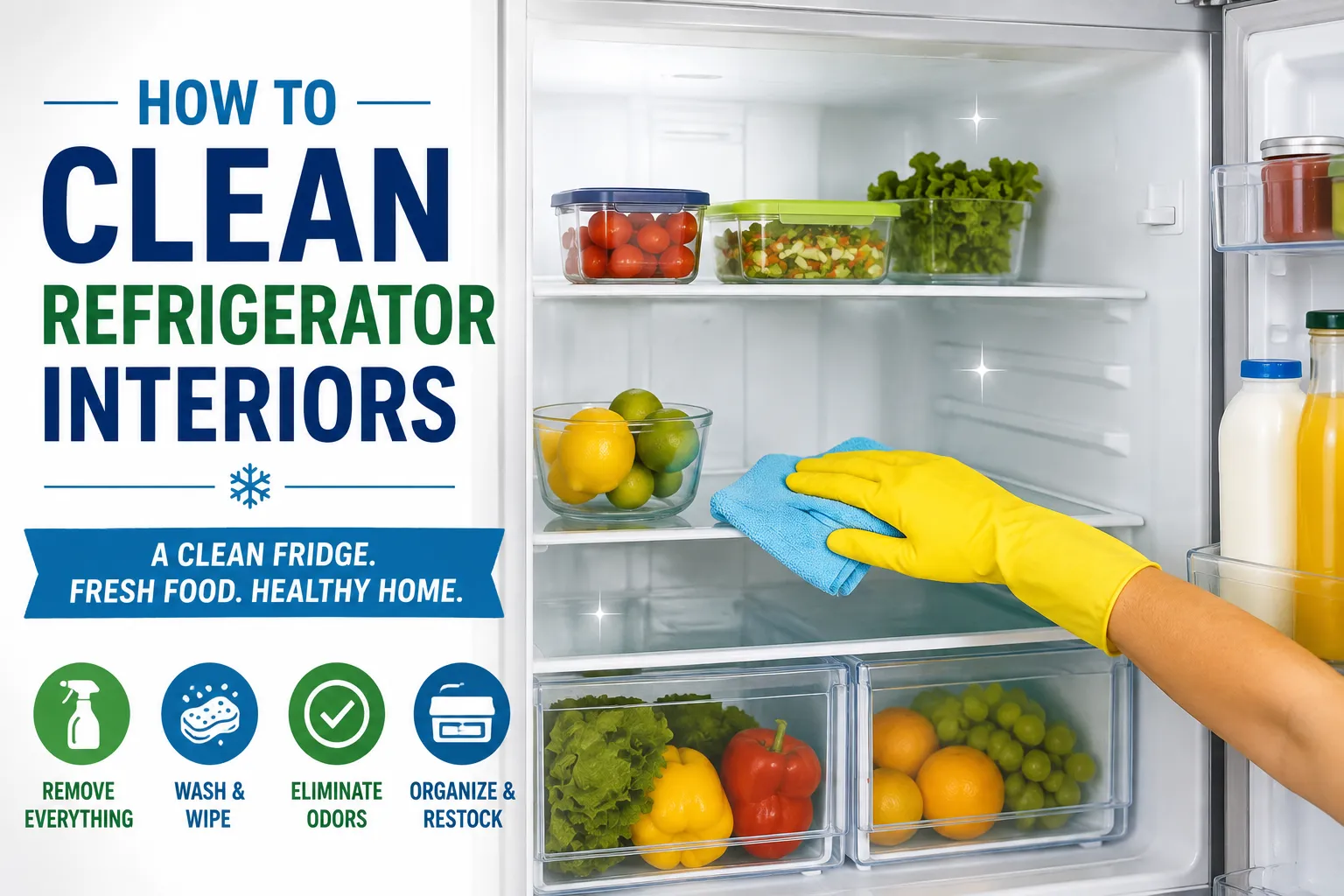
How to Clean Refrigerator Interiors
A refrigerator is one of the busiest appliances in a home, yet its interior is easy to overlook during routine cleaning. Spills can dry onto shelves, forgotten produce can spoil in drawers, and small amounts of food residue can gradually create unpleasant odors.
Cleaning the inside of a refrigerator does more than make it look better. Regular cleaning helps remove food residue, reduces unpleasant smells, makes it easier to spot spoiled food and keeps the storage area organized.
The good news is that refrigerator cleaning does not have to be complicated. With the right sequence, a thorough clean can usually be completed without harsh chemicals or specialized equipment.
For a broader approach to maintaining different areas and surfaces throughout the home, see The Ultimate Guide to Cleaning Your Home.
Why Refrigerator Interiors Need Regular Cleaning
Refrigerators slow the growth of many microorganisms because of their low temperatures, but cold temperatures do not make food surfaces automatically clean.
Food can leak, drip or spill onto shelves and drawers. Containers can leave sticky residue behind, while vegetables and fruits can introduce dirt and moisture into storage compartments.
Over time, these residues can become difficult to remove.
Regular cleaning also makes it easier to inspect food. A clean refrigerator provides a clearer view of expiration dates, leftovers and produce that needs to be used.
How Often Should You Clean a Refrigerator?
There is no single schedule that works for every household.
Small spills should ideally be cleaned as soon as they happen. A quick wipe is much easier than removing dried-on residue several days later.
A more thorough interior cleaning can be done periodically, depending on how heavily the refrigerator is used.
It is also sensible to clean the refrigerator immediately after:
-
A container leaks
-
Raw food spills
-
Moldy food is discovered
-
A strong odor develops
-
A shelf or drawer becomes visibly dirty
Households that frequently store fresh food or prepare meals at home may need to clean the interior more often.
For guidance on determining how often different parts of the home need more intensive cleaning, see How Often Should You Deep Clean?.
Gather Your Cleaning Supplies
You do not need a large collection of cleaning products.
Useful supplies include:
-
Clean microfiber cloths or soft cleaning cloths
-
Warm water
-
Mild dish soap
-
A bucket or basin
-
A soft sponge
-
An old toothbrush or small soft brush
-
Paper towels for spills, if desired
-
A cooler or insulated container for perishable food
Avoid using abrasive materials that could scratch plastic, glass or coated surfaces.
Before using a commercial cleaning product inside the refrigerator, check the manufacturer’s instructions. Some surfaces and materials may require specific cleaners or may not be compatible with certain chemicals.
Understanding the purpose and proper use of different household cleaning products can also help you choose safer options. See Cleaning Products Explained for more guidance.
Start by Removing the Food
The easiest way to clean a refrigerator thoroughly is to empty it first.
Take everything out and place perishable foods in a cooler or another appropriately cold storage area while you work.
As you remove items, inspect them.
Look for:
-
Expired products
-
Spoiled produce
-
Leftovers that have been stored too long
-
Leaking containers
-
Damaged packaging
-
Foods with unusual odors or visible mold
Discard food that is clearly unsafe rather than trying to salvage it.
This step also prevents you from cleaning around containers that should have been removed in the first place.
Remove Shelves and Drawers Carefully
Once the refrigerator is empty, remove shelves, drawers and removable door bins according to the manufacturer’s instructions.
Do not force a shelf that appears stuck.
Some glass shelves are designed to slide out in a particular direction, while drawers may need to be lifted or tilted before removal.
If the refrigerator has recently been running, glass shelves may be cold.
Allowing them to warm slightly before exposing them to warm water can help reduce the risk of thermal shock and cracking.
Always follow the appliance manufacturer’s care instructions.
Wash Removable Parts Separately
Cleaning shelves and drawers outside the refrigerator makes the job much easier.
Use warm water and a small amount of mild dish soap to remove food residue.
A soft sponge can handle most surfaces.
For stubborn residue, allow the item to soak in warm, soapy water before gently scrubbing it.
An old soft toothbrush can be useful around corners, grooves and seams where food particles accumulate.
Rinse thoroughly and dry the parts with a clean towel before putting them back.
For more information on selecting appropriate cloths, brushes, sponges and other household equipment, see Cleaning Tools: Complete Guide to Household Tools & Uses.
Be Careful With Glass Shelves
Glass shelves require particular attention.
Avoid sudden temperature changes, such as placing a very cold glass shelf directly into hot water.
Do not use abrasive pads or aggressive scraping tools that can damage the surface.
If food has hardened onto the shelf, soak it rather than trying to remove it through force.
Inspect the shelf for cracks or chips before reinstalling it. Damaged glass should be handled according to the manufacturer’s guidance.
Clean the Refrigerator Walls and Interior
With the shelves removed, wipe the refrigerator’s interior surfaces from top to bottom.
Mix a small amount of mild dish soap with warm water and use a soft cloth or sponge.
Pay particular attention to:
-
Back walls
-
Side walls
-
Ceiling
-
Corners
-
Shelf supports
-
Door seals
-
Areas around drawers
Work methodically so that dirt removed from higher surfaces does not contaminate areas you have already cleaned.
After washing, wipe the surfaces again with a clean damp cloth to remove soap residue.
Dry the interior with a clean towel.
Clean Small Crevices
Food particles often hide in places that are easy to overlook.
Use a soft brush or toothbrush to clean around:
-
Shelf brackets
-
Drawer tracks
-
Door-bin edges
-
Seams
-
Corners
-
Small grooves
Avoid poking sharp objects into drainage holes, vents or mechanical components.
If you are unsure how a particular opening or component should be cleaned, consult the refrigerator’s manual.
Pay Attention to Door Seals
The rubber gasket around the refrigerator door can collect crumbs, grease and moisture.
A dirty or damaged gasket can also interfere with the door’s seal.
Wipe the gasket gently with a damp cloth and mild soapy water.
Clean between folds carefully without stretching or pulling the material unnecessarily.
After cleaning, dry the gasket thoroughly.
If you notice cracks, deformation or a persistent sealing problem, check the manufacturer’s guidance or consider having the gasket inspected.
Clean the Door Bins
Door shelves often collect sticky residue because bottles, jars and containers are frequently placed there.
Remove the bins if they are designed to be removed and wash them separately.
Pay attention to the bottoms and corners, where small amounts of liquid can accumulate.
Before returning bottles and jars to the refrigerator, wipe their exteriors as well.
There is little benefit in putting a clean container into a freshly cleaned bin if the outside of the container is covered in sticky residue.
Deal With Stubborn Food Residue
Dried food can be difficult to remove with a quick wipe.
Instead of aggressively scrubbing the surface, place a warm, damp cloth over the residue for several minutes.
The moisture can soften the material.
Then gently wipe it away.
For removable shelves and drawers, soaking them in warm, soapy water can provide an even easier solution.
Avoid using knives, razor blades or other sharp objects to scrape refrigerator surfaces because they can scratch plastic or damage coatings.
For broader strategies for dealing with difficult marks and spills around the home, see the Stain Removal Guide.
How to Handle Refrigerator Odors
Unpleasant refrigerator odors usually have a source.
Start by looking for spoiled food, leaking containers or forgotten leftovers.
Clean the area where the odor originated and check nearby surfaces.
If the refrigerator remains clean but still has an odor, an open container of baking soda is sometimes used to help absorb smells.
However, odor absorbers should not be considered a substitute for finding and removing the source of the smell.
If an unusual odor persists despite thorough cleaning, check the refrigerator’s manual and consider whether the appliance needs professional attention.
For additional strategies for identifying and removing persistent household smells, see the Odor Removal Guide: How to Remove Household Smells.
Cleaning After Raw Food Spills
Raw meat, poultry and seafood require extra care because they can carry harmful microorganisms.
If raw food leaks inside the refrigerator, remove the contaminated food and clean the affected area promptly.
Use appropriate household cleaning and disinfection practices according to public health guidance and the product label.
Wash your hands thoroughly after handling contaminated packaging or surfaces.
Keep raw foods sealed and stored in a way that prevents liquids from dripping onto other foods.
Do Not Mix Cleaning Chemicals
Mixing household cleaning products can create dangerous chemical reactions.
Never combine different cleaning chemicals unless the product instructions specifically state that they are compatible.
For routine refrigerator cleaning, mild soap and water are often sufficient for removing ordinary food residue.
If you choose to use a disinfecting product, follow its label carefully and pay attention to whether the product is suitable for food-contact surfaces.
Keep Food From Making the Refrigerator Dirty Again
Cleaning is only part of refrigerator maintenance.
How food is stored can significantly influence how quickly the interior becomes dirty.
Use tightly sealed containers for leftovers and liquids.
Keep raw meat and seafood in leak-resistant packaging and store them in an appropriate location to prevent dripping.
Place smaller items in trays or containers when practical.
Wipe the outside of jars and bottles if they become sticky.
These simple habits can reduce spills and make future cleaning easier.
Organize Food While You Clean
A refrigerator cleaning session is also an opportunity to improve organization.
Group similar foods together.
For example:
-
Dairy products can be kept together
-
Condiments can occupy a designated area
-
Leftovers can be grouped in a visible section
-
Fruits and vegetables can be stored in their appropriate drawers
-
Frequently used items can be placed where they are easy to reach
Organization makes it easier to see what you have and may reduce the amount of food that gets forgotten.
Use the “First In, First Out” Approach
A simple organizational strategy is to place older foods toward the front and newer items toward the back.
This encourages household members to use older products first.
When restocking groceries, avoid automatically pushing existing food to the back.
Instead, check what is already there and arrange products so that items approaching their use-by or best-before dates remain visible.
This small habit can help reduce food waste.
Check Expiration and Storage Dates
Cleaning provides a natural opportunity to review food dates.
However, different date labels have different meanings depending on the product and local food-safety rules.
Some dates relate primarily to quality, while others may have specific safety implications.
When in doubt, follow official food-safety guidance rather than relying solely on smell or appearance.
Some harmful microorganisms do not produce obvious changes in food.
Clean Up Spills Immediately
One of the simplest ways to keep a refrigerator clean is to deal with spills as soon as they occur.
If juice leaks from a container, wipe it immediately.
If a sauce spills, clean it before it dries.
If produce leaves dirt in a drawer, remove it rather than allowing the residue to accumulate.
A thirty-second cleanup can prevent a much larger cleaning job later.
What Not to Put Inside the Refrigerator
Not every household food item needs refrigeration.
Some fruits, vegetables and other products are better stored elsewhere, depending on the food and local recommendations.
Overcrowding the refrigerator can also make cleaning and organization more difficult.
Before storing a product in the refrigerator simply because there is space, check its recommended storage conditions.
Cleaning the Refrigerator’s Exterior
Although the focus is on the interior, the outside deserves attention too.
Wipe the door, handles and control panel according to the manufacturer’s instructions.
Handles can receive frequent contact throughout the day, making them particularly important areas to keep clean.
Stainless-steel surfaces may require specific cleaning methods to avoid streaks or damage.
Always check the appliance’s care instructions before using a cleaning product on the exterior.
When to Deep Clean
A deeper cleaning can be useful when the refrigerator has accumulated significant residue or odors.
A deep-cleaning session can include:
-
Removing all food.
-
Inspecting and discarding spoiled items.
-
Removing shelves and drawers.
-
Washing removable parts.
-
Cleaning the interior walls.
-
Cleaning door seals and bins.
-
Wiping containers before returning them.
-
Drying all surfaces.
-
Reorganizing food.
-
Checking that the refrigerator door closes properly.
The exact procedure should always be adapted to the manufacturer’s instructions.
Common Refrigerator Cleaning Mistakes
Several mistakes can make refrigerator cleaning less effective.
Cleaning Around the Food
Leaving everything inside makes it difficult to reach hidden areas.
Using Abrasive Tools
Harsh scrubbers can scratch surfaces.
Ignoring Door Seals
The gasket is easy to overlook but can collect dirt and moisture.
Returning Dirty Containers
Clean shelves can quickly become dirty again if sticky containers are placed back inside.
Ignoring Leaks
A small leak can spread across a shelf or into a drawer.
Using Too Much Cleaning Product
More cleaner does not necessarily mean a cleaner refrigerator. Excess residue can be difficult to remove and may be inappropriate for food-contact surfaces.
A Simple Refrigerator Cleaning Routine
A practical routine does not need to take hours.
Daily: Wipe up visible spills as soon as possible.
Weekly: Check for spoiled food, leaking containers and obvious residue.
Periodically: Remove shelves and drawers, wash removable components and wipe the complete interior.
As needed: Address odors, raw-food spills and other contamination immediately.
The exact frequency can be adjusted according to household habits and the manufacturer’s recommendations.
When a Refrigerator Needs More Than Cleaning
Some problems are not caused by dirt.
If the refrigerator develops persistent odors, unusual temperatures, excessive condensation, leaking water or problems maintaining safe food storage temperatures, cleaning may not solve the issue.
Check the manufacturer’s troubleshooting guidance.
If the problem continues, professional appliance service may be appropriate.
Keeping a Cleaner Refrigerator With Less Effort
A clean refrigerator is easier to maintain when cleaning becomes a series of small habits rather than a major project.
Wipe spills quickly. Keep food in sealed containers. Inspect produce regularly. Clean removable parts when necessary. Keep older food visible and avoid overcrowding shelves.
When a deeper cleaning is needed, empty the refrigerator, remove removable components, wash them separately, clean the interior from top to bottom and allow everything to dry before returning food.
The simplest refrigerator-cleaning strategy is consistent maintenance: deal with small messes early, organize food thoughtfully and follow the appliance manufacturer’s care instructions. A few minutes of attention can prevent stubborn buildup and make the refrigerator easier to use every day.