How to Build and Manage Healthy Raised Garden Beds
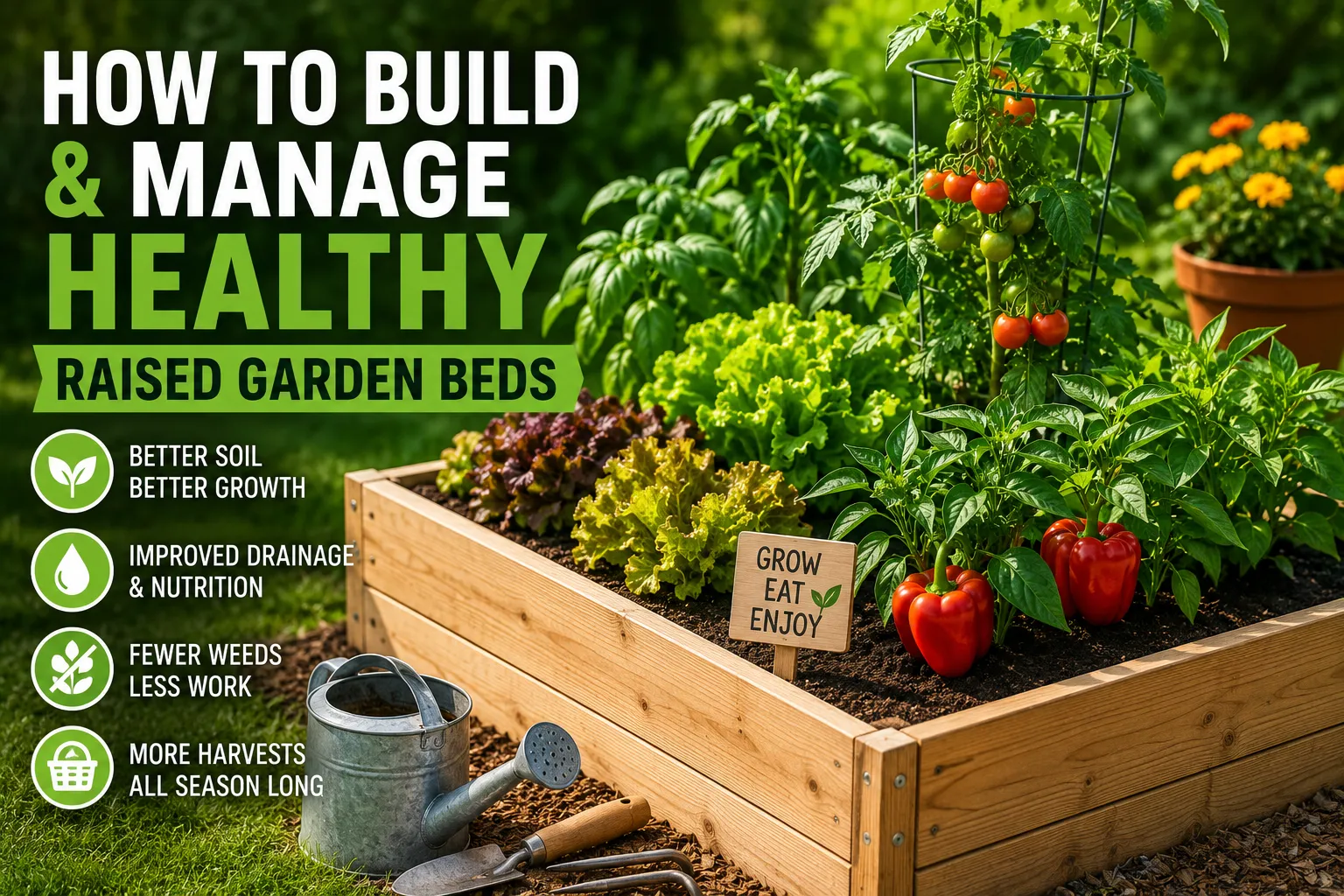
How to Build and Manage Healthy Raised Garden Beds
Raised garden beds have become a popular way to grow vegetables, herbs, flowers and other plants in spaces where traditional gardening may be difficult. By creating a defined growing area above the surrounding ground, gardeners can have greater control over soil quality, drainage, spacing and maintenance.
A well-designed raised bed does not have to be complicated or expensive. With the right location, healthy soil, adequate drainage and regular care, even a relatively small bed can produce an impressive amount of food and greenery.
The key is to think beyond simply building a box and filling it with soil. Healthy raised beds depend on an environment where roots have access to air, water and nutrients while plants receive the light and care they need. For a broader overview of growing healthy plants and managing a productive garden, see the Complete Guide to Flower Gardening.
Choose the Right Location
The first decision when creating a raised garden bed is where to put it.
Most vegetables and many flowering plants need several hours of direct sunlight each day. A location that receives insufficient light can result in weak growth and poor harvests, regardless of how good the soil is.
Before building, observe the proposed area throughout the day. Look for shade created by:
- Buildings
- Walls and fences
- Large trees
- Sheds
- Other structures
Also consider how easy the area will be to access.
A raised bed that is close to the house or a frequently used outdoor area may be easier to water, weed and harvest than one located at the far end of a property.
Start With a Manageable Size
Bigger is not always better when designing a raised bed.
A bed should be wide enough to provide useful growing space but narrow enough that plants in the middle can be reached without stepping on the soil.
A common approach is to make the bed narrow enough to allow access from both sides. This reduces the temptation to walk across the growing area and compact the soil.
The height can vary depending on the gardener’s needs and the plants being grown.
Lower beds can be easier and less expensive to construct, while taller beds can make gardening more comfortable for people who have difficulty bending or kneeling.
Decide Whether You Need a Frame
Raised beds can be built with or without permanent sides.
A framed bed creates a clearly defined growing area and can help hold soil in place. Materials commonly used for frames include untreated, naturally durable wood, stone, bricks and other suitable outdoor materials.
A raised mound without a frame can also work. The soil is simply shaped into a slightly elevated growing area.
The choice depends on budget, appearance, available materials and how much elevation is desired.
If using wood, choose material intended for outdoor conditions and avoid materials that may introduce unwanted chemicals into the growing environment.
Prepare the Ground Before Filling the Bed
The surface underneath a raised bed matters.
Remove invasive weeds and large vegetation before construction. If the existing ground is compacted, loosening the upper layer can help improve drainage and encourage roots to move downward.
In many situations, there is no need to create a completely sealed container at the bottom.
Allowing roots to grow into the soil below can give plants access to additional moisture, nutrients and space.
However, the best approach depends on the location. If the bed is being placed over contaminated soil, concrete or another unsuitable surface, a different design may be necessary.
Prioritize Good Drainage
Healthy roots need both water and oxygen.
Waterlogged soil can reduce the amount of air available around roots and create conditions that encourage root problems.
Raised beds generally drain better than low-lying garden areas, but good drainage still depends on the soil mixture and the construction of the bed.
Avoid creating a sealed container that allows water to accumulate.
If the bed has a solid bottom, appropriate drainage openings are particularly important.
Build Healthy Soil From the Beginning
The soil is arguably the most important component of a raised garden bed.
Instead of filling the bed with ordinary topsoil alone, create a growing medium that provides structure, nutrients, water retention and drainage.
A basic mixture can combine quality topsoil with mature compost and other appropriate organic material.
The exact proportions do not need to be treated as a universal formula because local soil, climate and plant requirements differ.
The finished soil should feel loose and crumbly rather than heavy, sticky or excessively sandy.
For a deeper understanding of the factors that influence productive growing conditions, see the Ultimate Guide to Soil Health.
Use Compost to Improve Soil Health
Compost is one of the most useful additions to a raised bed.
Well-finished compost adds organic matter and can improve soil structure while supplying a range of nutrients.
It also supports organisms that contribute to healthy soil biology.
Gardeners can use homemade compost when it is properly decomposed or purchase quality compost from a reliable source.
Avoid adding large quantities of fresh manure directly to beds containing growing plants. Fresh manure can contain pathogens, weed seeds and excessive nutrients and may damage plants.
Gardeners who want to produce their own organic soil amendment can learn more in How to Make Compost and Use It Effectively in a Garden.
Don’t Overfill With Fertilizer
More fertilizer does not necessarily mean healthier plants.
Excess nutrients can damage roots, disrupt nutrient balance and contribute to environmental pollution when nutrients move into waterways.
A better strategy is to understand what the soil and plants actually need.
A soil test can provide useful information about nutrient levels and pH, particularly when plants consistently perform poorly.
Fertilize according to the needs of the crop and the recommendations associated with the product being used.
Keep the Soil Covered
Bare soil is vulnerable to drying, erosion and temperature fluctuations.
A layer of organic mulch can help protect the surface of a raised bed.
Suitable mulch materials can include:
- Shredded leaves
- Straw
- Grass clippings that have been appropriately managed
- Compost
- Wood-based mulch where suitable
Keep mulch slightly away from plant stems to reduce the risk of excessive moisture around the base of plants.
As organic mulch breaks down, it can also contribute organic matter to the soil.
Choose Plants That Suit Your Conditions
A healthy raised bed starts with plants that are appropriate for the local climate and growing conditions.
Consider:
- Temperature
- Sunlight
- Rainfall
- Soil characteristics
- Available growing season
- Water availability
- Space requirements
Planting something simply because it looks appealing can lead to disappointment if the plant cannot tolerate the conditions in the garden.
Local nurseries, agricultural extension services and experienced gardeners can often provide useful guidance on varieties suited to the region.
Plan Plant Spacing Carefully
Overcrowding is a common problem in raised beds.
It may be tempting to plant as much as possible, but plants need adequate access to sunlight, water, nutrients and air circulation.
Follow recommended spacing guidelines while considering the mature size of each plant.
Proper spacing can also reduce humidity around foliage, which may lower the risk of some fungal diseases.
Use Succession Planting
Raised beds can produce more throughout the growing season when gardeners plan successive crops.
Instead of leaving a space empty after harvesting one crop, another suitable plant can take its place.
For example, a fast-growing leafy vegetable may be planted after an earlier crop has been harvested.
Succession planting makes efficient use of limited space and can extend the harvest period.
The exact schedule depends on climate and crop selection.
Rotate Crops Where Practical
Growing the same plant family in the same location year after year can contribute to the buildup of certain pests and diseases.
Crop rotation can help break these cycles.
Instead of repeatedly planting related crops in the same section, alternate plant families when practical.
For example, gardeners might rotate legumes, leafy vegetables, root crops and fruiting vegetables rather than planting members of the same family continuously.
Rotation is particularly useful in vegetable gardens where the same crops are grown repeatedly. The principles can be applied alongside broader strategies described in The Ultimate Guide to Growing Vegetables at Home.
Water Deeply Rather Than Constantly
Newly planted beds often need regular watering while roots become established.
Once plants are established, the goal is generally to provide enough water to reach the root zone without keeping the soil permanently saturated.
The appropriate watering frequency depends on:
- Climate
- Soil composition
- Plant type
- Bed depth
- Season
- Rainfall
- Mulching
Check the soil before watering rather than relying entirely on a fixed schedule.
Watering in the morning can also allow foliage and surrounding surfaces to dry during the day, depending on local conditions.
For more detailed guidance on matching irrigation to plant needs, see the Complete Guide to Watering Garden Plants Correctly.
Drip Irrigation Can Simplify Maintenance
For gardeners who want a more efficient watering system, drip irrigation can be useful.
Instead of spraying the entire bed, drip systems deliver water closer to the plants’ root zones.
This can reduce unnecessary evaporation and keep foliage drier than overhead watering.
A timer can further automate watering, although automated systems should still be checked regularly.
Technology should not replace observation. A clogged emitter or faulty timer can leave plants without water if nobody notices.
Control Weeds Early
Raised beds generally contain fewer weeds than unmanaged garden areas, but weeds can still appear.
Removing them while they are small is much easier than allowing them to establish deep roots and produce seeds.
Mulching can reduce the amount of bare soil available for weed seeds to germinate.
Hand weeding is often sufficient for small raised beds, while larger gardens may benefit from additional cultivation and weed-management strategies.
Avoid allowing weeds to compete heavily with young vegetable plants for water and nutrients.
Monitor Plants for Pests
Regular observation is one of the simplest forms of pest management.
Inspect leaves, stems and the soil around plants for signs such as:
- Holes in leaves
- Chewed edges
- Discoloration
- Sticky residue
- Webbing
- Distorted new growth
- Visible insects
Finding a problem early can make it easier to manage.
Not every insect is harmful, however. Many insects are beneficial predators or pollinators.
Before removing or treating insects, identify the problem whenever possible.
For a broader overview of identifying and managing common garden pests, see The Complete Guide to Garden Pest Control.
Encourage Beneficial Insects
A diverse garden can support insects that contribute to natural pest control and pollination.
Flowers that provide nectar and pollen can attract bees, butterflies and other beneficial insects.
Some predatory insects also feed on pests that damage garden plants.
Avoiding unnecessary broad-spectrum pesticide use can help preserve these useful organisms.
A garden with a variety of flowers, herbs and vegetables can provide a more supportive habitat than a garden containing only one type of plant.
Watch for Plant Diseases
Disease symptoms can appear as spots, wilting, mold, unusual growth or changes in leaf color.
Good garden hygiene can help reduce some problems.
Remove severely diseased plant material when appropriate, avoid repeatedly growing susceptible crops in the same location and maintain adequate spacing between plants.
Do not automatically assume that every yellow leaf indicates a disease. Nutrient deficiencies, overwatering, underwatering, pests and natural aging can produce similar symptoms.
Correct identification is important before taking action.
Keep Raised Beds Clean but Not Sterile
Gardeners should remove dead or heavily diseased plant material, fallen fruit and weeds that could harbor pests.
However, a completely sterile garden is neither necessary nor desirable.
Healthy soil contains a huge community of microorganisms and other organisms that contribute to nutrient cycling and decomposition.
The objective is to maintain a balanced growing environment rather than eliminate every organism.
Add Organic Matter Over Time
Soil does not remain unchanged after the bed is built.
Plants remove nutrients, organic matter decomposes and the soil can gradually settle.
Adding compost or other suitable organic amendments periodically can help maintain soil structure.
Rather than completely replacing the soil every season, gardeners can build fertility gradually by adding organic matter and avoiding practices that damage soil structure.
Avoid Walking on the Growing Soil
Compaction can reduce the spaces between soil particles and make it more difficult for roots to access air and water.
One of the major advantages of raised beds is that their defined layout makes it easier to keep foot traffic out of the growing area.
Create paths around the beds that provide enough room to move comfortably.
If the garden is large, consider designing permanent pathways from the beginning.
Protect the Bed During Extreme Weather
Raised beds can be affected by heavy rain, strong winds, heat and cold.
During periods of intense rainfall, good drainage helps prevent waterlogging.
During hot or dry weather, mulch and efficient irrigation can help conserve moisture.
Young plants may also need protection from unusually cold conditions.
Gardeners should adapt their maintenance routine to local weather rather than following the same schedule throughout the year.
Replenish the Bed Between Growing Seasons
At the end of a growing season, remove plants that have finished producing.
Healthy plant material can often be added to a compost system, while severely diseased material may need to be disposed of appropriately.
Adding a layer of compost or other suitable organic matter before the next planting cycle can help restore nutrients and improve soil structure.
Some gardeners also use cover crops to protect and improve soil between major growing seasons.
Raised Beds Can Be Adapted to Small Spaces
One of the biggest advantages of raised-bed gardening is flexibility.
A raised bed can be installed in a backyard, courtyard or other suitable outdoor space.
Smaller beds can support herbs, salad greens and compact vegetables, while larger installations can accommodate crops that require more room.
The same principles still apply: adequate sunlight, appropriate soil, drainage, water and plant spacing are essential.
Avoid Making the Garden Too Complicated
A common mistake is trying to build an elaborate system before learning how the garden behaves.
A simple raised bed can be highly productive.
Start with a manageable area, learn how quickly the soil dries, observe which plants perform well and adjust the garden over time.
Experience will reveal what the particular site needs.
This approach is often more effective than investing heavily in complicated equipment before understanding the basic growing conditions.
Build Soil Health, Not Just Bigger Harvests
The long-term health of a raised garden bed depends on the quality of its soil.
Healthy soil supports strong roots, efficient water movement and nutrient cycling. It also provides a foundation for productive plants year after year.
That means good gardening is not simply about adding more fertilizer or watering more frequently.
It is about creating an environment in which plants can naturally access what they need.
A Raised Bed That Gets Better With Time
Building a raised garden bed is relatively straightforward, but maintaining it successfully requires ongoing observation.
Choose a suitable location, create good drainage, fill the bed with quality soil and compost, select plants appropriate for the environment and give them adequate space.
From there, regular watering, mulching, pest monitoring, crop rotation and the periodic addition of organic matter can keep the growing environment productive.
The greatest advantage of a raised bed is that it gives gardeners greater control over the conditions in which plants grow. With thoughtful management, that control can turn a simple garden structure into a productive, healthy growing space that becomes more fertile and resilient with every season.