The Complete Guide To Garden Pest Control
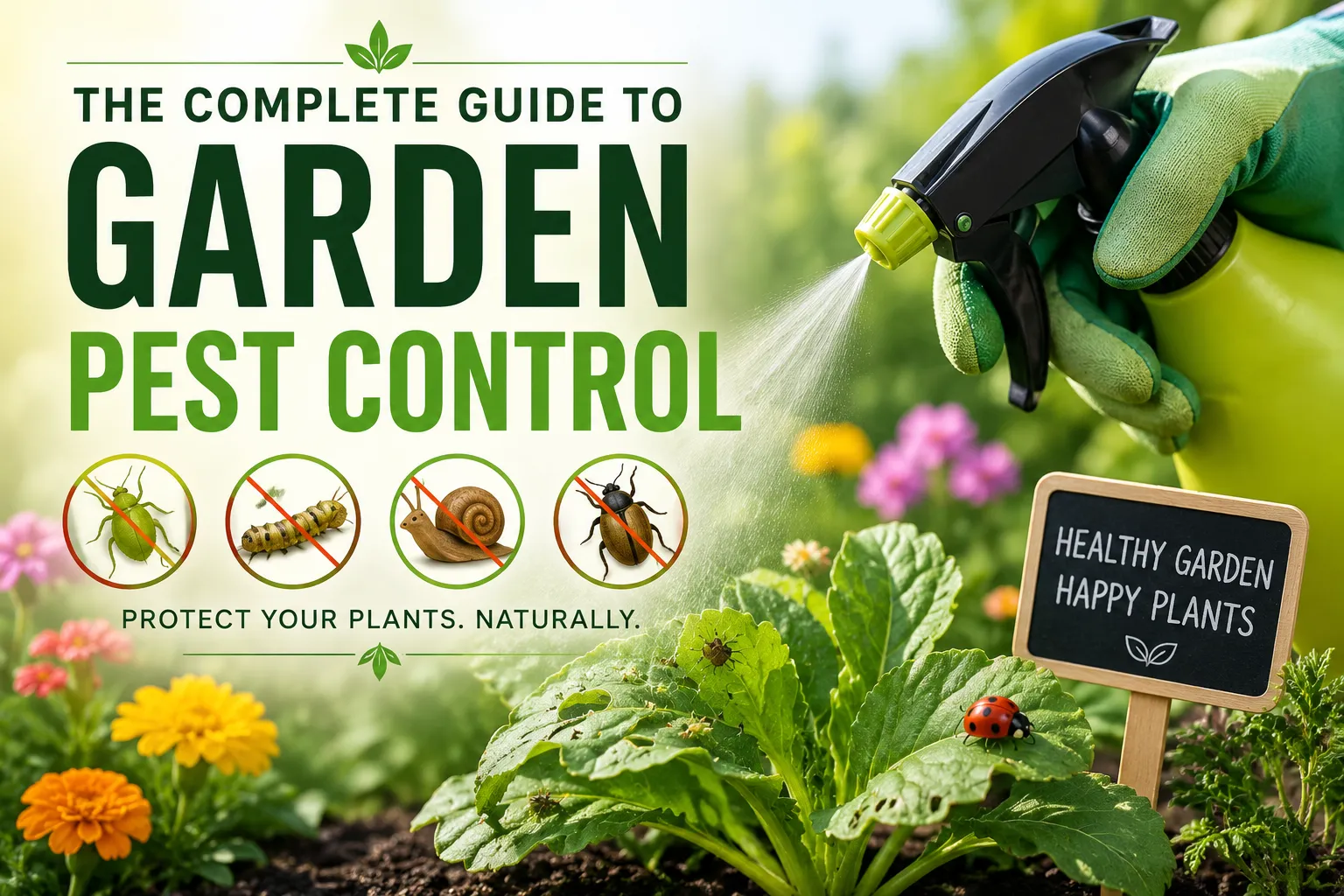
The Complete Guide To Garden Pest Control
A healthy garden is never completely free of insects. In fact, many insects are beneficial, helping with pollination, breaking down organic matter, or feeding on other pests. The problem begins when certain insects and other garden pests multiply quickly enough to damage plants, spread disease, or destroy an otherwise productive garden.
Effective garden pest control isn’t about eliminating every bug you see. It is about protecting plants while maintaining a healthy balance in the garden.
The best approach combines prevention, regular monitoring, good gardening practices, physical barriers, biological controls, and carefully selected treatments when they are genuinely necessary.
This guide explains how to identify common garden pests, prevent infestations, and deal with problems without turning your garden into a chemical battlefield.
Why Garden Pest Control Matters
Pests can affect almost every part of a garden.
Some chew holes in leaves, while others suck sap from stems and foliage. Certain pests attack roots underground, and others feed on fruits and vegetables just as they begin to mature.
A serious infestation can cause:
- Stunted plant growth
- Yellowing or distorted leaves
- Wilting
- Premature leaf drop
- Damaged flowers
- Poor fruit production
- Root damage
- Plant diseases
- Reduced harvests
- Plant death in severe cases
Pests can also spread rapidly. An infestation that appears minor one week can become much harder to manage a few weeks later.
That is why early detection is one of the most effective forms of pest control.
The First Rule: Know What You’re Dealing With
One of the most common gardening mistakes is treating a plant before identifying the problem.
Not every damaged leaf is evidence of an insect infestation.
Yellow leaves can result from overwatering, nutrient deficiencies, poor drainage, root problems, or disease. Holes in leaves could be caused by caterpillars, beetles, slugs, snails, or even physical damage.
Before choosing a treatment, inspect the plant carefully.
Look at:
- The undersides of leaves
- New growth
- Stems
- Flowers
- Soil around the plant
- Plant roots when appropriate
- Nearby plants
- Droppings or residue
- Webbing
- Eggs or larvae
The pest itself may be tiny, but the evidence it leaves behind can be easier to spot.
Common Garden Pests You Should Know
Different pests require different strategies. Learning to recognize the most common ones makes it much easier to respond quickly.
Aphids
Aphids are small, soft-bodied insects that commonly cluster around young shoots, stems, flower buds, and the undersides of leaves.
They feed on plant sap and can cause:
- Curled leaves
- Distorted new growth
- Yellowing
- Weak plants
- Sticky residue known as honeydew
Honeydew can also encourage the growth of sooty mold.
Aphids reproduce quickly, making early intervention important.
For light infestations, a strong stream of water can dislodge them. Encouraging beneficial insects such as lady beetles and lacewings can also help keep populations under control.
Caterpillars
Caterpillars can be particularly destructive in vegetable and ornamental gardens.
Common signs include:
- Large holes in leaves
- Missing sections of foliage
- Chewed seedlings
- Frass, or caterpillar droppings, on leaves
Inspect plants regularly, especially underneath leaves. Hand-picking larger caterpillars can be effective in small gardens.
Some biological controls can also be used against particular caterpillar species when appropriate.
Whiteflies
Whiteflies are tiny flying insects that often gather on the undersides of leaves.
When disturbed, they may rise from the plant in a small cloud.
Like aphids, whiteflies suck plant sap and can weaken plants while producing honeydew.
Yellow sticky traps can help monitor adult populations, while removing heavily infested leaves can reduce the problem.
Spider Mites
Spider mites are extremely small and can be difficult to see without magnification.
Their damage often appears as:
- Tiny pale spots on leaves
- Bronze or yellow foliage
- Fine webbing
- Premature leaf drop
They tend to thrive in hot, dry conditions.
Keeping plants adequately watered and reducing excessive dust can help discourage severe outbreaks. Strong water sprays can also knock mites from foliage.
Scale Insects
Scale insects often appear as small bumps attached to stems or leaves.
Because they remain relatively stationary, they can initially look like part of the plant.
Heavy infestations can weaken plants and cause yellowing, poor growth, and branch dieback.
Early detection is particularly useful because established scale populations can be difficult to control.
Slugs and Snails
Slugs and snails are especially troublesome in damp gardens.
They feed on tender leaves, seedlings, flowers, and vegetables, often doing much of their damage at night.
Signs include:
- Irregular holes
- Missing seedlings
- Ragged leaf edges
- Slime trails
Inspecting the garden after dark or early in the morning can reveal activity that isn’t obvious during the day.
White Grubs and Root-Feeding Pests
Some pests spend part of their life cycle underground and feed on plant roots.
These pests can be particularly difficult to diagnose because the visible symptoms may simply look like poor plant health.
Wilting despite adequate watering, unexplained yellowing, weak growth, or plants that pull easily from the soil can indicate root problems.
Prevention Is Better Than Eradication
The most effective garden pest-control program begins before an infestation occurs.
Healthy plants are generally better equipped to tolerate pest pressure than stressed plants.
For a broader foundation on creating and maintaining a healthy flower garden, see the Complete Guide to Flower Gardening.
Choose Healthy Plants
When purchasing seedlings or established plants, inspect them carefully.
Avoid plants with:
- Visible insects
- Webbing
- Discolored foliage
- Distorted growth
- Unexplained spots
- Root damage
- Signs of disease
Introducing an infested plant can bring pests into an otherwise healthy garden.
Give Plants Enough Space
Crowded plants create conditions that can encourage pests and diseases.
Adequate spacing improves:
- Air circulation
- Sunlight penetration
- Access for inspection
- Drying of foliage
- Overall plant health
Always follow the spacing recommendations appropriate for the particular plant.
Water Correctly
Both underwatering and overwatering can stress plants.
Whenever practical, water at the base of plants rather than constantly wetting the foliage.
Morning watering is generally preferable because it gives excess moisture time to evaporate during the day.
The exact watering schedule should depend on the plant, soil, weather, and local conditions.
For more detailed guidance on matching watering practices to plant needs, see the Complete Guide to Watering Garden Plants Correctly.
Keep the Garden Clean
Remove heavily damaged plant material, fallen fruit, and diseased leaves where appropriate.
Weeds can also provide shelter and alternative food sources for some pests.
However, don’t interpret “clean garden” as “empty garden.” Beneficial insects need habitat too.
The goal is to remove sources of serious pest pressure while maintaining a healthy ecosystem.
Encourage Beneficial Insects
Not every insect belongs on your pest-control list.
Predatory insects can be some of your garden’s most effective allies.
Beneficial species can include:
- Lady beetles
- Lacewings
- Hoverflies
- Praying mantises
- Parasitic wasps
- Ground beetles
- Predatory mites
Many of these organisms feed on aphids, caterpillars, mites, scale insects, or other pests.
Planting a diverse range of flowering plants can provide nectar and pollen for adult beneficial insects.
Avoiding unnecessary broad-spectrum insecticides can also help preserve these natural predators.
Companion Planting and Garden Diversity
Companion planting is often promoted as a natural pest-control solution.
Some plants may help attract beneficial insects, confuse pests, provide habitat, or simply diversify the garden enough to make large infestations less likely.
However, companion planting should not be treated as a guaranteed pest-control system.
A better strategy is to use plant diversity as one part of an integrated approach rather than expecting a particular plant to act as a magical pest repellent.
Growing different crops and varieties can also reduce the risk of losing an entire garden to a single pest or disease.
Use Physical Barriers
Physical barriers can prevent pests from reaching plants in the first place.
Depending on the garden, useful options include:
- Insect netting
- Row covers
- Fine mesh
- Plant collars
- Tree guards
- Fencing
- Protective cages
- Slug barriers
Barriers are particularly useful for young plants because seedlings can be severely damaged before they have time to establish themselves.
Make sure barriers are installed correctly. A small opening can be enough for some pests to get inside.
Hand-Picking Can Work Surprisingly Well
For small gardens, one of the simplest pest-control methods is often the most practical.
Large caterpillars, beetles, slugs, snails, and other visible pests can sometimes be removed by hand.
Check plants regularly and dispose of pests appropriately.
This method is labor-intensive, but it has a major advantage: it targets the pest without affecting the rest of the garden ecosystem.
Use Water Strategically
A strong spray of water can remove certain soft-bodied pests from plants.
This can be particularly useful against aphids and some mites.
However, avoid using water pressure strong enough to damage leaves, flowers, stems, or young plants.
Water-based pest removal works best as part of repeated monitoring rather than as a single treatment.
Sticky Traps and Monitoring
Sticky traps can help detect and monitor flying pests such as whiteflies and some other insects.
They are especially useful in greenhouses and enclosed growing spaces.
However, traps should generally be viewed as monitoring tools rather than a complete pest-control strategy.
If a trap suddenly begins catching large numbers of insects, that can be an early warning that you need to inspect nearby plants.
When Should You Use Insecticides?
Chemical pest control can have a place in gardening, but it should not automatically be the first response.
Before applying an insecticide, ask:
- What pest am I trying to control?
- Is it actually causing significant damage?
- Can the problem be managed physically?
- Are beneficial insects present?
- Is the plant likely to recover without treatment?
- Is the product specifically labeled for the pest and plant?
- What precautions are required?
A few insects on a healthy plant may not justify treatment.
Some plants can tolerate surprisingly high levels of pest activity without significant long-term damage.
Organic Doesn’t Automatically Mean Harmless
Natural and organic pest-control products can be useful, but the word “natural” should never be treated as synonymous with “safe for everything.”
Some natural substances can harm:
- Bees
- Beneficial insects
- Aquatic organisms
- Pets
- People
- Plants
Even products derived from plants or minerals should be used according to their labels.
The same principle applies to homemade pest-control mixtures. A recipe shared online isn’t necessarily safe for every plant, pest, or environment.
Neem Oil and Other Botanical Products
Neem-based products are frequently discussed as natural pest-control options.
Depending on the formulation and label directions, neem products may be used against certain insect pests.
However, effectiveness varies by pest, life stage, application method, and environmental conditions.
If using any pesticide, including botanical products, follow the product label carefully and check whether it is appropriate for the crop or ornamental plant you are treating.
Avoid spraying flowering plants when pollinators are actively visiting them unless the product label specifically permits that use.
Integrated Pest Management: A Smarter Approach
One of the most effective concepts in modern garden pest control is Integrated Pest Management (IPM).
IPM does not rely on a single method.
Instead, it combines several strategies:
Monitor
Inspect plants regularly for pests and damage.
Identify
Determine what is actually causing the problem.
Prevent
Improve plant health, sanitation, spacing, and growing conditions.
Control
Use physical, biological, cultural, and chemical methods when necessary.
Evaluate
After taking action, check whether the problem is actually improving.
This approach reduces unnecessary pesticide use while still giving gardeners effective ways to protect plants.
For situations where insects or other pests may also be contributing to plant disease, the Plant Diseases Guide provides additional guidance on recognizing and managing disease-related problems.
Don’t Kill Beneficial Insects by Accident
One of the biggest mistakes in pest control is treating every insect as a threat.
For example, an insect-covered plant may contain both pests and predators.
Before spraying, look closely.
Aphids might be accompanied by lady beetle larvae. Caterpillar populations may attract parasitic wasps. Hoverfly larvae can feed on aphids.
Learning to recognize beneficial insects can significantly improve your pest-control decisions.
Dealing With Garden Pests Without Harming Pollinators
Pollinators such as bees and butterflies are essential components of many gardens.
When pest control is necessary, protect them by:
- Avoiding unnecessary insecticide applications
- Following product labels
- Avoiding treatment of flowers when pollinators are actively visiting
- Using targeted treatments where appropriate
- Maintaining flowering plants that provide food and habitat
- Preserving beneficial insect populations
A garden that attracts pollinators and natural pest predators can become more resilient over time.
Pest Control in Vegetable Gardens
Edible gardens require additional care because anything applied to plants may ultimately become part of the food-production system.
Always check the product label for the specific crop and follow directions concerning application, harvest intervals, and protective equipment.
For vegetable gardens, prevention is especially valuable.
Use:
- Crop rotation where practical
- Healthy seedlings
- Physical barriers
- Regular inspections
- Proper spacing
- Mulching where appropriate
- Beneficial insect habitat
- Prompt removal of severely infested plant material
Wash harvested produce thoroughly according to appropriate food-safety guidance.
Pest Control in Container Gardens
Container gardens can experience pest problems just as easily as beds in the ground.
Because containers are smaller ecosystems, infestations can sometimes spread quickly.
Inspect container plants regularly, especially when bringing plants indoors or moving them between locations.
Don’t automatically assume a plant is pest-free simply because it is growing in a pot.
Pest Control in Indoor Plants
Houseplants can also attract aphids, scale, mealybugs, fungus gnats, spider mites, and other pests.
Isolation is one of the most useful strategies.
If you discover an infested houseplant, move it away from healthy plants when practical.
Inspect:
- New growth
- Leaf undersides
- Stems
- Soil surface
- Leaf joints
- Nearby pots
Newly purchased plants should also be inspected before being placed among an existing collection.
Common Pest-Control Mistakes to Avoid
Spraying Without Identifying the Pest
The wrong treatment can waste money and damage beneficial organisms.
Treating Every Insect
Many insects are harmless or beneficial.
Waiting Until Damage Is Severe
Regular inspections make problems much easier to manage.
Overusing Pesticides
More product does not necessarily mean better control.
Always follow the label.
Ignoring Plant Health
Stressed plants can be more vulnerable to pest problems.
Forgetting the Soil
Some pests spend important stages of their life cycle in or around the soil.
Maintaining healthy soil and suitable growing conditions can therefore be an important part of the overall pest-management strategy. The Ultimate Guide to Soil Health covers the broader principles behind creating a healthier growing environment.
Treating Symptoms Instead of Causes
Yellow leaves, wilting, and poor growth can have many causes besides insects.
Expecting One Treatment to Solve Everything
Some pest populations require repeated monitoring and appropriately timed management.
A Simple Weekly Garden Pest Check
You don’t need to spend hours inspecting every plant.
A short weekly routine can make a major difference.
Check New Growth
Look for distorted leaves, aphids, and other small insects.
Inspect Leaf Undersides
This is where many pests hide or lay eggs.
Examine Stems
Look for scale, mealybugs, eggs, and unusual markings.
Check the Soil
Look for slugs, snails, larvae, and signs of root problems.
Look for Damage Patterns
Holes, chewing marks, sticky residue, webbing, and discoloration can provide clues.
Record Recurring Problems
If the same pest appears every year, note when it arrives and which plants are affected.
Over time, these observations can help you anticipate problems rather than constantly reacting to them.
What to Do When a Plant Is Heavily Infested
Sometimes a plant is simply too badly damaged to save economically or practically.
If a plant is severely infested, diseased, or acting as a major source of pests, removing it may be the best option.
This can prevent the problem from spreading to healthier plants.
However, don’t automatically dispose of every damaged plant. Some plants can recover remarkably well once pest pressure is reduced.
Assess the extent of the damage, the plant’s value, and whether recovery is realistic.
Building a Healthier, More Resilient Garden
The best pest-control strategy is rarely a single product.
It is a gardening system.
Healthy soil, appropriate watering, good plant selection, biodiversity, beneficial insects, physical barriers, regular monitoring, and targeted intervention all work together.
A gardener who checks plants regularly can often spot an infestation while it is still manageable. A gardener who creates habitat for beneficial insects may naturally reduce pest populations. And a gardener who uses pesticides only when necessary can protect both plants and the wider garden ecosystem.
The goal isn’t a garden where no insects exist.
The goal is a garden where pests remain below damaging levels and plants have the conditions they need to thrive.
For additional guidance on matching fertilizer practices to plant needs without encouraging excessive growth, see the Complete Guide to Garden Fertilizers and Plant Nutrition.
A Garden That Works With Nature
Successful pest control is ultimately about balance.
Instead of reacting to every damaged leaf with a spray, gardeners can learn to observe what is happening, identify the cause, and choose the least disruptive solution that works.
That may mean removing a handful of caterpillars by hand, washing aphids from a plant, covering vulnerable vegetables with mesh, encouraging beneficial insects, improving growing conditions, or using a targeted treatment when other measures aren’t enough.
With regular attention and a little patience, pest control becomes less about fighting nature and more about managing a healthy garden ecosystem.
And that approach doesn’t just protect today’s plants—it helps create a garden that is stronger and easier to manage season after season.