Complete Guide to Watering Garden Plants Correctly
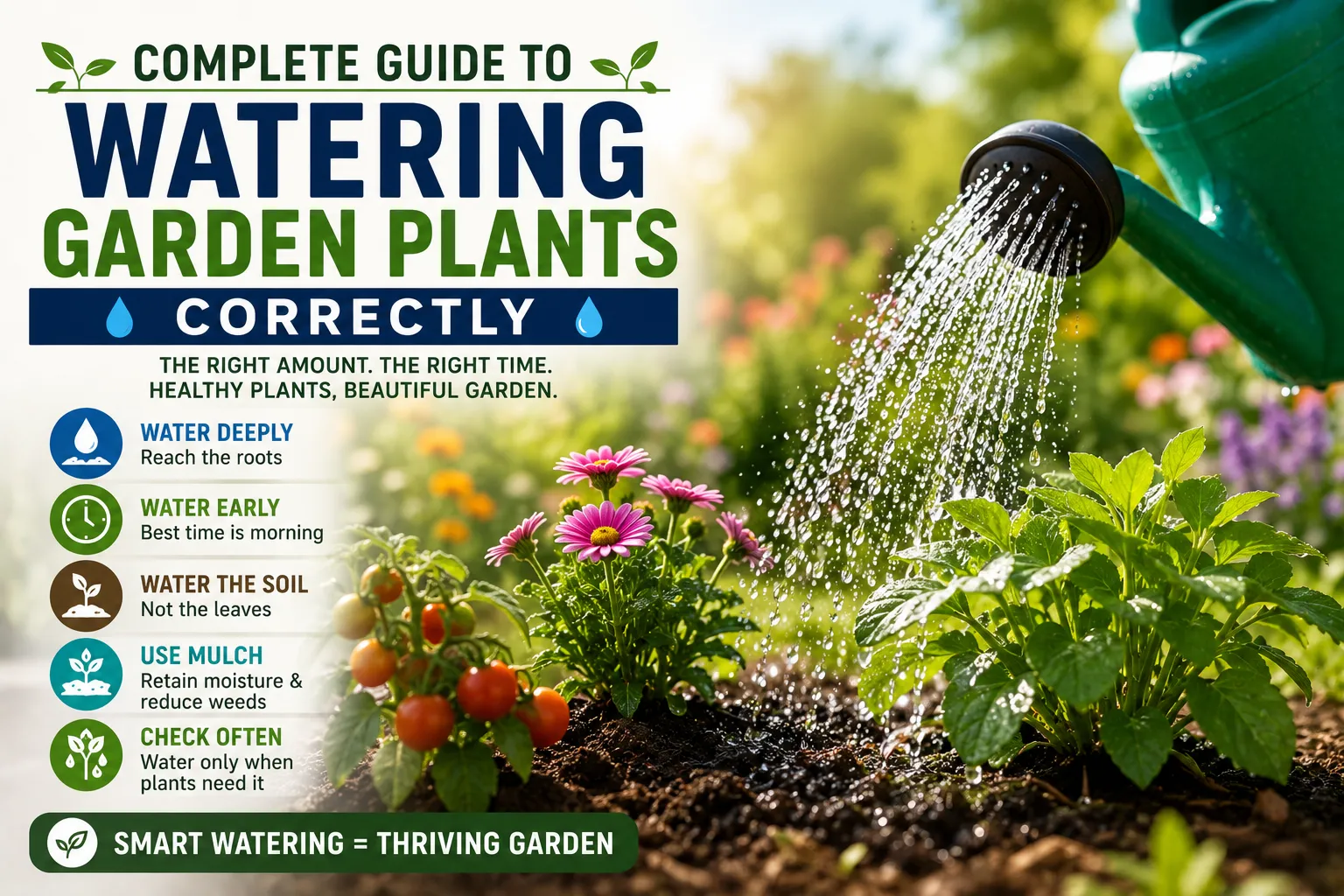
Complete Guide to Watering Garden Plants Correctly
Water is one of the most important things a garden needs, but watering plants correctly is not as simple as turning on a hose and soaking everything in sight.
Too little water can leave plants stressed, wilted and unable to grow properly. Too much water can be just as harmful, leading to root problems, fungal diseases and poor growth. Different plants also have different watering needs depending on their size, age, soil, location, weather and stage of growth.
The key is to understand when plants need water, how much they need and how to deliver it effectively.
This complete guide explains how to water garden plants properly, common mistakes to avoid, the best watering methods and practical ways to keep plants healthy without wasting water.
For a broader understanding of flower-growing conditions and garden care, see the Complete Guide to Flower Gardening.
Why Proper Watering Matters
Plants need water for several essential processes.
Water helps plants:
- Transport nutrients from the soil
- Maintain cell structure
- Support photosynthesis
- Regulate temperature
- Develop roots
- Produce leaves, flowers and fruit
- Recover from environmental stress
However, plants do not simply need “more water.” They need the right amount at the right time.
A plant sitting in constantly saturated soil may have access to plenty of water but still struggle because its roots need oxygen as well. On the other hand, soil that becomes completely dry for extended periods can make it difficult for roots to absorb enough moisture.
Good watering therefore aims to maintain a healthy balance between moisture and air in the soil.
How Often Should You Water Garden Plants?
There is no universal watering schedule that works for every garden.
A plant’s watering needs depend on several factors, including:
- Plant type
- Plant size
- Age
- Soil type
- Temperature
- Rainfall
- Wind
- Sun exposure
- Container size
- Mulch
- Season
- Root depth
Instead of watering automatically on a fixed schedule, check the soil and observe the plant.
For many established garden plants, it is generally better to water deeply when needed rather than giving small amounts of water every day.
The goal is to encourage moisture to reach the root zone rather than keeping only the surface of the soil damp.
How to Tell When Plants Need Water
The soil is often a better indicator than the calendar.
Push your finger into the soil near the plant.
If the surface is dry but the soil underneath is still reasonably moist, the plant may not need immediate watering.
If the soil feels dry several centimeters below the surface, watering may be necessary.
You can also look for signs of plant stress.
Possible signs of underwatering include:
- Wilting leaves
- Drooping stems
- Dry or brittle leaves
- Leaves curling inward
- Slow growth
- Dry, cracked soil
- Flowers dropping prematurely
However, wilting does not always mean a plant needs water.
Plants can wilt because of excessive heat, root damage, disease or overly wet soil.
That is why checking the soil is important before reaching for the hose.
Water the Soil, Not Just the Leaves
One of the most important watering principles is to direct water toward the root zone.
Roots are responsible for absorbing water and nutrients.
When water is sprayed primarily onto the leaves, much of it can evaporate without reaching the roots.
Instead, aim the water at the soil around the base of the plant.
This is particularly important for vegetables, flowering plants and young trees.
A gentle stream is generally better than blasting the soil with high-pressure water, which can wash away soil or damage delicate roots.
Water Slowly and Deeply
Slow watering gives moisture more time to penetrate the soil.
If you apply a large amount of water too quickly, especially on compacted or clay-heavy soil, water may run off instead of soaking downward.
A slower approach allows water to move deeper into the root zone.
This is particularly useful for established plants and shrubs whose roots extend below the surface.
A good technique is:
- Place the hose or watering tool near the base of the plant.
- Use a gentle flow.
- Allow water to soak into the soil.
- Pause if runoff begins.
- Continue once the water has absorbed.
- Check the soil afterward.
The exact amount of water required will depend on the plant and soil.
Should You Water Plants Every Day?
Usually, daily watering is not necessary for established garden plants, especially when the soil retains moisture and weather conditions are moderate.
Frequent shallow watering can encourage roots to remain close to the soil surface.
Deeper watering, when appropriate, can encourage roots to explore a larger volume of soil.
However, newly planted seedlings and plants may require more frequent attention because their root systems are still developing.
Container plants can also require frequent watering because pots generally contain a limited amount of soil and can dry out quickly.
The Best Time to Water Garden Plants
For many gardens, early morning is an excellent time to water.
Morning watering gives plants access to moisture during the warmer part of the day while allowing excess moisture on foliage to dry.
Watering in the morning can also reduce evaporation compared with watering during the hottest part of the afternoon.
What about evening?
Evening watering can be practical when morning watering is not possible.
However, avoid unnecessarily keeping foliage wet overnight, particularly for plants that are susceptible to fungal diseases.
What about midday?
Watering during very hot periods can result in greater evaporation.
That does not mean plants should be left to suffer if they are severely wilted. If a plant needs water, provide it rather than waiting for a perfect watering window.
How Much Water Do Plants Need?
The amount of water varies enormously between plants.
A small herb does not have the same requirements as an established fruit tree.
Rather than thinking only in terms of a specific number of liters or minutes, focus on whether the soil is being adequately moistened around the plant’s root zone.
For established plants, water should generally penetrate beyond the very top layer of soil.
A useful approach is to water thoroughly and then check how far the moisture has traveled.
Avoid creating a situation where the surface is wet while the deeper root zone remains dry.
Different Plants Need Different Amounts of Water
Understanding plant categories can make watering much easier.
Vegetables
Many vegetables have relatively shallow root systems and can be sensitive to inconsistent moisture, particularly while producing fruits or developing edible roots.
Leafy vegetables may need more frequent watering than established drought-tolerant plants.
Flowers
Flowering plants vary significantly.
Some prefer consistently moist soil, while others tolerate periods of dryness.
Always consider the individual plant rather than assuming all flowers have the same requirements.
Trees and Shrubs
Established trees and shrubs generally develop larger root systems and may require less frequent but deeper watering than small plants.
Newly planted trees, however, need careful watering while their roots become established.
Succulents
Succulents generally store water in their leaves or stems and can be damaged by consistently wet soil.
Allowing appropriate drying between watering is often important.
Herbs
Herbs vary widely.
Mediterranean herbs such as rosemary and thyme generally prefer well-drained conditions, while other herbs can require more consistent moisture.
How Soil Type Affects Watering
Soil has a major influence on how quickly water moves through the garden.
Understanding your soil’s structure is therefore an important part of effective irrigation. The Ultimate Guide to Soil Health explains how soil structure, organic matter and drainage affect plant growth and moisture management.
Sandy Soil
Sandy soil drains quickly and may require more frequent watering.
Water can move through it relatively rapidly, meaning plants may have less available moisture between watering sessions.
Clay Soil
Clay soil can hold substantial amounts of water but may drain slowly.
Applying too much water too quickly can create runoff or waterlogged conditions.
Loamy Soil
Loamy soil often provides a useful balance between drainage and moisture retention.
Compacted Soil
Compacted soil can prevent water from penetrating properly.
Instead of soaking into the root zone, water may remain on the surface or run away from the plant.
Improving soil structure with appropriate organic matter and avoiding unnecessary soil compaction can help.
How Mulch Helps With Watering
Mulch can be one of the most effective ways to conserve soil moisture.
Organic mulch materials can include:
- Shredded leaves
- Compost
- Straw
- Wood chips
- Bark
- Grass clippings, when appropriately managed
A layer of mulch can help:
- Reduce evaporation
- Moderate soil temperature
- Reduce weed competition
- Protect soil from heavy rain
- Improve soil structure as organic materials break down
Keep mulch away from direct contact with plant stems and tree trunks.
A thick pile of mulch against a trunk can create moisture and disease problems.
Watering Newly Planted Plants
New plants require particular attention because their roots have not yet spread extensively into the surrounding soil.
After planting:
- Water the root zone thoroughly.
- Check soil moisture regularly.
- Prevent the soil from repeatedly becoming completely dry.
- Adjust watering according to rainfall and temperature.
- Gradually encourage the plant to rely on a broader root zone as it becomes established.
Do not assume that rainfall automatically provides enough moisture for a newly planted tree or shrub.
Rain may fall nearby without adequately wetting the root zone.
How to Water Plants in Containers
Container plants are different from plants growing directly in the ground.
Pots contain a limited amount of soil, and their exposed surfaces can dry relatively quickly.
When watering a container plant:
- Water evenly across the soil surface.
- Continue until water begins to drain from the bottom.
- Allow excess water to drain away.
- Empty standing water from trays when appropriate.
- Check soil moisture before watering again.
A plant sitting in permanently waterlogged soil can suffer from root problems.
The container must therefore have adequate drainage.
For more on choosing containers and managing plants in limited growing spaces, see the Complete Beginners Guide to Container Gardening.
Why Drainage Matters
Healthy roots need both moisture and oxygen.
Poor drainage can leave soil saturated for too long, reducing the air available around roots.
Signs of excessive moisture can include:
- Yellowing leaves
- Wilting despite wet soil
- Root decay
- Foul-smelling soil
- Slow growth
- Mushy roots
If a plant repeatedly struggles despite apparently adequate watering, inspect the drainage rather than simply adding more water.
How to Water Vegetable Gardens
Vegetable gardens benefit from consistent moisture, particularly during germination and periods of active growth.
Water should generally be directed toward the soil around the plants.
A soaker hose or drip irrigation system can be particularly useful because it delivers water close to the root zone.
For vegetables, inconsistent watering can sometimes contribute to problems such as poor fruit development or cracking in certain crops.
A mulch layer can also help maintain more stable soil moisture.
Watering Seedlings Correctly
Young seedlings are vulnerable to both drought and excessive watering.
Their roots are small, so the surrounding soil can dry quickly.
At the same time, heavy streams of water can displace soil or damage delicate stems.
Use:
- A gentle watering can
- Fine spray
- Drip irrigation
- A carefully controlled hose
Keep the growing medium appropriately moist without leaving it constantly saturated.
As seedlings develop, their watering needs will change.
Drip Irrigation for Garden Plants
Drip irrigation delivers water slowly near the plant’s root zone.
It can be useful for:
- Vegetable gardens
- Flower beds
- Shrubs
- Trees
- Raised beds
- Container gardens
Potential benefits include:
- Reduced water waste
- Less foliage wetting
- More targeted watering
- Automated scheduling
- Consistent moisture
However, drip systems still need monitoring.
Emitters can become blocked, damaged or displaced, and plants can change size as they grow.
Soaker Hoses
Soaker hoses allow water to seep gradually along the length of the hose.
They can be useful in beds where plants are arranged in relatively continuous rows.
Place the hose so that water reaches the plants’ root zones rather than leaving large sections of the garden unnecessarily wet.
Check the soil after running the system to ensure water is penetrating adequately.
Using a Watering Can
A watering can is simple but effective for smaller gardens.
It provides good control when watering:
- Seedlings
- Containers
- Indoor-outdoor plants
- Small flower beds
- Newly planted specimens
Choose a rose or sprinkler attachment that produces a gentle flow for delicate plants.
Pour slowly enough to prevent soil erosion and runoff.
Using a Garden Hose
A hose is convenient for larger gardens, but high-pressure water can damage soil and plants.
Use a suitable nozzle setting and aim toward the soil.
Avoid constantly spraying flowers and foliage unless the plant specifically benefits from overhead watering.
A shutoff nozzle can also help prevent unnecessary water waste while moving between plants.
Rainwater and Garden Watering
Rainwater can be a valuable source of irrigation.
Some gardeners collect rainwater in suitable containers or rain barrels and use it for outdoor plants.
If collecting rainwater, ensure that storage containers are secure and appropriately maintained.
Also consider local regulations and safety considerations, particularly where water collection systems are large or connected to household plumbing.
How Weather Changes Watering Needs
Your watering routine should change with the weather.
During Hot Weather
Plants may lose water more rapidly through evaporation and transpiration.
Check soil moisture more frequently.
During Rainy Weather
Reduce supplemental irrigation when rainfall has already provided sufficient moisture.
During Windy Weather
Wind can increase moisture loss, particularly from exposed plants and containers.
During Cool Weather
Plants may use water more slowly.
Avoid continuing a hot-weather watering schedule automatically.
Watering During a Heatwave
During extreme heat, plants can become stressed quickly.
Prioritize plants that are:
- Newly planted
- Growing in containers
- Young seedlings
- Producing fruit
- Naturally sensitive to drought
Water deeply enough to reach the root zone rather than repeatedly wetting only the surface.
Adding mulch can also reduce moisture loss.
Watering Plants During Rainy Seasons
Rain can reduce or eliminate the need for supplemental irrigation.
However, rainfall is not always distributed evenly.
A short, intense storm may produce runoff rather than deeply soaking the soil.
After heavy rain, check the soil before deciding whether additional watering is necessary.
Do not water simply because it is part of your normal schedule.
Signs You Are Overwatering Your Plants
Overwatering is one of the most common garden problems.
Possible signs include:
- Yellowing leaves
- Soft or weak growth
- Wilting despite wet soil
- Root problems
- Mold or fungal growth
- Persistent wet soil
- Poor plant growth
If the soil remains saturated, reduce watering and investigate drainage.
Signs You Are Underwatering Your Plants
Underwatered plants may show:
- Wilting
- Dry soil
- Drooping leaves
- Leaf curling
- Brown leaf edges
- Premature leaf drop
- Slow growth
Severely stressed plants may need immediate attention.
Water slowly and thoroughly rather than repeatedly giving tiny amounts.
Should You Water Leaves?
For most garden plants, watering the soil is preferable to regularly wetting the leaves.
Wet foliage can remain damp for extended periods in humid conditions, potentially increasing the risk of certain fungal diseases.
However, there are situations where overhead watering is appropriate, particularly for some plants and gardening tasks.
The important point is to understand the needs of the particular plant.
Common Garden Watering Mistakes
Watering on a Fixed Schedule
A calendar cannot account for rainfall, temperature and soil moisture.
Check the actual conditions.
Giving Plants Tiny Amounts of Water
Light surface watering may not reach deeper roots.
Watering Too Fast
Fast watering can cause runoff.
Ignoring Soil Type
Sandy and clay soils behave very differently.
Watering Every Plant the Same Way
A succulent and a thirsty vegetable do not have identical needs.
Forgetting Containers
Potted plants can dry much faster than plants growing in the ground.
Overwatering After Rain
Always check the soil before adding more water.
Ignoring Drainage
More water will not solve a drainage problem.
How to Save Water in the Garden
Efficient watering benefits both the garden and your water supply.
Try these strategies:
Water at Appropriate Times
Morning watering can help reduce evaporation.
Use Mulch
Mulch helps slow moisture loss.
Improve Soil
Healthy soil can hold and distribute moisture more effectively.
Adding appropriate organic matter can improve the garden’s overall growing environment. Nutrient management also matters, so understanding garden fertilizers and plant nutrition can help you distinguish between watering problems and nutritional problems.
Use Drip Irrigation
Target water toward plant roots.
Group Plants by Water Needs
Place plants with similar requirements together.
Collect Rainwater Where Appropriate
Use captured rainwater for suitable outdoor applications.
Fix Leaks
A leaking hose, tap or irrigation connection can waste substantial amounts of water.
Choose Drought-Tolerant Plants
Plants adapted to local conditions may require less supplemental irrigation once established.
Group Plants According to Water Needs
Garden design can make watering easier.
Instead of planting a drought-tolerant herb beside a plant that requires consistently moist soil, group plants with similar requirements.
For example, create separate areas for:
- Drought-tolerant plants
- Moisture-loving plants
- Vegetables
- Herbs
- Containers
This allows you to water each section according to its needs rather than treating the entire garden as one unit.
How to Know if Water Has Reached Deep Enough
After watering, check the soil rather than guessing.
Push a finger or suitable soil probe into the ground.
For larger plants, you can check moisture at several points around the root zone.
If the surface is wet but the soil beneath remains dry, water may not have penetrated deeply enough.
If the soil is saturated well below the surface, additional water may be unnecessary.
Watering Trees Correctly
Trees often need different treatment from small garden plants.
A newly planted tree requires regular attention while its root system establishes.
Water around the root zone rather than placing all the water directly against the trunk.
As the tree grows, its root system expands outward.
Established trees may require supplemental watering during prolonged dry conditions, depending on species, climate, soil and rainfall.
Avoid assuming that frequent shallow watering is beneficial.
Watering Shrubs and Hedges
Shrubs should be watered around their root zones.
Newly planted shrubs generally require more frequent monitoring than established plants.
For hedges, water along the planting line rather than focusing on individual leaves.
Mulching around shrubs can help maintain soil moisture and reduce competition from weeds.
A Simple Garden Watering Routine
A practical routine can be built around observation rather than a rigid timetable.
Every Few Days
Check:
- Soil moisture
- Newly planted plants
- Containers
- Signs of wilting
- Irrigation equipment
Weekly
Inspect:
- Mulch
- Drip lines
- Soaker hoses
- Plant growth
- Areas receiving excessive or insufficient water
After Heavy Rain
Check soil moisture before watering again.
During Hot or Dry Periods
Increase monitoring and adjust irrigation when necessary.
This approach is more reliable than blindly following a watering calendar.
Garden Watering Checklist
Use this checklist when caring for your plants:
- Check soil moisture before watering.
- Consider recent rainfall.
- Water the root zone.
- Apply water slowly.
- Avoid unnecessary runoff.
- Adjust watering for the weather.
- Group plants with similar needs.
- Check containers frequently.
- Maintain adequate drainage.
- Use mulch where appropriate.
- Inspect irrigation systems.
- Watch for signs of overwatering.
- Watch for signs of underwatering.
- Adjust watering as plants mature.
Healthy Roots Start With Smarter Watering
The best garden watering routine is not necessarily the one that uses the most water or follows the strictest schedule.
It is the one that responds to what the plants and soil actually need.
Check the soil before watering, direct moisture toward the root zone, water slowly enough for it to penetrate, and adjust your routine according to weather, plant type and soil conditions. Mulch, drip irrigation and good soil structure can make the job easier, while paying attention to drainage can prevent many of the problems associated with overwatering.
Once you learn to read your garden—dry soil, wilted leaves, saturated ground, changing weather and different plant requirements—watering becomes much less of a guessing game.
The goal is simple: keep the root zone adequately moist, avoid prolonged saturation and give each plant the conditions it needs to grow well.