Container Gardening: The Complete Beginner's Guide
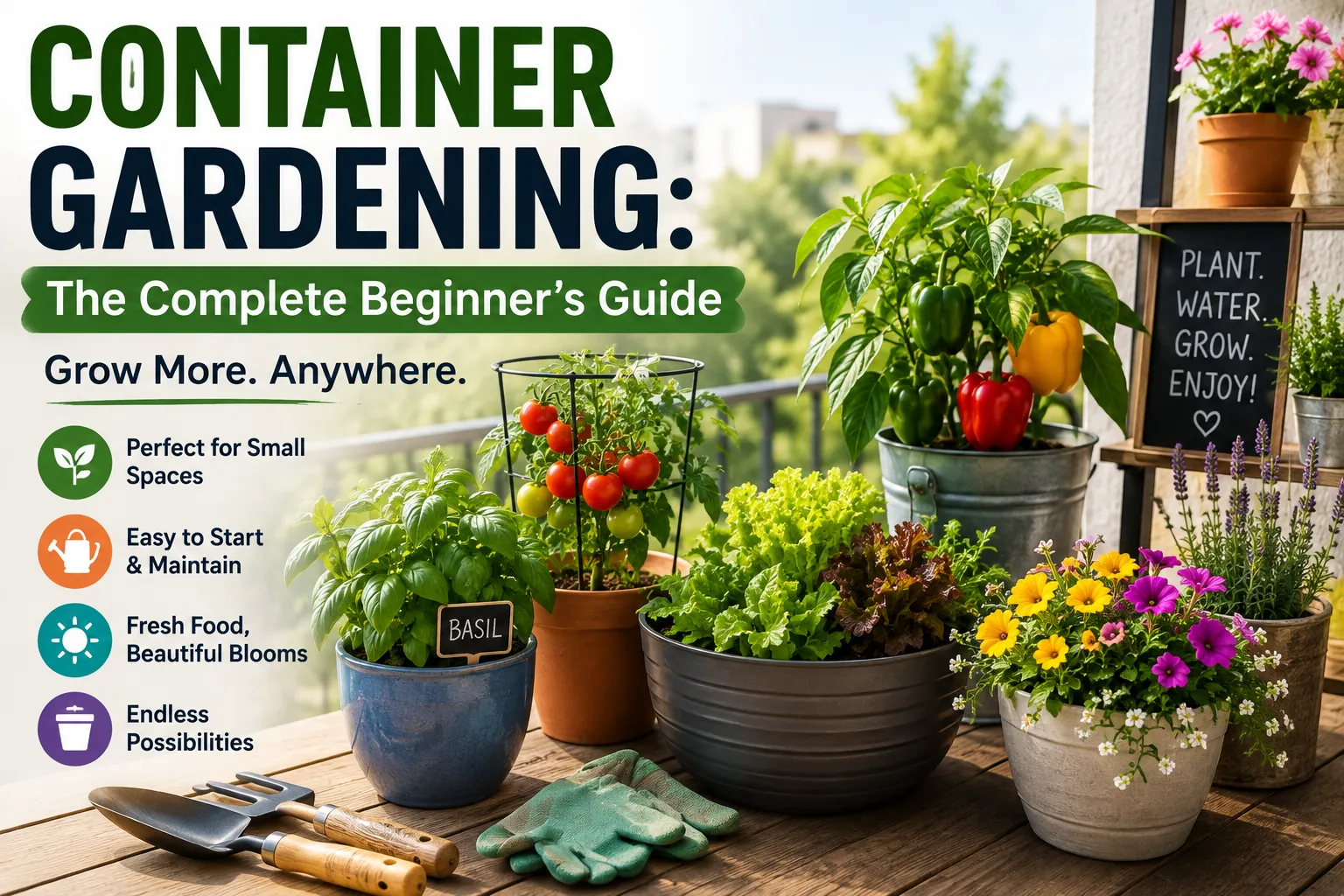
Container Gardening: The Complete Beginner’s Guide
You don’t need a large backyard to grow fresh herbs, colorful flowers, vegetables, or even fruit. With the right containers, soil, plants, and basic care, almost anyone can create a productive garden on a balcony, patio, windowsill, rooftop, or small outdoor space.
That is the appeal of container gardening.
Instead of planting directly into the ground, container gardening allows plants to grow in pots, planters, boxes, buckets, and other suitable vessels. It gives gardeners greater control over soil, placement, watering, and growing conditions while making gardening accessible to people who have limited outdoor space.
For beginners, it can also be a much simpler way to start learning how plants grow.
For a broader introduction to selecting, planting, designing, and maintaining flowering plants, see the Complete Guide to Flower Gardening.
What Is Container Gardening?
Container gardening is the practice of growing plants in containers rather than directly in the ground.
Almost any plant with a suitable root system can potentially be grown in a container, although some plants are considerably better suited to this method than others.
Common container-garden plants include:
- Tomatoes
- Peppers
- Lettuce
- Radishes
- Carrots
- Beans
- Strawberries
- Basil
- Mint
- Parsley
- Chives
- Flowers
- Succulents
- Small shrubs
- Dwarf fruit trees
The key is matching the plant to the container, growing medium, available sunlight, and amount of care you can provide.
Why Choose Container Gardening?
Container gardening offers several advantages, particularly for beginners.
It Works in Small Spaces
A balcony or small patio can still accommodate a productive garden.
Containers can be placed on:
- Balconies
- Patios
- Decks
- Porches
- Rooftops
- Windowsills
- Small yards
Containers Can Be Moved
One of the biggest advantages is mobility.
If a plant is receiving too much afternoon sun, you may be able to move it. If cold weather approaches, certain containers can potentially be relocated to a more protected area.
You Control the Growing Medium
Poor native soil does not necessarily prevent you from gardening.
With containers, you can select a suitable growing medium from the beginning.
Fewer Weeds
Containers generally have fewer weeds than traditional garden beds, although weeds can still appear.
Easier Access
Raised containers can make gardening more accessible because plants can be positioned at a comfortable working height.
Choosing the Right Container
The container is one of the most important decisions a beginner will make.
There is no single perfect material or shape.
Common options include:
- Plastic pots
- Terracotta pots
- Ceramic planters
- Wooden containers
- Fabric grow bags
- Metal containers
- Repurposed food-safe containers
- Window boxes
The most important considerations are size, drainage, durability, and suitability for the plant.
Why Drainage Matters
One of the most common beginner mistakes is using a container that does not drain properly.
Plant roots need access to water, but they also need oxygen.
When excess water remains around the roots for too long, plants can become stressed and root problems can develop.
Look for containers with drainage holes.
If a decorative container has no drainage, consider using it as an outer pot with a properly draining container placed inside.
How Big Should a Container Be?
Container size should match the mature size and root requirements of the plant.
Small herbs can often grow successfully in relatively small containers, while tomatoes, peppers, large flowers, and fruiting plants generally require more space.
A container that is too small can restrict root development and dry out quickly.
When in doubt, check the growing instructions provided for the particular plant or seed variety.
Choosing Container Materials
Different materials have different characteristics.
Terracotta
Terracotta is attractive and breathable, but it can dry out relatively quickly because the material is porous.
Plastic
Plastic containers are generally lightweight and retain moisture better than porous materials.
Fabric Grow Bags
Fabric containers are lightweight and can be useful for vegetables and other plants. Their increased airflow can also affect how quickly the growing medium dries.
Wood
Wooden planters can provide an attractive natural appearance but need to be made from materials appropriate for outdoor use and should be protected from premature deterioration.
Metal
Metal containers can be durable and visually appealing, but they can heat up considerably in strong sunlight.
The best choice depends on the plant, climate, location, and how frequently you can water.
Choosing the Right Growing Medium
Regular garden soil is usually not the best choice for containers.
Garden soil can become compacted in a pot, restricting drainage and root growth.
Instead, container gardeners typically use a purpose-made potting or container-growing mix designed to provide appropriate drainage, moisture retention, and aeration.
A good growing medium should generally:
- Drain excess water
- Hold enough moisture for plant growth
- Provide air around the roots
- Support healthy root development
- Remain reasonably stable over time
Different plants may have different growing-medium requirements.
Succulents and cacti, for example, generally need a different moisture environment from many leafy vegetables.
Because soil and growing media form the foundation of successful plant growth, the Ultimate Guide to Soil Health is also useful for understanding the broader principles behind healthy growing conditions.
Should You Add Gravel to the Bottom?
Adding a layer of gravel or stones to the bottom of a container is a common gardening practice, but it does not automatically improve drainage.
The more important solution is to use an appropriately sized container with actual drainage holes and a suitable growing medium.
If water cannot escape through the bottom of the container, a layer of gravel will not solve the underlying problem.
Understanding Sunlight
Before buying plants, examine the amount of sunlight your growing area receives.
Different plants have different light requirements.
A location might receive:
- Full sun
- Partial sun
- Partial shade
- Shade
The exact definitions can vary somewhat depending on the plant and gardening source, so always check the requirements for the specific variety.
Watch the Sun Throughout the Day
A location that looks sunny in the morning may become shaded later.
Spend a day observing how sunlight moves across the space.
Pay attention to:
- Morning sunlight
- Afternoon sunlight
- Buildings that cast shadows
- Trees
- Walls
- Roof overhangs
- Seasonal changes
This simple observation can prevent many unsuccessful plant choices.
Choosing Beginner-Friendly Plants
Beginners often do best by starting with plants that suit their environment and have manageable care requirements.
Good starting choices can include:
Herbs
Basil, chives, parsley, oregano, thyme, and mint can be suitable container plants when their growing requirements are met.
Leafy Greens
Lettuce and some other leafy greens can work well in containers because they generally do not require the same root depth as large fruiting plants.
Radishes
Radishes can grow relatively quickly and can be rewarding for beginners.
Peppers
Peppers can perform well in appropriately sized containers when provided with sufficient warmth, sunlight, water, and nutrients.
Tomatoes
Tomatoes are popular container plants, although they require more space and support than many beginner herbs and greens.
Choose varieties specifically suited to container growing when possible.
Growing Herbs in Containers
Herbs are among the easiest ways to begin container gardening.
A small collection of pots can provide a useful supply of fresh ingredients.
Basil, parsley, chives, thyme, oregano, and other herbs can be grown individually or combined when their growing requirements are compatible.
Keep in mind that some herbs spread aggressively.
Mint, for example, is often easier to control when grown in its own container rather than planted directly alongside other herbs.
Growing Vegetables in Containers
Many vegetables can be grown successfully in containers.
Some particularly useful choices include:
- Lettuce
- Radishes
- Carrots
- Peppers
- Tomatoes
- Beans
- Bush cucumbers
- Green onions
The main limitation is usually root space and the physical size of the mature plant.
A compact variety can be a much better choice for container gardening than a variety bred to become very large.
For a broader look at growing food in a home garden, see the Ultimate Guide to Growing Vegetables at Home.
Growing Tomatoes in Containers
Tomatoes are popular with container gardeners because fresh homegrown tomatoes can be particularly rewarding.
However, tomatoes can become large and heavy.
They generally need:
- A suitably large container
- Strong sunlight
- Consistent watering
- Nutrient-rich growing medium
- Support for the plant
- Good air circulation
A cage, stake, or other suitable support can prevent branches from bending or breaking under the weight of the plant.
Growing Peppers in Containers
Peppers can be productive container plants when given adequate warmth, light, water, and nutrition.
Choose a container that provides enough room for the mature plant and avoid allowing the growing medium to remain constantly saturated.
Because peppers can vary considerably in size, check the requirements for the specific variety before planting.
Growing Flowers in Containers
Container gardening is not limited to food.
Flowers can transform balconies, patios, entrances, and other outdoor spaces.
When combining flowers in one container, select plants with similar requirements for:
- Sunlight
- Water
- Soil conditions
- Temperature
A plant that needs very dry conditions may not be a good companion for a flower that requires consistently moist soil.
Combining Plants in One Container
A single large container can sometimes support several compatible plants.
A useful approach is to think about the plants in terms of:
Thrillers: Taller plants that provide height.
Fillers: Medium-sized plants that occupy the central area.
Spillers: Plants that grow outward or hang over the container edge.
This classic design approach can create attractive ornamental arrangements.
For edible gardens, however, prioritize compatible growing requirements rather than appearance alone.
Watering Container Plants
Watering is one of the most important container-gardening skills.
Containers can dry out faster than garden beds because they have a limited amount of growing medium and are exposed to air on multiple sides.
However, watering too frequently can also create problems.
For more detailed guidance, see the Complete Guide to Watering Garden Plants Correctly.
Check Before Watering
Do not automatically water every plant on the same schedule.
Instead, check the growing medium and consider the plant’s specific requirements.
Factors affecting how quickly a container dries include:
- Container size
- Plant size
- Temperature
- Wind
- Sunlight
- Container material
- Growing medium
- Humidity
- Plant species
A small container sitting in strong sunlight may require significantly more attention than a large container in a sheltered location.
Water Thoroughly
When watering is appropriate, apply enough water to moisten the growing medium throughout the container.
Excess water should be able to escape through the drainage holes.
Avoid relying solely on a small amount of water applied to the surface.
Avoid Constantly Wet Soil
More water is not necessarily better.
Plant roots need oxygen as well as moisture.
If the growing medium remains saturated for prolonged periods, root health can suffer.
Feeding Container Plants
Plants growing in containers have access to a limited amount of nutrients.
Over time, nutrients can be depleted as plants grow and water passes through the growing medium.
Fertilizer requirements vary by plant.
Follow the instructions for the specific fertilizer and plant rather than assuming that more fertilizer will produce faster growth.
Over-fertilization can damage plants.
For a deeper explanation of plant nutrients and fertilizer use, see the Complete Guide to Garden Fertilizers and Plant Nutrition.
Read Fertilizer Labels
Fertilizers often display three major nutrient numbers representing nitrogen, phosphorus, and potassium.
Rather than choosing a product solely based on the largest numbers, consider the needs of the plant you are growing.
A general-purpose fertilizer may be suitable for some plants, while others have more specialized requirements.
Supporting Taller Plants
Some container plants need physical support.
This is particularly important for:
- Tomatoes
- Climbing beans
- Cucumbers
- Certain flowers
- Vining plants
Install supports early when possible.
Adding a stake or cage after a plant has become large can disturb its roots or make the job more difficult.
Preventing Container Plants From Drying Out
If you frequently forget to water, choose plants and containers that fit your routine.
You can also reduce unnecessary moisture loss by:
- Using appropriately sized containers
- Grouping containers in suitable locations
- Adding an appropriate mulch layer
- Protecting plants from excessive wind
- Monitoring soil moisture regularly
Mulch can help reduce evaporation from the surface, although it should be used appropriately for the plant.
Container Gardening in Hot Weather
High temperatures can cause containers to dry rapidly.
During hot periods:
- Check plants more frequently
- Monitor moisture levels
- Protect sensitive plants from excessive heat where appropriate
- Avoid placing containers against surfaces that become extremely hot
- Consider whether the plant is receiving the correct amount of sunlight
Do not automatically assume that every plant needs to be moved into shade during hot weather. Some plants require substantial sunlight to thrive.
Container Gardening in Cold Weather
Cold conditions can create additional challenges because plant roots in containers are more exposed to surrounding temperatures than roots in the ground.
The appropriate response depends on the plant and climate.
Cold-sensitive plants may need to be moved to a protected location or brought indoors when conditions require it.
Perennial plants may need specialized winter protection depending on their species and local climate.
Common Container Gardening Mistakes
Even experienced gardeners occasionally make mistakes, but beginners can avoid many of the most common problems.
Choosing a Container That Is Too Small
A tiny container may look attractive but become impractical as the plant grows.
Ignoring Drainage
A container without adequate drainage can create serious root problems.
Using Heavy Garden Soil
Garden soil can compact inside containers and interfere with drainage and root growth.
Planting Without Checking Light Requirements
A plant that requires full sun will struggle in a dark corner.
Likewise, shade-loving plants can suffer when exposed to intense sunlight.
Overwatering
Watering according to a rigid schedule rather than checking actual conditions can lead to excessive moisture.
Underwatering
Small containers and thirsty plants can dry quickly.
Overfertilizing
More fertilizer does not automatically mean more growth.
Crowding Plants
Plants need enough space for roots, leaves, and airflow.
Choosing Plants That Are Too Large
A giant plant can quickly overwhelm a small balcony or patio container.
Choose varieties appropriate for the available space.
How to Organize a Container Garden
If you have several containers, organization becomes increasingly important.
Group plants according to their care requirements.
For example:
High-water group: Plants requiring more frequent moisture.
Low-water group: Plants that prefer drier conditions.
Full-sun group: Plants requiring substantial direct sunlight.
Partial-shade group: Plants that perform better with less intense exposure.
This can make daily maintenance much easier.
Label Your Plants
Plant labels are particularly useful when growing from seed.
Write down:
- Plant name
- Variety
- Planting date
- Important care information
This becomes especially valuable when several plants look similar during their early growth stages.
Starting From Seeds or Buying Seedlings?
Both approaches have advantages.
Seeds
Growing from seed can be less expensive and gives you access to a much wider range of varieties.
It also teaches you more about the complete plant-growing process.
Seedlings
Young plants purchased from a nursery or garden center provide a head start.
They can be particularly useful for beginners who want to reduce the amount of time spent waiting for seeds to germinate and establish.
A combination of both approaches can work well.
For gardeners interested in producing additional plants from existing ones, the Complete Guide to Plant Propagation provides useful background on expanding a garden from established plant material.
Choosing Where to Buy Plants
When purchasing plants, look for healthy specimens.
Avoid plants showing obvious signs of:
- Severe wilting
- Major pest damage
- Disease
- Extensive yellowing
- Damaged stems
- Poor root health
A healthy plant is more likely to establish successfully in its new container.
Pest Management in Container Gardens
Container plants can still attract insects and other pests.
Regularly inspect leaves, stems, and growing tips.
Look for:
- Chewed leaves
- Discoloration
- Sticky residue
- Webbing
- Distorted growth
- Visible insects
Do not immediately reach for strong pesticides.
Identify the pest first and consider whether the damage is significant enough to require intervention.
For edible plants, always follow product labels and applicable safety instructions when using any treatment.
Gardeners dealing with recurring pest problems can also consult The Complete Guide to Garden Pest Control for broader strategies.
Cleaning and Maintaining Containers
Containers themselves need occasional maintenance.
At the end of a growing season or before reusing a container, clean it appropriately to remove old plant material and soil residue.
This can help reduce the chance of carrying pests or disease problems into a new planting.
Inspect containers for:
- Cracks
- Broken drainage holes
- Structural weakness
- Rust
- Rot
- Damage from weather
Replace containers that are no longer safe or functional.
How to Make a Small Container Garden Productive
Limited space does not necessarily mean limited possibilities.
Use the available space efficiently by considering:
- Vertical supports
- Hanging containers where appropriate
- Window boxes
- Rail planters designed for safe installation
- Tiered plant stands
- Compact plant varieties
- Succession planting
However, avoid overcrowding.
Every plant still needs enough space, light, water, and airflow.
Growing Food in Small Containers
If your primary goal is producing food, prioritize crops that provide a useful harvest without requiring enormous amounts of space.
Leafy greens, herbs, radishes, green onions, and compact peppers can be good starting points.
Once you gain experience, you can experiment with larger crops such as tomatoes, beans, and strawberries.
Creating a Simple Beginner Container Garden
If you are starting from scratch, you do not need dozens of plants.
A simple beginner garden could consist of:
- One container of herbs
- One container of leafy greens
- One container of a fruiting plant such as a pepper or tomato
- One container of flowers
This gives you an opportunity to learn about different watering, feeding, and growth patterns without creating an overwhelming workload.
Keep a Simple Gardening Journal
A gardening journal can help you learn what works.
Record:
- Plant varieties
- Planting dates
- Container sizes
- Watering observations
- Fertilizer applications
- Pest problems
- Harvests
- Weather conditions
- What you would change next time
Over several growing cycles, these notes can become more useful than generic gardening advice because they reflect your own growing conditions.
Container Gardening Is About Observation
One of the biggest lessons for new gardeners is that plants do not follow a perfect calendar.
A watering schedule that worked last week may not work this week because the temperature changed.
A plant that thrived in spring may struggle during intense summer heat.
A container that was large enough when the plant was young may eventually become restrictive.
Successful container gardening therefore depends less on following rigid instructions and more on learning to observe.
Look at the leaves. Check the growing medium. Watch how quickly the container dries. Notice how much sunlight the plant receives.
Then adjust your care accordingly.
Start Small and Let the Garden Grow
Container gardening does not require a huge investment, extensive outdoor space, or years of experience.
A few suitable containers, quality growing medium, healthy plants, adequate sunlight, and consistent care can be enough to get started.
The most important thing is to choose plants that fit your available space and lifestyle rather than trying to grow everything at once.
Start with a handful of containers, learn how they behave in your particular environment, and expand gradually.
Before long, that small collection of pots can become a productive garden—and a practical introduction to the rewarding habit of growing something yourself.