How Greenhouse Gardening Creates Controlled Growing Conditions
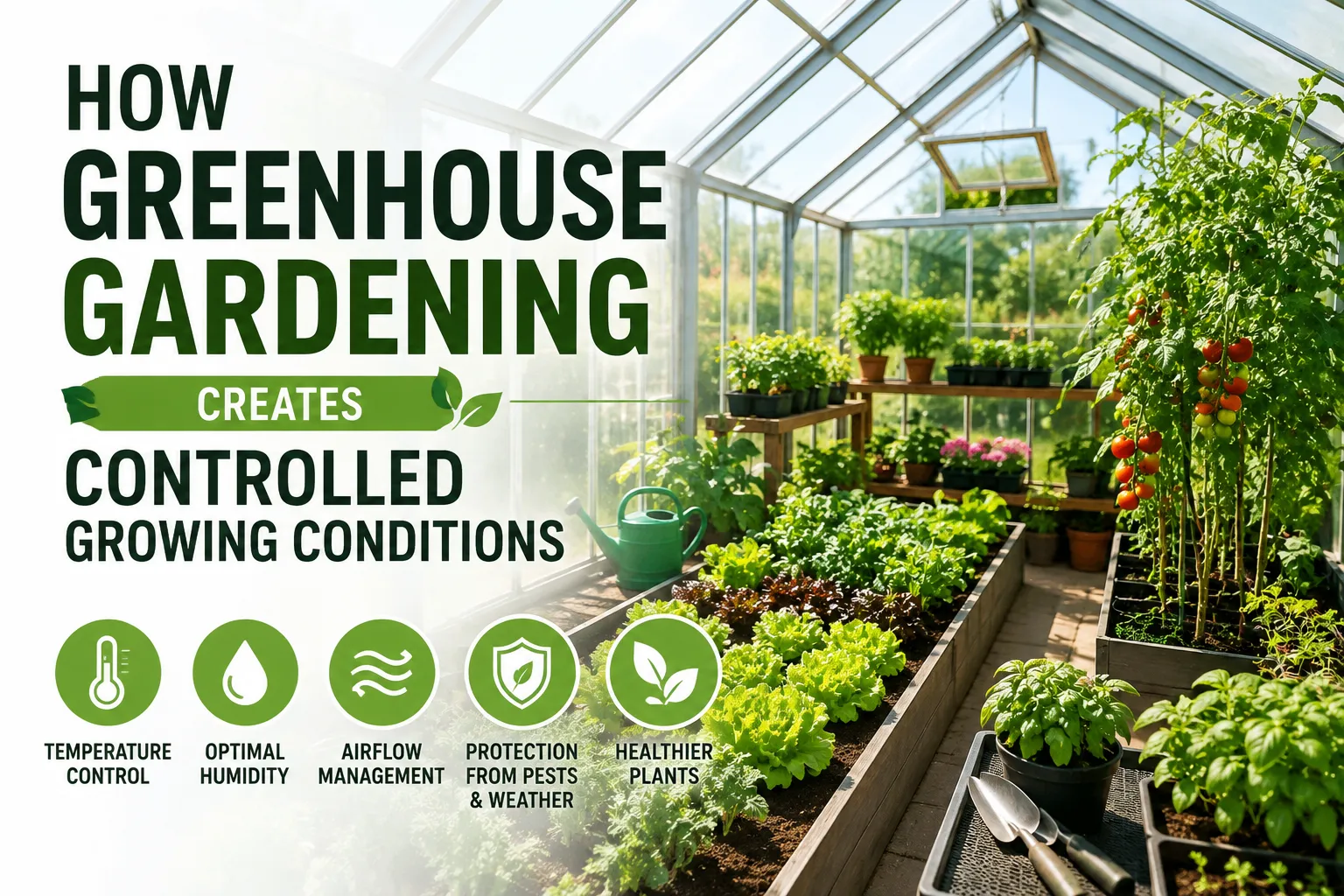
How Greenhouse Gardening Creates Controlled Growing Conditions
Greenhouse gardening gives plants something they cannot always get outdoors: a more controlled environment.
Instead of leaving crops completely exposed to changing temperatures, heavy rain, strong winds, pests and other environmental conditions, a greenhouse creates a partially enclosed space where gardeners can influence important growing factors.
That does not mean a greenhouse can create perfect conditions automatically. Temperature can still rise too high, humidity can become excessive and plants still require appropriate water, nutrients and light.
The advantage is control.
By managing the environment more carefully, gardeners can extend growing seasons, protect delicate plants and create conditions that are better suited to particular crops. For a broader look at how different gardening practices work together to support healthy plants, see the Complete Guide to Flower Gardening.
What Makes a Greenhouse Different?
A greenhouse is an enclosed growing structure that allows sunlight to enter while creating a barrier between plants and the outside environment.
Greenhouses can range from small backyard structures to large commercial facilities.
They may use:
- Glass
- Polycarbonate panels
- Plastic film
- Fiberglass or other translucent materials
The structure itself does not necessarily provide every condition a plant needs. Instead, it gives the gardener greater influence over the growing environment.
This can make it easier to manage temperature, humidity, watering, ventilation and protection from weather.
How Greenhouses Capture Solar Energy
Sunlight is one of the most important factors behind greenhouse growing.
Light passes through the transparent or translucent covering and reaches plants, soil and other surfaces inside the structure. These materials absorb some of that energy and release heat, contributing to a warmer interior environment.
The exact temperature inside a greenhouse depends on numerous factors, including:
- Outdoor temperature
- Sunlight intensity
- Greenhouse size
- Covering material
- Ventilation
- Insulation
- Internal shading
- Number and type of plants
A greenhouse can therefore become considerably warmer than the surrounding outdoor environment, particularly on sunny days.
Temperature Control Is Central to Greenhouse Gardening
Plants have temperature ranges in which they generally grow best.
Some prefer relatively cool conditions, while others thrive in warmer environments.
Outdoor temperatures can change dramatically between day and night or from one season to another.
A greenhouse provides an opportunity to moderate those changes.
During cooler periods, the structure can retain some of the heat gained during the day. During hot periods, gardeners can open vents, doors or sides to release excess heat.
In more advanced systems, heaters, fans and automated controls can provide even greater precision.
Ventilation Prevents Excessive Heat
One of the most important lessons for greenhouse gardeners is that a greenhouse should not simply be sealed shut.
On sunny days, temperatures inside can rise quickly.
Ventilation allows hot air to escape while bringing in cooler outside air.
Common ventilation methods include:
- Roof vents
- Side vents
- Doors
- Exhaust fans
- Circulation fans
Good ventilation can also help regulate humidity and reduce conditions that encourage certain fungal diseases.
Air Circulation Is Different From Ventilation
These two concepts are related but not identical.
Ventilation exchanges indoor air with outdoor air.
Air circulation moves air around inside the greenhouse.
Fans can circulate air around leaves and growing areas without necessarily exchanging large amounts of air with the outdoors.
Good circulation can help reduce stagnant pockets of humid air and promote more uniform environmental conditions.
This becomes particularly important when plants are grown closely together.
Humidity Needs to Be Managed
Water evaporates from soil, plant surfaces and other materials inside a greenhouse.
Because the structure is enclosed, moisture can accumulate more easily than it would outdoors.
High humidity can create an environment favorable to certain plant diseases, especially when leaves remain wet or air movement is poor.
Gardeners can manage humidity through:
- Ventilation
- Air circulation
- Appropriate watering
- Adequate plant spacing
- Removing diseased plant material
- Avoiding unnecessary moisture on foliage
The goal is not to eliminate humidity. Plants need water and atmospheric moisture plays a role in their growth. The objective is to keep conditions within a suitable range for the plants being grown.
Watering Becomes More Predictable
Outdoor gardens receive rainfall, but rainfall is rarely perfectly matched to a plant’s needs.
A greenhouse allows gardeners to take greater control over irrigation.
Plants can receive water through:
- Hand watering
- Drip irrigation
- Soaker systems
- Capillary systems
- Automated irrigation
Drip irrigation is particularly useful because it can deliver water close to the plant’s root zone while reducing unnecessary wetting of leaves and surrounding areas.
However, controlled irrigation does not mean plants should always receive more water.
Overwatering can damage roots and create other problems.
For a more detailed explanation of how to determine when and how much to water different plants, see the Complete Guide to Watering Garden Plants Correctly.
Soil Moisture Still Needs Monitoring
A greenhouse can reduce exposure to rainfall, but that also means plants may depend more heavily on the gardener for water.
Checking soil moisture before watering is therefore important.
Factors affecting water requirements include:
- Plant species
- Plant size
- Container size
- Soil composition
- Temperature
- Humidity
- Growth stage
- Sunlight exposure
A plant growing in a small container on a hot day may require significantly more frequent watering than a mature plant growing in a large bed.
Understanding the condition and structure of the growing medium is equally important, which is why gardeners may also benefit from the Ultimate Guide to Soil Health.
Greenhouses Protect Plants From Severe Weather
Weather can be unpredictable.
Strong winds can damage stems and leaves. Heavy rain can waterlog soil. Hail can physically injure plants, while unexpected cold temperatures can damage sensitive crops.
A greenhouse provides a physical barrier against many of these conditions.
That protection can be particularly valuable for young seedlings and delicate plants.
However, greenhouses are not completely weatherproof. Strong storms can still damage structures, and extreme heat can create dangerous conditions for plants if ventilation is inadequate.
Growing Seasons Can Be Extended
One of the major advantages of greenhouse gardening is the ability to grow plants outside their normal outdoor season.
Seeds can sometimes be started earlier because the greenhouse provides a more protected environment.
At the other end of the season, crops may continue producing after outdoor temperatures become less favorable.
This effectively gives gardeners more flexibility over when they start and finish particular crops.
The exact benefit depends on the greenhouse design, local climate and plants being grown.
Greenhouses Can Protect Young Seedlings
Seedlings are often more vulnerable than mature plants.
A sudden temperature drop, heavy rain or strong wind can damage them before they become established.
Starting seedlings inside a greenhouse allows gardeners to monitor their environment more closely.
Once plants are stronger, they can be transplanted outdoors if appropriate.
This process can give gardeners greater control over the early stages of plant development.
Light Management Matters
A greenhouse needs light, but more light is not always better.
Plants require light for photosynthesis, yet excessive sunlight can raise temperatures and cause stress.
The amount of light entering a greenhouse depends on:
- Covering material
- Structure orientation
- Season
- Time of day
- Nearby buildings or trees
- Weather conditions
- Shade systems
During particularly bright or hot periods, shade cloth or other shading methods can reduce the intensity of incoming sunlight.
Greenhouse Orientation Can Influence Growing Conditions
The position of a greenhouse can affect how much sunlight it receives.
Gardeners should consider the movement of the sun throughout the year, nearby structures and trees, prevailing winds and accessibility.
A greenhouse placed where it is shaded for much of the day may struggle to provide enough light.
At the same time, a location exposed to intense afternoon sun may require additional ventilation or shading.
The best position depends on the local climate and the gardener’s growing objectives.
Greenhouses Can Reduce Some Pest Pressure
The physical barrier created by a greenhouse can make it harder for certain outdoor pests to reach plants.
This can be particularly useful for young crops.
However, a greenhouse is not automatically pest-free.
Aphids, whiteflies, spider mites, fungus gnats and other pests can still enter or arrive on plants, soil, clothing or gardening equipment.
In fact, the stable conditions inside a greenhouse can sometimes allow certain pests to reproduce rapidly.
Regular inspection remains important.
For a broader approach to identifying and managing common garden pests, gardeners can also refer to the Complete Guide to Garden Pest Control.
Prevention Is Easier Than a Major Pest Problem
Greenhouse gardeners can reduce pest problems by monitoring plants regularly.
Check the undersides of leaves, stems and new growth for signs of insects or damage.
Other useful practices include:
- Inspecting new plants before introducing them
- Removing badly affected plant material
- Keeping the greenhouse clean
- Avoiding overcrowding
- Maintaining appropriate ventilation
- Monitoring plants consistently
Early detection can make pest management considerably easier.
Greenhouses Can Help Manage Diseases
Environmental control can also influence plant disease.
Many fungal and bacterial problems become more likely when leaves remain wet for long periods and air circulation is poor.
A greenhouse allows gardeners to control rainfall exposure and improve ventilation.
However, the enclosed environment can also create problems if humidity becomes excessive.
Good greenhouse management therefore requires balance.
Keeping foliage dry where appropriate, providing adequate spacing and removing infected material can help reduce disease pressure.
Growing Media Can Be Customized
Greenhouse gardening is not limited to traditional garden soil.
Plants can be grown in:
- Garden beds
- Containers
- Raised beds
- Commercial potting mixes
- Coco coir
- Other specialized growing media
This flexibility allows gardeners to choose growing conditions based on the crop.
For container gardening, the growing medium should provide appropriate drainage while retaining enough moisture for the plant.
Poor drainage can cause roots to remain saturated and may lead to root problems.
Gardeners who rely heavily on containers can learn more from the Container Gardening: The Complete Beginners Guide.
Nutrient Management Becomes More Important
Plants growing in containers or controlled greenhouse systems may rely heavily on the gardener for nutrients.
Nutrients can be supplied through compost, organic amendments or commercial fertilizers depending on the growing system.
However, more fertilizer does not necessarily mean faster or healthier growth.
Excess nutrients can damage plants and may accumulate in the growing medium.
A balanced approach based on the needs of the crop is generally more effective than applying fertilizer indiscriminately.
For a deeper look at nutrient requirements, amendments and fertilizer use, see the Complete Guide to Garden Fertilizers and Plant Nutrition.
Carbon Dioxide Plays a Role in Plant Growth
Plants use carbon dioxide during photosynthesis.
In a closed greenhouse, plants can consume carbon dioxide during periods of active photosynthesis, potentially reducing its concentration within the structure.
Commercial greenhouse operations sometimes use controlled carbon dioxide supplementation to influence crop productivity.
For ordinary home gardeners, however, ventilation and healthy plant growth are generally more important priorities than attempting to manipulate carbon dioxide levels.
The principle illustrates how many different variables can influence greenhouse production.
Automation Can Make Environmental Control Easier
Modern greenhouse technology allows gardeners to automate some routine tasks.
Sensors can monitor factors such as:
- Temperature
- Humidity
- Soil moisture
- Light
- Ventilation conditions
Automated systems can then trigger fans, irrigation or other equipment when predetermined conditions are reached.
For example, a soil-moisture sensor could activate irrigation when the growing medium becomes sufficiently dry.
Automation can reduce routine work, but it does not eliminate the need for observation.
Sensors can fail, irrigation systems can clog and plants can respond differently to the same environmental conditions.
Small Greenhouses Can Still Be Effective
Greenhouse gardening does not require a large commercial structure.
A small backyard greenhouse, compact walk-in structure or even a suitable mini-greenhouse can provide useful environmental protection.
Smaller structures can be particularly practical for:
- Seed starting
- Herbs
- Leafy greens
- Flowers
- Container plants
- Selected vegetables
The smaller the greenhouse, however, the faster its internal temperature can change.
Monitoring becomes particularly important during sunny weather.
Greenhouses Can Be Used for Different Growing Systems
The controlled environment can support several gardening approaches.
A gardener might grow directly in the ground, use raised beds or grow plants in containers.
Some greenhouses are also designed for hydroponic growing, where plants receive water and nutrients without traditional soil.
Each system has different requirements.
Traditional soil-based growing may be simpler for beginners, while hydroponic systems can provide greater control over nutrient and water delivery but require more equipment and monitoring.
Choosing Plants for a Greenhouse
Not every plant needs greenhouse protection.
A greenhouse is particularly useful for plants that benefit from longer growing seasons, protection from cold or more stable environmental conditions.
Gardeners should consider the natural preferences of each crop.
For example, a cool-season vegetable may perform poorly if placed in a hot greenhouse during summer without appropriate ventilation and shading.
The structure creates opportunities, but plant selection still matters.
Greenhouse Gardening Requires Daily Observation
One misconception is that a greenhouse automatically creates ideal growing conditions.
It does not.
The gardener remains responsible for monitoring the environment.
On a hot day, vents may need to be opened.
After heavy watering, humidity may need attention.
Plants may require additional nutrients as they grow.
Pests can appear unexpectedly.
A greenhouse therefore provides control, but that control works best when someone pays attention to what is happening inside.
Common Greenhouse Mistakes to Avoid
Several mistakes can undermine the benefits of a greenhouse.
Overheating
A greenhouse can become extremely hot when ventilation is inadequate.
Overwatering
Because plants are protected from rain, gardeners may assume they need frequent watering even when the soil remains moist.
Poor Air Circulation
Stagnant air can contribute to excessive humidity and disease problems.
Overcrowding
Plants placed too close together have less airflow and may compete for light and nutrients.
Ignoring Seasonal Changes
A greenhouse that works well in one season may require additional shading, ventilation or heating in another.
Neglecting Cleaning
Plant debris, algae and contaminated tools can contribute to pest and disease problems.
Cleaning and Maintenance Matter
A greenhouse should be treated as part of the garden rather than a structure that can be ignored.
Regular maintenance can include:
- Cleaning glazing or panels
- Checking vents
- Inspecting structural components
- Cleaning irrigation equipment
- Removing dead plant material
- Checking for pests
- Repairing damaged coverings
- Keeping pathways clear
Clean coverings allow more light to reach plants, while well-maintained ventilation systems help keep the environment under control.
Greenhouse Gardening Can Make Growing More Predictable
Outdoor gardening will always be influenced heavily by weather.
A greenhouse cannot eliminate that influence, but it can reduce it.
The structure gives gardeners greater control over temperature, moisture, airflow, light exposure and protection from the elements.
That control can make it easier to start plants, extend growing seasons and cultivate crops that might otherwise struggle in a particular climate.
But the greenhouse itself is only one part of the equation.
Turning a Greenhouse Into a Productive Growing Space
Successful greenhouse gardening comes down to understanding the relationship between several environmental factors.
Light affects temperature and photosynthesis. Temperature affects growth. Water affects nutrient uptake and plant health. Humidity influences disease pressure. Ventilation affects both temperature and moisture.
Changing one factor can influence the others.
That is what makes greenhouse gardening both useful and interesting. It gives gardeners the ability to move beyond simply reacting to outdoor conditions and instead create a growing environment tailored to the plants they want to cultivate.
For beginners, the best approach is often to start small, monitor conditions regularly and learn how plants respond before adding complicated equipment.
A greenhouse does not have to be high-tech to be effective. Even a simple structure can provide valuable protection and extend the possibilities of a garden when it is managed thoughtfully.