How to Organize Closets for Easy Access
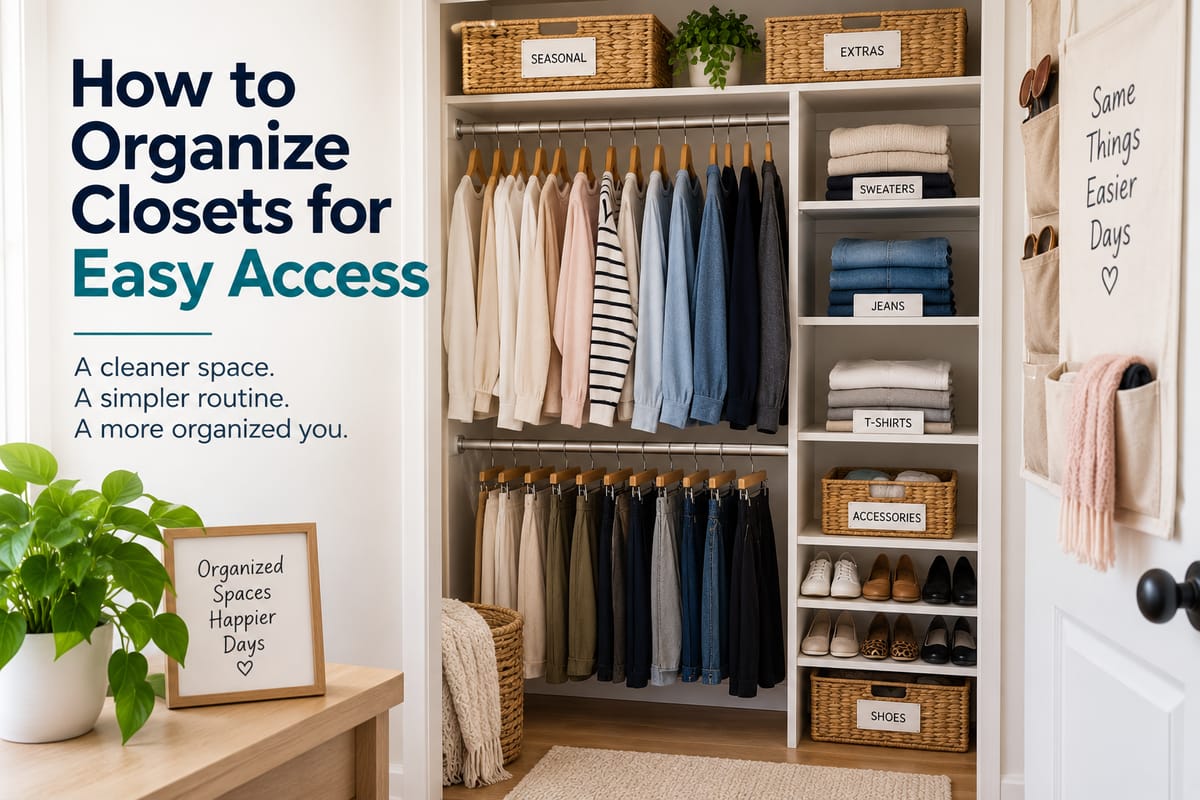
**How to Organize Closets for Easy Access
A well-organized closet can make everyday life noticeably easier. When clothes, shoes, accessories, linens, and other belongings have designated places, it becomes simpler to find what you need without digging through piles or moving half the contents of a shelf.
The challenge is that closets often become storage spaces for everything that does not have an obvious home. Over time, items get pushed toward the back, shelves become crowded, and frequently used belongings end up in inconvenient locations.
Organizing a closet effectively is less about creating a picture-perfect space and more about making the contents easy to see, reach, use, and put away.
Why Easy Access Matters in Closet Organization
A closet can technically be organized while still being difficult to use.
For example, neatly stacked clothing may look appealing, but if everyday items are buried underneath rarely worn pieces, the system creates extra work. Similarly, storing frequently used shoes behind boxes can make getting ready more frustrating.
An accessible closet should make common tasks straightforward.
Ideally, you should be able to:
- See the items you use regularly
- Reach frequently needed belongings without moving other things
- Return items to their designated locations easily
- Identify what you own
- Make use of available vertical and horizontal space
- Keep less frequently used items out of the way
The best organization system is one that works with your everyday habits.
Start by Emptying the Closet
Before deciding where everything should go, consider taking most or all of the contents out of the closet.
This gives you a clearer view of the available space and prevents you from simply rearranging clutter.
Place the contents into broad groups such as:
- Everyday clothing
- Formal clothing
- Seasonal clothing
- Shoes
- Accessories
- Bags
- Linens
- Household items
- Sentimental belongings
- Items that belong somewhere else
Sorting everything first makes it easier to see how much storage you actually need.
Declutter Before Organizing
Organization becomes much easier when there are fewer unnecessary items competing for space.
Before purchasing containers or rearranging shelves, decide which belongings genuinely need to remain in the closet.
Consider whether an item is:
- Used regularly
- Needed occasionally
- Seasonal
- Sentimental
- A duplicate
- Damaged
- No longer useful
- Better stored somewhere else
You do not have to discard something simply because you have not used it recently. The goal is to make thoughtful decisions about what deserves valuable closet space.
For a broader approach to reducing unnecessary possessions, the Decluttering Explained: The Complete Guide offers useful principles for deciding what to keep, remove, donate, or relocate.
Group Similar Items Together
One of the simplest ways to make a closet easier to navigate is to store similar things together.
Instead of spreading shirts across several shelves, create one area for them. Keep trousers together, group dresses together, and place accessories in a defined location.
Possible categories include:
- T-shirts
- Shirts and blouses
- Sweaters
- Trousers
- Jeans
- Dresses
- Jackets
- Athletic clothing
- Sleepwear
- Undergarments
- Accessories
The exact categories should reflect how you actually use your belongings.
If you frequently wear certain combinations, you might also organize clothing around outfits or activities rather than strict garment types.
Put Frequently Used Items at Eye Level
Closet space is easier to use when the most frequently accessed items are positioned where you can see and reach them comfortably.
The middle portion of the closet is often ideal for everyday belongings.
For example, frequently worn clothing can occupy the main hanging area, while everyday shoes can sit on a low shelf or accessible rack.
Less frequently used items can move higher or farther back.
This creates a simple hierarchy:
Frequent use → easiest access
Occasional use → moderate access
Rare use → harder-to-reach storage
The arrangement reduces the amount of unnecessary movement required during everyday routines.
Use Vertical Space
Closets often have more vertical capacity than people realize.
If there is unused space above hanging clothing or between shelves, consider whether it can accommodate additional storage.
Useful options may include:
- Stackable shelves
- Hanging organizers
- Shelf dividers
- Hooks
- Over-the-door organizers
- Tall storage boxes
- Tiered shoe racks
Vertical storage can be particularly helpful in smaller closets because it increases capacity without requiring additional floor space.
However, avoid filling every available inch. A little open space can make the closet easier to navigate and maintain.
Make the Hanging Area Work Harder
Hanging space is valuable, so use it selectively.
Items that wrinkle easily or benefit from hanging can take priority. Clothing that folds well can generally occupy shelves or drawers instead.
You can also group hanging clothes according to a system that makes sense to you.
Some people prefer organizing by:
- Clothing type
- Color
- Season
- Frequency of use
- Occasion
There is no universal method. The best approach is the one that allows you to find what you need quickly.
Organize Clothes for Everyday Use
Clothing storage deserves particular attention because wardrobes are accessed frequently.
A practical system might place everyday clothing in the easiest-to-reach locations while moving formalwear and seasonal pieces to less accessible areas.
For additional ideas, see how to organize clothes and closet storage for easier everyday use.
You can also create dedicated sections for clothing that serves different purposes, such as workwear, casual clothing, exercise clothing, or special-occasion outfits.
This can reduce the time spent searching through unrelated items.
Fold Clothing According to the Available Space
There is more than one useful way to fold clothes.
Traditional horizontal stacks can work well when shelves are shallow and clothing categories are limited. However, deep stacks can make it difficult to retrieve something from the bottom.
Vertical folding or file-style arrangements can make individual items easier to identify, particularly inside drawers or bins.
The right method depends on:
- Shelf depth
- Drawer dimensions
- Clothing type
- Frequency of use
- Personal preference
The important objective is visibility and accessibility rather than following a particular folding trend.
Use Bins for Smaller Items
Small belongings can quickly make a closet look chaotic.
Bins and baskets can provide a defined home for items such as:
- Scarves
- Belts
- Hats
- Gloves
- Small bags
- Seasonal accessories
- Travel items
Labels can make bins even easier to use, particularly when they contain items that are not needed every day.
Transparent containers can also make contents visible without requiring the container to be opened.
Keep Shoes Easy to See
Shoes are often responsible for wasted closet space.
A pile of shoes may make individual pairs difficult to find and can create unnecessary clutter near the floor.
Consider using:
- Shoe shelves
- Cubby storage
- Stackable shoe racks
- Clear shoe boxes
- Door-mounted organizers
Frequently worn shoes should be the easiest to reach. Formal or seasonal footwear can occupy less accessible areas.
Keeping shoes paired also makes it easier to identify what you have.
Use the Back of the Closet Door
The back of a closet door can provide useful storage without taking up shelf or floor space.
Depending on the closet and door design, an organizer can hold smaller items such as:
- Belts
- Scarves
- Accessories
- Shoes
- Bags
- Cleaning supplies
Before installing anything, make sure the organizer does not interfere with the door’s movement or place excessive weight on the hinges.
Store Seasonal Items Separately
Seasonal belongings do not necessarily need to occupy prime closet space throughout the year.
Heavy winter clothing, holiday accessories, beach items, or other seasonal possessions can be moved into higher shelves or labeled storage containers when they are not needed.
When the season changes, rotate the contents.
This approach keeps the most relevant belongings accessible while reducing congestion.
Label Storage Containers
Labels are particularly helpful when containers are opaque or stored on high shelves.
A label can identify a category without requiring you to open several boxes.
Instead of vague labels such as “Stuff” or “Miscellaneous,” use specific descriptions like:
- Winter accessories
- Extra bedding
- Travel bags
- Holiday decorations
- Formalwear
- Spare towels
Clear labels make the storage system easier for everyone in the household to understand.
Consider the Whole Home Storage System
A closet works best when it is part of a larger household organization system.
If every closet is expected to store miscellaneous belongings from throughout the house, even a well-designed closet can become overcrowded.
Think about where different categories logically belong.
For example, cleaning supplies might have a dedicated storage area, while linens could remain near the bedrooms or bathroom.
A broader look at this approach can be found in how home storage systems organize household belongings efficiently.
Make Storage Easy to Maintain
A complicated organization system may look impressive initially but become difficult to maintain.
If putting something away requires several steps, people may eventually stop following the system.
For example, a simple open basket may be more practical for frequently used accessories than a container that requires stacking and rearranging several other boxes.
When designing storage, ask:
How easy is it to put this item away after using it?
If the answer is “not very,” the system may need to be simplified.
Leave Some Empty Space
A closet does not need to be filled completely.
Leaving some empty shelf and hanging space creates flexibility for new belongings and makes existing items easier to access.
Overcrowded storage also makes it more difficult to maintain organization because every item competes for limited space.
Empty space is therefore not necessarily wasted space. It can be part of a functional storage system.
Create a Daily-Use Zone
One useful strategy is to create a dedicated area for things used almost every day.
This might include:
- Frequently worn clothes
- Everyday shoes
- Work bags
- School bags
- Accessories
- Jackets
- Workout clothing
Keeping these items together can make morning and evening routines more efficient.
The exact arrangement will depend on the people using the closet and the activities they perform each day.
Store Heavy Items Lower Down
Heavy boxes and containers are generally easier and safer to handle when they are stored closer to the floor rather than high above your head.
Use lower shelves or floor-level storage for heavier belongings where appropriate.
Reserve high shelves for lightweight items that are used less frequently.
This arrangement also reduces the risk of dropping a heavy container while trying to retrieve it.
Make Children’s Closets Accessible
Children’s closets benefit from organization systems designed around their height and routines.
Frequently used clothing and shoes should be placed where children can reach them safely when appropriate.
Lower hanging rods, accessible baskets, and clearly defined categories can make it easier for children to participate in putting away their belongings.
As children grow, the storage arrangement can be adjusted.
Review the Closet Regularly
Closet organization is not a one-time project.
New clothes arrive, old belongings stop being useful, seasons change, and household routines evolve.
A quick review every few months can prevent clutter from becoming overwhelming again.
During each review, look for:
- Items that no longer fit
- Clothing that is no longer worn
- Broken storage containers
- Duplicate belongings
- Seasonal items that need to be rotated
- Objects that belong elsewhere
Small adjustments are usually easier than waiting until the closet becomes completely disorganized.
A Simple Closet Organization Routine
If the closet feels overwhelming, break the project into manageable stages.
Step 1: Empty
Remove the contents so you can see the available space.
Step 2: Sort
Group similar belongings together.
Step 3: Declutter
Decide what should remain, move elsewhere, be donated, or otherwise removed.
Step 4: Prioritize
Identify the items you use most often.
Step 5: Assign Locations
Give each category a specific storage area.
Step 6: Improve Accessibility
Move frequently used items to convenient locations.
Step 7: Add Storage Tools
Use bins, shelves, hooks, dividers, and organizers where they solve a genuine storage problem.
Step 8: Label
Identify containers and categories where necessary.
Step 9: Test the System
Use the closet for several days and notice what feels inconvenient.
Step 10: Adjust
Move items or change storage methods based on how the closet actually functions.
Organizing Beyond the Closet
Closet organization is one part of creating a more functional home.
The same principles can be applied to bedrooms, kitchens, bathrooms, entryways, home offices, garages, and other spaces.
The Room-by-Room Home Organization Guide provides a broader framework for approaching organization throughout the home.
The goal is not to make every room look identical. Each space should support the activities that happen there.
Making the Closet Work for You
An organized closet should reduce friction rather than create another chore.
The most effective systems reflect how people actually live. Everyday belongings should be easy to reach, rarely used items can be stored farther away, and unnecessary possessions should not consume valuable space.
Grouping similar items, using vertical space, choosing practical storage containers, and regularly reviewing the contents can make a substantial difference.
Most importantly, organization should remain simple enough to maintain. When every item has a logical home and that home is easy to access, keeping the closet orderly becomes part of the routine rather than a major project that has to be repeated from scratch.