Decluttering Explained: The Complete Guide
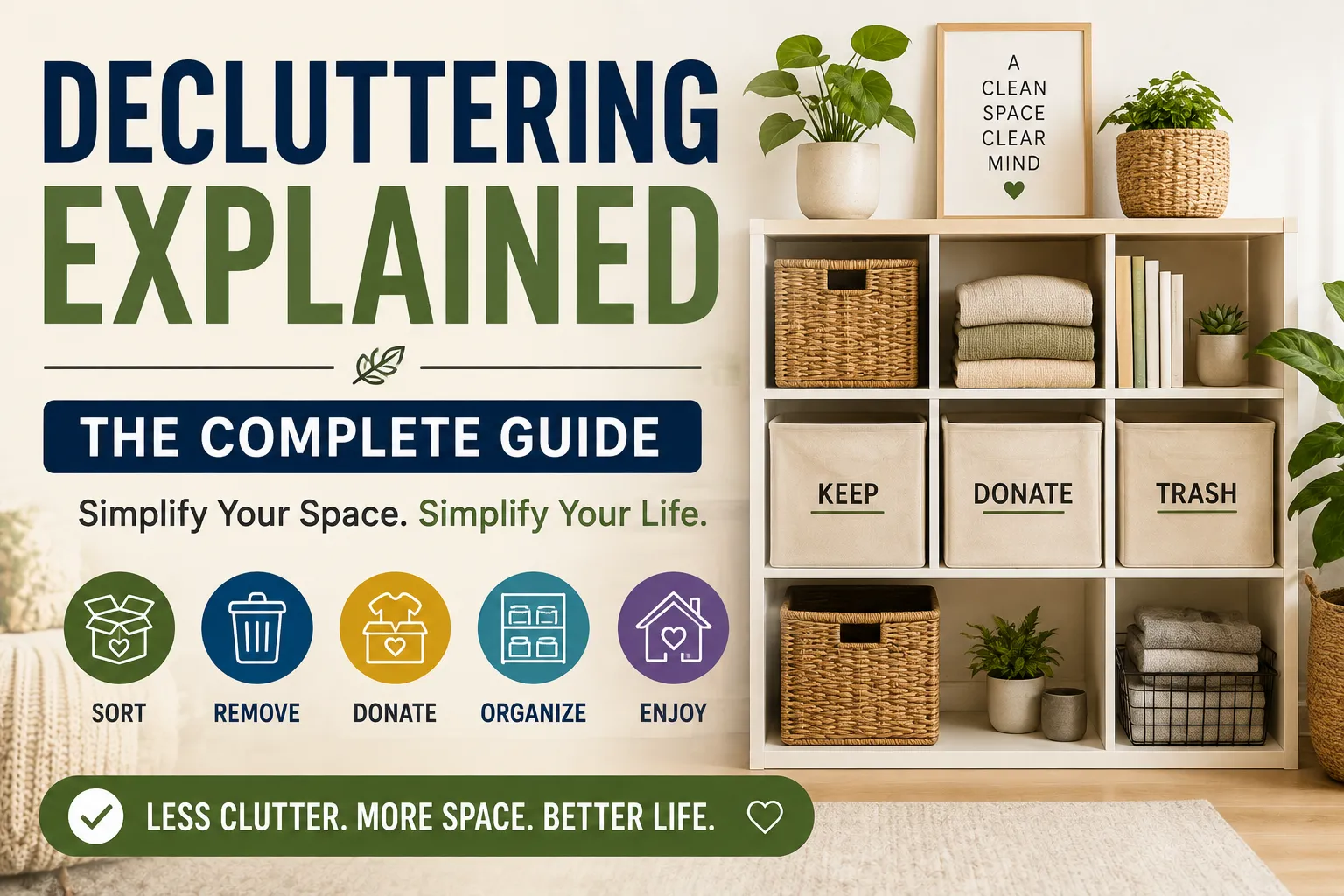
Decluttering Explained: The Complete Guide
A clutter-free home is about more than appearance, it’s about creating a space that supports comfort, productivity, and peace of mind. As modern lifestyles become busier and homes accumulate more belongings, many people are discovering the benefits of decluttering as a way to simplify daily life.
Decluttering isn’t about owning as little as possible or embracing strict minimalism. Instead, it’s about intentionally keeping the items that add value to your life while removing those that no longer serve a purpose. The result is a home that is easier to clean, more functional, and often less stressful to live in.
This guide explains what decluttering is, why it matters, and how you can organize your home one step at a time.
What Is Decluttering?
Decluttering is the process of removing unnecessary, unused, or unwanted items from your living space.
The goal is to create an environment that is:
- Organized
- Functional
- Comfortable
- Easy to maintain
- Free of unnecessary distractions
Decluttering is not about achieving perfection—it’s about creating a home that better supports your daily life.
Why Decluttering Matters
Living in a cluttered environment can make everyday tasks feel more difficult.
An organized home may help:
- Reduce cleaning time
- Improve productivity
- Make finding items easier
- Create a calmer atmosphere
- Maximize available space
- Simplify household routines
Many people also report feeling more in control of their surroundings after completing a decluttering project.
Signs Your Home May Need Decluttering
You may benefit from decluttering if you frequently:
- Misplace everyday items
- Feel overwhelmed by mess
- Avoid certain rooms
- Have overflowing closets
- Struggle to clean efficiently
- Store items you rarely use
- Buy duplicates because you can’t find things
Recognizing these signs is often the first step toward creating a more organized home.
The Benefits of Decluttering
Decluttering offers practical advantages beyond appearance.
Common benefits include:
- Easier home maintenance
- Better use of storage space
- Improved household efficiency
- Reduced visual distractions
- More functional living areas
- Less time spent searching for belongings
Over time, maintaining an organized home can make everyday routines simpler and more enjoyable.
Start With a Plan
Large decluttering projects often feel overwhelming without a strategy.
Consider:
- Working one room at a time
- Setting realistic goals
- Scheduling short decluttering sessions
- Prioritizing frequently used spaces
- Celebrating small accomplishments
Even 20 to 30 minutes of focused decluttering can make noticeable progress. A structured Room-by-Room Home Organization Guide can also help you work through different areas systematically.
The Four-Box Method
A simple system can help you make decisions more efficiently.
Prepare four containers labeled:
- Keep
- Donate
- Recycle
- Discard
Every item should go into one of these categories.
This approach reduces indecision and keeps projects moving.
Decluttering Room by Room
Living Room
Focus on removing:
- Old magazines
- Broken electronics
- Unused decorations
- Excess throw pillows
- Tangled cables
- Items that belong elsewhere
Store everyday essentials where they are easy to access.
Kitchen
The kitchen often accumulates duplicate tools and expired products.
Check:
- Pantry items
- Expired food
- Plastic containers
- Unused gadgets
- Damaged cookware
- Duplicate utensils
Organize frequently used items within easy reach.
Bedroom
A clutter-free bedroom supports relaxation.
Declutter:
- Clothing
- Shoes
- Bedside tables
- Jewelry
- Old books
- Unused accessories
Seasonal clothing can be stored separately to maximize closet space.
Bathroom
Remove:
- Expired medications (dispose of them safely according to local guidance)
- Old cosmetics
- Empty bottles
- Worn towels
- Duplicate toiletries
Keeping countertops clear also makes cleaning easier.
Home Office
Organize:
- Paperwork
- Office supplies
- Computer cables
- Charging devices
- Old notebooks
- Unused electronics
Digital organization is equally important.
Declutter Your Digital Life
Digital clutter can become just as overwhelming as physical clutter.
Consider organizing:
- Email inboxes
- Desktop files
- Smartphone apps
- Photos
- Downloads folder
- Cloud storage
Deleting unnecessary files may improve productivity and make important information easier to find.
Ask Helpful Questions
When deciding whether to keep something, ask:
- Have I used this in the past year?
- Does it serve a purpose?
- Is it in good condition?
- Would I buy it again today?
- Does it truly add value to my life?
Honest answers can make decision-making easier.
Organizing After Decluttering
Decluttering and organizing work together.
Helpful storage solutions include:
- Clear storage bins
- Drawer dividers
- Shelf organizers
- Storage baskets
- Label makers
- Closet systems
Everything should have a designated place.
For a deeper look at how different storage approaches can make better use of available space, see How Home Storage Systems Organize Household Belongings Efficiently.
Avoid Future Clutter
Maintaining an organized home requires ongoing habits.
Helpful strategies include:
- Returning items after use
- Shopping intentionally
- Donating unused items regularly
- Avoiding unnecessary impulse purchases
- Completing small daily tidy-up routines
Consistency is often more effective than occasional large cleanups.
Involve the Whole Household
Organization is easier when everyone participates.
Encourage family members to:
- Put items away
- Sort belongings regularly
- Respect shared spaces
- Donate unused items
- Follow simple storage systems
Shared responsibility helps maintain long-term organization.
Decluttering and Sustainability
Decluttering doesn’t have to create unnecessary waste.
Whenever possible:
- Donate usable items
- Recycle responsibly
- Repurpose household goods
- Repair items before replacing them
- Sell valuable items you no longer need
These practices help reduce environmental impact.
Common Decluttering Mistakes
Avoid these common pitfalls:
- Trying to organize before decluttering
- Taking on the entire house at once
- Keeping items “just in case”
- Buying storage before reducing clutter
- Comparing your home to others
- Expecting instant perfection
Progress is more important than perfection.
Maintaining an Organized Home
Once you’ve decluttered, simple daily habits help preserve your progress.
Try:
- Making the bed each morning
- Putting items away immediately
- Cleaning as you cook
- Sorting mail daily
- Scheduling monthly decluttering sessions
- Reviewing storage areas seasonally
Small routines prevent clutter from returning.
Developing stronger systems for managing tasks, belongings and routines can make these habits easier to maintain. How to Improve Personal Organization Skills explores those broader organization skills in more detail.
The Future of Home Organization
Technology is making home organization more efficient.
Emerging innovations include:
- Smart inventory apps
- AI-powered home organization tools
- Digital storage planning
- Smart closets
- Automated household reminders
- Connected home management systems
While technology can help, consistent habits remain the foundation of an organized home.
Looking Ahead
Decluttering is more than simply getting rid of unwanted belongings—it’s about creating a home that supports your lifestyle, reduces unnecessary stress, and makes everyday living easier. By approaching the process one room at a time and focusing on long-term habits rather than quick fixes, anyone can build a space that feels more functional and welcoming.
Whether your goal is easier cleaning, greater productivity, or simply a calmer home environment, decluttering offers lasting benefits that extend well beyond organized shelves and tidy closets.
Frequently Asked Questions
What is decluttering?
Decluttering is the process of removing unnecessary or unused items to create a more organized, functional, and comfortable living space.
How often should I declutter?
Small monthly sessions and a larger seasonal review help prevent clutter from building up over time.
What’s the easiest room to declutter first?
Many people begin with smaller spaces such as bathrooms, entryways, or kitchen drawers to build momentum before tackling larger rooms.
Should I organize before decluttering?
No. It’s generally more effective to remove unnecessary items first and organize only what remains.
Can decluttering improve daily life?
Many people find that an organized home makes cleaning easier, reduces time spent searching for belongings, and creates a more functional living environment.
Key Takeaways
- Decluttering focuses on keeping what adds value while removing unnecessary items.
- Organized homes are generally easier to clean and maintain.
- Working one room at a time makes large projects more manageable.
- Consistent daily habits help prevent clutter from returning.
- Sustainable decluttering includes donating, recycling, and repurposing usable items.
- A well-organized home supports comfort, efficiency, and long-term peace of mind.