How Home Storage Systems Organize Household Belongings Efficiently
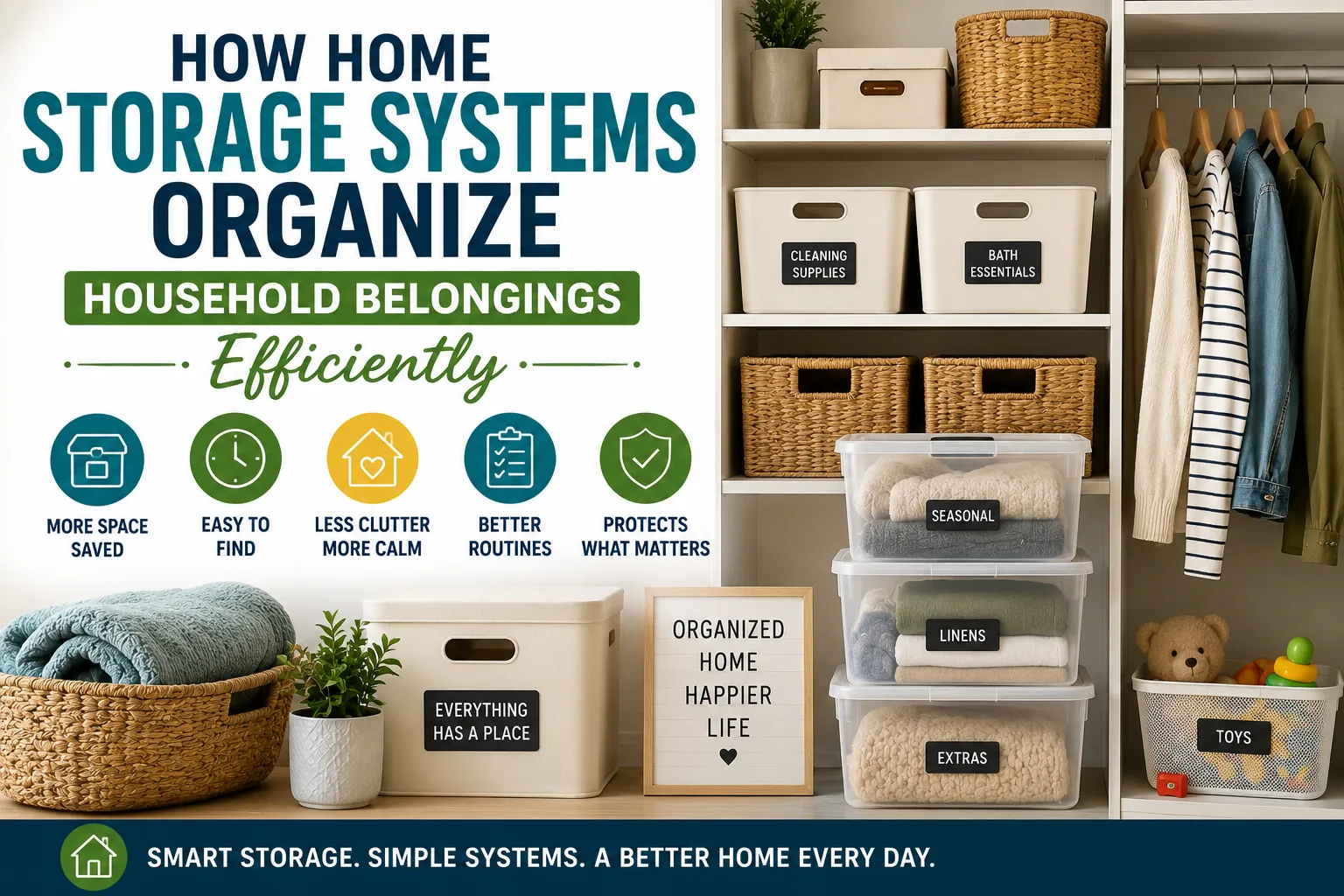
How Home Storage Systems Organize Household Belongings Efficiently
A well-organized home is rarely the result of simply owning more shelves, boxes, or cabinets. Effective organization comes from creating a storage system that gives belongings a logical place, makes frequently used items easy to reach, and prevents clutter from returning.
Home storage systems can range from simple baskets and drawer organizers to built-in cabinetry, modular shelving, wardrobes, pantry systems, and multifunctional furniture. When these elements are planned around how a household actually lives, they can make everyday routines considerably easier.
The key is to think of storage as a system rather than a collection of containers.
What Is a Home Storage System?
A home storage system is an organized arrangement of furniture, cabinets, shelves, containers, drawers, hooks, and other solutions used to store household belongings.
The purpose goes beyond hiding things away. A good system should help households:
- Keep similar items together
- Use available space efficiently
- Find belongings quickly
- Protect delicate or valuable items
- Reduce visible clutter
- Make cleaning easier
- Prevent unnecessary purchases
- Maintain organization over time
Storage systems can be permanent, such as built-in wardrobes, or flexible, such as stackable containers and modular shelving.
Why Efficient Storage Matters
Household belongings tend to accumulate gradually. Clothing, kitchen equipment, cleaning supplies, paperwork, electronics, toys, tools, seasonal items, and personal possessions can quickly overwhelm available space.
Without a defined storage strategy, items often end up wherever there is temporary room.
That creates several problems.
Clutter Becomes Difficult to Control
When belongings do not have designated locations, surfaces become convenient storage areas. Kitchen counters, dining tables, chairs, floors, and entryways can gradually become overloaded.
Items Become Difficult to Find
A crowded drawer or poorly organized cupboard may technically contain everything a household needs, but finding one specific item can take considerably longer.
Cleaning Takes More Time
Objects left on floors and surfaces have to be moved before those areas can be cleaned.
An organized storage system reduces the number of loose items that need to be relocated during routine cleaning.
Households May Buy Duplicates
When people cannot find something, they may assume they do not own it and purchase another one.
Clear storage and labeling can make existing belongings easier to locate and reduce unnecessary duplication.
The Basic Principles of Effective Home Storage
The most effective storage systems tend to follow several straightforward principles.
Give Every Category a Home
The first principle is simple: belongings should have designated locations.
Instead of placing items wherever space is available, group them by function or category.
For example:
- Towels belong together
- Baking equipment belongs together
- Everyday cleaning supplies belong together
- Important documents belong together
- Batteries and small electronics accessories belong together
This makes both storage and retrieval more predictable.
Store Items Where They Are Used
Storage becomes much more efficient when items are kept close to their point of use.
Kitchen utensils should generally be stored near food preparation areas. Shoes and bags can be kept near the entrance. Cleaning supplies can be positioned near the rooms where they are commonly used.
This principle is sometimes called point-of-use storage.
It reduces unnecessary movement and makes it easier for household members to return items after use.
Keep Frequently Used Items Accessible
Not everything should be stored at the same height or behind multiple layers of containers.
Frequently used belongings should generally occupy the easiest-to-reach locations.
Less frequently used items can be placed:
- On higher shelves
- At the back of deeper cabinets
- Under beds
- In attic storage
- In labeled containers
- In other less accessible areas
This creates a hierarchy based on frequency of use.
Making Better Use of Vertical Space
One of the most overlooked storage opportunities in a home is vertical space.
Walls and the upper sections of rooms often provide substantial unused capacity.
Tall shelving units, wall-mounted cabinets, pegboards, hooks, and overhead storage can increase capacity without requiring additional floor space.
This is particularly useful in smaller homes and apartments.
However, upper storage should be reserved for items that are not needed constantly. Frequently used belongings should remain within comfortable reach to avoid unnecessary climbing or stretching.
Using Drawers More Efficiently
Drawers are convenient, but they can quickly become disorganized when multiple categories are mixed together.
Drawer dividers can separate small belongings into defined sections.
For example, a bedroom drawer might have separate areas for:
- Socks
- Undergarments
- Accessories
- Belts
- Small personal items
Kitchen drawers can similarly use dividers for utensils, cooking tools, or food preparation accessories.
The objective is not to divide everything unnecessarily. Instead, dividers should create useful boundaries between categories.
How Shelving Systems Improve Organization
Shelving is one of the most adaptable storage solutions available.
Open shelving provides visibility and quick access, while closed shelving protects belongings from dust and reduces visual clutter.
Adjustable shelves are particularly useful because household storage requirements change over time.
A shelf that currently holds books might eventually be needed for storage boxes, household equipment, or children’s belongings.
Adjustability allows the storage system to adapt without requiring a complete redesign.
Baskets and Containers Create Structure
Storage containers can transform loose collections of small objects into manageable categories.
They work particularly well for:
- Toys
- Craft supplies
- Cables
- Bathroom products
- Cleaning cloths
- Accessories
- Seasonal decorations
- Small household tools
However, containers should not become an excuse to store unnecessary belongings.
Putting clutter into attractive boxes does not eliminate clutter. It simply makes it less visible.
A container system works best when its contents are deliberately selected and clearly categorized.
Labeling Makes Shared Storage Easier
Labels can be especially valuable when multiple people use the same storage system.
A clearly labeled container communicates what belongs inside without requiring someone to open it and search.
Labels can be useful for:
- Pantry containers
- Storage bins
- Filing systems
- Children’s toys
- Craft supplies
- Holiday decorations
- Cleaning products
- Spare household supplies
Labels also make it easier for family members to return items to their proper locations.
Designing Efficient Kitchen Storage
Kitchens often contain a large number of objects within a relatively small area.
Efficient kitchen storage starts by considering how the space is used.
Frequently used cookware should be accessible. Everyday dishes should not require navigating through rarely used equipment. Food preparation tools should remain close to preparation areas where practical.
Pantry organization can also benefit from grouping products into categories such as:
- Grains and cereals
- Baking ingredients
- Canned foods
- Snacks
- Spices
- Cooking oils
- Breakfast foods
Clear containers or labels can make frequently used supplies easier to identify.
Organizing Bedroom Storage
Bedrooms often combine several different storage requirements, particularly clothing, footwear, bedding, accessories, and personal belongings.
Wardrobes become more efficient when clothing is organized according to a logical system.
Possible approaches include grouping clothing by:
- Type
- Season
- Frequency of use
- Household member
- Activity
For example, everyday clothing can occupy the most accessible section while occasional formalwear can be stored elsewhere.
Under-bed storage can also provide useful capacity for items that are not required every day.
For a more detailed approach to wardrobes and clothing storage, see How to Organize Clothes and Closet Storage for Easier Everyday Use.
Making Bathrooms Easier to Maintain
Bathrooms often have limited storage but contain many small products.
Cabinet organizers, drawer dividers, narrow shelving units, baskets, and wall-mounted solutions can help separate personal-care products.
Frequently used items should remain easy to reach, while backup supplies can be stored separately.
This distinction is useful because households often mix everyday products with unopened replacements. Separating the two makes it easier to see what is currently being used and what is already available as backup.
Creating an Organized Entryway
The entrance to a home is often where clutter begins.
Shoes, bags, coats, keys, umbrellas, mail, and other objects can accumulate quickly.
A dedicated entryway storage system might include:
- Shoe storage
- Wall hooks
- A small bench
- Key hooks
- Baskets
- Mail organizers
- Coat storage
The goal is to create a landing place for items that enter and leave the home frequently.
When belongings have a designated location near the entrance, they are less likely to spread into other rooms.
For a broader room-by-room approach to creating practical storage zones throughout the house, see the Room by Room Home Organization Guide.
Storage for Cleaning Supplies
Cleaning supplies should be organized according to safety, accessibility, and frequency of use.
Everyday products can be kept in a convenient location, while backup supplies can occupy a separate storage area.
It is also important to keep household cleaning chemicals in appropriate locations and follow their product safety instructions, particularly where children or pets are present.
A simple organization system can make cleaning more efficient because the necessary tools can be located without searching through several cabinets.
Using Multifunctional Furniture
Furniture can provide storage without requiring additional floor space.
Examples include:
- Beds with storage compartments
- Ottomans with internal storage
- Benches with drawers
- Coffee tables with shelves
- Storage benches
- Desks with integrated cabinets
Multifunctional furniture is particularly useful in smaller homes because one piece can serve several purposes.
The best choices are those that provide storage without making frequently used items difficult to access.
Hidden Storage Versus Open Storage
Both open and concealed storage have advantages.
Open storage makes belongings easy to see and reach. It works well for books, frequently used kitchenware, decorative objects, and everyday items.
Closed storage hides visual clutter and protects belongings from dust. It is useful for paperwork, cleaning supplies, miscellaneous household objects, and items that do not need to remain visible.
Many effective homes use a combination of both.
The choice should depend on how frequently an item is used and whether visibility is helpful.
How Decluttering Fits Into Storage
Storage and decluttering are closely connected, but they are not the same thing.
Storage determines where useful belongings should go. Decluttering determines which belongings need to remain in the home.
Adding storage capacity without evaluating what is being stored can simply allow clutter to grow.
Before buying a new cabinet or organizer, it can be useful to ask:
- Do we actually use these items?
- Are there duplicates?
- Do they still serve a purpose?
- Are they being kept for a specific reason?
- Could they be donated, recycled, repaired, or responsibly discarded?
Reducing unnecessary possessions can make the remaining storage system substantially more effective. The broader principles behind deciding what to keep, remove, and organize are covered in Decluttering Explained: The Complete Guide.
Storage Systems Should Reflect Household Habits
There is no universal storage arrangement that works perfectly for every household.
A family with young children will have different needs from a single professional. Someone who cooks frequently will require different kitchen storage from someone who rarely prepares meals.
The most useful system therefore starts with observing household behavior.
Ask:
- What items are used every day?
- Where does clutter appear most often?
- Which belongings are difficult to find?
- Which areas become disorganized repeatedly?
- What gets left on counters or floors?
- Which items are used together?
These observations can reveal where storage improvements will have the greatest impact.
Common Home Storage Mistakes
Buying Storage Before Decluttering
Purchasing containers before deciding what actually needs to be stored can lead to unnecessary spending and crowded cabinets.
Creating Overly Complicated Systems
An organization system that requires several steps to return an item is unlikely to remain effective.
Simple systems are generally easier for everyone in the household to maintain.
Ignoring Accessibility
Storage that looks attractive but is difficult to access may discourage people from putting items away.
Using Every Available Space
Not every empty corner needs to be filled.
Leaving some breathing room makes spaces easier to maintain and allows storage systems to adapt as household needs change.
Mixing Too Many Categories
A single container filled with unrelated objects becomes difficult to manage.
Grouping similar items creates a more useful system.
How to Maintain an Organized Storage System
Organization is not a one-time project.
Household belongings change constantly. New products enter the home, old items stop being useful, children grow, hobbies change, and rooms take on new purposes.
A simple maintenance routine can prevent storage systems from deteriorating.
Perform Small Reviews Regularly
Instead of waiting until an entire room becomes overwhelming, periodically review drawers, cabinets, shelves, and storage bins.
Return Items Immediately
Putting something back after use usually requires less effort than conducting a large cleanup later.
Keep Categories Flexible
Storage systems should be adjusted when household needs change.
A category that once required an entire cabinet may eventually need only one shelf, while another category may grow.
Avoid Filling Storage to Maximum Capacity
Leaving some empty space makes it easier to put items away and accommodate future changes.
How Technology Can Support Home Organization
Digital tools can also complement physical storage systems.
Households can use simple digital inventories to keep track of:
- Important documents
- Valuable possessions
- Household equipment
- Warranty information
- Maintenance records
- Stored seasonal items
For larger homes, photographs and digital inventories can help people remember what is stored in less accessible areas.
Technology should support the physical system rather than make it unnecessarily complicated.
The Most Efficient Storage System Is the One People Use
The ultimate purpose of home storage is not to create a picture-perfect room.
It is to make everyday life easier.
A successful storage system allows household members to answer three questions quickly:
Where does this belong?
Where can I find it?
How easily can I put it back?
When those answers are obvious, clutter becomes easier to control and household routines become more efficient.
The best systems also remain flexible. They can evolve as belongings, family structures, routines, and living spaces change.
Building a Home That Organizes Itself
Efficient home storage is ultimately about reducing friction.
When frequently used belongings are close to where they are needed, categories are clearly defined, unnecessary possessions are removed, and storage is easy to access, organization becomes less of a daily chore.
The goal is not to hide every possession behind a cabinet door. It is to create a home where belongings naturally have logical places—and where maintaining those places requires as little effort as possible.