Formex 2026 Reveals the Nordic Interior Trends Set to Shape Homes Next
Formex 2026 Reveals the Nordic Interior Trends Set to Shape Homes Next
Nordic interiors have long been associated with clean lines, natural materials and a quiet sense of functionality. But the next phase of Scandinavian-inspired design is moving beyond the idea that a beautiful home must also be minimalist.
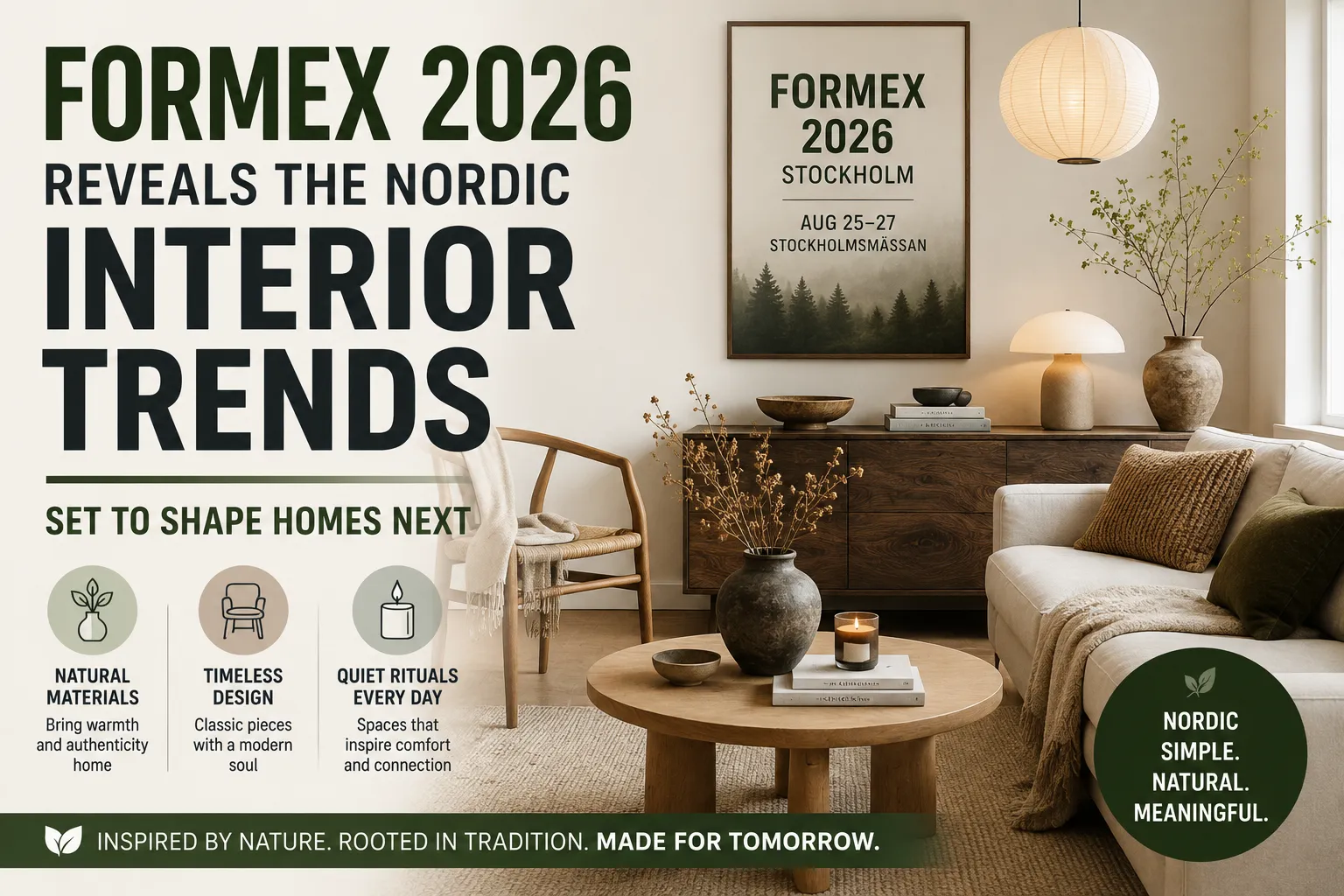
As Formex 2026 prepares to open at Stockholmsmässan in Stockholm from August 25–27, the Nordic design industry is turning its attention toward a warmer, more personal and emotionally driven approach to interiors. Formex, founded in 1960 and held twice a year, brings together designers, buyers, producers, retailers and other industry professionals to showcase new products, ideas and emerging trends.
For its fall/winter 2026 trend direction, Formex is placing a strong emphasis on tradition, authenticity, craftsmanship and personal meaning. Trend analyst Elin Frendberg has organized the season around three themed worlds: Wedding Vows, Jewelry Box and Quiet Rituals.
Together, they point toward a Nordic interior style that feels less manufactured and more lived in.
Nordic Design Is Moving Beyond Minimalism
Minimalism has played a major role in Scandinavian interior design for decades.
White walls, pale woods, uncluttered surfaces and functional furniture helped establish the recognizable Nordic aesthetic around the world.
But Formex’s 2026 direction suggests that consumers are increasingly looking for something more personal.
The fair describes the coming season as a return to the genuine, handmade, intuitive and personal in response to digital fatigue and increasingly standardized visual culture. The emphasis is on rooms that tell stories and objects that carry a sense of history and emotional connection.
That does not mean minimalism is disappearing.
Instead, it is becoming softer.
A room can remain uncluttered while incorporating antiques, handmade ceramics, inherited furniture, textured fabrics and objects with personal significance.
This shift toward warmer, more layered spaces also reflects the broader movement discussed in layered comfort and the move beyond minimalist interiors.
Tradition Becomes a Design Feature
One of the strongest messages emerging from Formex 2026 is that tradition itself can become part of contemporary interior design.
Rather than treating older objects as outdated, designers are increasingly finding ways to combine them with modern pieces.
An old wooden chair might sit beside a contemporary sofa.
A vintage mirror might become the focal point of a modern hallway.
Handmade ceramics can add character to a clean kitchen.
The result is a home that feels collected over time rather than purchased all at once.
This approach also creates more opportunities for individuality.
Instead of recreating an identical social-media interior, homeowners can use objects connected to their own families, travels and experiences.
Wedding Vows Brings Romance Into the Home
The first of Formex’s three trend worlds is Wedding Vows.
According to Formex, this theme draws on the dreamy light and atmosphere associated with midwinter weddings.
Translated into residential interiors, that idea suggests a renewed interest in romance, ceremony and softness.
Expect this direction to influence interiors through details such as:
- Soft, atmospheric lighting
- Elegant glassware
- Delicate textiles
- Romantic floral arrangements
- Decorative table settings
- Light-reflective materials
- Layered candlelight
- Soft, muted color combinations
The important point is that romance does not have to mean overly ornate decoration.
A contemporary Nordic room could incorporate the mood through a single sculptural vase, linen tablecloth, warm lighting or a collection of candles.
The emphasis is on atmosphere rather than excess.
Lighting Takes on Greater Emotional Importance
The Nordic relationship with light has always been important, partly because of the region’s long, dark winters.
Formex’s 2026 themes reinforce the idea that lighting should do more than simply illuminate a room.
It can create mood.
A home may therefore use multiple layers of light rather than relying on one bright ceiling fixture.
Think:
- Table lamps
- Floor lamps
- Wall lights
- Candles
- Small decorative lights
- Adjustable task lighting
- Warm ambient illumination
This approach makes rooms feel more adaptable.
The same living room can feel bright and functional during the day and intimate and relaxing in the evening.
Jewelry Box Celebrates Objects With History
The second Formex trend world, Jewelry Box, moves toward the beauty of aged and cherished objects.
The concept is particularly relevant to the growing interest in interiors that mix old and new.
Instead of choosing furniture and accessories because they belong to one perfectly coordinated collection, homeowners can create contrast through different periods, materials and finishes.
A modern home might include:
- Antique brass
- Aged wood
- Vintage glass
- Decorative boxes
- Old photographs
- Heirloom objects
- Patinated metals
- Handmade accessories
The appeal comes from the tension between refinement and imperfection.
A slightly worn object can sometimes contribute more character than a flawless new one.
Patina May Become More Valuable
The growing appreciation for patina represents a broader change in design thinking.
For years, many interiors emphasized newness.
Surfaces were expected to be pristine. Furniture was often chosen to look untouched.
Now, signs of age can be considered part of an object’s beauty.
Scratches, faded finishes, natural variations and visible craftsmanship can make a piece feel authentic.
That philosophy works particularly well with Nordic interiors because it introduces warmth without requiring visual clutter.
A single aged wooden cabinet, for example, can completely change the character of an otherwise contemporary room.
Quiet Rituals Puts Everyday Life at the Center
The third theme is Quiet Rituals, which Formex connects with the warmth and comfort of small everyday rituals.
This may be the most practical trend of the three.
Instead of designing homes primarily for appearance, Quiet Rituals focuses on how spaces support daily life.
That could mean creating a comfortable corner for morning coffee, a reading chair near a window, a beautifully arranged dining table or a calm bedroom designed specifically for winding down.
The underlying idea is simple:
Ordinary moments deserve good design too.
Homes Are Becoming More About How They Feel
The Quiet Rituals concept reflects a wider movement in interior design toward emotional comfort.
People are increasingly asking not only:
“Does this room look good?”
but also:
“How does this room make me feel?”
That changes design priorities.
A chair becomes important because it is comfortable enough to encourage reading.
A dining table becomes the center of a room because it supports conversation.
A lamp matters because its light creates a relaxing atmosphere.
A bedroom becomes a retreat rather than simply a place containing a bed.
Function and emotion begin working together.
This also connects with the broader shift toward more personal homes that move away from perfect showroom aesthetics.
Handmade Pieces Gain Ground
Craftsmanship is another major element of the Formex 2026 direction.
The fair’s Design Talents program specifically highlights emerging designers, with this year’s participants selected around qualities including innovation, craftsmanship and sustainability.
That focus reflects a broader appreciation for objects that show how they were made.
Handmade ceramics, woven textiles, carved wood, artistic lighting and small-batch furniture can introduce visual character that mass-produced products often struggle to replicate.
They also give homeowners opportunities to support individual designers and craftspeople.
Imperfection Can Make a Room More Interesting
The renewed interest in craftsmanship naturally creates space for imperfection.
A handmade bowl may have subtle variations.
A wooden table may display differences in grain.
A woven textile may contain irregularities.
Instead of treating these characteristics as defects, contemporary interiors can treat them as evidence of authenticity.
This is particularly useful for homeowners who want their spaces to feel less staged.
Perfectly coordinated rooms can sometimes appear impersonal.
A few imperfect objects can make a room feel more human.
Natural Materials Remain Important
The Nordic design vocabulary continues to have a strong relationship with natural materials.
Wood, stone, wool, linen, cotton, leather, clay and other tactile materials can create warmth while maintaining a relatively restrained visual language.
The key difference is that materials are increasingly being appreciated for their texture and character rather than simply their clean appearance.
A rough ceramic surface can contrast with smooth wood.
A chunky wool textile can soften a hard stone surface.
Aged metal can add depth to pale cabinetry.
These combinations create visual interest without requiring excessive decoration.
The continued importance of earthy materials also fits closely with the rise of warm earth tones in interior design.
Sustainability Moves From Trend to Practice
Sustainability remains an important part of the Formex ecosystem.
For its August 2026 edition, the fair is bringing back its Sustainability Stand for the third time, featuring selected companies and sustainable products in a space designed around reuse and circular thinking.
That is significant because sustainability in interiors increasingly involves more than choosing products labeled “eco-friendly.”
It can also mean:
- Buying fewer but better pieces
- Repairing furniture
- Choosing durable materials
- Buying vintage
- Reusing existing objects
- Supporting local craftsmanship
- Selecting products designed for long-term use
- Avoiding unnecessary replacement
The more personal an object becomes, the less likely it may be to feel disposable.
Vintage and New Pieces Can Work Together
One of the easiest ways to bring the 2026 Nordic direction into a home is through contrast.
Instead of replacing everything, homeowners can introduce a few new elements around existing pieces.
For example:
A contemporary sofa can sit alongside a vintage side table.
A modern dining room can include inherited chairs.
A minimalist kitchen can display handmade pottery.
A new bedroom can incorporate an antique mirror.
This approach is not only visually interesting but can also be more sustainable and affordable.
Color May Become More Personal
The traditional Nordic palette has often relied on whites, grays, beige and pale natural tones.
Those colors are not disappearing.
But the growing emphasis on personal interiors allows homeowners to experiment with deeper and more individual accents.
Rather than applying a single trend color throughout an entire room, color can be introduced through:
- Artwork
- Cushions
- Ceramics
- Curtains
- Rugs
- Books
- Decorative objects
- Painted furniture
This creates flexibility.
A homeowner can maintain a calm base while allowing individual objects to bring personality.
Texture Can Replace Visual Clutter
For people who still prefer minimalist interiors, the 2026 trends offer an interesting alternative to adding more decoration.
Instead of filling a room with objects, introduce texture.
A linen curtain, wool rug, textured plaster wall, wooden furniture and handmade ceramic pieces can create a rich environment without making the space feel crowded.
This is particularly compatible with Nordic design.
The room remains visually calm, but it becomes more tactile.
Furniture Is Becoming Softer
Contemporary furniture trends are also moving toward comfort and softer forms.
Current 2026 design coverage highlights curved silhouettes, low-profile seating, modular designs and deeper sofas as alternatives to more rigid furniture forms.
That aligns naturally with the broader move toward homes as places of restoration and connection.
Furniture is increasingly expected to encourage people to sit, talk, relax and spend time together.
In practical terms, that could mean choosing a sofa for comfort rather than simply for its appearance.
The Home as a Refuge From Digital Life
Perhaps the most interesting idea behind Formex’s 2026 trend direction is its response to technology.
Formex explicitly connects the desire for authenticity and physical reality with an era shaped by AI, digital fatigue and turbulence.
That has important implications for interior design.
As more of daily life moves onto screens, physical environments can become increasingly valuable as places for tactile experiences.
A dining table encourages face-to-face conversation.
A reading chair creates a space away from a phone.
A handmade object provides a physical connection to craftsmanship.
A kitchen becomes a place for preparing food rather than simply an extension of digital convenience.
Interior design can therefore become part of a broader effort to create more meaningful offline experiences.
This same desire to create spaces away from constant digital stimulation can be seen in the growing interest in the analog room and screen-free interior spaces.
Personal Objects May Matter More Than Designer Labels
The emphasis on belonging and history also challenges the idea that a beautiful home must be filled with recognizable brands.
An inexpensive object inherited from a family member may carry more emotional value than an expensive decorative piece.
A handmade bowl bought during a trip can become a meaningful reminder of a particular place.
A child’s artwork can become part of a gallery wall.
A well-used chair can tell a story.
This kind of personalization is difficult to replicate through mass-produced décor.
It also makes interiors more resilient to rapidly changing trends.
Design Talents Show Where the Industry Is Going
The Design Talents section of Formex provides another window into emerging design directions.
The August 2026 selection includes designers working across areas such as handmade lighting, ceramics, furniture, textiles, accessories and objects. Formex describes the program as a platform for emerging creators and a springboard for future design careers.
Several of the listed designers emphasize handmade production, natural materials, organic forms, sustainability and personal expression.
That reinforces the central message of the 2026 fair: the future of Nordic design may be less about achieving a perfectly controlled aesthetic and more about combining function with character.
What Homeowners Can Take From Formex 2026
You do not need to redesign an entire house to embrace these trends.
A few deliberate changes can create the same effect.
Bring in one meaningful vintage piece
Choose something with visible history rather than buying another generic decorative object.
Add warmer lighting
Use table lamps, floor lamps or candles to create layers of illumination.
Display handmade objects
A small collection of handmade ceramics can add personality without creating clutter.
Mix old and new
Pair contemporary furniture with vintage accessories or inherited pieces.
Focus on texture
Introduce linen, wool, wood, stone, clay and other tactile materials.
Create a quiet ritual space
Design a small area for reading, coffee, conversation, music or another activity you genuinely enjoy.
Buy more intentionally
Rather than replacing everything whenever a new trend appears, choose pieces that you expect to keep.
Nordic Design Is Becoming More Human
Formex 2026 arrives at a moment when interior design is increasingly responding to a paradox.
Technology has made it easier than ever to discover inspiration, purchase furniture and create digitally perfect spaces. At the same time, people appear increasingly interested in interiors that feel authentic, personal and connected to real life.
Formex’s fall/winter 2026 trends capture that tension particularly well.
Wedding Vows brings romance and atmosphere.
Jewelry Box celebrates history, patina and treasured objects.
Quiet Rituals focuses on the small experiences that make a house feel like home.
All three point in the same direction: away from interiors designed purely to impress and toward spaces designed to comfort, connect and mean something.
The Next Nordic Interior May Tell Your Story
The most important takeaway from Formex 2026 may not be a particular color, furniture shape or decorative material.
It is a change in philosophy.
The Nordic home of the next few years is likely to remain functional and visually restrained, but it may become warmer, more tactile and much more personal. Handmade objects, vintage finds, natural materials, layered lighting and meaningful possessions can coexist with modern technology and contemporary furniture.
Formex’s 2026 direction suggests that the strongest interiors will not necessarily be the ones that look the newest.
They may be the ones that feel lived in, tell a story and make everyday life feel a little more meaningful.
As the fair opens in Stockholm on August 25, the message from the Nordic design world is increasingly clear: the future of Scandinavian interiors may not be about owning less simply for the sake of minimalism. It may be about choosing better, keeping what matters and creating a home that feels unmistakably your own.