Behr Reveals Its 2027 Color of the Year as Earthy Green Takes Center Stage
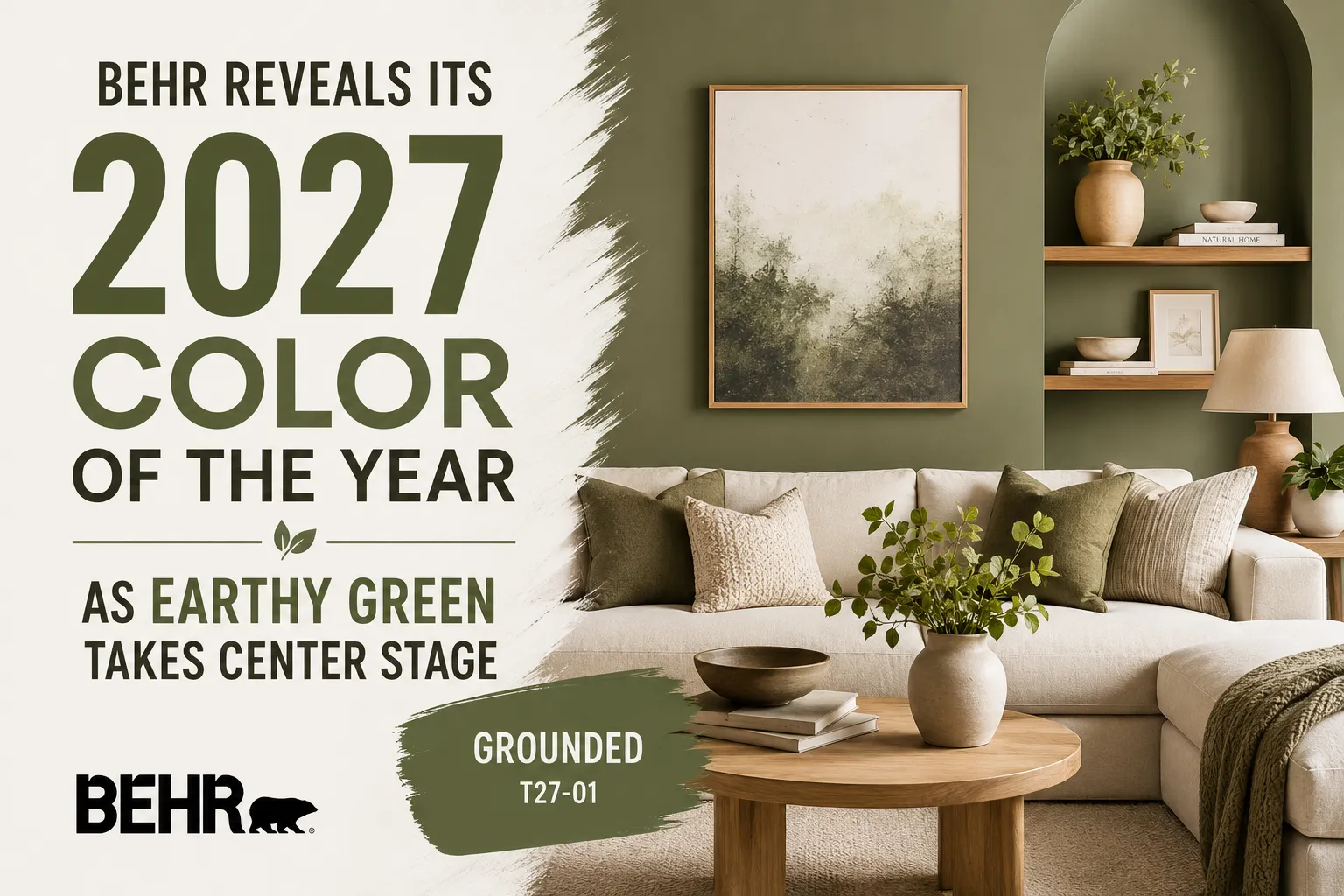
Behr Reveals Its 2027 Color of the Year as Earthy Green Takes Center Stage
Behr has officially unveiled its 2027 Color of the Year, and the paint company is turning toward nature with a sophisticated shade designed to make homes feel warmer, calmer and more connected to the outdoors.
Called Grounded (T27-01), the new color is a mossy olive green with subtle brown undertones. Behr describes it as a shade that sits between olive and moss, bringing earthy depth without becoming overwhelmingly dark.
The announcement, made August 26, also marks the 10th anniversary of Behr’s Color of the Year program. The choice reflects a broader interior-design movement toward natural colors, warmer spaces and interiors that feel comfortable rather than overly polished. It fits particularly well with the broader shift toward layered comfort in interior design.
Meet Grounded, Behr’s 2027 Color of the Year
Grounded is not the bright, energetic green that might immediately come to mind when thinking about botanical-inspired interiors.
Instead, it has a muted, earthy quality.
Its olive and moss characteristics give it a connection to foliage, while the brown undertones add warmth and sophistication. That combination allows the color to function as more than an accent.
Behr positions Grounded as a versatile shade capable of working across walls, cabinetry, trim and architectural details. The company also says it can be used for both interior and exterior projects.
The result is a green that can make a statement while still behaving somewhat like a neutral.
Why Earthy Green Is Having a Moment
The choice of Grounded comes as homeowners increasingly look for interiors that feel comfortable and connected to nature.
Behr’s own research found that 77% of Americans surveyed said they turn to nature when life feels chaotic. The company also reported that 86% said home DIY and design projects help them create a comforting place to retreat and recharge.
That desire for comfort is influencing more than paint colors.
Interior designers have increasingly incorporated:
- Natural wood
- Stone and other organic materials
- Houseplants
- Earth-inspired colors
- Warm neutrals
- Handmade-looking textures
- Layered fabrics
- Softer lighting
Grounded fits naturally into that broader aesthetic, particularly as biophilic design continues to influence contemporary interiors.
Rather than making a room feel disconnected from its surroundings, the shade can help create an environment that feels more rooted and organic.
Green Moves Beyond the Accent Wall
Green has already become a familiar presence in interior design, but Grounded suggests the color can play a larger role.
Instead of limiting green to a single feature wall, homeowners can use an earthy shade throughout an entire room.
Behr’s own examples show Grounded being used on walls, trim and shelving, creating a more immersive effect. The company also showcases the color in living rooms, bedrooms, dining rooms and kitchens.
This approach can create what designers often call a more enveloping or color-drenched interior.
For homeowners who are hesitant to paint an entire room green, however, smaller applications can still have a significant effect.
A green-painted cabinet, interior door, built-in bookshelf or accent area can introduce the color without completely changing the room.
Grounded Can Work Like a New Neutral
One of the most interesting aspects of Behr’s selection is the suggestion that Grounded can operate as a “living neutral.”
Traditional neutral colors such as beige, cream, gray and white remain popular because they are easy to combine with other colors.
Grounded offers some of that flexibility while introducing considerably more personality.
Its muted character means it can work alongside:
- Cream
- Warm white
- Beige
- Natural wood
- Tan leather
- Brass
- Terracotta
- Soft blue
- Deeper greens
- Earthy reds and browns
That versatility could make it appealing to homeowners who want something more expressive than gray or beige without committing to an extremely bold color.
How to Use Grounded in a Living Room
The living room is one of the easiest places to experiment with an earthy green.
Painting the walls Grounded can establish a warm backdrop for furniture made from wood, leather and natural textiles.
Cream-colored sofas and chairs can create contrast without making the room feel stark.
Wood furniture can reinforce the connection to nature, while brass or bronze accents can add a touch of sophistication.
For a less dramatic approach, Grounded could instead be used on built-in shelving, a fireplace wall or cabinetry.
The key is to balance the depth of the green with lighter surfaces and plenty of texture.
Grounded Could Bring Warmth to Kitchens
Green cabinetry has become an increasingly popular alternative to traditional white or gray kitchens.
Grounded’s brown undertones make it particularly suitable for kitchens that already feature warm materials.
Imagine the shade paired with:
- Natural or medium-toned wood
- Cream countertops
- Brass hardware
- Stone surfaces
- Open shelving
- Warm lighting
The result can feel more residential and less clinical than an all-white kitchen.
Behr’s 2027 color examples specifically include Grounded cabinetry paired with warm wood countertops and open shelving.
The Color Can Create a Calmer Bedroom
Bedrooms are another natural fit for Grounded.
The shade’s subdued character can provide depth without the visual intensity associated with brighter greens.
Used on a feature wall behind the bed, it can establish a strong focal point.
Alternatively, covering the walls in Grounded can create a more immersive atmosphere, particularly when combined with neutral bedding, natural wood and soft lighting.
Behr’s own bedroom example pairs Grounded with neutral furnishings and warm materials, demonstrating how the shade can function as a backdrop rather than competing with the rest of the room.
Dining Rooms Could Handle More of the Color
Dining rooms often provide an opportunity to use deeper colors because they are spaces where people can embrace a stronger atmosphere.
Grounded could work particularly well with traditional or contemporary dining furniture.
A wooden table, upholstered chairs and a metallic light fixture can provide enough contrast to prevent the green from feeling monotonous.
Behr’s 2027 examples show the color used across dining-room walls alongside decorative molding, a wood dining table and brass lighting.
The result demonstrates another advantage of the shade: it can feel both modern and established.
Grounded Is Designed to Work With a Larger Palette
Behr did not introduce Grounded in isolation.
The shade anchors the company’s 2027 Color Trends Palette, which includes warm neutrals, earthy colors, muted pinks, clay tones and airy blues. The palette also brings back seven legacy colors, including Coastal Beige, Wheat Grass, Environmental, Denim Light, Smokey Claret, Sarsaparilla and Mozart.
That broader palette gives homeowners more flexibility.
Rather than designing an entire room around one color, Grounded can become the foundation for a layered combination of shades.
For example, warm beige and creamy neutrals can soften it, while clay tones can make the room warmer and more energetic.
Airy blues can introduce contrast without fighting the earthy character of the green.
Natural Materials Make the Color Even Stronger
Paint alone does not determine how an interior feels.
The surrounding materials can dramatically change how a color is perceived.
Grounded can be particularly effective alongside natural textures such as:
- Oak
- Walnut
- Rattan
- Linen
- Wool
- Stone
- Terracotta
- Leather
These materials reinforce the nature-inspired character of the color.
A room painted Grounded and filled with glossy synthetic surfaces may feel very different from one combining the same paint with wood, woven fabrics and handmade ceramics.
That makes texture an important part of using the color successfully.
The emphasis on earthy colors and natural materials also mirrors the broader direction toward warm earth tones dominating contemporary interior design.
What Makes Grounded Different From Softer Sage Greens?
Sage green has dominated many nature-inspired interiors because of its muted, grayish quality.
Grounded takes a somewhat deeper and warmer direction.
Its brown undertones give it more visual weight than many pale sage shades, while its olive and moss characteristics keep it connected to nature.
That means it can potentially work in rooms where a pale sage might feel too light or washed out.
It also gives homeowners another option between a traditional neutral and a much darker forest green.
A More Expressive Alternative to Gray
Gray has played a major role in contemporary interiors for years.
But homeowners looking for warmer and more emotionally expressive spaces are increasingly exploring alternatives.
Grounded provides one possible answer.
Instead of relying on a cool gray as a neutral foundation, homeowners can use an earthy green that introduces color while retaining considerable flexibility.
The change can be subtle.
A room doesn’t need to become intensely colorful simply because the walls are green.
With cream, beige, wood and other restrained tones, Grounded can create a sophisticated palette that still feels relatively understated.
The Shade Reflects a Broader Shift in Interior Design
Behr’s selection is part of a larger movement toward interiors that feel more personal and lived-in.
The emphasis is shifting away from spaces designed purely to look pristine in photographs and toward rooms that communicate comfort, personality and connection.
That can mean deeper colors, imperfect textures, vintage furniture, natural materials and objects with personal meaning.
Grounded fits comfortably within that direction.
It is not an attention-seeking neon green. It is a color designed to blend into an environment while still changing the character of the room.
This preference for personality over perfection is also evident in the movement toward more personal homes rather than perfectly styled showrooms.
Grounded Is Available Across Behr’s Paint Lines
The new shade is available in several Behr interior paint lines, including BEHR DYNASTY, BEHR MARQUEE, BEHR ULTRA and BEHR PREMIUM PLUS, and is sold exclusively through The Home Depot in the United States.
Behr also provides a digital visualization tool that allows homeowners to explore how Grounded and other colors can look in different spaces.
Testing a color before painting an entire room remains important, particularly with deeper shades.
Natural light, artificial lighting, surrounding colors and the size of the room can all influence how a paint color appears.
How to Try Grounded Without Repainting Everything
If covering an entire room in olive green feels like too much of a commitment, there are several smaller ways to experiment.
Consider using Grounded on:
- A single accent wall
- Kitchen cabinets
- A bathroom vanity
- Built-in shelving
- Interior doors
- A fireplace surround
- A home office
- A small powder room
Smaller rooms can actually be excellent places to experiment with deeper colors because the limited space allows the shade to create a strong visual identity.
A sample painted directly on the wall—or a removable sample—can also help reveal how the color changes throughout the day.
Why Behr’s 2027 Choice Could Have Staying Power
Color-of-the-year selections are often associated with short-lived trends, but Grounded is positioned differently.
Its muted olive character, earthy undertones and neutral-like versatility give it qualities that could remain useful well beyond 2027.
That may ultimately be its greatest strength.
A highly fashionable color can quickly make an interior feel dated when the trend disappears. A restrained, nature-inspired shade has a better chance of adapting as furniture, materials and decorative styles change.
Grounded can provide drama today without necessarily locking a room into a particular design era.
Green Is Becoming a Foundation, Not Just a Trend
Behr’s decision to make Grounded its 2027 Color of the Year says something about where residential interiors are heading.
The desire for nature-inspired spaces is moving beyond adding a few houseplants or choosing light wood furniture. Color itself is increasingly being used to create an emotional atmosphere.
Grounded brings together several of those priorities: warmth, nature, versatility and a sense of comfort.
For homeowners who have spent years surrounded by white, gray and beige, the shade offers a way to introduce more personality without abandoning a sophisticated aesthetic.
Behr’s Grounded may be labeled the 2027 Color of the Year, but its appeal goes beyond a calendar year. As interiors continue moving toward warmer, nature-inspired and more personal spaces, this earthy olive green could become one of the shades that helps define the next chapter of home design.