Jia Curated 2026 Puts Biophilic Design in the Spotlight
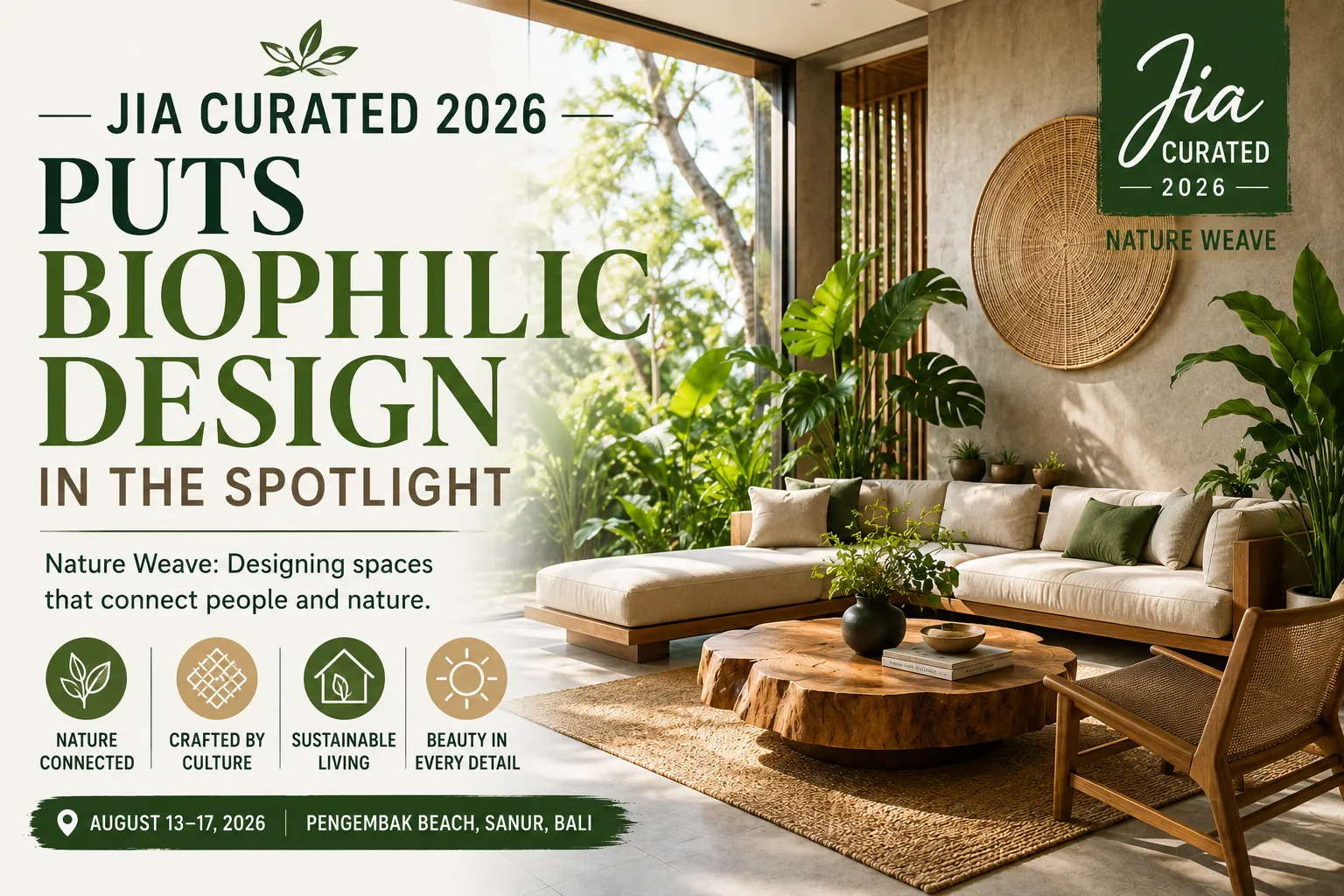
Jia Curated 2026 Puts Biophilic Design in the Spotlight
Biophilic design is moving beyond a fashionable interior-design aesthetic and into a broader conversation about how people live alongside nature. That idea is taking center stage at Jia CURATED 2026, a five-day celebration of craft, design and culture taking place from August 13 to 17 at Pengembak Beach in Sanur, Bali.
This year’s theme, “Nature Weave,” explores the relationship between people and the natural world, with biophilia positioned as one of the central ideas shaping the event. The programme brings together architecture, interiors, materials, landscape, product design, craft and cultural expression.
For interior-design enthusiasts, the event offers a useful glimpse into how nature-inspired spaces may evolve beyond simply adding houseplants to a room.
What Is Biophilic Design?
Biophilic design is an approach to creating spaces that strengthen people’s connection with nature.
That can involve obvious elements such as:
- Indoor plants
- Natural light
- Wood and stone
- Views of greenery
- Water features
- Natural ventilation
- Organic shapes
- Natural textures
- Outdoor-indoor connections
But the concept goes deeper than decoration.
A genuinely biophilic space considers how people experience light, air, materials, vegetation, sound and movement throughout the environment.
That distinction is particularly relevant to Jia CURATED 2026, where the organizers describe biophilia as a relationship with the natural world rather than simply an aesthetic choice. The event’s official theme emphasizes creating with greater awareness of natural systems and recognizing people as participants in shared environments.
Why Jia CURATED Is Highlighting Nature
Jia CURATED has developed from a smaller initiative into a broader platform connecting designers, artisans, architects and creative communities.
The event was originally introduced in 2022 as Jia CURATED Kiosks and evolved into Jia CURATED in 2025. Its organizers say the programme is rooted in the Indonesian concept of Gotong Royong, which emphasizes communal cooperation and collaboration.
That philosophy fits naturally with this year’s focus.
Rather than treating the home as an isolated interior, “Nature Weave” asks designers to consider the relationships between buildings, landscapes, materials, ecosystems and people.
The result is a broader interpretation of what sustainable and nature-conscious design can mean.
For a wider look at how warmer, more layered approaches are reshaping interiors, see Layered Comfort Is Taking Over: Why Designers Are Moving Beyond Minimalist Interiors.
Architecture Takes a Central Role
One of the most notable programmes at Jia CURATED 2026 is Architecture in Scale, an exhibition of architectural maquettes curated by design journalist and writer Charmaine Chan.
The exhibition features work from 25 architectural studios across Indonesia and wider Asia. Participating practices include Kengo Kuma & Associates, Andramatin, IBUKU Studio and Cheng Tsung Feng.
The selection has a particularly relevant criterion: biophilia needs to be integral to the architecture rather than merely decorative.
That distinction is significant for interior design because it shifts the conversation from adding natural-looking objects to designing spaces where the relationship with nature is embedded into the structure itself.
When Biophilia Becomes Part of Architecture
One example highlighted in coverage of the exhibition is Elok House, designed by Chang Architects in Singapore.
The project demonstrates how vegetation, light and water can be incorporated into a relatively constrained urban property. Its design includes light wells, trees growing through openings in the building and a retaining wall that incorporates a waterfall.
Projects such as this demonstrate a different way of thinking about biophilic design.
Instead of asking where a plant can be placed, designers can ask:
How can nature become part of the space itself?
That question has implications for everything from residential architecture to hotel interiors and urban developments.
Natural Light Is More Than Decoration
Natural light is one of the most accessible elements of biophilic design.
Large windows, skylights, courtyards and carefully positioned openings can introduce changing patterns of daylight into interiors.
The experience is different from relying entirely on artificial lighting because daylight changes throughout the day, creating variation in brightness, shadow and atmosphere.
Good interior design can use those changes deliberately.
A breakfast area might receive soft morning light, while a living space could be oriented toward afternoon daylight. In a well-designed home, windows can also provide visual connections to gardens, trees or surrounding landscapes.
This creates a relationship between the interior and the world outside.
Materials Are Becoming Part of the Story
Biophilic interiors often emphasize materials that provide a tactile connection to nature.
Wood is an obvious example, but the possibilities extend to:
- Stone
- Clay
- Bamboo
- Natural fibers
- Rattan
- Cork
- Handmade ceramics
- Woven materials
- Reclaimed materials
The appeal is not simply visual.
Natural materials can introduce texture, variation and a sense of craftsmanship that mass-produced synthetic surfaces sometimes lack.
That emphasis on material intelligence also appears throughout Jia CURATED’s broader 2026 programme, which brings together exhibitors working across materials and finishes, manufacturing, craft, architecture, landscape and interior design.
These material choices also connect with the broader movement toward warmer, earthier interiors explored in Warm Earth Tones Continue to Dominate Interior Design.
The Rise of More Thoughtful Interiors
One of the strongest ideas emerging from the Jia CURATED programme is that sustainable design does not necessarily have to look technological.
A sustainable interior can be warm, tactile and culturally specific.
That is important because homeowners sometimes associate sustainability with highly technical systems, smart-home equipment or futuristic architecture.
But sustainability can also involve choosing durable materials, supporting craftsmanship, reusing discarded resources and designing spaces that respond intelligently to their surroundings.
Jia CURATED’s Waste to Wonder initiative, for example, explores how discarded materials can be transformed using simple, low-tech techniques and craftsmanship.
The emphasis on craftsmanship and individuality also reflects the broader shift toward homes that feel less staged and more personal, as explored in Interior Designers Move Away From Perfect Showrooms Toward More Personal Homes.
Connecting Interior Design With Local Culture
Biophilic design also provides an opportunity to make interiors more connected to their geographical and cultural context.
A home in Bali does not necessarily need to imitate a Scandinavian interior filled with generic greenery.
Instead, designers can draw from local materials, traditional craft techniques, native vegetation, climate-responsive architecture and regional building knowledge.
That creates spaces that feel connected to their surroundings rather than simply decorated with internationally popular design trends.
This approach is particularly relevant to Jia CURATED, which aims to highlight Indonesian and regional creative practices while encouraging cross-cultural exchange.
What This Means for Homeowners
The ideas being explored at Jia CURATED do not require homeowners to redesign an entire house.
Biophilic principles can be introduced gradually.
A homeowner might start by improving access to daylight, introducing plants that suit the local environment or replacing synthetic finishes with natural materials.
Other possibilities include:
Create Better Views
Position seating near windows overlooking gardens, trees or outdoor spaces where possible.
Bring in More Natural Materials
Wooden furniture, woven textiles, stone accessories and handmade ceramics can introduce natural textures without requiring major renovations.
Improve Indoor Greenery
Choose plants according to the amount of natural light, humidity and maintenance time available rather than selecting plants purely for appearance.
Connect Indoor and Outdoor Spaces
Large openings, balconies, patios and courtyards can help blur the boundary between interior and exterior.
Use Natural Ventilation
Where climate and building design allow, windows and openings can provide fresh air and reduce reliance on mechanical systems.
Avoid Excessive Clutter
Biophilic interiors often benefit from a calmer visual environment where natural materials and greenery have room to stand out.
Why This Matters for Future Interior Design
The significance of Jia CURATED 2026 extends beyond a single design event.
The programme reflects a broader shift in the design industry toward thinking about buildings and interiors as part of larger ecological systems.
That could influence how designers approach everything from residential projects to hospitality spaces and commercial interiors.
Instead of treating sustainability as an additional feature, designers can incorporate environmental considerations from the beginning of the design process.
This can affect material selection, building orientation, landscaping, ventilation, lighting and the relationship between indoor and outdoor spaces.
Jia CURATED Expands the Conversation Beyond Interiors
Although biophilic design is an important theme, Jia CURATED 2026 is not solely an interior-design event.
The programme includes more than 150 local and international exhibitors and over 250 participating brands across areas including product design, architecture, construction, materials, art and landscape.
It also includes talks, cultural performances, food and drink, and initiatives designed to encourage collaboration among creative communities.
The 360° Design Dialogues programme is another part of that effort, bringing together designers, architects, makers and other creative thinkers to discuss broader questions around design.
That interdisciplinary structure is important because the future of biophilic design will likely depend on collaboration between multiple fields rather than interior designers working in isolation.
A Preview of More Nature-Connected Homes
Jia CURATED 2026 arrives at a time when the relationship between people and their built environments is receiving increasing attention.
Homes are where people spend substantial portions of their lives, yet many modern interiors can become disconnected from daylight, natural materials, fresh air and outdoor environments.
The “Nature Weave” concept offers an alternative: spaces that do not simply place nature inside a building but consider the building as part of a wider living system.
For interior designers, that can mean rethinking everything from material choices to spatial planning.
For homeowners, it can mean creating environments that feel calmer, more tactile and more connected to the places where they live.
From Houseplants to Whole-Space Thinking
The most interesting takeaway from Jia CURATED 2026 may be that biophilic design is becoming less about a particular visual style and more about a way of designing.
A plant-filled room can be beautiful, but true nature-connected design asks more fundamental questions.
Where does daylight enter?
How does air move through the space?
What materials surround the occupants?
Can people see vegetation?
How does the building interact with its landscape?
Where do materials come from, and how long will they last?
And perhaps most importantly, how can a built environment coexist more thoughtfully with the natural world?
Those questions place biophilic design at the intersection of interior design, architecture, sustainability and human experience.
As Jia CURATED 2026 prepares to bring these ideas together in Bali, “Nature Weave” offers a compelling vision of interiors that are not merely inspired by nature, but more deeply connected to it.