ABUP Show 2026: The Furniture and Home Decor Trends to Watch This Week
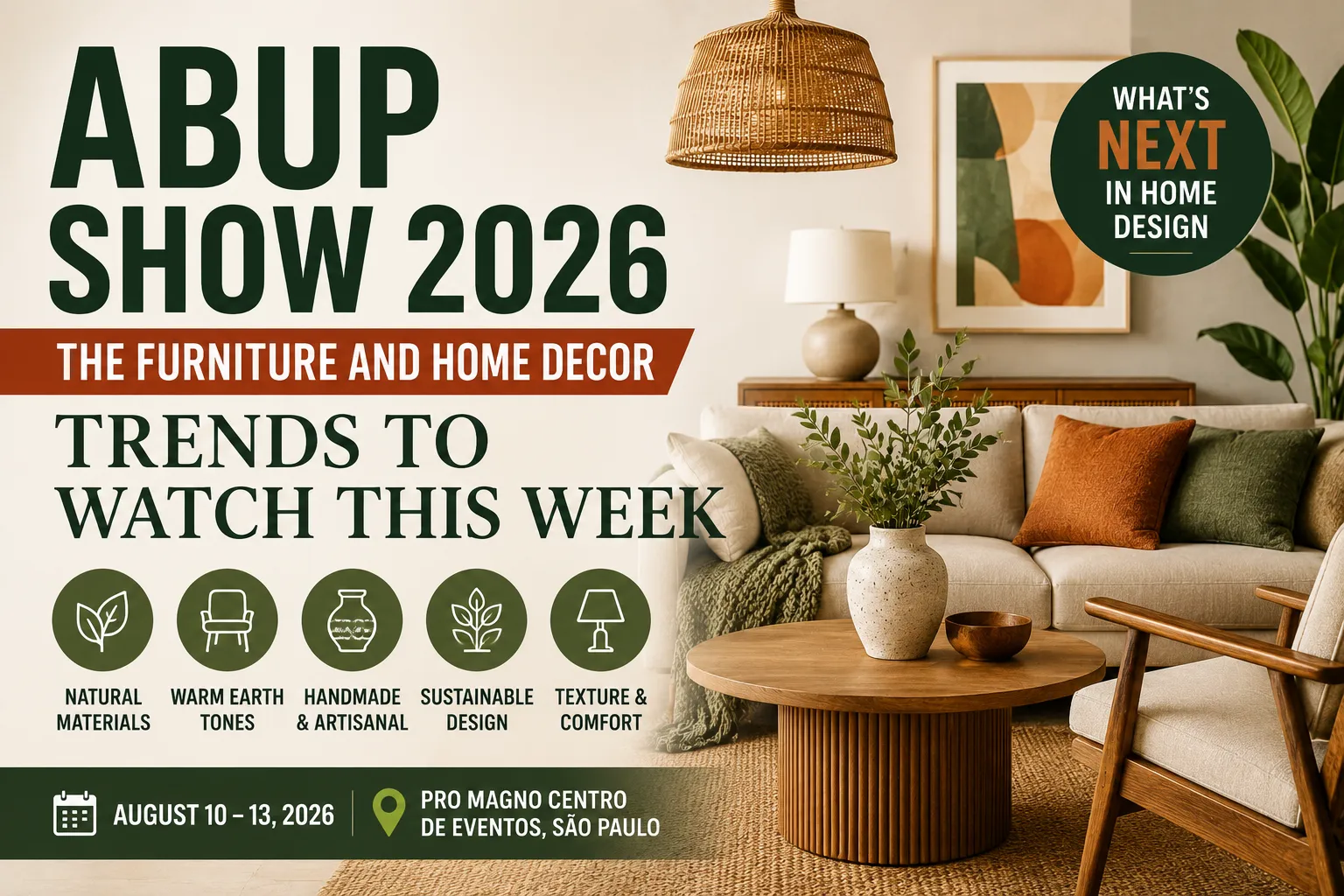
ABUP Show 2026: The Furniture and Home Decor Trends to Watch This Week
The Brazilian home-design market is getting a fresh look this week as ABUP SHOW 2026 opens in São Paulo, bringing together retailers, designers, decorators, architects, manufacturers, importers and other professionals looking for what could shape the next season of home furnishings and décor.
The second ABUP SHOW edition of 2026 runs from August 10 to 13 at PRO MAGNO Centro de Eventos in São Paulo. Organizers expect around 200 exhibitors, 15,000 visitors and 16,000 square meters of exhibition space. The business-focused event covers home decoration, tableware, housewares, decorative textiles, gifts, handicrafts and Brazilian authorial design.
Because the show is aimed at industry professionals rather than the general public, it serves as more than a shopping event. It is a place where retailers and designers can see products before they reach stores and identify the colors, materials, textures and design ideas likely to become more visible in homes.
And while the full picture from this week’s show will only emerge as exhibitors unveil their collections, several themes are already giving clues about where Brazilian interiors may be heading—and how they fit into the broader shift toward layered comfort in interior design.
Nature Is Moving From Inspiration to the Center of the Room
One of the clearest signals from ABUP’s 2026 programming so far is the continuing influence of nature.
At the first major ABUP SHOW of the year, the organization highlighted products inspired by natural landscapes and materials, including shades of green, blue, brown and terracotta, along with natural textures and patterns drawn from the natural world.
That points to a broader shift away from interiors that feel overly polished or disconnected from their surroundings.
Instead, designers are bringing nature indoors through:
- Earthy color palettes
- Natural wood
- Fibers and woven materials
- Stone and ceramic surfaces
- Botanical motifs
- Organic shapes
- Handmade objects
- Reclaimed materials
For homeowners, the trend does not require turning a room into a literal jungle.
A single wooden accent table, woven lamp, terracotta vase, botanical textile or sculptural piece can introduce the look without overwhelming an otherwise modern interior.
Expect More Warm, Earthy Color
Neutral interiors are not disappearing, but they are becoming warmer.
ABUP’s 2026 trend material has repeatedly pointed toward natural colors and more welcoming palettes. The combination of green, blue, brown and terracotta seen in the year’s earlier launches suggests a move toward colors that feel connected to landscapes rather than purely decorative.
That could translate into living rooms and bedrooms featuring:
- Olive and botanical greens
- Deep and muted blues
- Terracotta
- Clay
- Warm browns
- Sand
- Cream
- Natural wood tones
The appeal is practical as well as aesthetic.
Earthier colors can make a contemporary room feel less sterile while working easily with wood, stone, leather, linen and other natural materials.
For more inspiration on this direction, see how warm earth tones continue to dominate interior design across contemporary interiors.
Texture Is Becoming as Important as Color
One of the more interesting directions surrounding ABUP’s 2026 offerings is the emphasis on tactile surfaces.
The organization’s autumn décor guidance highlighted enveloping textures, natural materials and colors, comfort and a sense of welcome as important elements in current décor.
That suggests interiors are increasingly being designed to feel good as well as look good.
Think:
- Chunky textiles
- Woven baskets
- Textured ceramics
- Bouclé and other tactile upholstery
- Hand-finished surfaces
- Carved wood
- Natural fibers
- Layered rugs
- Decorative textiles
Texture is particularly useful for neutral rooms.
Instead of adding several colors to make a space interesting, designers can create depth by combining smooth, rough, soft, woven, glossy and matte finishes.
The Return of the Handmade Look
Mass-produced interiors have made it easier than ever to furnish a home quickly.
But that convenience has also increased demand for objects that look personal and distinctive.
ABUP continues to give significant space to Brazilian craftsmanship and independent designers. The current show includes Projeto Célula and Alma Brasileira, initiatives curated by Cristiane Rosenbaum that are designed to give visibility to independent designers, smaller-scale production and work that highlights Brazilian creativity and cultural identity.
That makes the handmade aesthetic one of the most interesting themes to watch this week.
Rather than making every item in a room look perfectly coordinated, the emerging approach favors pieces with evidence of the maker’s hand.
A handmade ceramic vase does not necessarily need to match another vase.
A wooden stool can have visible grain.
A woven textile can have subtle irregularities.
A sculptural object can become a focal point rather than simply filling an empty shelf.
The same preference for natural materials and craftsmanship can be seen in other design markets, including the Nordic interior trends emerging from Formex 2026.
Brazilian Design Is Getting More Attention
ABUP SHOW is also a useful indicator of the growing visibility of Brazilian authorial design.
The fair brings together established companies with independent designers and smaller producers, creating an environment where traditional craft and contemporary design can appear side by side. The organization describes its programming as a way of promoting Brazilian original design and connecting emerging talent with the professional market.
This matters because Brazilian interiors have a distinctive resource that cannot easily be replicated: local materials, regional craft traditions and a large pool of designers drawing from different cultural influences.
The result can be furniture and decorative objects that feel contemporary without losing a sense of place.
Expect More Objects With a Story
Another trend worth watching is what could be called emotional decorating.
ABUP’s previous August show identified “Memória Afetiva”—or affective memory—as one of its standout themes, alongside patterns and natural materials and colors. The examples included decorative objects referencing family, childhood, traditional crafts and familiar cultural symbols.
That idea is likely to remain relevant because consumers increasingly want their homes to say something about them.
Instead of asking only, “Does this match the sofa?”, homeowners are increasingly asking:
“Does this mean something to me?”
That can mean displaying:
- Family heirlooms
- Travel souvenirs
- Handmade objects
- Vintage pieces
- Artwork by local creators
- Traditional crafts
- Objects connected to childhood
- Pieces with personal stories
The result is a home that feels collected rather than decorated from a single catalog.
This movement toward more individual interiors can also be seen in the broader shift toward interior designers moving away from perfect showrooms toward more personal homes.
Pattern Is Coming Back With More Confidence
Minimalism has dominated interiors for years, but pattern has steadily returned.
ABUP’s 2025 show identified prints as one of its three major trend categories, highlighting geometric designs, floral motifs, Brazilian fauna and flora, and colorful decorative collections.
That does not necessarily mean every wall will become heavily patterned.
Instead, pattern can appear through smaller elements:
- Cushions
- Curtains
- Rugs
- Lampshades
- Table linens
- Upholstery
- Ceramic designs
- Artwork
This makes the trend easier to adopt.
A homeowner who prefers neutral walls can still introduce a patterned chair or a colorful rug without redesigning an entire room.
Organic Shapes Can Soften Modern Interiors
Straight lines and sharp geometric furniture remain useful, but organic forms can make contemporary spaces feel more relaxed.
Curved chairs, rounded tables, irregular ceramics and sculptural accessories can introduce visual movement without requiring bright colors.
The emphasis on natural inspiration at ABUP makes organic forms particularly relevant. The fair’s 2026 trend coverage has linked nature not only to color and materials but also to forms and textures.
For furniture, this can mean:
- Rounded coffee tables
- Curved sofas
- Arched mirrors
- Sculptural chairs
- Irregular side tables
- Soft-edged storage
- Organic decorative objects
The appeal is especially strong in rooms that already contain many hard architectural lines.
Wood Remains a Key Material
Wood is hardly a new interior-design trend, but its role continues to evolve.
ABUP’s previous trend coverage highlighted natural and recycled wood, including decorative pieces made from reclaimed urban trees.
The emphasis is not necessarily on perfectly uniform timber.
Visible grain, natural variation and evidence of craftsmanship can become part of the aesthetic.
This makes wood particularly useful for creating warmth in minimalist spaces.
A contemporary apartment with concrete, glass and metal, for example, can feel considerably softer with a natural wood dining table, bench or sideboard.
Sustainability Is Showing Up Through Materials
Sustainability in interiors is increasingly moving beyond marketing language and into the materials themselves.
ABUP’s earlier launches included examples using recycled wood, natural fibers and handcrafted production. One highlighted collection used different recycled wood species for decorative vessels, while another featured accessories made from sisal and wood.
That points toward a more material-conscious approach to decorating.
Instead of simply buying products labeled “sustainable,” consumers can look for:
- Reclaimed materials
- Recycled components
- Durable construction
- Locally produced pieces
- Natural materials
- Repairable furniture
- Timeless designs
- Smaller-scale production
The most sustainable object is not necessarily the one with the most elaborate sustainability label.
Sometimes it is the object that is well made, used for many years and not quickly replaced.
Small Decorative Objects Are Getting Bigger Design Roles
Furniture often gets the attention in interior design, but smaller objects can have an outsized effect on a room.
ABUP SHOW includes a wide range of decorative objects, tableware, textiles, gifts and handcrafted products, making accessories a major part of its trend landscape.
Expect decorative pieces to function less like afterthoughts and more like miniature artworks.
A sculptural vase, unusual lamp, handmade bowl or distinctive wall object can provide the personality that a room needs without requiring a major renovation.
This is also one of the easiest trends for homeowners to adopt.
Changing accessories is considerably less expensive and disruptive than replacing furniture.
Hospitality-Inspired Comfort Is Spilling Into Homes
ABUP’s professional audience extends beyond furniture and décor retailers. Hotels, restaurants, bars, architects, decorators, designers and landscapers are among the visitors the event is designed to attract.
That mix can influence residential design.
Hospitality spaces have become increasingly focused on creating environments where people want to stay longer.
That philosophy translates naturally into homes through:
- Comfortable seating
- Layered lighting
- Soft textiles
- Side tables
- Decorative objects
- Warm colors
- Flexible spaces
- More inviting dining areas
The emphasis is less on creating a room that looks impressive in a photograph and more on creating one that feels comfortable at 8 p.m. on an ordinary evening.
Furniture May Become More Personal and Less “Matchy-Matchy”
One of the strongest implications of the trends surrounding ABUP is the move away from perfectly coordinated furniture sets.
If natural materials, handmade objects, emotional pieces and independent design continue gaining attention, interiors may increasingly combine furniture from different sources.
A room could pair:
- A contemporary sofa
- A vintage wooden table
- A handmade ceramic lamp
- A patterned rug
- A sculptural Brazilian artwork
- A woven accent chair
The pieces do not have to belong to the same collection.
They simply need to share enough visual relationships—such as color, material, scale or shape—to create a coherent room.
The “Collected Home” Could Beat the Showroom Look
The showroom look is efficient.
Buy a sofa, matching chairs, coffee table, console and accessories from the same collection, and the room is finished.
But the collected-home approach offers something different.
It allows a room to evolve.
A homeowner might purchase a sofa this year, find an antique table next year, commission artwork later and eventually add a handmade rug.
That approach reflects the growing emphasis on memory, craftsmanship and individuality visible in ABUP’s trend direction.
The finished room can therefore feel less like a product display and more like a record of the people who live there.
What Retailers Will Be Watching
ABUP SHOW is ultimately a B2B event, so its importance extends beyond interior-design inspiration.
Retailers are watching to determine which products consumers may want next.
The August timing is particularly strategic because businesses are preparing their portfolios ahead of major retail periods including Children’s Day, Christmas and New Year’s Eve, according to ABUP president Jamil Rima.
For retailers, that means the show is partly about identifying what can sell.
For designers, it is about discovering materials, makers and new sources.
For manufacturers, it is an opportunity to see where the market is moving.
And for consumers, those decisions can eventually determine what appears in stores and online catalogs over the coming months.
The Designers to Watch May Be the Smaller Ones
Large manufacturers naturally dominate attention at trade shows because they have the scale to produce and distribute widely.
But some of the most interesting design ideas can come from smaller studios.
That’s one reason Projeto Célula and Alma Brasileira matter.
ABUP says Projeto Célula gives visibility to designers with independent production and smaller-scale output, while Alma Brasileira highlights independent brands and designers that value Brazilian art and culture.
These initiatives can provide a window into ideas that have not yet become mainstream.
Some may remain niche.
Others could eventually influence larger manufacturers and retailers.
What Homeowners Can Take From the Show
You do not need to live in São Paulo or attend a trade fair to benefit from the trends emerging around ABUP.
The easiest lessons to translate into a home are relatively simple.
Start With Natural Materials
Introduce wood, stone, ceramics, rattan, linen or other tactile materials.
Warm Up Your Color Palette
Try terracotta, olive, muted blue, brown, cream or other nature-inspired shades.
Add One Handmade Piece
A single locally made object can give a room more personality than a shelf filled with generic accessories.
Mix Old and New
Combine contemporary furniture with vintage or sentimental objects.
Use Pattern Selectively
A patterned rug, cushion or lampshade can add energy without overwhelming the room.
Choose Objects With Meaning
Decor should reflect the people who live in the house—not only current trends.
Buy for Longevity
Prioritize pieces that are durable enough to remain useful after the trend cycle changes.
What Could Define the Next Wave of Brazilian Interiors?
ABUP SHOW 2026 arrives at an interesting moment for interior design.
The strongest signals are not pointing toward one single color or furniture shape. Instead, they suggest a broader change in what people want their homes to feel like.
Warmer.
More tactile.
More personal.
More connected to nature.
More expressive of local culture and craftsmanship.
The event’s earlier 2026 launches already showed the strength of nature-inspired colors, materials, textures and forms, while the organization’s previous August edition identified emotional decorating, patterns and natural materials as major indicators of what could move into stores.
This week’s show could reveal whether those ideas continue to gain momentum—or whether new directions begin to emerge.
Why ABUP Show 2026 Matters Beyond São Paulo
Trade fairs rarely tell consumers exactly what their homes should look like.
Their real value is that they reveal where the industry is experimenting.
At ABUP SHOW 2026, that experimentation is taking place across furniture and décor, textiles, craftsmanship, tableware, home accessories and Brazilian authorial design. The event’s combination of established companies and independent creators makes it particularly useful as a snapshot of where the country’s home-design market is heading.
For homeowners, the biggest takeaway may be that the next phase of interior design is less about chasing a single “look” and more about creating spaces with warmth, texture, character and a stronger connection to the materials and stories behind the objects.
And if the trends already emerging around ABUP are any indication, the most interesting homes of the next season may be the ones that look collected, tactile and unmistakably personal—not perfectly matched.