What Garden Soil pH Means and How Acidity Affects Plant Nutrients
**What Garden Soil pH Means and How Acidity Affects Plant Nutrients
Healthy plants need more than sunlight and water. The condition of the soil around their roots can have a major influence on how well they grow, and one of the most important soil characteristics is pH.
Soil pH describes how acidic or alkaline the soil is. Although it may seem like a technical measurement, pH has practical consequences for gardeners because it affects how easily plants can access essential nutrients.
A soil can contain plenty of nutrients and still leave plants struggling if the pH prevents their roots from taking those nutrients up efficiently. Understanding soil pH can therefore help gardeners diagnose nutrient problems, choose appropriate plants, and make better decisions about fertilizers and soil amendments.
What Is Soil pH?
Soil pH is a measure of the acidity or alkalinity of soil.
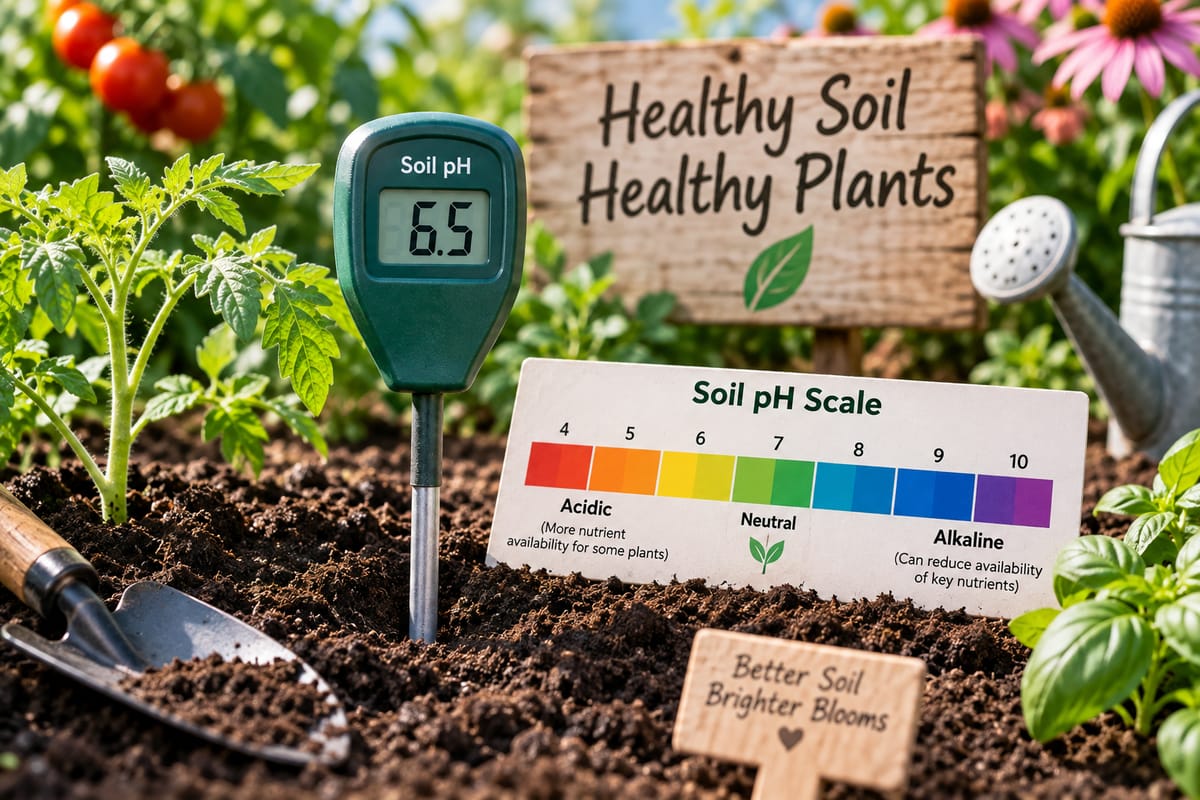
The pH scale generally runs from 0 to 14:
- Below 7: Acidic
- 7: Neutral
- Above 7: Alkaline
Most garden soils fall somewhere within the acidic-to-alkaline portion of this scale.
The pH scale is logarithmic, which means relatively small numerical changes can represent meaningful differences in acidity. A soil with a pH of 5 is considerably more acidic than soil with a pH of 6.
The goal is not necessarily to make every garden soil neutral. Different plants have different pH preferences, and many grow well in mildly acidic or mildly alkaline conditions.
Why Soil pH Matters to Plants
One of the main reasons pH matters is that it influences nutrient availability.
Plant roots absorb nutrients in specific chemical forms. Soil conditions influence whether those forms remain available for root uptake or become less accessible.
As a result, soil pH can affect nutrients such as:
- Nitrogen
- Phosphorus
- Potassium
- Iron
- Manganese
- Zinc
- Copper
- Calcium
- Magnesium
- Boron
This means that nutrient availability is not simply a matter of how much fertilizer has been added to the soil.
A garden can contain substantial amounts of a particular nutrient while plants show signs of deficiency because the nutrient is chemically unavailable under the existing soil conditions.
The Difference Between Nutrient Content and Nutrient Availability
It is useful to distinguish between how much of a nutrient exists in soil and how much of that nutrient a plant can access.
Imagine soil containing an adequate supply of iron. If the soil conditions cause much of that iron to become difficult for plant roots to absorb, the plant can still develop symptoms associated with iron deficiency.
Adding more iron without addressing the underlying soil conditions may not solve the problem.
This is why gardeners sometimes need to consider soil pH when a plant appears to have a nutrient deficiency.
What Acidic Soil Means
Acidic soil has a pH below 7.
Some plants naturally perform well in acidic conditions. Others may struggle when acidity becomes too strong.
Strongly acidic soils can influence nutrient availability and may also affect microorganisms, root development, and other aspects of soil health.
Certain nutrients can become more available as soils become more acidic, while others may become less available. Extremely acidic conditions can also increase the availability of some elements to levels that may be harmful to sensitive plants.
The effect therefore depends on the particular nutrient, plant species, and degree of acidity.
What Alkaline Soil Means
Alkaline soil has a pH above 7.
Highly alkaline conditions can reduce the availability of several micronutrients. Iron is a particularly important example because plants growing in alkaline soils can sometimes develop iron-deficiency symptoms even when iron is present in the soil.
Phosphorus availability can also be affected by soil chemistry, depending on the pH and the minerals present.
As with acidic soil, moderately alkaline conditions are not automatically a problem. Some plants are naturally adapted to them.
Most Garden Plants Prefer a Moderate Range
Many common garden plants perform well in slightly acidic to neutral soil.
A moderately acidic environment can support the availability of many essential nutrients while also providing favorable conditions for soil organisms.
However, there is no single ideal pH for every plant.
For example, some acid-loving plants prefer distinctly acidic conditions, while other plants tolerate or prefer soils closer to neutral or slightly alkaline.
Gardeners should therefore consider the requirements of the plants they intend to grow rather than attempting to force every part of a garden to the same pH.
How Soil pH Affects Nitrogen
Nitrogen is essential for plant growth and is strongly associated with the development of healthy foliage.
Soil pH can influence nitrogen cycling partly through its effects on soil microorganisms. These organisms participate in processes that make different forms of nitrogen available to plants.
Extremely acidic or alkaline conditions can interfere with biological activity and nutrient cycling.
Maintaining suitable soil conditions can therefore support more efficient use of nitrogen already present in organic matter or supplied through fertilizers.
How Soil pH Affects Phosphorus
Phosphorus supports processes involving energy transfer, root development, and reproduction.
Its availability can be particularly sensitive to soil chemistry.
In strongly acidic soils, phosphorus can interact with minerals containing iron and aluminum. In alkaline soils, it can interact with calcium-containing compounds.
These reactions can reduce the amount of phosphorus available to plants.
This is one reason simply adding more phosphorus fertilizer is not always the best response to poor plant growth. The underlying soil conditions may need attention as well.
How Soil pH Affects Potassium
Potassium plays important roles in water regulation, enzyme activity, and overall plant function.
Unlike some other nutrients, potassium availability is often less dramatically affected by pH across the normal garden range. However, soil structure, mineral composition, moisture, and other conditions still influence how effectively plants can access it.
A balanced approach to soil management is therefore more useful than focusing on pH alone.
Iron Deficiency and High Soil pH
Iron is one of the clearest examples of the relationship between pH and nutrient availability.
When soil becomes too alkaline, iron can become less available to plant roots. Plants may then develop interveinal chlorosis, in which the areas between leaf veins turn yellow while the veins remain greener.
This symptom can sometimes be mistaken for a lack of iron in the soil.
In reality, the issue may be that the existing iron is not sufficiently available under the soil conditions.
Understanding this distinction can prevent gardeners from repeatedly adding nutrients without addressing the underlying cause.
Soil pH Also Influences Other Micronutrients
Iron is not the only micronutrient affected by pH.
The availability of elements such as manganese, zinc, copper, and boron can also change depending on soil conditions.
Some micronutrients tend to become less available as soil becomes more alkaline, while others may become increasingly available as acidity rises.
This creates a nutrient-availability pattern that changes across the pH scale.
For gardeners, the practical lesson is simple: more fertilizer does not always mean more nutrition for plants.
Soil pH and Root Health
Soil pH can influence plants beyond nutrient availability.
Roots need a suitable chemical environment for normal development. Extremely acidic or alkaline conditions can interfere with root growth and the biological processes taking place around the root zone.
Soil pH can also interact with factors such as:
- Soil structure
- Moisture
- Organic matter
- Microbial activity
- Salinity
- Nutrient levels
- Mineral composition
This is why pH should be considered as one part of overall soil health rather than an isolated number.
Gardeners interested in the broader subject can explore The Ultimate Guide to Soil Health for a wider look at the physical, chemical, and biological characteristics that contribute to productive soil.
How to Test Garden Soil pH
The easiest way to understand a garden’s pH is to test the soil.
Home gardeners can use several types of soil-testing products, ranging from simple pH kits to more sophisticated meters and laboratory tests.
A soil sample should represent the area being evaluated. In a large garden, different beds can have different pH levels, so testing multiple areas may provide a more useful picture.
For more reliable results, gardeners should follow the instructions provided with their chosen test method.
A professional soil analysis can provide additional information about nutrient levels, organic matter, and other soil properties alongside pH.
Why Guessing Soil pH Can Cause Problems
Gardeners sometimes try to diagnose soil conditions based only on plant appearance.
Although leaves and growth patterns can provide clues, visual symptoms are not always specific.
Yellow leaves, slow growth, poor flowering, or weak plants can have many possible causes, including:
- Nutrient deficiencies
- Excess nutrients
- Poor drainage
- Drought
- Root damage
- Pests
- Diseases
- Compacted soil
- Inappropriate light
- Unsuitable temperatures
- Incorrect soil pH
Testing provides a more reliable starting point than repeatedly adding amendments based on symptoms alone.
How Gardeners Can Lower Soil pH
When soil is excessively alkaline for the plants being grown, gardeners may use amendments intended to gradually increase acidity.
Elemental sulfur is one commonly used amendment, although the appropriate amount depends on the existing soil, soil type, and desired pH.
Organic matter can also influence soil characteristics over time, although compost should not be treated as a universal or immediate solution for significantly changing pH.
Changes in soil pH generally take time. Large corrections should be approached gradually rather than attempting to transform the soil dramatically in a single application.
How Gardeners Can Raise Soil pH
When soil is too acidic for the plants being grown, gardeners may use materials such as agricultural lime to increase pH.
The amount required depends on factors including:
- Current soil pH
- Soil texture
- Organic matter
- Target pH
- Type of liming material
Clay soils and soils with greater buffering capacity can require different amounts of amendment than sandy soils.
A soil test can therefore help determine whether an amendment is needed and how much may be appropriate.
Organic Matter and Soil pH
Organic matter is an important part of healthy garden soil.
Materials such as compost can improve soil structure, water management, and biological activity. Their effects on pH can vary depending on the material and the existing soil conditions.
Gardeners can learn more about making and applying compost through How to Make Compost and Use It Effectively in a Garden.
Rather than viewing compost simply as a way to change pH, it is generally more useful to think of it as one component of broader soil management.
Fertilizer Does Not Replace Good Soil Management
Fertilizers supply nutrients, but they do not necessarily correct every soil problem.
A gardener may apply fertilizer to a plant showing poor growth, only to see little improvement because the actual problem involves pH, drainage, compaction, or another environmental factor.
This is why fertilizer decisions should ideally be based on the needs of the plant and information about the soil.
The Complete Guide to Garden Fertilizers and Plant Nutrition offers additional information on how nutrients support plant growth and how fertilizers fit into a broader gardening strategy.
Plants Can Influence Soil Conditions
Plants are not simply passive occupants of the soil.
Roots interact with their surrounding environment and release compounds that can influence the chemistry immediately around them. Decomposing plant material also returns organic compounds and nutrients to the soil.
Over time, gardening practices can influence soil characteristics.
Removing plant material, adding compost, applying fertilizers, irrigating heavily, and using certain amendments can all contribute to changes in soil chemistry.
Soil Type Matters When Managing pH
Two gardens with the same measured pH may respond differently to amendments.
Soil texture and composition influence how strongly a soil resists changes in pH. This property is sometimes referred to as buffering capacity.
Sandy soils may change more readily in response to certain amendments, while soils with greater clay or organic matter content can resist rapid pH changes.
This is another reason why recommended amendment quantities should not be applied blindly.
Acid-Loving Plants and Alkaline-Tolerant Plants
Choosing plants that naturally suit existing soil conditions can sometimes be easier than attempting to change the soil dramatically.
Plants adapted to acidic environments may perform well where other species struggle. Likewise, plants that tolerate alkaline conditions can be better choices for gardens where raising or lowering pH would be difficult.
This approach is especially useful for established landscapes.
Instead of constantly modifying the soil, gardeners can select plants according to the conditions already present.
Organic Gardening and Soil pH
Organic gardening places considerable emphasis on maintaining healthy soil through practices such as composting, mulching, crop diversity, and responsible use of organic materials.
These practices can contribute to long-term soil quality, but organic gardening does not mean soil pH can be ignored.
Natural materials can still alter soil chemistry, and “organic” does not automatically mean a material is appropriate for every plant or soil condition.
For a broader introduction to the subject, Organic Gardening Explained explores the principles behind growing plants while emphasizing soil and ecological management.
Common Mistakes When Managing Soil pH
Several mistakes can make pH management unnecessarily difficult.
Changing pH Without Testing
Applying lime or sulfur without knowing the starting pH can push soil further away from the desired range.
Trying to Change pH Too Quickly
Large quantities of amendments can create new problems. Gradual adjustments are generally easier to manage.
Assuming Every Plant Wants Neutral Soil
Plants have different preferences. A neutral pH is not automatically ideal for every species.
Treating Every Yellow Leaf as a Nutrient Deficiency
Yellowing can have many causes. Testing and observing the plant’s growing conditions can help narrow down the possibilities.
Adding Fertilizer Without Understanding the Soil
More nutrients do not necessarily solve a problem caused by pH or poor root conditions.
A Simple Approach to Managing Garden Soil pH
Gardeners do not need to become soil scientists to manage pH effectively.
A practical approach is to:
- Know which plants you are growing.
- Test the soil rather than guessing.
- Compare the measured pH with the plants’ preferred ranges.
- Look at nutrient levels when possible.
- Improve organic matter and overall soil quality.
- Use amendments only when there is a clear reason.
- Make pH changes gradually.
- Retest after sufficient time has passed.
This approach reduces unnecessary amendments and helps maintain a more stable growing environment.
When Soil pH Is Only Part of the Problem
A plant growing poorly does not necessarily have a pH problem.
Even when soil pH falls outside the preferred range, other factors can contribute to poor growth. Waterlogged soil, drought, insufficient sunlight, pests, diseases, temperature stress, compacted soil, and root damage can all affect plant health.
Good gardening therefore involves looking at the entire growing environment.
Soil pH is an important piece of the puzzle, but it is not the whole picture.
Understanding the Number Behind Healthy Soil
Soil pH may appear to be nothing more than a number on a test kit, but that number can provide valuable information about the environment surrounding plant roots.
Acidity and alkalinity influence how nutrients behave in soil, which in turn can affect whether plants are able to access the resources they need. The relationship is complex because nutrient availability also depends on soil minerals, organic matter, moisture, microorganisms, and plant species.
The goal is not to achieve a particular pH at all costs. Instead, gardeners can use soil testing and knowledge of their plants to create conditions where nutrients are available, roots can develop properly, and the soil remains productive over time.
A better understanding of pH can turn fertilizer and soil management from guesswork into a more informed part of everyday gardening.