The Home Design Trends Emerging From Intertextile Shanghai 2026
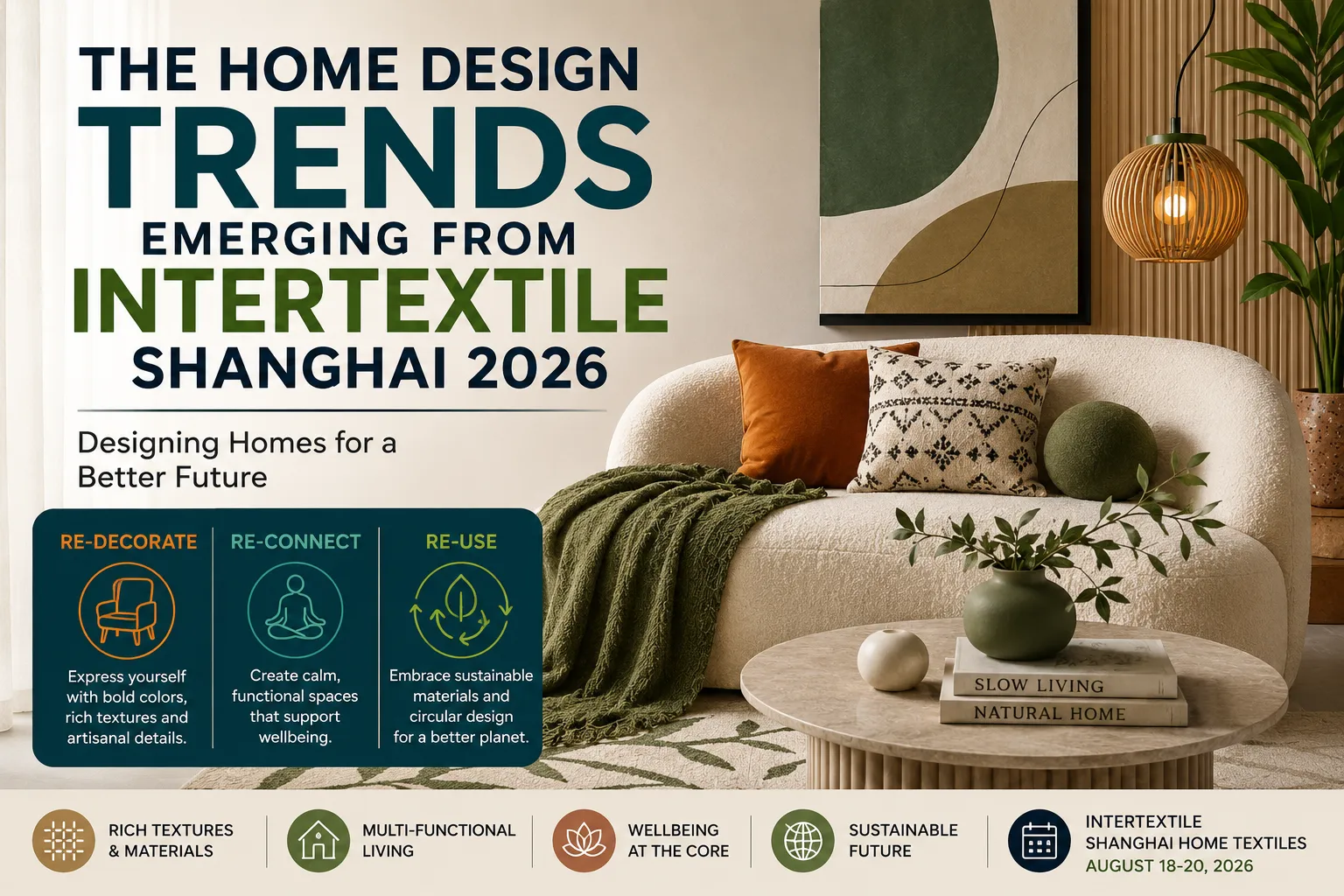
The Home Design Trends Emerging From Intertextile Shanghai 2026
Intertextile Shanghai Home Textiles 2026 is putting the spotlight on a broader shift taking place in interior design: homes are increasingly being designed not simply to look good, but to support wellbeing, individuality, flexibility and more responsible consumption.
The Autumn Edition of the event takes place August 18–20, 2026, at the National Exhibition and Convention Center in Shanghai. Organisers have positioned the fair as a major platform for emerging home-textile and interior trends, with the 2027 trend programme developed in collaboration with international trend forecasting agency NellyRodi.
At the centre of the programme is the theme “BREATHE UP!”, a concept built around balance, vitality and the relationship between interior environments and emotional wellbeing. Rather than treating textiles as purely decorative products, the trend direction points toward homes that influence how people feel, rest, connect and live.
Interiors Are Becoming More Personal
One of the clearest signals from the 2027 trend outlook is a move toward greater individual expression.
The RE-DECORATE direction encourages interiors built around bold aesthetics, rich textures and artisanal craftsmanship. The idea is that a home can become a form of personal expression rather than simply following a predetermined decorating style.
That could translate into more distinctive upholstery, decorative wall treatments, patterned fabrics, handmade-looking surfaces and carefully selected accessories.
Instead of matching every element of a room, homeowners may increasingly combine different textures and visual influences to create spaces that feel collected and personal.
This is particularly significant for textiles because curtains, upholstery, rugs, cushions and wall coverings can change the character of a room without requiring major structural renovations.
The emphasis on individuality also connects with the broader movement toward homes that feel less like staged showrooms and more like genuine reflections of the people who live in them. This is part of the shift explored in Interior Designers Move Away From Perfect Showrooms Toward More Personal Homes.
Calm Spaces Are Taking On Greater Importance
The second direction, RE-CONNECT, takes the trend in a different direction.
While RE-DECORATE is expressive, RE-CONNECT focuses on calmer interiors that combine pared-back design with intelligent functionality. The objective is to create environments that feel restorative rather than visually overwhelming.
This reflects a wider evolution in how people think about their homes.
Living rooms, bedrooms and even work areas are increasingly expected to serve several purposes. A bedroom may need to support sleep and relaxation, while a living area can function as a workspace, social space and entertainment area.
As a result, interior design is moving beyond appearance toward questions such as:
- Does the room feel comfortable?
- Can it support different activities?
- Does the lighting create the right atmosphere?
- Are the materials pleasant to touch?
- Does the space encourage rest?
- Can furniture and textiles adapt as needs change?
These considerations are helping blur the line between interior decoration and wellbeing-focused design.
The growing interest in nature-connected interiors also reflects this desire for calmer, more restorative spaces. JIA Curated 2026 Puts Biophilic Design in the Spotlight explores how natural elements, materials and architectural thinking are becoming part of that wider conversation.
Sustainability Moves From Principle to Design Feature
Sustainability is another major theme emerging from Intertextile Shanghai.
The RE-USE direction focuses on circular thinking, recycled materials and innovative production processes. Importantly, the concept does not present sustainability solely as an environmental obligation. It also treats recycled and reused materials as opportunities for aesthetic experimentation.
That distinction could be important for the future of interior design.
Consumers do not necessarily want sustainable products that compromise on appearance, comfort or quality. Instead, sustainable materials are increasingly expected to compete on design as well as environmental credentials.
This creates opportunities for furniture fabrics, carpets, curtains, bedding and decorative materials made with recycled or otherwise more resource-conscious processes.
The trend also supports a broader movement toward buying fewer disposable products and choosing pieces that can remain useful for longer.
Home Textiles Are Expanding Beyond Fabric
Another interesting development is the introduction of the Home Textiles Lifestyle Zone at the 2026 Autumn Edition.
The new area brings together products including carpets, wallpapers, aromatherapy products and home accessories.
That expansion reflects a larger change in how consumers approach interior design.
Rather than treating curtains, furniture, flooring, fragrance and accessories as completely separate categories, homeowners increasingly think about how these elements work together to create an overall experience.
For designers, this means a room’s atmosphere can be considered more holistically.
A particular combination of wall covering, rug texture, lighting, furniture and scent can create a very different experience from the same room using conventional materials.
The Bedroom Becomes a Wellness Space
The direction toward wellbeing is also particularly visible in bedroom design.
Earlier in 2026, the Spring Edition of Intertextile Shanghai Home Textiles placed significant attention on sleep, sustainable bedding and functional textile technologies. The event brought together nearly 380 exhibitors and more than 28,500 visitors, while its programme explored the relationship between home textiles and healthier sleep environments.
That emphasis suggests that bedroom design is increasingly being viewed through the lens of recovery and comfort.
Bedding materials, pillows, temperature management, tactile qualities and the broader atmosphere of a bedroom can all become part of the design conversation.
The result is a shift away from bedrooms being designed primarily around appearance toward spaces designed to support relaxation.
Multi-Functional Homes Will Need Smarter Textiles
Modern homes are also becoming more flexible.
A single room may need to accommodate working, exercising, relaxing, entertaining or sleeping depending on the household and time of day.
This makes adaptable materials increasingly valuable.
Curtains can divide spaces. Upholstery can provide comfort while adding acoustic qualities. Rugs can visually define different zones. Wall coverings can change the atmosphere of a room without significant construction work.
Intertextile’s emphasis on diversified living spaces and multifunctional environments reflects this broader shift in consumer expectations.
The future of interior design may therefore involve fewer rigidly defined rooms and more adaptable environments.
Texture Is Becoming a Design Tool
The focus on rich textures and tactile materials under RE-DECORATE also points toward an interior landscape that is less dependent on flat visual surfaces.
Texture can make neutral colours feel more interesting, soften hard architectural elements and introduce depth without relying exclusively on strong colours or patterns.
Velvets, woven fabrics, boucle-style surfaces, textured wall coverings, natural fibres and dimensional upholstery can all contribute to this approach.
The important change is that texture is increasingly being treated as a functional part of the atmosphere rather than a finishing touch.
Technology Has a Role, But It Is Not the Whole Story
The emerging trends do not suggest that future interiors will simply become filled with technology.
Instead, technology is increasingly expected to work quietly in the background.
The Spring Edition highlighted smart textiles and the integration of smart-home products with bedding, while the Autumn Edition’s wider focus includes intelligent functionality and future-ready living environments.
That points toward a more subtle model of smart living.
Rather than technology dominating a room visually, it can support comfort, convenience, sleep, lighting, temperature and other aspects of daily life while remaining largely invisible.
What These Trends Could Mean for Everyday Homes
The most significant message from Intertextile Shanghai 2026 may not be a particular colour, fabric or furniture style.
It is the changing purpose of the home.
The BREATHE UP! concept brings together three seemingly different ideas—expression, wellbeing and reuse—but they point toward the same underlying shift. Future interiors are likely to be more personal, more adaptable and more conscious of how materials affect both people and the environment.
For homeowners, that could mean moving away from decorating an entire room according to one rigid trend. Instead, the more enduring approach may be to combine expressive pieces with comfortable materials, adaptable layouts and products selected for their durability.
Why Intertextile Shanghai Matters Beyond Textiles
Intertextile Shanghai Home Textiles is primarily a trade and sourcing platform, but its influence extends beyond fabric suppliers.
The Autumn Edition is designed to connect international buyers, designers and suppliers while showcasing developments across bedding, upholstery, wall coverings, flooring, curtains and other home-related categories. The 2025 edition attracted more than 35,000 visitors and nearly 900 exhibitors, highlighting the scale of the platform.
That makes its trend programme useful as an early indicator of where the broader home-interior market may be heading.
The trends appearing in Shanghai are not necessarily predictions that every homeowner will immediately adopt. Instead, they offer a glimpse into the materials, aesthetics and lifestyle priorities that designers and manufacturers are preparing for the years ahead.
The Home Is Becoming an Experience
The emerging direction from Intertextile Shanghai 2026 suggests that the next generation of interiors will be judged by more than appearance.
A successful home may need to express personality, create calm, accommodate changing routines, use materials more responsibly and support physical and emotional comfort.
That makes the future of interior design less about choosing one perfect style and more about creating spaces that work for the people who live in them.
And if the RE-DECORATE, RE-CONNECT and RE-USE framework is any indication, the most influential interiors of the coming years could be those that successfully balance beauty, wellbeing and responsibility.