Seafood Cooking Guide: How to Prepare and Cook Seafood
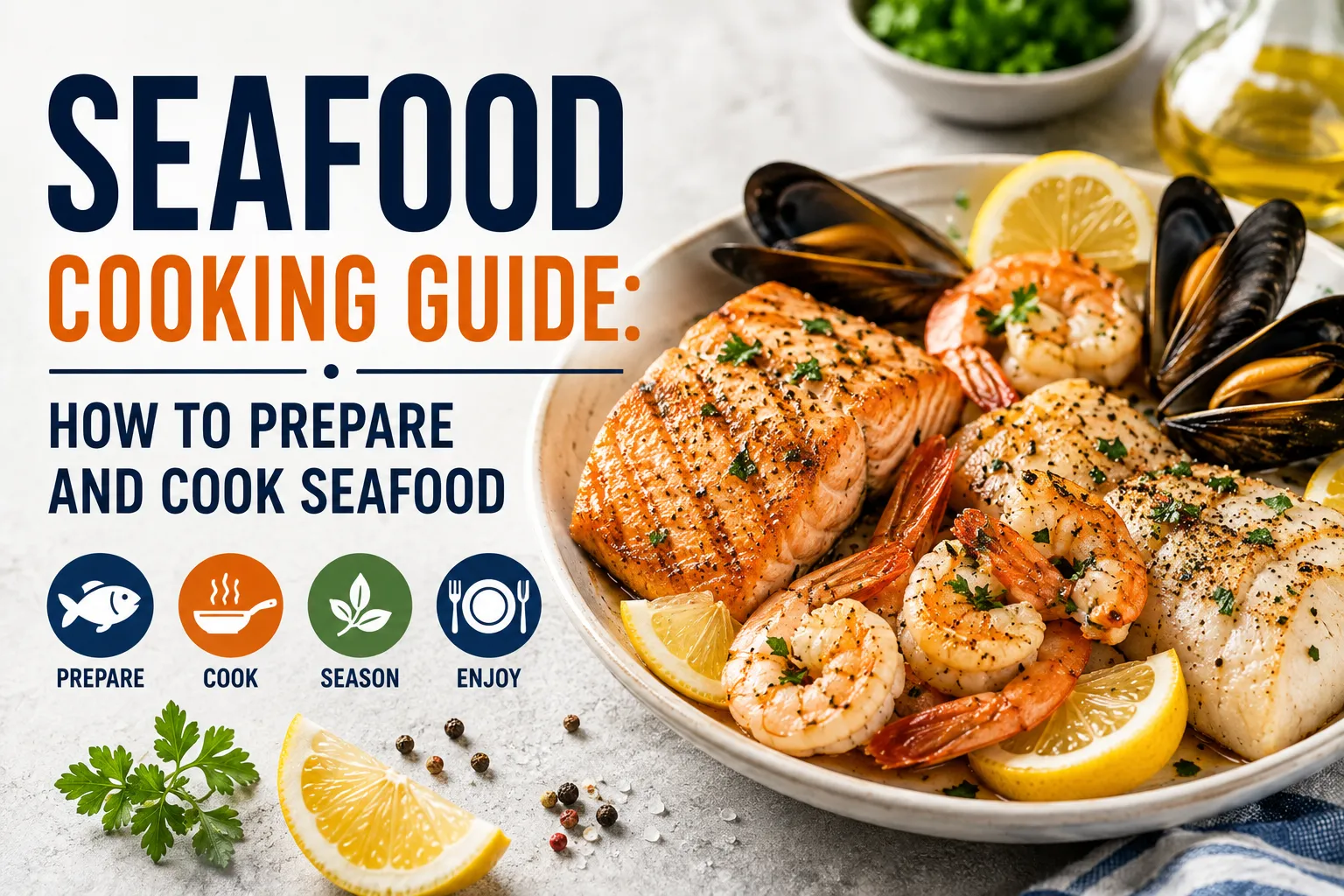
Seafood Cooking Guide: How to Prepare and Cook Seafood
Seafood can turn an ordinary meal into something special, but cooking it well requires more than simply putting fish or shellfish in a hot pan. Different types of seafood have different textures, cooking times and preparation requirements, and even a small mistake can leave fish dry, shellfish rubbery or delicate flavors completely overwhelmed.
The good news is that seafood cooking is easier once you understand a few fundamentals. Whether you’re preparing salmon, tilapia, tuna, prawns, shrimp, crab, lobster, squid or mussels, the right preparation method and cooking technique can make a significant difference.
This complete seafood cooking guide explains how to select, prepare, season and cook seafood while avoiding some of the most common kitchen mistakes. It also forms part of the broader skills covered in the Complete Guide to Cooking for Beginners.
Understanding Different Types of Seafood
Before choosing a cooking method, it helps to understand what you’re working with.
Seafood can broadly be divided into two groups:
-
Finfish — salmon, tuna, cod, tilapia, haddock, snapper and similar fish
-
Shellfish — shrimp, prawns, crab, lobster, mussels, clams, oysters and squid
Fish can also vary considerably in fat content.
Fatty fish, such as salmon, sardines and mackerel, generally have richer flavors and can tolerate relatively strong cooking methods.
Lean fish, such as cod, tilapia and some varieties of snapper, contain less fat and can dry out more quickly if overcooked.
Shellfish require their own approach. Shrimp and prawns cook rapidly, while squid can become tough if cooked incorrectly.
How to Choose Fresh Seafood
Good seafood starts with good ingredients. Understanding how different ingredients behave, including their texture, freshness and storage requirements, is an important part of successful preparation. For a broader reference, see this Cooking Ingredients Guide: Types, Uses, Substitutions & Storage.
When buying fresh fish, look for:
-
Flesh that appears firm and moist
-
A clean, mild smell
-
Bright, clear eyes on whole fish
-
Shiny skin
-
Flesh that springs back when gently pressed
-
Proper refrigeration or storage
Fresh seafood should not have a strong ammonia-like or unpleasant odor.
For shellfish, look for signs of freshness appropriate to the type. Live mussels and clams should generally be closed or close when handled, while shrimp and prawns should appear firm and have a fresh smell.
If buying frozen seafood, choose packages without excessive ice crystals, signs of freezer burn or damaged packaging.
Fresh Versus Frozen Seafood
Frozen seafood isn’t necessarily inferior to fresh seafood.
In many cases, seafood is frozen soon after being caught, which can preserve quality effectively. Frozen seafood can also be convenient because it allows you to keep ingredients available for longer.
The important factor is proper storage and thawing.
How to Prepare Fish Before Cooking
Preparation depends on whether you’re working with a whole fish, fillets or steaks.
1. Check for Bones
Run your fingers gently over the surface of a fillet to identify pin bones.
Use clean kitchen tweezers or fish-bone pliers to remove them.
2. Pat the Fish Dry
Use paper towels to remove excess moisture from the surface.
This is particularly important when pan-searing fish because a dry surface helps it brown instead of steaming.
3. Season Before Cooking
Simple seasoning is often enough.
Try:
-
Salt and black pepper
-
Garlic
-
Lemon
-
Fresh herbs
-
Paprika
-
Ginger
-
Chili
-
Olive oil
-
Butter
The goal is to enhance the seafood rather than bury its natural flavor. Learning how different herbs, spices, salt and other flavors work together can also help you build better seafood dishes; see the guide to seasoning food with herbs, spices, salt and other flavors.
How to Prepare Shrimp and Prawns
Shrimp and prawns are among the easiest seafood options to cook quickly.
Depending on how they were sold, you may need to:
- Remove the shell.
- Remove the legs.
- Remove the head if desired.
- Devein the shrimp or prawn.
- Rinse briefly if necessary.
- Pat thoroughly dry.
- Season immediately before cooking.
The dark line along the back is the digestive tract. Removing it is primarily a matter of preference and presentation, although many cooks prefer to remove it.
Avoid soaking shrimp unnecessarily because excess water makes browning more difficult.
How to Cook Seafood Safely
Seafood should be handled carefully because raw seafood can carry harmful microorganisms.
Keep seafood refrigerated until you’re ready to prepare it, avoid cross-contamination with ready-to-eat foods and wash hands, utensils and surfaces after handling raw seafood.
A food thermometer is one of the most reliable ways to determine whether seafood has reached a safe internal temperature. For specific seafood and food-safety requirements, follow guidance from your local food-safety authority.
Don’t rely solely on color or texture when safety is especially important.
How to Pan-Fry Fish
Pan-frying is one of the simplest ways to cook fish. It is also one of several cooking techniques worth understanding when developing broader kitchen skills; different techniques can produce very different results, as explained in Cooking Methods Explained: The Complete Guide.
What You Need
-
Fish fillets
-
Cooking oil
-
Salt
-
Black pepper
-
Optional flour or breadcrumbs
-
Lemon
-
Butter
-
Herbs
Method
- Pat the fish completely dry.
- Season both sides.
- Heat a skillet over medium to medium-high heat.
- Add a small amount of cooking oil.
- Place the fish into the pan carefully.
- Cook without constantly moving it.
- Flip when the first side has developed a golden crust.
- Continue cooking until the fish is properly cooked.
- Add butter, garlic or herbs near the end if desired.
- Finish with fresh lemon juice.
One of the biggest mistakes is flipping the fish repeatedly. Allowing it to remain in contact with the pan helps develop a better crust.
How to Bake Seafood
Baking is particularly useful when cooking larger portions for a family.
A basic baked fish preparation can include:
-
Fish fillets
-
Olive oil or butter
-
Lemon slices
-
Garlic
-
Salt and pepper
-
Fresh herbs
Place the seasoned fish in a suitable baking dish and cook in a preheated oven until it reaches the appropriate internal temperature and texture.
Thicker pieces will naturally require more time than thin fillets.
Avoid leaving fish in the oven long after it has cooked because residual heat can continue drying it out.
How to Grill Fish
Grilling gives seafood a smoky flavor and works especially well with firm fish.
Good choices include:
-
Salmon
-
Tuna
-
Swordfish
-
Mackerel
-
Snapper
-
Thick fish steaks
Before grilling:
- Clean the grill grates.
- Preheat the grill.
- Lightly oil the fish and grates.
- Season the seafood.
- Place it carefully on the grill.
- Avoid moving it unnecessarily.
- Turn it once when appropriate.
- Remove it when properly cooked.
Delicate fillets can break apart on grill grates, so using a grill basket or foil can make handling easier.
How to Steam Seafood
Steaming is a gentle cooking method that works particularly well for delicate fish and shellfish.
You can steam seafood with aromatics such as:
-
Ginger
-
Garlic
-
Lemongrass
-
Scallions
-
Lemon
-
Fresh herbs
The steam cooks the seafood without requiring large amounts of oil.
This method can be particularly useful when you want the natural flavor of the seafood to remain prominent.
How to Poach Fish
Poaching involves gently cooking fish in a flavorful liquid.
The liquid might contain:
-
Water
-
Fish stock
-
Milk
-
Coconut milk
-
Wine
-
Lemon
-
Herbs
-
Spices
The key is maintaining a gentle cooking environment rather than allowing the liquid to boil aggressively.
Poaching can produce exceptionally tender fish when done correctly.
How to Cook Shrimp and Prawns
Shrimp and prawns cook quickly, making them ideal for fast meals.
They can be:
-
Pan-fried
-
Grilled
-
Baked
-
Boiled
-
Steamed
-
Stir-fried
A simple garlic shrimp preparation requires little more than oil or butter, garlic, seasoning and shrimp.
Heat the pan, add the shrimp and cook until they are properly cooked through. Avoid leaving them in the pan unnecessarily because overcooked shrimp quickly develop a firm, rubbery texture.
How Do You Know When Shrimp Are Cooked?
Shrimp change appearance as they cook, becoming more opaque and developing a firm texture.
However, appearance alone isn’t the most reliable food-safety measure. A food thermometer provides a more dependable indication of doneness.
How to Cook Mussels
Mussels are commonly steamed because they cook quickly and release flavorful juices.
A simple preparation might include:
-
Mussels
-
Garlic
-
Onion or shallots
-
Herbs
-
Broth or another flavorful liquid
-
Lemon
-
Butter or olive oil
Clean the mussels according to the type and preparation requirements, then cook them in a covered pot until they open.
Discard mussels that remain closed after cooking rather than forcing them open.
How to Cook Squid Without Making It Tough
Squid has a reputation for becoming rubbery, but the problem is usually technique.
Squid generally performs best with either very quick cooking or longer, gentle cooking.
For quick cooking:
-
Use high heat.
-
Cut squid into appropriate pieces.
-
Cook for a short period.
-
Serve immediately.
For slow preparations:
- Cook the squid gently in a sauce or stew until tender.
The awkward middle ground—cooking squid for long enough to toughen it but not long enough to tenderize it—is where many problems occur.
How to Cook Crab and Lobster
Crab and lobster can be boiled, steamed, grilled or incorporated into other dishes.
Because shellfish can be delicate and expensive, avoid overpowering them with excessive seasoning.
Butter, garlic, lemon, herbs and mild spices are classic pairings.
When cooking whole crustaceans, pay particular attention to food safety, cooking time and proper handling.
Best Seasonings for Seafood
Seafood pairs well with both simple and strongly flavored ingredients.
Classic Combinations
Lemon + garlic + butter
A versatile combination for fish, shrimp, prawns and shellfish.
Ginger + garlic + soy sauce
Works well with Asian-inspired seafood dishes.
Chili + lime + cilantro
Useful for grilled fish, shrimp and seafood tacos.
Tomato + garlic + herbs
Excellent for Mediterranean-style fish dishes.
Coconut + ginger + chili
A natural pairing for curries and tropical seafood preparations.
Common Seafood Cooking Mistakes
Overcooking the Fish
This is probably the most common mistake.
Fish continues cooking after being removed from heat, so timing matters. Understanding how heat affects cooking results is especially useful here, and the guide to how cooking temperature affects food and cooking results provides a broader explanation.
Starting With Wet Seafood
Excess moisture prevents proper browning.
Always pat seafood dry before pan-searing.
Using Too Much Seasoning
Delicate fish can easily become overwhelmed by aggressive sauces and spices.
Start simply and add flavor gradually.
Cooking Everything the Same Way
Salmon, tilapia, shrimp, squid and mussels don’t behave the same way.
Choose a cooking method according to the seafood’s size, texture and fat content.
Moving Fish Too Much
Constantly turning fish can prevent crust formation and increase the chance of breaking the fillet.
Ignoring Carryover Cooking
Seafood can continue cooking after leaving the pan, grill or oven.
Take this into account when judging doneness.
How to Prevent Seafood From Sticking to the Pan
A few simple techniques can dramatically reduce sticking.
Use the Right Pan
A quality stainless-steel, cast-iron or nonstick pan can work well depending on the recipe.
Preheat Properly
Putting seafood into a cold pan can encourage sticking.
Dry the Seafood
Moisture is the enemy of good browning.
Use Enough Fat
A thin layer of oil can help create a barrier between the seafood and cooking surface.
Don’t Force the Fish
If fish seems stuck, it may not have developed enough crust yet.
Give it additional time before attempting to turn it.
What Goes Well With Seafood?
Seafood works with a wide variety of side dishes.
Popular options include:
-
Steamed rice
-
Roasted potatoes
-
Mashed potatoes
-
Couscous
-
Pasta
-
Fresh salads
-
Grilled vegetables
-
Corn
-
Green beans
-
Sautéed spinach
-
Coleslaw
-
Fresh bread
For rich seafood dishes, fresh vegetables or acidic ingredients such as lemon can help balance the meal.
Easy Seafood Meal Ideas
If you’re new to cooking seafood, start with straightforward dishes.
Garlic Butter Shrimp
Cook shrimp with butter, garlic, black pepper and a squeeze of lemon. Serve with rice, pasta or crusty bread.
Lemon Herb Fish
Season white fish with lemon, herbs, olive oil, salt and pepper before baking or pan-searing.
Grilled Salmon
Season salmon simply with olive oil, salt, pepper and lemon before grilling.
Seafood Pasta
Combine cooked shrimp or other seafood with pasta, garlic, tomatoes, herbs and a light sauce.
Coconut Seafood Curry
Cook fish and shellfish gently in a coconut-based sauce with ginger, garlic and spices.
How to Store Cooked Seafood
Cooked seafood should be refrigerated promptly rather than left at room temperature for extended periods.
Store leftovers in clean, covered containers and use them within the timeframe recommended by your local food-safety guidance.
When reheating seafood, heat it thoroughly while avoiding unnecessary repeated reheating.
For frozen seafood, follow appropriate freezing and thawing practices to preserve quality.
Frequently Asked Questions About Cooking Seafood
What is the easiest seafood to cook?
Shrimp, prawns, salmon and relatively thin fish fillets are good starting points because they cook relatively quickly and require minimal preparation.
Should seafood be washed before cooking?
It depends on the product and preparation. Rinsing raw seafood can also spread microorganisms around the kitchen through splashing. In many cases, patting seafood dry with paper towels is preferable to washing it.
Why does my fish fall apart when cooking?
Fish can fall apart because it is delicate, overhandled, under-supported or overcooked. Using a suitable spatula and allowing the fish to develop a crust before flipping can help.
Why does seafood become rubbery?
Overcooking is a common cause. Shrimp, squid and other seafood can become particularly firm when exposed to excessive heat or cooking time.
Can you cook frozen seafood directly?
Some seafood can be cooked from frozen, depending on the product and recipe. However, certain dishes benefit from controlled thawing first. Always follow the product’s preparation instructions.
What is the healthiest way to cook seafood?
Steaming, baking, poaching and grilling can provide ways to prepare seafood without requiring large amounts of added fat. The overall nutritional profile also depends on the seafood, seasonings, sauces and side dishes.
A Simple Seafood Cooking Formula
When you’re unsure how to prepare a particular seafood ingredient, use this basic framework:
1. Choose good-quality seafood → 2. Keep it properly chilled → 3. Prepare it correctly → 4. Pat it dry → 5. Season appropriately → 6. Choose the right cooking method → 7. Monitor doneness → 8. Serve immediately.
The most important lesson is that seafood doesn’t need complicated recipes to taste good. Good ingredients, appropriate heat and careful timing often produce better results than elaborate preparation.
From Simple Fish Fillets to Restaurant-Style Seafood
Learning to cook seafood is less about memorizing dozens of recipes and more about understanding how different ingredients respond to heat. Once you know the difference between delicate and firm fish, lean and fatty varieties, and quick-cooking and slow-cooking seafood, you can confidently adapt recipes to whatever is available.
Start with simple preparations, pay attention to cooking time and temperature, and resist the temptation to overcook. With those fundamentals in place, everything from a weeknight shrimp dinner to a carefully prepared whole fish becomes much easier to master.