How Shade Structures Improve Outdoor Spaces
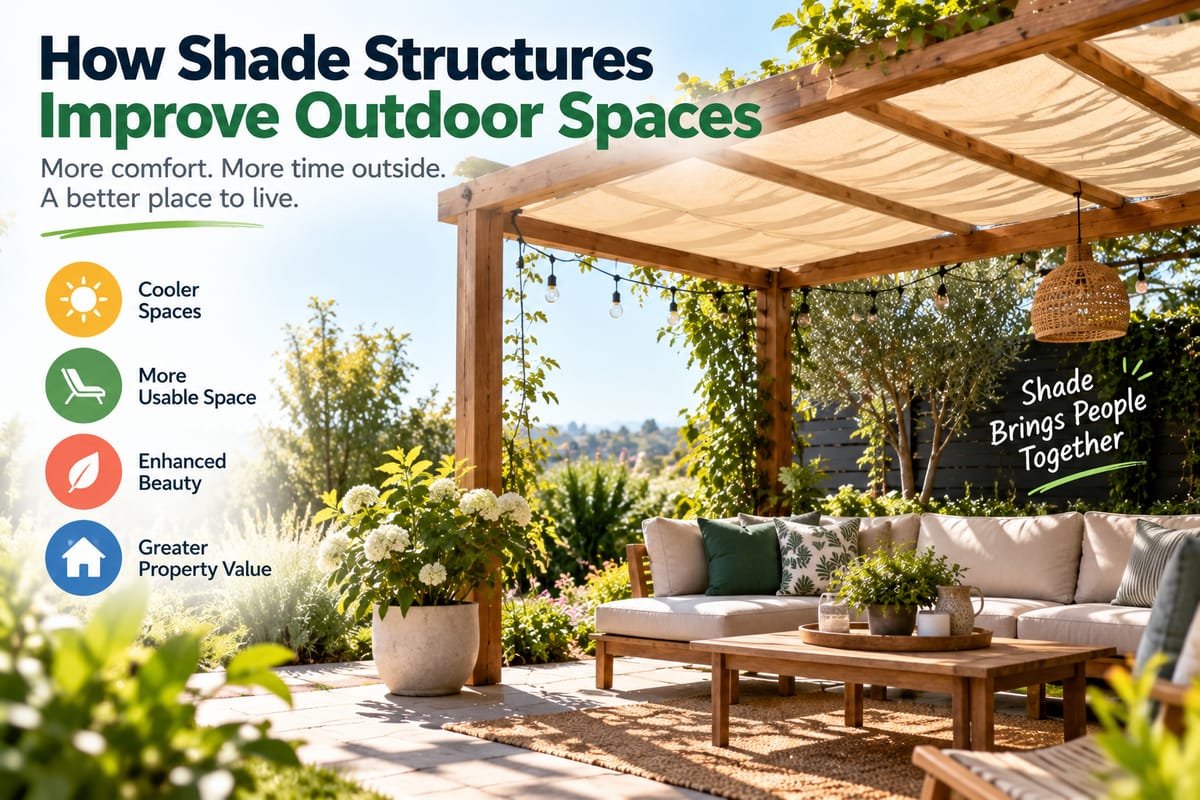
How Shade Structures Improve Outdoor Spaces
Outdoor spaces can become much more comfortable and useful when they offer protection from intense sunlight. Shade structures provide a practical way to create cooler areas for relaxing, dining, entertaining, gardening, and spending time outdoors without completely separating the space from its surroundings.
From pergolas and covered patios to shade sails, gazebos, umbrellas, and strategically placed trees, there are many ways to introduce shade into a garden or outdoor living area.
The right structure can also do more than block sunlight. It can help define different areas, protect outdoor furniture, influence planting choices, and make a garden feel more intentional.
What Are Shade Structures?
Shade structures are features designed to reduce direct exposure to sunlight in an outdoor area.
They can be permanent, temporary, attached to a building, or completely independent. Common examples include:
- Pergolas
- Gazebos
- Covered patios
- Shade sails
- Retractable awnings
- Garden umbrellas
- Covered decks
- Arbors
- Lattice structures
- Outdoor pavilions
- Trees and other living shade elements
Each option provides a different combination of shade, ventilation, privacy, appearance, and weather protection.
The best choice depends on how the space will be used, the local climate, the available area, and the overall design of the property.
Why Shade Matters in Outdoor Spaces
Direct sunlight can make outdoor areas uncomfortable during the hottest parts of the day.
A patio may look attractive but remain unused if its surface becomes extremely hot. Similarly, outdoor furniture can become uncomfortable to sit on, while plants placed in the wrong location may struggle with excessive sunlight.
Shade changes the experience of the space.
A shaded area can provide a place to:
- Eat outdoors
- Read
- Relax
- Entertain guests
- Work
- Exercise
- Enjoy a garden
- Protect children from intense sunlight
- Keep outdoor furniture more comfortable
By creating areas with different levels of sun exposure, homeowners can make more of their outdoor property throughout the day.
Shade Structures Can Define Outdoor Rooms
One of the most useful design benefits of a shade structure is its ability to create a sense of enclosure.
An open yard can sometimes feel like one large, undefined area. Adding a pergola, pavilion, or covered seating zone can visually establish an outdoor room.
For example, a garden might include:
- A shaded dining area
- An open lawn
- A sunny planting bed
- A sheltered seating area
- A walkway
- A small entertaining space
These zones can make a property feel more organized without requiring solid walls.
The principles discussed in Understanding Garden Design and Landscape Planning can help explain how structures, planting areas, pathways, and functional zones can work together as part of a broader outdoor design.
Pergolas Create Partial Shade
Pergolas are popular because they can provide shade while retaining an open-air feeling.
A traditional pergola uses vertical supports and overhead beams or slats. Depending on the design, additional materials can be added to increase shade.
Plants can also be trained over some pergolas, creating a combination of architectural and natural shade.
A pergola can work particularly well over:
- Outdoor dining tables
- Seating areas
- Patios
- Walkways
- Garden entrances
- Outdoor kitchens
Because pergolas do not necessarily create a fully enclosed environment, they can allow airflow while reducing direct overhead sunlight.
Gazebos Offer More Shelter
Gazebos generally provide a stronger sense of enclosure than an open pergola.
Depending on their construction, they can provide shade from multiple directions and offer greater protection from light rain or wind.
A gazebo can become a focal point within a garden, particularly when surrounded by plants, pathways, seating, or lighting.
However, its size and placement should be considered carefully. A large structure can dominate a small garden if its proportions do not match the surrounding space.
Shade Sails Provide Flexible Design Options
Shade sails use tensioned fabric attached to posts, walls, or other secure points.
They can be useful when homeowners want substantial shade without building a heavy permanent structure.
Their shapes can also create a modern architectural appearance.
Shade sails can be particularly useful for:
- Patios
- Play areas
- Poolside spaces
- Outdoor dining areas
- Small gardens
- Contemporary landscapes
The fabric, attachment points, height, and angle all influence how effectively the sail provides shade.
Retractable Awnings Can Adapt to Changing Conditions
Retractable awnings allow homeowners to adjust the amount of shade depending on the weather and time of day.
An awning can be extended during periods of strong sunlight and retracted when more sunlight is desired.
This flexibility can be particularly useful for spaces attached directly to a home.
For example, a patio next to a living room may benefit from an awning that provides shade during hot afternoons while allowing more sunlight into the area at other times.
Outdoor Umbrellas Are Simple and Flexible
Large outdoor umbrellas can provide shade without requiring permanent construction.
They are relatively easy to reposition, making them useful for changing outdoor arrangements.
An umbrella can shade a dining table, lounge chairs, or a small seating area while allowing the rest of the garden to remain open.
Because umbrellas are available in many sizes and designs, they can work in both compact patios and larger gardens.
Their main limitation is that they generally provide less structural permanence than built shade features.
Shade Structures Can Improve Outdoor Dining
Outdoor dining becomes more comfortable when people are protected from intense sunlight.
A shaded dining area can make it easier to enjoy breakfast, lunch, dinner, or gatherings outdoors.
A roof, pergola, awning, or large umbrella can also help reduce glare and heat around a table.
Adding lighting can make the space useful after sunset, while comfortable furniture and nearby planting can create a more inviting atmosphere.
Shade Can Make Outdoor Entertaining More Comfortable
Outdoor entertaining often involves people spending several hours in the same area.
Without shade, guests may move indoors when temperatures rise or sunlight becomes uncomfortable.
A shaded entertaining area provides a natural gathering point.
It can accommodate:
- Conversation areas
- Outdoor sofas
- Dining tables
- Grills
- Outdoor kitchens
- Games
- Decorative lighting
The goal is not necessarily to shade the entire property. Creating one comfortable central area can significantly increase how often an outdoor space is used.
Shade Structures Can Protect Outdoor Furniture
Direct sunlight can affect some outdoor materials over time.
Furniture, cushions, rugs, umbrellas, and decorative items can experience fading or deterioration when exposed continuously to strong sunlight and weather.
A shade structure can reduce direct solar exposure and help protect furniture when it is being used.
However, shade alone does not eliminate weather-related wear. Outdoor furniture should still be selected for the conditions in which it will be used and maintained appropriately.
Shade Can Support Better Outdoor Living Design
A successful outdoor space usually needs to balance aesthetics with practical use.
A shaded seating area can become the center of an outdoor layout, while paths, plants, lighting, and other features are arranged around it.
The broader principles behind this approach are explored in How to Design Functional Outdoor Living Spaces Around a Garden.
Instead of adding a shade structure as an isolated feature, homeowners can consider how it connects with the rest of the garden.
Shade Structures Influence Plant Selection
Adding shade changes the amount of sunlight reaching nearby plants.
This can create opportunities to grow plants that prefer lower-light conditions, while plants that require full sun may need to remain in more exposed areas.
Understanding sunlight patterns is therefore important before placing a large structure.
The relationship between sunlight and plant health is explored in How Sunlight Affects Plant Growth in Gardens.
A shade structure can effectively create a new microclimate within a garden, but the change should be considered when selecting and positioning plants.
Living Shade Can Combine Plants and Structure
Shade does not always have to come entirely from manufactured materials.
Trees, vines, shrubs, and other plants can contribute to shade while adding natural beauty.
A mature tree can provide substantial overhead shade, while climbing plants can gradually cover a pergola or arbor.
Living shade can provide additional benefits such as:
- Visual interest
- Habitat for wildlife
- Seasonal changes
- Improved garden character
- Additional greenery
- Natural screening
However, plants require time to grow and need appropriate care. Their eventual size should be considered before planting them close to buildings or structures.
Trees Require Long-Term Planning
Trees can be excellent sources of shade, but they are long-term landscape investments.
Before planting a tree for shade, homeowners should consider:
- Mature height
- Mature canopy width
- Root growth
- Proximity to buildings
- Utility lines
- Soil conditions
- Local climate
- Seasonal sunlight
- Maintenance requirements
A tree that is appropriately positioned can provide useful shade for decades. A poorly positioned tree can eventually create conflicts with structures, pathways, utilities, or other plants.
Shade Structures Can Create Cooler Microclimates
A shaded area can feel noticeably different from an exposed area, particularly during hot weather.
Reducing direct solar radiation can lower the amount of heat absorbed by surfaces such as patios, decks, furniture, and walls.
Air movement remains important, however.
A completely enclosed structure may trap heat if it does not have adequate ventilation. Open-sided designs such as pergolas and pavilions can provide shade while allowing breezes to move through the area.
The best design depends heavily on local weather conditions.
Materials Affect Performance and Appearance
Shade structures can be built from many materials, including:
- Wood
- Metal
- Fabric
- Composite materials
- Vinyl
- Masonry
- Glass
- Natural plant materials
Each has different maintenance and appearance requirements.
Wood can provide a warm, natural appearance but may require regular maintenance. Metal can create a contemporary look and offer structural durability. Fabric provides flexibility but may eventually need replacement.
Material selection should consider both appearance and the environmental conditions the structure will face.
Placement Is Just as Important as Design
Even an attractive shade structure can perform poorly if it is placed incorrectly.
The position of the sun changes throughout the day and across seasons. A structure that provides excellent shade at noon may provide little protection later in the afternoon.
Before installing a permanent feature, homeowners can observe the area at different times of day.
Important questions include:
- Where is the strongest sunlight?
- Which areas become uncomfortable first?
- Where do people naturally gather?
- What direction does the prevailing breeze come from?
- Will the structure block desirable views?
- Will it create unwanted shade for plants?
- Will it affect indoor daylight?
Thinking about these questions before construction can prevent expensive adjustments later.
Shade Structures Can Add Privacy
Some shade structures can also provide a greater sense of privacy.
Pergolas can support screens, curtains, climbing plants, or lattice panels. Covered patios can create separation between an outdoor living area and neighboring properties.
This can make a garden feel more private without completely enclosing it.
Privacy features should still allow sufficient ventilation and natural light where appropriate.
Outdoor Projects Can Increase the Usability of a Property
Outdoor improvements can range from simple additions such as umbrellas and seating to larger projects involving patios, pergolas, landscaping, and outdoor kitchens.
The growing interest in Outdoor Living Projects reflects the broader trend toward treating outdoor areas as extensions of indoor living spaces.
Shade can be an important part of that transformation because it makes these areas more practical during periods of strong sunlight.
Lighting Can Extend the Use of a Shaded Area
A shade structure does not have to stop being useful when the sun goes down.
Outdoor lighting can make a covered patio, pergola, or gazebo comfortable in the evening.
Options can include:
- String lights
- Recessed fixtures
- Lanterns
- Wall lights
- Solar lighting
- Low-voltage landscape lighting
Lighting should be planned alongside the structure rather than added as an afterthought when possible.
Consider Rain and Other Weather Conditions
Shade structures vary considerably in how much protection they provide from rain.
An open pergola may provide little protection during heavy rainfall, while a solid roof can create a more sheltered environment.
Wind is another consideration.
Large umbrellas, fabric sails, and lightweight structures can be affected by strong winds and may require secure installation or temporary removal.
Local weather patterns should therefore influence the design and materials selected.
Common Mistakes When Adding Shade
Several mistakes can reduce the usefulness of a shade structure.
Choosing the Wrong Size
A structure that is too small may not provide enough usable shade, while one that is too large can overwhelm the garden.
Ignoring the Sun’s Movement
Shade changes throughout the day. Placement should account for different sun angles rather than relying on a single observation.
Blocking Too Much Natural Light
A structure placed directly against a home can reduce the amount of daylight entering nearby rooms.
Forgetting About Ventilation
A shaded space can become uncomfortable if warm air becomes trapped.
Ignoring Plant Requirements
New shade can affect nearby plants and may make the area unsuitable for species that require full sunlight.
Choosing Materials Without Considering Maintenance
Outdoor materials are exposed to weather, so durability and maintenance should be considered alongside appearance.
How to Choose the Right Shade Structure
The best option depends on the purpose of the space.
For a small seating area, an umbrella or retractable awning may be sufficient.
For a larger entertaining space, a pergola or covered patio may provide more useful coverage.
For a garden focal point, a gazebo or pavilion can create a stronger architectural feature.
For a modern property, shade sails can provide a clean, contemporary appearance.
For a natural garden, trees and climbing plants can contribute shade while integrating the structure with the landscape.
Creating a Balanced Outdoor Environment
The most successful outdoor spaces usually combine several elements rather than relying on one feature.
Shade can work alongside:
- Comfortable seating
- Suitable plants
- Pathways
- Outdoor lighting
- Water features
- Privacy screens
- Outdoor kitchens
- Dining areas
- Lawns
- Decorative elements
A shade structure can serve as an anchor around which these features are organized.
The result can be a space that feels more intentional while remaining practical for everyday use.
Making Shade Part of the Garden Plan
Shade should be considered early when planning a new outdoor space rather than treated as an addition after everything else has been installed.
Its location can influence seating, plant selection, pathways, lighting, furniture placement, and views.
Homeowners can begin by identifying where shade is most needed, observing how sunlight moves across the property, and determining how the space will be used.
From there, they can select a structure that fits the scale and character of the garden.
A well-planned shade structure can turn an exposed part of a property into a comfortable outdoor room while also contributing to the overall landscape design. Whether the solution is a simple umbrella, a planted pergola, a mature tree, or a fully covered patio, thoughtful shade planning can make outdoor spaces more comfortable, functional, and enjoyable throughout the year.