Understanding Garden Design and Landscape Planning
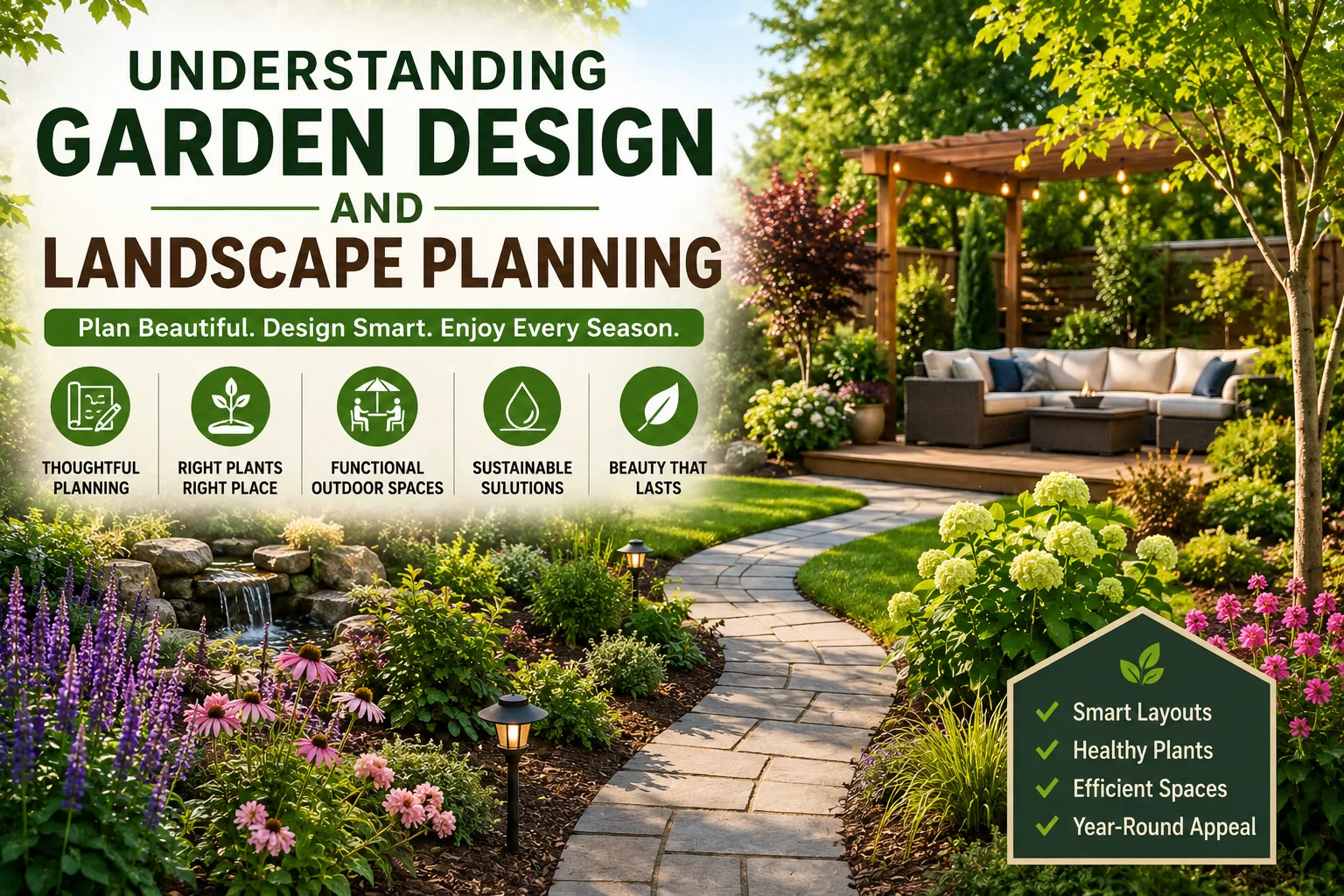
Understanding Garden Design and Landscape Planning
A well-designed garden is more than a collection of attractive plants. It is a carefully considered outdoor environment in which planting, pathways, structures, lighting, water, furniture, and open space work together.
Garden design focuses on how an outdoor space looks and functions, while landscape planning considers the broader relationship between the garden, property, environment, and the people who use it. Together, they can transform an ordinary outdoor area into a practical and enjoyable extension of the home.
Whether the space is a small urban courtyard, a family backyard, or a large property, thoughtful planning can make the garden easier to maintain and more useful throughout the year.
A well-planned landscape can also complement the planting principles discussed in the Complete Guide to Flower Gardening.
What Is Garden Design?
Garden design is the process of planning the appearance, layout, planting, and functionality of a garden.
It involves decisions about:
- Where plants should be positioned
- How people will move through the space
- Where seating should go
- How different areas will be connected
- Which colours and textures should dominate
- How much maintenance the garden will require
- How the garden will interact with the surrounding property
Good garden design balances beauty, practicality, environmental conditions, and personal preferences.
A garden may look impressive in photographs but still be poorly designed if pathways are inconvenient, plants outgrow their locations, drainage is inadequate, or maintenance becomes unnecessarily difficult.
What Is Landscape Planning?
Landscape planning takes a broader view.
Instead of focusing only on individual garden beds or plants, it considers the entire outdoor environment and how different elements relate to one another.
Landscape planning can include:
- Buildings
- Lawns
- Trees
- Flower beds
- Patios
- Walkways
- Fences
- Outdoor structures
- Water features
- Drainage
- Outdoor lighting
- Views
- Privacy
- Existing natural features
The objective is to create an outdoor space that functions as a coherent whole.
Why Planning Matters Before Planting
One of the most common mistakes in garden development is buying plants before deciding where everything should go.
This can produce a garden that feels crowded, difficult to maintain, or visually disconnected.
Planning first allows homeowners to consider important questions such as:
- How will people use the space?
- Which areas receive the most sunlight?
- Where does rainwater collect?
- What views should be emphasized?
- Where is privacy needed?
- How much time is available for maintenance?
- Which plants are appropriate for the local conditions?
- Where should seating and pathways be placed?
A basic plan can prevent expensive changes later.
Understanding the Garden’s Purpose
Before choosing plants or materials, it helps to establish what the garden is supposed to accomplish.
A garden might primarily be designed for:
- Relaxation
- Entertaining guests
- Children
- Growing food
- Wildlife
- Privacy
- Exercise
- Outdoor dining
- Recreation
- Visual appeal
Many gardens have several purposes at once.
For example, a family backyard might include a dining area, a lawn for children, ornamental planting, vegetable beds, and a quiet seating corner.
Dividing the space into functional zones can make multiple uses possible without making the garden feel chaotic.
For ideas on integrating seating, dining, recreation, and other practical features into a garden, see How to Design Functional Outdoor Living Spaces Around a Garden.
The Importance of Garden Layout
Layout determines how the different parts of a garden relate to each other.
A useful layout usually creates a natural progression between spaces rather than scattering individual features randomly.
A simple garden might contain:
Entrance → Pathway → Planting Area → Seating Area → Lawn
Larger gardens can have several interconnected zones.
The layout should also account for movement. Pathways should lead people naturally toward important destinations such as doors, seating areas, gates, sheds, or entertaining spaces.
Creating Garden Zones
Dividing an outdoor area into zones is one of the most effective ways to make a garden more functional.
A garden could include:
Social Zone
This might contain outdoor seating, a dining table, barbecue area, or entertainment space.
Relaxation Zone
A quieter section can provide space for reading, resting, or enjoying plants.
Activity Zone
A lawn, open area, or play space can accommodate physical activities.
Growing Zone
Vegetable beds, herbs, fruit trees, or greenhouse space can be grouped together.
Service Zone
Bins, storage sheds, composting areas, tools, and other practical facilities can be positioned where they remain accessible without dominating the main garden.
Creating these zones gives each part of the garden a clear purpose.
Working With Sunlight
Sunlight is one of the most important factors in landscape planning.
Different plants require different amounts of light, while people also tend to use outdoor spaces differently depending on the position of the sun.
Observe the garden throughout the day before making major planting decisions.
Consider:
- Which areas receive morning sunlight?
- Where does afternoon sun fall?
- Which areas remain shaded?
- Does a building cast shadows?
- Will mature trees eventually change the light conditions?
Planting should be based on actual growing conditions rather than simply selecting plants because they look attractive.
Understanding Soil Conditions
Soil affects plant health, drainage, nutrient availability, and long-term garden performance.
Before establishing large planting areas, it is useful to understand the characteristics of the existing soil.
Important considerations include:
- Soil texture
- Drainage
- Organic matter
- Nutrient levels
- Soil acidity or alkalinity
- Compaction
Improving soil before planting can be more effective than trying to compensate for poor growing conditions later.
Water and Drainage Should Be Planned Early
Water management is another fundamental part of landscape planning.
A garden needs sufficient water to support plants, but excessive water can create problems with roots, paths, lawns, and structures.
Good planning considers both irrigation and drainage.
Rainwater should have appropriate routes away from areas where standing water could cause damage or make the garden difficult to use.
Depending on the site, landscape solutions can include:
- Drainage channels
- Permeable surfaces
- Rain gardens
- Swales
- Carefully graded surfaces
- Rainwater collection
- Appropriate irrigation systems
Water management can also influence which plants are suitable for particular parts of the garden.
Choosing Plants for the Right Place
Plant selection should begin with the conditions available rather than personal preference alone.
Consider:
- Mature plant size
- Sunlight requirements
- Water requirements
- Soil preferences
- Growth rate
- Climate suitability
- Maintenance requirements
- Flowering period
- Root behavior
- Seasonal appearance
A small plant purchased from a nursery can eventually become a large tree or shrub.
Planning for mature size prevents overcrowding and reduces the need for severe pruning or removal later.
For guidance on selecting and establishing larger structural plants, see How to Plant and Maintain Healthy Trees and Shrubs at Home.
Creating Visual Balance
Garden design uses many of the same visual principles found in interior design.
Balance helps prevent one section from appearing excessively heavy or empty.
Balance can be:
- Symmetrical, with similar elements arranged on opposite sides
- Asymmetrical, using different elements with comparable visual weight
- Radial, with features arranged around a central point
A garden does not need to be perfectly symmetrical to feel organized.
In fact, informal gardens often rely on asymmetrical arrangements while still maintaining a strong sense of balance.
Repetition Creates Cohesion
Repeating certain plants, colours, shapes, materials, or textures can make separate areas feel connected.
For example, the same type of shrub might appear along different sections of a pathway.
A particular paving material could also be repeated around several areas.
Without repetition, a garden can feel like a collection of unrelated features.
With too much repetition, however, it can become monotonous.
Good design usually finds a middle ground between consistency and variety.
Choosing a Garden Style
Garden styles can provide a useful starting point for design decisions.
Common approaches include:
- Formal gardens
- Cottage-style gardens
- Contemporary gardens
- Tropical gardens
- Mediterranean-inspired gardens
- Naturalistic landscapes
- Woodland gardens
- Wildlife-friendly gardens
- Productive kitchen gardens
A style does not have to be followed rigidly.
Many successful gardens combine influences to create a space that suits the property’s architecture and the owner’s preferences.
Paths Are More Than Practical Features
Pathways provide movement through a garden, but they can also influence how the space is perceived.
A straight path can create a strong, formal appearance and direct attention toward a specific destination.
Curved pathways can create a sense of discovery by partially hiding what lies ahead.
The choice of surface also affects the character of the garden.
Possible materials include:
- Stone
- Brick
- Gravel
- Concrete
- Timber
- Pavers
- Natural stepping stones
The surface should be appropriate for the intended use, drainage conditions, accessibility requirements, and maintenance expectations.
Trees Provide Long-Term Structure
Trees can become some of the most important elements in a landscape.
They can provide:
- Shade
- Privacy
- Wind protection
- Habitat
- Seasonal interest
- Vertical structure
- Cooling
- Visual screening
However, trees require long-term thinking.
Before planting, consider their eventual height, canopy spread, root system, proximity to buildings, overhead infrastructure, and maintenance requirements.
A tree that looks appropriately sized in a young garden can become a significant structural feature decades later.
Privacy Can Be Designed Into the Landscape
Gardens often need to provide privacy from neighboring properties, roads, or surrounding buildings.
Privacy can be created using:
- Trees
- Shrubs
- Hedges
- Fences
- Screens
- Pergolas
- Trellises
- Layered planting
Plants can create softer visual boundaries than solid structures.
Layering is particularly effective because a combination of trees, shrubs, and lower plants can create depth while avoiding a wall-like appearance.
Outdoor Lighting Extends Garden Use
Lighting can transform how a garden looks after sunset and make outdoor areas more practical.
Different types of lighting can serve different purposes.
Path lighting helps define routes.
Task lighting illuminates areas used for activities such as cooking.
Accent lighting highlights trees, architectural features, sculptures, or water.
Ambient lighting creates a softer atmosphere around seating and entertaining areas.
Lighting should be planned carefully so that it enhances the landscape without producing excessive glare.
Designing for Maintenance
A beautiful garden that requires more maintenance than the household can realistically provide may eventually become difficult to manage.
Maintenance should therefore influence design decisions from the beginning.
Consider:
- How often plants need pruning
- How much lawn requires mowing
- How quickly weeds may spread
- How much watering is necessary
- Whether paths are easy to clean
- How accessible planting beds are
- How leaves and other garden waste will be handled
Lower-maintenance does not necessarily mean fewer plants. It means selecting an appropriate combination of plants, materials, layouts, and systems.
Sustainable Landscape Planning
Environmental considerations are becoming increasingly important in garden design.
A sustainable landscape can incorporate practices such as:
- Selecting plants suited to local conditions
- Improving soil health
- Reducing unnecessary irrigation
- Using rainwater where appropriate
- Creating habitat for pollinators
- Planting trees
- Reducing excessive hard surfaces
- Composting suitable organic material
- Choosing durable materials
- Avoiding unnecessary chemical use
The objective is to create a landscape that works with local environmental conditions rather than constantly fighting them.
Designing Gardens for Wildlife
Gardens can provide valuable habitat for birds, insects, and other wildlife.
A diverse planting scheme can offer:
- Nectar
- Seeds
- Fruits
- Shelter
- Nesting opportunities
- Water
- Places for insects to live
Using a variety of plant forms and flowering periods can help create a more dynamic ecosystem.
Even a small urban garden can contribute to local biodiversity when plants and features are selected thoughtfully.
Common Garden Design Mistakes
Planting Too Closely
Young plants may look sparse when first installed, encouraging homeowners to plant more than necessary. As they mature, overcrowding can become a problem.
Ignoring Mature Size
A plant’s current size tells little about how much space it may eventually require.
Creating Too Many Features
Water features, sculptures, structures, multiple paving materials, decorative beds, and furniture can compete for attention when used excessively.
Neglecting Circulation
A garden should be designed around how people actually move through it.
Choosing Plants Without Considering Conditions
A plant that thrives in one environment may struggle in another.
Designing Only for One Season
A garden can lose much of its appeal if all of its visual interest occurs at the same time of year.
Designing for Year-Round Interest
A strong landscape can change throughout the year.
Different plants can provide interest through:
- Flowers
- Foliage
- Fruit
- Bark
- Seed heads
- Autumn colour
- Evergreen structure
- Winter silhouettes
Combining plants with different seasonal characteristics helps keep the garden visually engaging for longer.
The Relationship Between Garden and Home
The best landscape designs usually consider the architecture of the house.
Materials, colours, proportions, and shapes can be selected to create a relationship between indoor and outdoor spaces.
For example, a modern home may work well with clean lines and restrained planting, while a traditional property may suit softer planting arrangements and natural materials.
This does not mean the garden must exactly match the building.
Instead, the two environments should feel visually connected.
Start With the Site, Not the Shopping List
Effective garden design begins with observation.
Before buying plants, furniture, paving, or decorative features, spend time understanding the property.
Look at its:
- Sunlight
- Soil
- Drainage
- Existing vegetation
- Views
- Boundaries
- Wind exposure
- Access points
- Building orientation
- Existing structures
Then determine how the household wants to use the space.
From there, a landscape plan can bring practical requirements and aesthetic preferences together.
Creating an Outdoor Space That Works
Garden design is ultimately about creating relationships between people, plants, structures, materials, and the natural environment.
The strongest landscapes rarely depend on one spectacular feature. Instead, they succeed because the individual elements support one another.
A well-planned garden provides convenient movement, appropriate planting, useful outdoor spaces, visual interest, and manageable maintenance. It can also evolve as plants mature and household needs change.
The result is an outdoor environment that feels intentional without necessarily feeling artificial—a garden designed not just to be looked at, but to be lived in.