How to Design Functional Outdoor Living Spaces Around a Garden
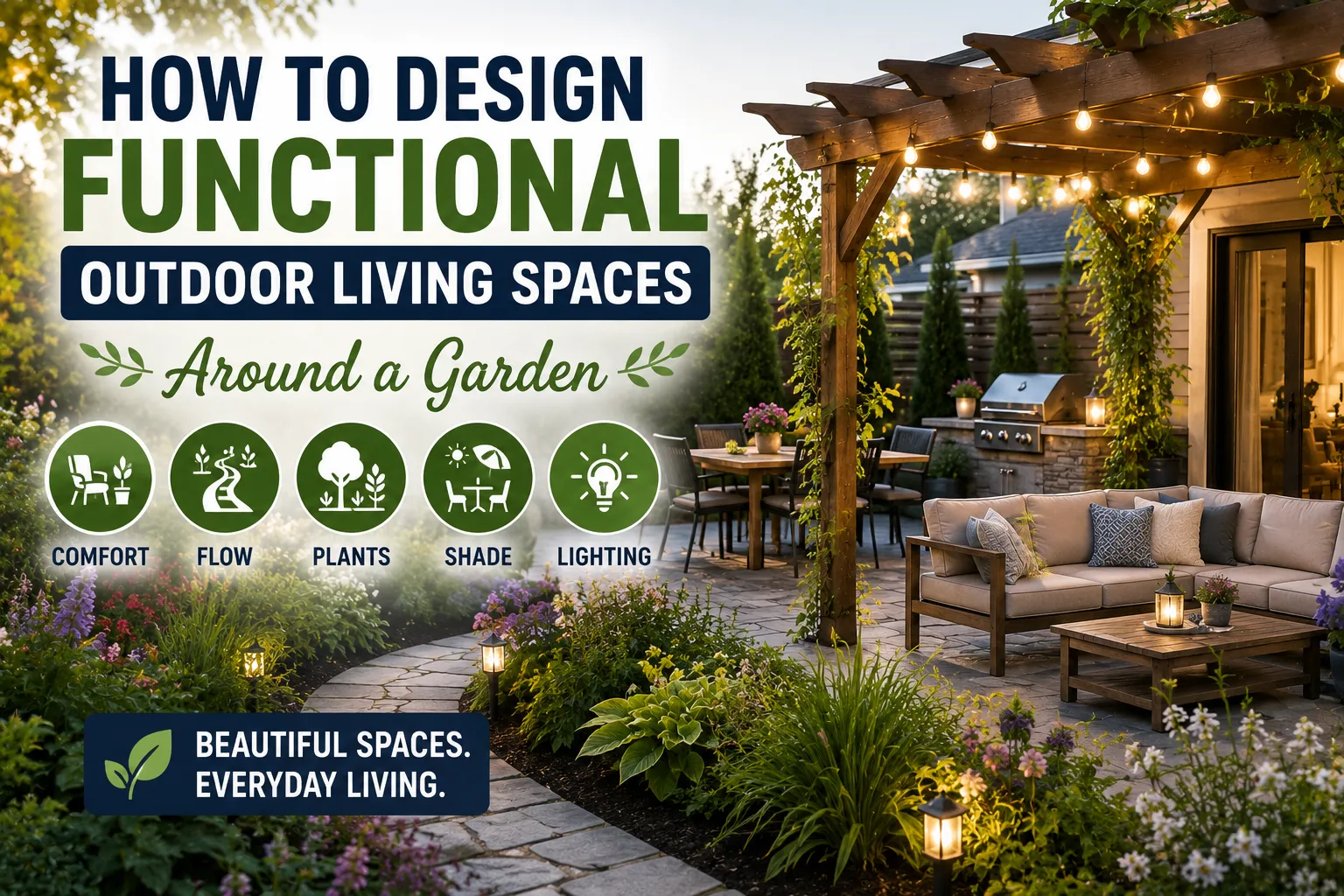
How to Design Functional Outdoor Living Spaces Around a Garden
A garden can be much more than a collection of plants. With thoughtful planning, the space around it can become an outdoor extension of the home—a place to eat, relax, entertain, work, play, or simply enjoy nature.
The challenge is making the space functional without allowing patios, furniture, pathways, and other features to overwhelm the garden itself.
A successful outdoor living area balances comfort, movement, planting, privacy, maintenance, and practicality. The best designs feel natural rather than forced, with each part of the garden serving a clear purpose.
Start by Understanding How the Space Will Be Used
Before buying furniture or deciding where to build a patio, think about what you actually want to do outdoors.
An outdoor living space might be designed for:
- Family meals
- Morning coffee
- Entertaining guests
- Reading
- Gardening
- Children’s play
- Outdoor cooking
- Working from home
- Relaxation
- Watching wildlife
- Evening gatherings
A garden intended primarily for quiet relaxation will need a different layout from one designed for frequent entertaining.
Start with activities rather than objects.
Instead of asking, “Where should I put a table?” ask, “What do I want people to do here?”
That question can guide almost every later decision.
Divide the Garden Into Functional Zones
One of the easiest ways to make a large outdoor area more useful is to divide it into zones.
Possible zones include:
- Dining area
- Lounge area
- Cooking area
- Children’s area
- Gardening area
- Pathways
- Planting beds
- Storage area
- Quiet retreat
- Open lawn
These zones do not necessarily need walls or fences between them.
Changes in paving, planting, furniture placement, elevation, lighting, or surface material can visually define different areas while keeping the overall garden connected.
For a broader look at how layout, circulation, planting, and outdoor structure work together, see Understanding Garden Design and Landscape Planning.
Create a Natural Connection to the House
An outdoor living area generally works best when it feels connected to the home.
If people have to walk through a complicated route just to reach the seating area, they may use it less often.
Consider placing frequently used outdoor spaces near the rooms from which they are accessed.
For example, an outdoor dining area near the kitchen can make meals easier to carry outside.
A lounge area near a living room can create a natural transition between indoor and outdoor spaces.
Think About Movement Before Furniture
A beautiful garden can become frustrating if people cannot move through it comfortably.
Plan the main routes first.
Consider how people will move between:
- The house and garden
- The kitchen and dining area
- Seating areas and pathways
- The garden and storage
- Parking areas and entrances
- Outdoor cooking areas
- Different garden zones
Leave enough room around furniture for people to walk, pull out chairs, and carry food or equipment.
The exact dimensions depend on the furniture and household, but pathways should feel comfortable rather than squeezed between obstacles.
Use Pathways to Connect Spaces
Pathways can do more than provide practical access.
They can guide movement and help shape how the garden is experienced.
A straight path may create an efficient route between two frequently used areas.
A gently curved path can create a sense of discovery and encourage people to slow down.
Pathways can be made from many materials, including:
- Stone
- Brick
- Concrete
- Gravel
- Pavers
- Timber
- Other appropriate outdoor surfaces
Choose materials that suit the climate, drainage requirements, maintenance expectations, and overall style of the property.
Give Every Outdoor Area a Purpose
Not every part of a garden needs to contain furniture.
An open lawn, planting bed, tree canopy, or quiet corner can provide valuable breathing room.
However, functional design becomes easier when major areas have clear purposes.
For example:
Dining zone: table, chairs, lighting, and convenient access to the house.
Lounge zone: comfortable seating, shade, side tables, and perhaps a fire feature where appropriate.
Garden zone: planting beds, raised planters, composting space, and storage for tools.
Quiet zone: a bench, hammock, or small seating area surrounded by plants.
Clear purposes prevent the garden from becoming a collection of unrelated objects.
Choose Furniture for the Environment
Outdoor furniture needs to withstand conditions that indoor furniture does not.
Consider exposure to:
- Sunlight
- Rain
- Humidity
- Wind
- Dust
- Temperature changes
- Pollen
- Dirt
Materials vary in durability and maintenance requirements.
Wood can provide a warm natural appearance but may require periodic maintenance depending on the species and finish.
Metal can be strong and long-lasting, although some finishes require protection against corrosion.
Synthetic materials can offer lower maintenance and resistance to moisture.
The best choice depends on local conditions and how much maintenance you are willing to perform.
Prioritize Comfort
Outdoor living spaces should not look functional while feeling uncomfortable.
Consider:
- Seat height
- Cushion support
- Back support
- Shade
- Table height
- Surface temperature
- Wind exposure
- Evening lighting
A beautiful chair that becomes unbearably hot in direct sunlight may not receive much use.
Likewise, a dining table positioned where strong afternoon sunlight hits directly into people’s eyes may be less pleasant than expected.
Comfort should be part of the design from the beginning.
Provide Shade Where It Matters Most
Shade can dramatically increase the amount of time people can comfortably spend outdoors.
Natural shade can come from:
- Trees
- Large shrubs
- Pergolas covered with plants
- Tall planting
- Existing structures
Built shade can include:
- Pergolas
- Canopies
- Umbrellas
- Shade sails
- Retractable awnings
The best solution depends on the garden, climate, budget, and desired appearance.
A strategically positioned shade structure can turn an otherwise uncomfortable area into one of the most useful parts of the garden.
Use Trees as Outdoor Architecture
Trees can perform many roles in an outdoor living space.
They can provide:
- Shade
- Privacy
- Wind protection
- Seasonal interest
- Wildlife habitat
- Visual structure
- Cooler microclimates
A strategically positioned tree can function almost like an outdoor room divider.
However, consider the mature size of a tree before planting it close to patios, walls, drainage systems, or utility infrastructure.
A small tree at the garden center may eventually become a major structural feature.
For more guidance on choosing locations and caring for these larger landscape features, see How to Plant and Maintain Healthy Trees and Shrubs at Home.
Create Privacy With Plants
Privacy does not always require a tall fence.
Plants can create softer visual barriers.
Options include:
- Hedges
- Shrubs
- Small trees
- Climbing plants
- Tall grasses
- Layered planting
A combination of different heights often looks more natural than a single uniform row.
Privacy planting can also improve the appearance of boundaries while providing habitat for birds and insects.
Avoid Making Privacy Too Dense
A common mistake is creating a completely enclosed outdoor space.
While privacy is valuable, excessive screening can make a garden feel dark, cramped, or disconnected.
Consider what you actually want to block.
You may need privacy from a neighboring window but not from the sky or distant landscape.
Selective screening can preserve openness while still creating a sense of seclusion.
Use Planting to Define Outdoor Rooms
Plants can act as living walls.
For example, a group of shrubs can separate a dining area from a lawn without creating a hard barrier.
A row of ornamental grasses can define a pathway.
A raised planting bed can create a visual boundary around a seating area.
This approach allows the garden itself to become part of the architecture.
Layer Your Planting
Layered planting creates depth and makes outdoor spaces feel more established.
A simple planting structure might include:
- Tall trees
- Medium-height shrubs
- Perennials
- Groundcovers
- Low-growing edging plants
Different layers can also serve different functional purposes.
Tall plants can provide shade and privacy.
Medium plants can define spaces.
Low plants can soften edges and cover exposed soil.
Consider the Views From Inside the House
The garden should not only look good when you are standing outside.
Consider how it appears from:
- Living rooms
- Kitchens
- Bedrooms
- Home offices
- Hallways
- Large windows
A strategically positioned tree, sculpture, seating area, or attractive planting bed can become a focal point visible from indoors.
This makes the garden feel connected to everyday life even when nobody is outside.
Think About the Sun Throughout the Day
The position of the sun changes significantly between morning and afternoon.
A dining area that feels pleasantly warm at breakfast could become intensely hot by lunchtime.
A seating area that looks comfortable in the afternoon could become chilly or dark in the evening.
Observe the garden at different times before committing to permanent features.
Pay attention to:
- Morning sunlight
- Afternoon heat
- Evening shade
- Seasonal changes
- Shadows from buildings and trees
This simple observation can prevent costly layout mistakes.
Consider Wind Direction
Wind can make an otherwise attractive outdoor area uncomfortable.
Strong airflow can disturb meals, blow lightweight furniture around, or make evenings feel colder.
Plants, fences, walls, screens, and strategically positioned structures can help reduce wind exposure.
However, completely blocking airflow is not always desirable.
A well-designed windbreak can reduce uncomfortable gusts while maintaining ventilation.
Design for Rain
Outdoor spaces need to account for water.
Consider where rainwater will go after it falls on:
- Patios
- Roofs
- Paths
- Decks
- Planting beds
Poor drainage can create standing water, slippery surfaces, erosion, and damage to structures.
Use appropriate slopes and drainage systems where necessary.
Permeable surfaces can also help some outdoor areas manage rainfall by allowing water to infiltrate the ground rather than directing all runoff toward one location.
Connect Hardscaping With Planting
Hardscaping includes constructed elements such as:
- Patios
- Paths
- Walls
- Steps
- Decks
- Edging
- Outdoor kitchens
Too much hardscape can make a garden feel sterile.
Too little can make it difficult to use.
The goal is balance.
Plants can soften the edges of patios and pathways, while hard surfaces provide practical areas for furniture and movement.
Use Edges Carefully
The transition between a patio and a planting bed can determine whether the garden feels polished or messy.
Clear edges can make maintenance easier.
Possible edging materials include:
- Stone
- Brick
- Metal
- Timber
- Concrete
- Plants
However, rigid edging is not always necessary.
A softly planted border can create a more natural appearance.
Choose the approach that fits the style and maintenance requirements of the garden.
Create a Comfortable Dining Area
An outdoor dining area can become one of the most useful garden features.
It should ideally provide:
- Enough space for chairs
- Comfortable access
- Shade when needed
- Adequate lighting
- A stable surface
- Convenient access to food preparation areas
Think about how plates, drinks, serving dishes, and other items will move between the kitchen and table.
The shorter and simpler that journey is, the more practical the dining area becomes.
Design an Outdoor Lounge
A lounge area is more relaxed than a dining space.
It might include:
- Sofas
- Armchairs
- Side tables
- Outdoor cushions
- Coffee tables
- Shade
- Lighting
Arrange seating so people can comfortably talk to one another.
A common mistake is pointing every chair toward a single focal point, such as a television or fireplace, when the real purpose of the area is conversation.
Add an Outdoor Cooking Area Carefully
Outdoor kitchens and cooking stations can be valuable additions, but they require more planning than simply placing a grill on a patio.
Consider:
- Cooking location
- Food preparation space
- Storage
- Lighting
- Ventilation
- Fire safety
- Cleaning
- Waste disposal
- Access to the house
Outdoor cooking equipment should be installed and operated according to manufacturer instructions and applicable local requirements.
Keep combustible materials an appropriate distance from cooking and heat sources.
Plan for Storage
Outdoor living becomes much easier when garden equipment has a home.
Storage may be needed for:
- Gardening tools
- Cushions
- Toys
- Outdoor cooking equipment
- Cleaning supplies
- Sports equipment
- Plant pots
- Hoses
Options include:
- Garden sheds
- Storage benches
- Cabinets
- Deck boxes
- Built-in storage
Storage should be convenient enough that people actually use it.
Use Multipurpose Furniture
When space is limited, multipurpose furniture can make a significant difference.
Examples include:
- Benches with storage
- Folding tables
- Stackable chairs
- Extendable dining tables
- Modular seating
- Movable planters
Furniture that can be rearranged allows the garden to adapt to different activities.
Make Small Gardens Feel Larger
A small garden does not necessarily need fewer functions.
Instead, functions can overlap.
A bench can provide seating while also defining a planting area.
A narrow dining table can double as a workspace.
A wall-mounted planter can add greenery without taking up floor space.
Vertical planting can make use of walls and fences without consuming valuable ground area.
Use Vertical Space
Walls, fences, trellises, and pergolas provide opportunities for vertical gardening.
Climbing plants can:
- Add greenery
- Increase privacy
- Soften hard surfaces
- Provide shade
- Create visual interest
Vertical gardening can be particularly useful where ground space is limited.
Make sure structures are strong enough to support mature plants and that climbing species are appropriate for the climate and structure.
Choose Plants for the Amount of Maintenance You Want
A beautiful garden that requires more maintenance than you have time for can quickly become frustrating.
Before choosing plants, consider:
- Water requirements
- Pruning needs
- Growth rate
- Mature size
- Pest susceptibility
- Seasonal behavior
- Local climate
- Soil conditions
Low-maintenance does not mean no-maintenance.
Every garden requires some care, but the right plant choices can significantly reduce the workload.
Use Native and Climate-Appropriate Plants
Plants adapted to local conditions may require less intervention than species that struggle in the environment.
Consider plants suited to:
- Local temperatures
- Rainfall
- Soil
- Sun exposure
- Seasonal conditions
Local and native plants can also support wildlife and contribute to biodiversity where appropriately selected.
Design With the Seasons in Mind
A garden should not depend entirely on one season for its appeal.
Choose a mixture of plants and features that provide interest at different times of year.
Seasonal interest can come from:
- Flowers
- Foliage
- Fruit
- Bark
- Evergreen structure
- Changing colors
- Garden architecture
This helps ensure that the outdoor living area remains visually appealing even when particular plants are not flowering.
For broader guidance on selecting and combining flowering plants throughout a landscape, explore the Complete Guide to Flower Gardening.
Make Evening Use Possible
A garden can become a completely different space after sunset.
Outdoor lighting can make paths, seating areas, steps, and entrances more usable.
Consider several types of lighting:
Path Lighting
Helps illuminate routes through the garden.
Task Lighting
Provides focused illumination for cooking, dining, or other activities.
Accent Lighting
Highlights trees, plants, walls, or architectural features.
Ambient Lighting
Creates a softer atmosphere around seating and entertaining areas.
Avoid excessive brightness.
Outdoor lighting should improve visibility without making the garden feel like a brightly illuminated parking lot.
Use Lighting to Highlight Plants
Lighting can make trees and architectural plants visible after dark.
Instead of illuminating everything equally, choose a few focal points.
A strategically lit tree can create a strong visual feature.
Low-level lighting around planting beds can also provide subtle depth.
Consider Outdoor Electrical Safety
Outdoor electrical installations require appropriate protection from moisture and weather.
Use equipment specifically designed for outdoor conditions and follow applicable electrical regulations.
Permanent electrical work should be performed by a qualified professional where required.
Avoid improvised extension-cord arrangements that create trip hazards or expose electrical connections to moisture.
Think About Outdoor Heating
In cooler climates, outdoor heating can extend the useful season.
Options can include:
- Fireplaces
- Fire pits
- Outdoor heaters
- Built-in heating systems
Fire and heating equipment should be positioned safely and operated according to manufacturer instructions and local regulations.
Keep combustible materials away from heat sources and ensure adequate ventilation for equipment that requires it.
Make the Garden Accessible
An outdoor living space should be usable by the people who actually live in the home.
Consider accessibility when planning:
- Path widths
- Steps
- Slopes
- Seating heights
- Surface changes
- Lighting
- Handrails
Smooth, stable pathways can make a significant difference for people using mobility aids or simply navigating the garden at night.
Consider Children and Pets
If children or pets regularly use the garden, design accordingly.
Potential considerations include:
- Secure boundaries
- Safe play areas
- Durable surfaces
- Shade
- Pet-friendly plants
- Storage for toys
- Safe separation from cooking equipment
- Protection around ponds or other hazards
The garden should accommodate real household behavior rather than relying on everyone to avoid certain areas.
Keep Maintenance Routes Accessible
One overlooked design consideration is how the garden will be maintained.
Can you reach:
- Planting beds?
- Outdoor taps?
- Gutters?
- Storage?
- Equipment?
- Utility areas?
- Trees that need pruning?
Do not place permanent structures directly in front of components that will eventually need servicing.
A garden that looks perfect but cannot be maintained easily will eventually become difficult to manage.
Choose Durable Outdoor Materials
Outdoor materials experience more severe conditions than indoor materials.
Before selecting a material, consider:
- Moisture
- Sunlight
- Temperature changes
- Foot traffic
- Maintenance
- Slipperiness
- Cleaning
- Expected lifespan
A cheaper material may not necessarily be more economical if it requires frequent replacement or intensive maintenance.
Keep Water Away From Buildings
Patios, paths, and planting areas should be designed so water does not consistently flow toward the house.
This is especially important around doors, foundations, and other vulnerable areas.
Proper drainage design can prevent many problems before they start.
For complex sites or properties with persistent drainage problems, professional landscape or drainage advice may be appropriate.
Use Plants to Soften Built Structures
Outdoor kitchens, retaining walls, fences, and patios can sometimes look visually heavy.
Planting can soften these structures.
Use a combination of:
- Shrubs
- Climbers
- Grasses
- Groundcovers
- Containers
- Small trees
Plants can make hardscape feel like part of the garden rather than something imposed upon it.
Don’t Overfill the Space
One of the most common outdoor design mistakes is trying to include too many features.
A garden might contain:
- A dining set
- A lounge
- A fire pit
- A barbecue
- A fountain
- Several planters
- A shed
- Children’s equipment
- Multiple decorative structures
Individually, these may all seem appealing.
Together, they can leave little room to move or appreciate the garden.
Leave some open space.
Create a Focal Point
A focal point gives the eye somewhere to settle.
It could be:
- A mature tree
- A water feature
- A sculpture
- A fireplace
- A beautiful planting bed
- An architectural structure
- A particularly attractive view
Not every garden needs a dramatic centerpiece.
Sometimes a simple bench positioned beneath a tree can provide enough visual focus.
Let the Garden Frame the Living Space
Rather than treating plants as decorations around a patio, consider how they can frame the outdoor room.
Planting behind seating can provide a backdrop.
Low plants in front can soften the edge.
Trees overhead can create a canopy.
This makes the living space feel embedded within the garden rather than placed on top of it.
Plan the Design Before Building
Even a modest outdoor project benefits from planning.
A simple sketch can show:
- House
- Existing trees
- Property boundaries
- Sun direction
- Seating
- Dining
- Paths
- Planting areas
- Storage
- Drainage
- Utilities
You do not need professional design software to begin.
The purpose is to identify conflicts before construction starts.
Start With the Most Important Area
If your budget is limited, do not try to transform the entire garden at once.
Start with the area that will have the greatest impact.
That might be:
- A small dining patio
- A comfortable seating area
- A better pathway
- A shaded corner
- A garden entrance
- A neglected section near the kitchen
Once that space works well, other improvements can be added gradually.
Build in Stages
A staged approach can make larger garden projects more affordable.
Stage One: Function
Build or improve the essential patio, path, seating, or drainage.
Stage Two: Planting
Add trees, shrubs, flowers, and groundcovers.
Stage Three: Comfort
Add shade, lighting, cushions, and other features.
Stage Four: Refinement
Introduce storage, decorative elements, improved planting, or additional outdoor features.
This approach allows the garden to evolve rather than requiring a large upfront investment.
Balance Beauty With Maintenance
Every design decision has a maintenance consequence.
More planting can mean more pruning.
More paving can mean more cleaning.
More furniture can mean more storage.
A pond can require water-quality management.
A large lawn requires mowing and other maintenance.
Before adding a feature, ask:
How much work will this require five years from now?
The answer may influence the design more than the initial appearance.
Design Around the Garden You Already Have
Mature trees and established plants can be valuable assets.
Removing them simply to create a blank canvas may not always be necessary.
Instead, consider whether the existing landscape can become part of the design.
An old tree might provide the perfect location for:
- A bench
- A hammock
- A shaded seating area
- A reading corner
- A children’s play space
Working with existing features can also reduce construction and planting costs.
Make Comfort a Year-Round Consideration
An outdoor living space does not need to be usable every day of the year to be worthwhile.
However, thoughtful design can extend its useful period.
Consider:
- Shade in hot weather
- Wind protection
- Lighting for shorter days
- Weather-resistant furniture
- Seasonal planting
- Outdoor heating where appropriate
- Storage for cushions and equipment
The goal is to make the space useful under a range of conditions rather than designing it for one perfect afternoon.
Think About the Experience
A functional garden is not simply a list of facilities.
Think about how you want the space to feel.
Should it be:
- Calm?
- Social?
- Private?
- Lively?
- Natural?
- Modern?
- Informal?
- Family-oriented?
This emotional goal can guide material, planting, furniture, lighting, and layout decisions.
A garden that works practically but feels unpleasant may still go unused.
Build an Outdoor Space People Actually Want to Use
The most successful garden living spaces do not necessarily contain the most expensive furniture or the largest patios.
They work because their design responds to everyday life.
People can move easily between the house and garden. There is somewhere comfortable to sit. Dining areas are conveniently located. Plants provide shade and privacy without overwhelming the space. Paths are practical, drainage is considered, and storage is available when needed.
Most importantly, the garden remains a garden.
The strongest outdoor living design creates useful spaces without sacrificing the plants, views, natural textures, and sense of openness that make spending time outdoors worthwhile. Start with how you want to use the space, build around the garden’s existing strengths, and add features that make everyday outdoor living easier rather than simply adding more things.