How Leisure and Recreation Improve Everyday Living
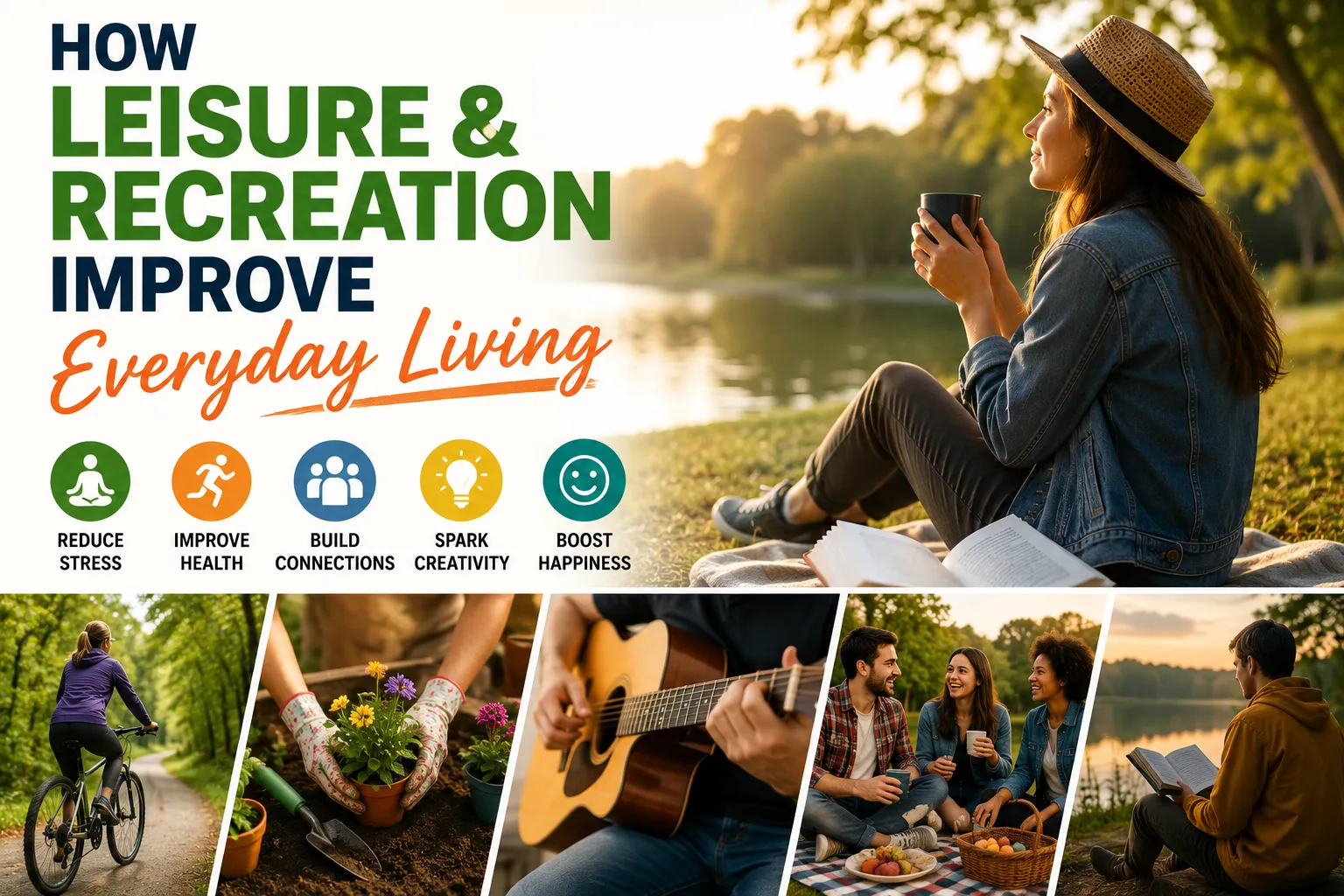
How Leisure and Recreation Improve Everyday Living
Modern life can make it easy to treat free time as something that should be filled with errands, work or responsibilities. Yet leisure and recreation play an important role in maintaining a balanced and satisfying life.
Leisure is not simply about doing nothing. It can include reading, walking, gardening, playing sports, traveling, listening to music, spending time with friends, pursuing hobbies or simply enjoying a quiet afternoon. Recreation gives people opportunities to step away from routine demands and engage in activities that provide enjoyment, relaxation or personal fulfillment.
Making room for these activities can benefit physical health, mental wellbeing, relationships and even productivity. These benefits also make leisure an important part of living a balanced lifestyle.
What Are Leisure and Recreation?
Although the terms are often used together, leisure and recreation are slightly different.
Leisure generally refers to discretionary time when a person is free from work and other essential responsibilities. It can include relaxing, socializing, pursuing interests or simply taking a break.
Recreation refers more specifically to activities undertaken for enjoyment, relaxation or refreshment.
Recreation can be active or passive.
Examples include:
- Walking
- Cycling
- Swimming
- Reading
- Gardening
- Playing music
- Watching films
- Cooking for enjoyment
- Playing games
- Visiting parks
- Traveling
- Participating in sports
- Spending time with friends
There is no single correct way to use leisure time. What matters is whether an activity provides meaningful rest, enjoyment, connection or engagement.
Leisure Gives the Mind a Break
Continuous concentration can be mentally exhausting.
Work, studying, household responsibilities and digital communication can keep the brain occupied for much of the day. Leisure creates an opportunity to step away from those demands.
A relaxing activity can provide a psychological change of pace.
Reading a novel, taking a walk or listening to music may shift attention away from work-related problems and allow the mind to recover from sustained concentration.
This does not mean every leisure activity has to be completely passive. Activities that require attention can also be restorative when they are chosen voluntarily rather than imposed as another obligation.
Recreation Can Help Manage Everyday Stress
Stress is a normal part of life, but prolonged exposure to demanding situations can make it difficult to recover.
Recreational activities can provide a healthy outlet.
Physical activities such as walking, swimming or cycling can help people move their bodies while taking their attention away from daily pressures. Creative activities can provide another form of mental engagement.
Even simple leisure activities can create a boundary between work and personal life.
For example, taking a short walk after work can become a transition ritual between professional responsibilities and home life.
Physical Recreation Supports Physical Health
Many recreational activities involve movement.
Walking, dancing, cycling, swimming, hiking and recreational sports can contribute to regular physical activity.
Regular movement can support:
- Cardiovascular health
- Muscle strength
- Bone health
- Balance
- Mobility
- Energy levels
- Physical fitness
Recreation can make physical activity feel less like a chore.
Someone who dislikes formal workouts may still enjoy gardening, hiking or playing football with friends. The activity provides health benefits while also satisfying the desire to have fun.
Hobbies Can Make Exercise More Enjoyable
Exercise does not have to happen exclusively in a gym.
People may become more consistent when physical activity is connected to something they genuinely enjoy.
Someone might:
- Join a recreational sports team
- Walk while exploring a new neighborhood
- Go hiking with friends
- Take dance classes
- Ride a bicycle
- Garden
- Swim
- Play with children outdoors
The enjoyment itself can make it easier to maintain the activity over time.
For a broader look at how different interests can enrich free time, the complete guide to hobbies and leisure provides a useful companion resource.
Leisure Supports Mental Wellbeing
Enjoyable activities can contribute to a greater sense of wellbeing.
A hobby provides something to anticipate and something that belongs to the individual rather than being dictated by work or other responsibilities.
This sense of personal choice can be valuable.
Leisure can also provide opportunities for positive emotions such as enjoyment, curiosity, satisfaction and relaxation.
However, recreational activities are not a substitute for professional support when someone is experiencing persistent or severe mental health difficulties.
Hobbies Can Create a Sense of Achievement
Leisure is sometimes associated only with relaxation, but many hobbies involve learning and accomplishment.
Someone learning to play guitar may struggle with a song before eventually mastering it.
A gardener may plant seeds and watch them develop.
A photographer may gradually improve their ability to capture interesting images.
A person learning to cook may become capable of preparing meals they previously thought were too difficult.
These experiences can provide a sense of progress without the pressure associated with professional achievement.
Creativity Needs Room to Grow
Creative recreation can provide an outlet for ideas and self-expression.
Activities such as:
- Painting
- Writing
- Drawing
- Photography
- Music
- Crafting
- Cooking
- Gardening
- Woodworking
allow people to experiment without necessarily worrying about whether the result has commercial value.
Creative hobbies can also encourage curiosity and problem-solving.
The objective does not have to be producing something perfect. The process itself can be rewarding.
People interested in developing these abilities further may also benefit from exploring how to develop creativity, learn independently and pursue meaningful personal interests.
Leisure Can Strengthen Relationships
Recreation is often more enjoyable when shared with other people.
Playing a game, preparing a meal, attending a concert, hiking or watching a movie together can create opportunities for conversation and shared experiences.
These moments can strengthen relationships because they provide time together outside the demands of work and household responsibilities.
For families, recreational activities can become traditions that create lasting memories.
For friends, shared hobbies can provide a reason to stay connected despite busy schedules.
Shared Activities Can Reduce Social Isolation
Social connection is an important part of everyday wellbeing.
People can become isolated when work, family responsibilities, relocation or other circumstances reduce opportunities for interaction.
Recreational groups can create natural opportunities to meet people.
Examples include:
- Sports clubs
- Book clubs
- Walking groups
- Community gardens
- Art classes
- Volunteer organizations
- Hobby groups
- Local cultural activities
These settings can make social interaction easier because participants already have a shared interest.
For people looking to strengthen these connections beyond recreational activities, how to build and maintain healthy friendships and social connections offers a related perspective.
Leisure Can Improve the Quality of Family Time
Family time does not always need to involve elaborate trips or expensive entertainment.
Simple activities can be meaningful.
Families might:
- Cook together
- Take evening walks
- Play board games
- Visit a local park
- Garden together
- Ride bicycles
- Have a movie night
- Explore nearby attractions
The value often comes from shared attention rather than the cost of the activity.
Putting phones and other distractions aside during recreational time can make these interactions more meaningful.
Recreation Can Encourage Exploration
Leisure provides opportunities to experience something unfamiliar.
Travel is an obvious example, but exploration does not require an international trip.
People can explore:
- A new walking route
- A nearby town
- A museum
- A local restaurant
- A nature reserve
- A different style of cooking
- A new book genre
- An unfamiliar hobby
Trying new activities can interrupt repetitive routines and introduce fresh experiences.
Leisure Can Make Everyday Life Feel Less Repetitive
Daily routines provide structure, but too much repetition can make life feel monotonous.
Recreation introduces variation.
A weekly hike, weekend football match, gardening session or evening hobby gives the week something different to look forward to.
These small changes can make ordinary routines feel more balanced.
Leisure does not need to be dramatic to be meaningful.
Nature-Based Recreation Offers Multiple Benefits
Spending leisure time outdoors can combine physical activity, relaxation and exposure to natural surroundings.
Activities such as walking, hiking, gardening and cycling can get people away from indoor environments and screens.
A garden can become a recreational space. A local park can provide an inexpensive place to walk or read. A trail can turn exercise into exploration.
Outdoor recreation also does not have to involve specialized equipment.
A comfortable pair of shoes and a safe walking route may be enough.
Gardening Is Both Productive and Recreational
Gardening is a good example of an activity that combines recreation with practical results.
Planting vegetables, caring for flowers or maintaining a small container garden can provide physical activity and a sense of accomplishment.
It also creates opportunities to spend time outdoors and observe gradual changes in the natural environment.
For some people, the repetitive tasks involved in gardening can be particularly relaxing.
Recreation Can Encourage Better Work-Life Boundaries
Without deliberate boundaries, work can gradually occupy personal time.
Checking messages at night, answering emails during weekends and constantly thinking about unfinished tasks can make it difficult to mentally disconnect.
A planned recreational activity can create a clear separation.
A person who plays basketball every Saturday morning, attends a weekly art class or takes an evening walk may be more likely to protect that period from unnecessary work interruptions.
Leisure therefore becomes more than entertainment. It becomes part of a personal boundary system.
Taking Breaks Can Support Productivity
Rest and productivity are not necessarily opposites.
People have limited attention and energy. Continuous work without meaningful breaks can contribute to fatigue and reduced concentration.
Short breaks throughout the day can provide opportunities to reset.
Longer recreational periods can provide deeper recovery.
The goal is not to avoid work but to recognize that sustainable productivity depends partly on allowing people time away from demanding tasks.
Leisure Can Support Better Sleep Habits
The relationship between leisure and sleep depends heavily on the activity.
Relaxing evening routines can help create a transition toward bedtime.
Reading a physical book, taking a gentle walk or listening to calming music may be more conducive to winding down than continuing work late into the night.
On the other hand, highly stimulating activities or excessive screen use immediately before bed can interfere with sleep for some people.
Choosing leisure activities thoughtfully can therefore become part of a healthier evening routine.
Digital Recreation Has a Place, Too
Not all recreation needs to happen outdoors or away from screens.
Video games, films, online communities, digital photography and other forms of digital entertainment can provide enjoyment.
The important consideration is balance.
Digital recreation can become less beneficial when it consistently replaces sleep, physical activity, face-to-face relationships or important responsibilities.
The goal is not necessarily to eliminate screen-based leisure but to make sure it fits into a broader lifestyle.
Recreation Does Not Have to Be Expensive
Financial cost can be a barrier to some forms of leisure, but many enjoyable activities require little or no money.
Affordable options include:
- Walking
- Reading library books
- Gardening
- Home cooking
- Drawing
- Writing
- Stretching
- Local sports
- Visiting public parks
- Listening to music
- Photography with an existing phone
- Board games with friends
A meaningful leisure routine is not defined by how much money someone spends.
Leisure Can Be Simple
People sometimes make recreation unnecessarily complicated.
A relaxing activity does not need to involve a vacation, expensive equipment or a carefully planned itinerary.
Sitting outside with a cup of tea, reading for twenty minutes or taking a walk around the neighborhood can provide a useful break.
The important question is whether the activity genuinely helps you disengage from unwanted demands and reconnect with something you value.
Avoid Turning Every Hobby Into a Performance
One potential problem with modern leisure is the pressure to optimize everything.
A hobby that begins as a source of enjoyment can become another performance project.
Someone may start running for fun and then become obsessed with statistics. A person may begin photography as a creative outlet and become preoccupied with equipment. Gardening can become competitive.
There is nothing wrong with pursuing excellence, but leisure can also be valuable when there is no pressure to be the best.
Sometimes the point is simply to enjoy the activity.
Schedule Leisure Instead of Waiting for Free Time
One reason people struggle to maintain hobbies is that they wait for spare time to appear.
Busy schedules rarely create large amounts of unexpected free time.
Instead, leisure can be treated as a legitimate part of the weekly schedule.
That might mean reserving:
- Twenty minutes for reading
- An hour for exercise
- A weekend afternoon for gardening
- One evening for friends
- A regular family game night
Scheduling leisure does not make it less spontaneous. It simply gives it enough space to happen.
Learn to Protect Unstructured Time
Not every minute needs to be planned.
Unstructured time can allow people to decide what they actually feel like doing.
A completely open afternoon might lead to reading, cooking, exploring the neighborhood or simply resting.
This can be particularly valuable in a culture where calendars and digital notifications can fill nearly every available moment.
Leaving some space unplanned can provide a different kind of freedom.
Leisure Should Match the Person
There is no universal recreational activity that works for everyone.
One person may find running relaxing while another finds it exhausting.
One person may enjoy crowded social events while another prefers gardening alone.
One person may recharge by playing competitive sports while another prefers reading quietly.
The most useful leisure activity is often the one that fits the individual’s interests, energy level and circumstances.
How to Build a More Balanced Leisure Routine
A balanced recreational routine does not need to be complicated.
Consider including activities from several categories:
Something Physical
Walking, cycling, swimming, dancing or recreational sports.
Something Social
Time with friends, family, neighbors or community groups.
Something Creative
Writing, cooking, photography, painting, music or crafts.
Something Restful
Reading, listening to music, meditation or simply spending quiet time outdoors.
Something New
Trying a new recipe, visiting a new place or learning a new skill.
Having several types of leisure prevents recreation from becoming overly dependent on one activity.
Start With Small Amounts of Time
Someone with a demanding schedule may feel that there is no room for hobbies.
Starting small can make the idea more realistic.
Ten or fifteen minutes of reading, a short walk after dinner or a brief gardening session can be enough to establish a habit.
Once leisure becomes a normal part of the routine, longer periods may become easier to protect.
Make Recreation Easier to Access
Convenience strongly influences behavior.
If your walking shoes are easy to find, you’re more likely to walk.
If your guitar is buried in storage, you’re less likely to practice.
If gardening tools are organized and accessible, spending time in the garden becomes easier.
Reducing the friction between yourself and your preferred hobby can make recreational habits more sustainable.
Give Yourself Permission to Rest
Not all leisure needs to be productive.
There is value in simply resting without feeling guilty about it.
Modern culture can create pressure to use every free moment for self-improvement, exercise, learning or achievement.
But recovery is itself a legitimate need.
Watching a favorite show, sitting quietly or taking an afternoon nap when appropriate does not have to produce a measurable outcome.
Sometimes leisure is valuable precisely because it asks nothing of you.
Recreation Can Make Life More Sustainable
A healthy leisure routine does not necessarily require constant consumption.
Activities based on experiences, relationships, creativity and nature can provide satisfaction without requiring frequent purchases.
Walking with friends, gardening, cooking, reading or playing music can all become meaningful parts of life without turning leisure into a cycle of buying new products.
This can also make recreation more accessible and financially sustainable.
The Role of Leisure Changes Over Time
What people enjoy can change throughout life.
A person may enjoy competitive sports when younger and later prefer hiking or swimming.
Someone who once spent weekends socializing may eventually find more satisfaction in gardening, reading or family activities.
Changes in work, relationships, health, location and responsibilities can all influence recreational preferences.
There is no need to maintain a hobby simply because it once mattered.
Leisure should evolve with the person.
Making Room for Enjoyment
Leisure and recreation are sometimes treated as optional extras that can be sacrificed whenever life becomes busy. In reality, they can contribute to a more sustainable and satisfying daily routine.
They provide opportunities to move, relax, create, socialize, explore and recover from everyday demands. They can strengthen relationships, support physical activity and give people a sense of identity outside work and responsibilities.
The most effective approach is not necessarily to fill every free hour with activities. It is to create enough space for things that genuinely restore and engage you.
A walk around the neighborhood, an evening spent reading, a weekend in the garden or a game with friends may seem like small parts of life. Over time, those moments can become some of the experiences that make everyday living feel more balanced, enjoyable and meaningful.