ABCasa Fair 2026: Home Décor Trends and Design Ideas to Watch
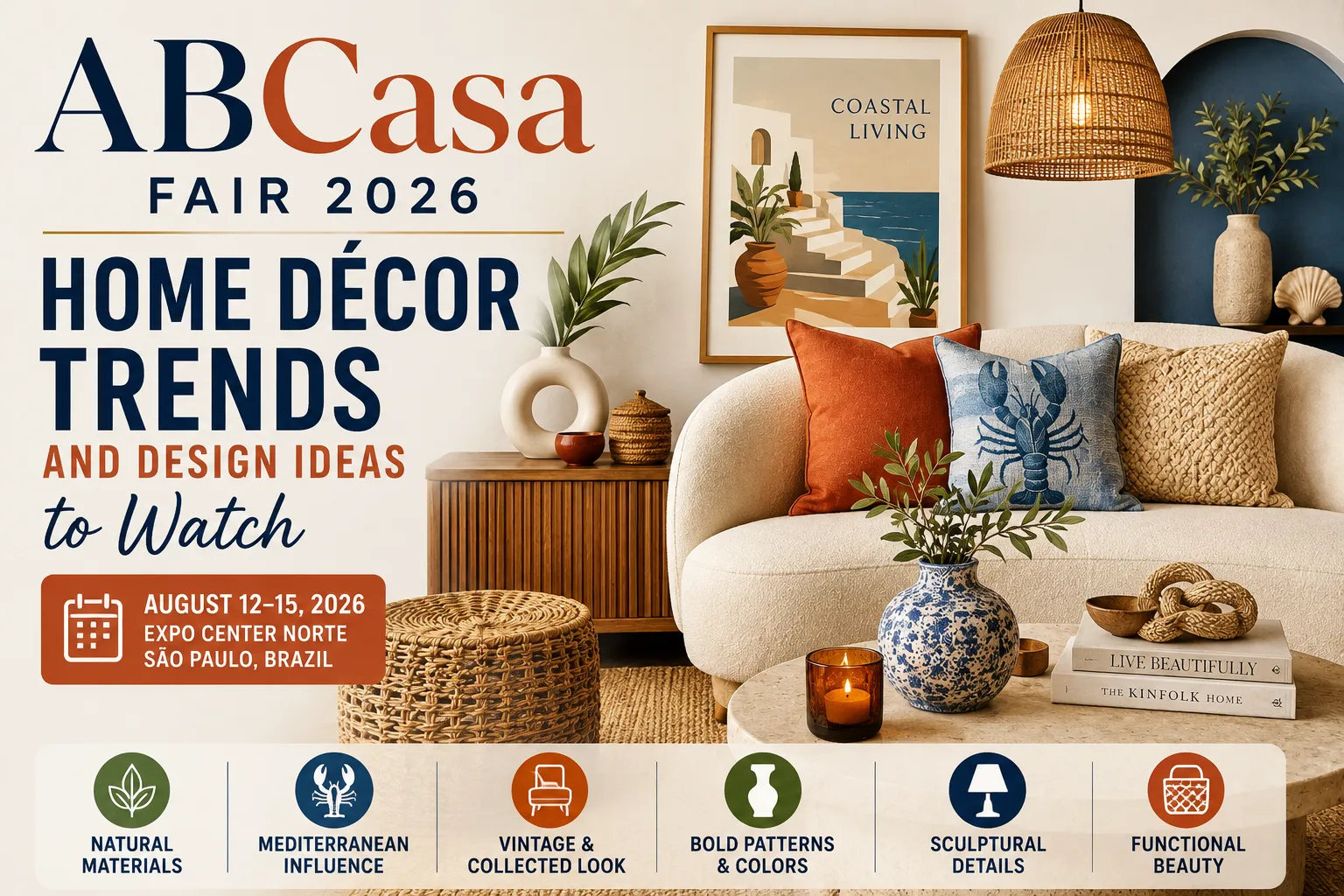
ABCasa Fair 2026: Home Décor Trends and Design Ideas to Watch
The home décor market is entering a more expressive phase, and the ABCasa Fair 2026 is offering an important glimpse into where that shift is heading.
Held at Expo Center Norte in São Paulo, the major business-to-business event brings together companies, retailers, designers, architects and other professionals working across home décor, furniture, gifts and household products. The August 2026 edition runs from August 12 through August 15, making this year’s fair a timely showcase for products and ideas likely to influence interiors in the months ahead.
The event is particularly worth watching because ABCasa describes its fair as a major B2B meeting point for the Latin American home and décor market. The February 2026 edition attracted more than 390 exhibitors across 75,000 square meters and around 45,000 professional visitors, according to the organizers.
While the August edition is still underway, themes emerging from ABCasa’s 2026 coverage already point toward a home that feels warmer, more tactile, more personal and less dependent on perfectly coordinated minimalism.
A Shift Toward More Personal Interiors
One of the biggest changes happening across interior design is the move away from spaces that look as though they were assembled entirely from a single showroom.
Instead, designers and homeowners are increasingly mixing:
- Vintage and contemporary pieces
- Natural and manufactured materials
- Bold and neutral colors
- Handmade and mass-produced objects
- Functional furniture and decorative accessories
- Different textures and patterns
The result is a home that feels collected rather than purchased all at once.
That broader direction is also visible in 2026 design coverage beyond ABCasa, with designers emphasizing warmer colors, vintage elements, layered textures and objects that reflect the personality of the people who live in the space.
This shift toward warmer, more tactile and personal interiors is closely aligned with the ideas explored in Layered Comfort Is Taking Over.
Natural Materials Continue to Gain Ground
Natural materials remain one of the clearest themes associated with the 2026 décor landscape.
ABCasa’s February fair coverage highlighted products made from materials such as bamboo, sisal and straw, particularly in organizers and household accessories. The attraction is not purely visual: these materials add texture and warmth while supporting the broader desire for more natural-feeling interiors.
That makes materials such as:
- Bamboo
- Rattan
- Straw
- Sisal
- Natural wood
- Woven fibers
- Linen
- Ceramic
- Stone
particularly useful for homeowners looking to refresh a room without completely remodeling it.
How to Use the Trend
Natural materials do not have to dominate an entire room.
A woven basket, bamboo organizer, rattan chair, wooden side table or textured lampshade can introduce the look without making the space feel overly rustic.
The most contemporary approach is often to combine natural textures with cleaner architectural lines.
The same preference for natural and tactile materials can be seen in Formex 2026 Reveals the Nordic Interior Trends Set to Shape Homes Next.
The Rise of Mediterranean-Inspired Décor
One of the more distinctive trends identified by ABCasa in its February 2026 coverage was the unexpected popularity of lobster-inspired décor.
The motif appeared across items including artwork, ceramics, tableware, textiles and decorative accessories.
ABCasa connected the trend with contemporary Mediterranean aesthetics and the relaxed atmosphere associated with places such as Sicily and the European summer.
The significance goes beyond the lobster itself.
It reflects growing interest in interiors that evoke travel, coastal living and escapism without necessarily becoming traditional beach décor.
How to Bring Mediterranean Character Home
Instead of covering an entire room in nautical decorations, choose one or two expressive elements.
Consider:
- Mediterranean-inspired artwork
- Blue or sea-green ceramics
- Textured linen
- Natural wood
- Terracotta accessories
- Handcrafted-looking tableware
- Sculptural coastal objects
The objective is atmosphere rather than a literal theme.
Bold Decorative Motifs Are Coming Back
For several years, minimalist interiors dominated social media and design magazines.
Now, personality is returning.
Patterns, decorative objects and unexpected motifs are increasingly being used to create focal points.
This does not necessarily mean every wall needs a dramatic print.
A patterned cushion, unusual vase, colorful ceramic piece or distinctive artwork can provide enough contrast to make a neutral room feel more interesting.
The lobster trend at ABCasa is a particularly good example of how a single recognizable motif can become a broader decorative language.
Warmth Is Replacing Sterile Minimalism
The ultra-minimalist white-and-gray interior is losing some of its dominance.
Current design conversations increasingly emphasize:
- Warm neutrals
- Brown
- Terracotta
- Olive
- Ochre
- Muted blue
- Deep green
- Rich wood tones
Recent interior-design reporting similarly points toward warmer palettes and richer materials as homeowners move away from colder, highly uniform interiors.
This does not mean neutral interiors are disappearing.
Instead, neutral spaces are becoming more layered.
A cream wall can work beautifully with a walnut table, woven rug, bronze lighting and terracotta accessories.
For another perspective on the growing preference for earthy palettes, see Warm Earth Tones Continue to Dominate Interior Design.
Color Is Becoming More Confident
One of the easiest ways to update an interior is through color.
Rather than repainting an entire house, homeowners can experiment with concentrated doses of stronger colors.
For example:
Living room: olive-green cushions or a deep-blue accent chair.
Bedroom: warm terracotta bedding.
Dining room: colorful ceramics or artwork.
Bathroom: a bold mirror or decorative tile.
Entryway: a painted console or statement wall.
This approach allows homeowners to experiment without committing to an expensive renovation.
Sculptural Accessories Are Turning Functional Spaces Into Design Statements
Lighting and furniture are increasingly being treated as sculptural objects.
A lamp does not have to disappear into the background.
A chair can become a focal point.
A mirror can act almost like artwork.
A coffee table can introduce an unusual silhouette.
This trend works particularly well in rooms with simple architectural backgrounds.
A relatively restrained room provides space for one or two visually distinctive objects to stand out.
Handmade Details Add Character
Another important movement in contemporary décor is the renewed appreciation for craftsmanship.
Handmade ceramics, woven pieces, carved wood and artisanal accessories can make a room feel less generic.
ABCasa’s broader 2026 coverage emphasizes authenticity and emotional connection as important consumer themes. Its reporting on the fair also highlights the way exhibitors use new products to create experiences rather than simply sell functional objects.
That creates an opportunity for homeowners to think beyond perfectly matching sets.
A handmade bowl does not need to match every other item on the dining table.
Its slight irregularities can actually make the arrangement more interesting.
Vintage Pieces Are Becoming More Valuable
Vintage furniture and accessories are also benefiting from the shift toward authenticity.
Instead of filling a room entirely with new products, designers are mixing contemporary pieces with objects that have history.
This could mean:
- An antique mirror
- A vintage sideboard
- An old wooden chair
- Retro artwork
- A second-hand ceramic collection
- A traditional rug
- A family heirloom
The goal is not to make the room look old.
It is to give the interior a sense of history.
Recent design reporting suggests that vintage pieces are increasingly valued for their craftsmanship, character and individuality rather than simply their age.
The Collected-Look Interior
The collected look may become one of the defining approaches to decorating in 2026.
Instead of asking:
“How do I make everything match?”
the better question becomes:
“How do I make everything work together?”
That distinction is important.
A room can contain different furniture styles and still feel cohesive if there is consistency in:
- Color
- Scale
- Material
- Texture
- Proportion
- Lighting
This approach gives homeowners considerably more freedom.
Functional Décor Is Getting More Attention
Beautiful objects are useful, but today’s homeowners also want their homes to work efficiently.
ABCasa’s February 2026 fair coverage identified natural organizers and multifunctional household products as important trends. Bamboo, sisal and straw were used in products designed to combine organization with visual appeal.
This reflects a broader design principle:
Storage should not have to look like storage.
A woven basket can hide clutter.
A decorative cabinet can organize equipment.
A stylish tray can keep everyday objects together.
A bench can provide seating while storing shoes or blankets.
Good interior design increasingly combines aesthetics with practical living.
The Home as a Wellness Space
The emphasis on natural materials, warm colors and tactile surfaces also reflects a larger desire to make homes feel restorative.
After years of homes becoming workplaces, classrooms, entertainment centers and offices, homeowners are paying more attention to how their surroundings affect their everyday experience.
That can mean:
- Softer lighting
- Comfortable seating
- Natural textures
- Plants
- Less visual clutter
- Calming colors
- Better organization
- Spaces dedicated to relaxation
The objective is not to create a showroom.
It is to create a home where people actually want to spend time.
Layered Lighting Will Remain Important
Lighting can completely change how a room feels.
Instead of depending on a single ceiling fixture, designers increasingly use several sources of illumination.
A well-layered room might combine:
- Ceiling lighting
- Floor lamps
- Table lamps
- Wall sconces
- Accent lighting
- Natural daylight
Warm light can make wood, fabric and earthy colors feel richer.
Meanwhile, sculptural fixtures can function as decorative pieces even when they are switched off.
Natural Stone Is Becoming More Expressive
Natural stone is also gaining attention as homeowners look for materials with visual movement and individuality.
Rather than selecting surfaces that are perfectly uniform, designers are increasingly embracing stone with distinctive veining and variations.
Green, brown, red and gold tones can create dramatic but organic focal points in kitchens, bathrooms and other spaces.
The appeal is partly about uniqueness.
No two natural stone slabs are exactly alike.
That makes the material feel more personal than a completely standardized surface.
Curves Continue to Soften Interiors
Straight lines remain fundamental to furniture and architecture, but curved shapes continue to appear across contemporary interiors.
Curves can be introduced through:
- Rounded sofas
- Circular mirrors
- Arched doorways
- Curved cabinets
- Sculptural chairs
- Rounded coffee tables
- Soft-edged lighting
The effect can make a room feel more relaxed and less rigid.
It is also an easy trend to experiment with because a single curved piece can change the character of an otherwise angular room.
Statement Bathrooms Are Becoming More Like Living Spaces
Bathrooms are no longer being treated purely as utility rooms.
Designers are increasingly introducing:
- Decorative lighting
- Artwork
- Natural stone
- Rich colors
- Sculptural mirrors
- Comfortable textures
- Curved shapes
Recent 2026 design coverage points toward bathrooms becoming more expressive, with jewel tones, decorative lighting and natural textures creating a more lounge-like atmosphere.
For homeowners, this does not necessarily mean a complete bathroom renovation.
A new mirror, lighting fixture, towels, artwork or accessories can dramatically change the space.
The Return of Traditional Influence
Contemporary design is also borrowing from traditional interiors.
But the new version is less formal.
Designers are combining traditional elements such as:
- Decorative trim
- Wood cabinetry
- Classic furniture shapes
- Arches
- Vintage patterns
with modern materials and simpler styling.
The result is an interior that feels familiar without looking dated.
This fits neatly into the broader movement toward homes that feel established and personal rather than completely new.
Why Matching Sets Are Losing Their Appeal
Buying an entire furniture set can make decorating easier.
But it can also make a room look predictable.
The collected approach encourages homeowners to choose individual pieces based on quality, comfort and personality.
For example, instead of purchasing a matching sofa, coffee table, side tables and chairs, consider combining:
- A contemporary sofa
- A vintage side table
- A sculptural coffee table
- A woven chair
- An unusual lamp
The room becomes more visually dynamic.
Sustainability Is Becoming Part of the Design Conversation
Sustainability is increasingly influencing the products consumers choose for their homes.
Natural materials, durable furniture, vintage pieces and products designed for long-term use can all contribute to a more considered approach to consumption.
ABCasa’s 2026 coverage specifically connects natural-material household products with a growing interest in sustainability and wellbeing.
However, homeowners should avoid assuming that every product marketed as “natural” or “eco-friendly” is automatically sustainable.
Look at:
- Material sourcing
- Product lifespan
- Manufacturing
- Packaging
- Repairability
- Recyclability
- Transportation
A durable item that remains useful for years may ultimately be a better choice than a cheaply produced trend item that needs replacing quickly.
How to Use 2026 Trends Without Making Your Home Look Dated
The biggest mistake with any design trend is adopting everything simultaneously.
Trends are most effective when they are used selectively.
A timeless foundation might include:
- Good-quality furniture
- Neutral architectural finishes
- Natural materials
- Functional storage
- Appropriate lighting
Trendy elements can then be layered on top.
For example:
Foundation: neutral sofa and wood flooring.
Trend: terracotta cushions.
Trend: sculptural lamp.
Trend: Mediterranean-inspired ceramic.
Personal touch: family artwork.
This creates a room that can evolve without requiring a complete redesign every few years.
Small Changes Can Make a Big Difference
You do not need a large budget to experiment with emerging décor trends.
Try:
Change the Textiles
Replace cushion covers, throws or curtains.
Add Natural Texture
Introduce baskets, woven accessories or wooden objects.
Update Lighting
Replace an outdated lamp with a sculptural fixture.
Introduce One Strong Color
Choose a single accent color and repeat it in small quantities.
Add Artwork
A large piece of artwork can transform a blank wall.
Mix Old and New
Pair one vintage object with contemporary furniture.
Improve Organization
Replace plastic storage containers with attractive baskets or boxes.
These changes can produce a noticeable visual transformation without major construction.
What ABCasa Fair Means for the Broader Décor Market
The importance of ABCasa Fair extends beyond the products displayed at the event.
Because the fair connects manufacturers, importers, retailers, designers and other professionals, it provides a useful snapshot of what businesses believe consumers will want next.
The February 2026 edition demonstrated the scale of that ecosystem, with more than 390 exhibitors and approximately 45,000 professional visitors. ABCasa also reported that 80% of exhibitors saw higher sales than at the previous edition, with some products selling out before the event ended.
That makes the fair more than a shopping event.
It is a marketplace where consumer preferences, product development and design trends intersect.
A More Personal Home Is Emerging
The strongest message from the 2026 design landscape may not be a particular color, material or decorative object.
It is the growing emphasis on personality.
Homeowners increasingly want spaces that communicate something about who they are.
That could mean a love of travel, an appreciation for craftsmanship, a connection to nature, an interest in vintage design or simply a preference for colorful and comfortable surroundings.
The result is an interior that feels less like a showroom and more like a lived-in environment.
Design Ideas to Take Home From ABCasa Fair 2026
The trends emerging around ABCasa Fair suggest several practical directions for homeowners and interior designers:
- Use natural materials to introduce warmth and texture.
- Experiment with stronger colors instead of relying exclusively on beige and gray.
- Mix vintage and contemporary pieces for a more collected appearance.
- Choose decorative objects with personality rather than filling shelves with generic accessories.
- Embrace craftsmanship through handmade ceramics, woven goods and artisanal pieces.
- Use lighting as décor, not simply as illumination.
- Prioritize multifunctional storage that looks attractive.
- Bring in Mediterranean influences through subtle colors, ceramics and natural textures.
- Use statement pieces selectively rather than turning every surface into a focal point.
- Choose durable materials that can remain attractive beyond a single design cycle.
The Next Chapter of Home Décor
ABCasa Fair 2026 arrives at a moment when interior design is becoming less about following one dominant aesthetic and more about combining influences.
Natural materials can sit beside modern furniture. Vintage objects can work with contemporary lighting. Bold colors can coexist with calm neutral backgrounds. Functional storage can become part of the decorative scheme.
That flexibility may be the most useful trend of all.
The August ABCasa Fair runs through August 15 at Expo Center Norte in São Paulo, while the organizers have already scheduled the next edition for February 14–17, 2027.
For homeowners, the takeaway is simple: you do not need to redesign your entire home to participate in the next wave of interior design. A carefully chosen natural texture, a piece of vintage furniture, a stronger color, better lighting or one memorable decorative object can be enough to make a space feel distinctly more current.
The future of décor is looking warmer, more tactile, more expressive and considerably more personal—and ABCasa Fair 2026 is giving the industry an early look at what that future may look like.