The Complete Guide to Mortgages
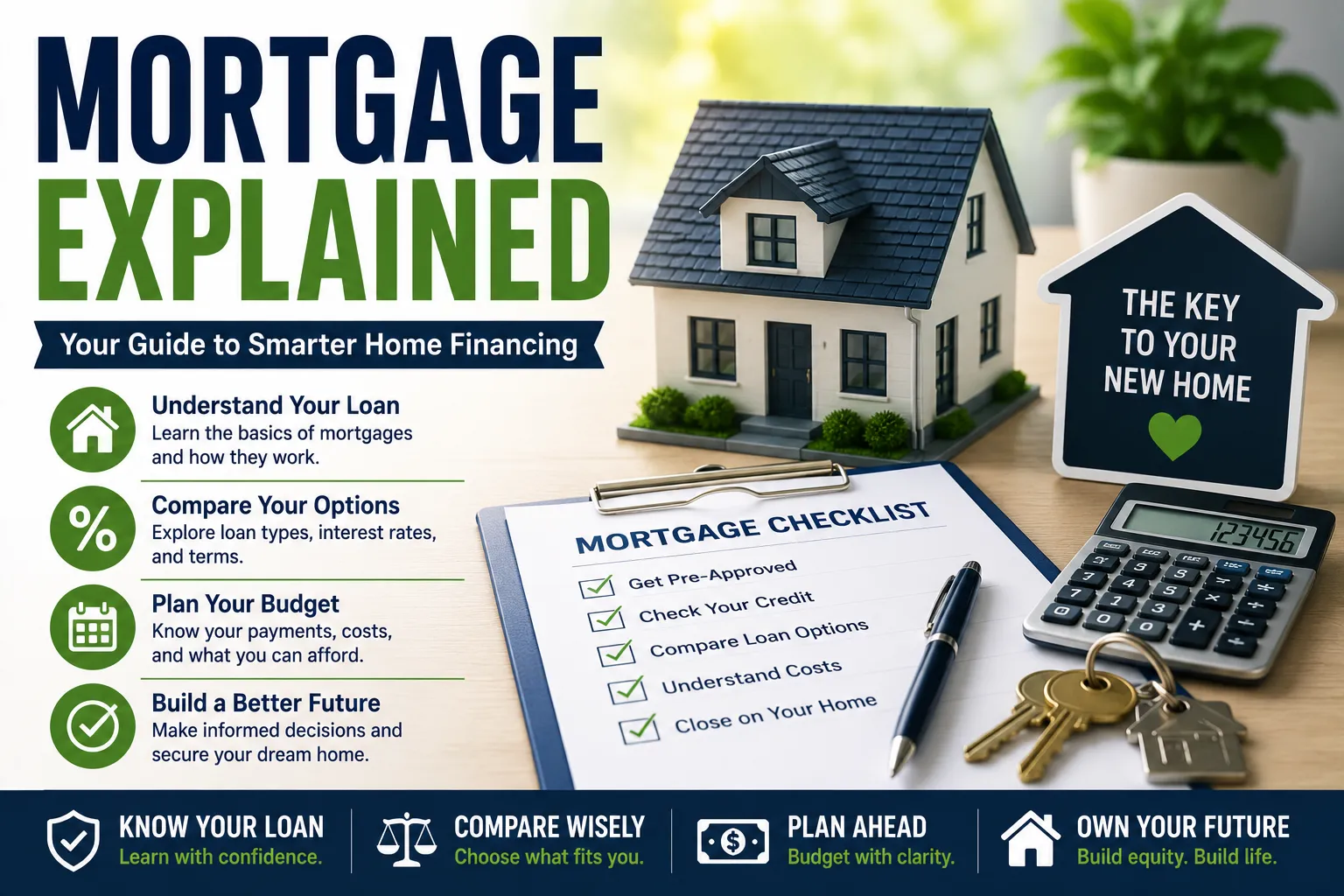
Mortgage Explained
Buying a home is one of the largest financial decisions most people will ever make, and for many, a mortgage makes homeownership possible. A mortgage is a long-term loan used to purchase real estate, allowing buyers to spread the cost of a property over many years instead of paying the full purchase price upfront.
Understanding how mortgages work is essential for making informed financial decisions. From interest rates and loan terms to monthly payments and closing costs, knowing the basics can help buyers choose a mortgage that fits their budget and long-term goals.
This guide explains what a mortgage is, how it works, the different types of home loans, key mortgage terms, and practical tips for first-time and experienced homebuyers alike.
What Is a Mortgage?
A mortgage is a loan provided by a financial institution that enables a borrower to purchase a home or other real estate.
The borrower agrees to repay the loan over a specified period through regular payments that typically include:
- Loan principal
- Interest
- Property taxes (when applicable)
- Homeowners insurance (when applicable)
The property generally serves as collateral for the loan until it is fully repaid.
Why Mortgages Matter
Mortgages allow individuals and families to purchase homes without paying the entire purchase price upfront.
Benefits include:
- Access to homeownership
- Long-term repayment options
- Predictable monthly payments (for many loan types)
- Opportunity to build home equity
- Potential property value appreciation
- Greater financial flexibility
A mortgage is a significant financial commitment and should be chosen carefully.
For people entering the housing market for the first time, the First-Time Home Buyers Guide provides additional guidance on the broader home-buying process.
How a Mortgage Works
The mortgage process generally follows these steps:
- Apply for a mortgage.
- The lender evaluates your financial situation.
- The property is appraised.
- The loan is approved if requirements are met.
- The home purchase closes.
- Monthly mortgage payments begin.
Over time, a larger portion of each payment typically goes toward the loan principal as the balance decreases, depending on the loan structure.
Key Mortgage Terms
Understanding common mortgage terminology makes the process less intimidating.
Principal
The principal is the amount borrowed from the lender.
Interest
Interest is the cost of borrowing money.
Loan Term
The loan term is the length of time you have to repay the mortgage.
Common loan terms include:
- 15 years
- 20 years
- 30 years
Down Payment
A down payment is the portion of the home’s purchase price paid upfront by the buyer.
Equity
Equity represents the difference between your home’s market value and the remaining mortgage balance.
As you repay the loan or your property’s value increases, your equity generally grows.
Fixed-Rate Mortgages
A fixed-rate mortgage maintains the same interest rate throughout the loan term.
Advantages may include:
- Stable monthly payments
- Easier budgeting
- Predictable long-term costs
These loans are popular among buyers planning to stay in their homes for many years.
Adjustable-Rate Mortgages (ARMs)
An adjustable-rate mortgage begins with an initial interest rate that may change over time based on market conditions.
Potential characteristics include:
- Lower introductory rates
- Future payment changes
- Periodic rate adjustments
- Greater payment uncertainty
Borrowers should fully understand adjustment terms before selecting this type of loan.
Mortgage Pre-Approval
Many buyers seek mortgage pre-approval before shopping for a home.
Pre-approval may help:
- Estimate borrowing capacity
- Demonstrate seriousness to sellers
- Simplify the buying process
- Identify affordable price ranges
Pre-approval does not guarantee final loan approval, but it provides useful guidance.
Factors That Affect Mortgage Approval
Lenders evaluate several financial factors, including:
- Income
- Employment history
- Credit history
- Existing debt
- Savings
- Down payment amount
- Property value
Requirements vary between lenders and loan programs.
Understanding Interest Rates
Mortgage interest rates influence the total cost of borrowing.
Rates may be affected by:
- Economic conditions
- Inflation
- Creditworthiness
- Loan type
- Loan term
- Market trends
Even small differences in interest rates can significantly affect long-term borrowing costs.
Monthly Mortgage Payments
Monthly mortgage costs often include more than just loan repayment.
Payments may consist of:
- Principal
- Interest
- Property taxes
- Homeowners insurance
- Mortgage insurance (when required)
Reviewing the full monthly payment provides a clearer picture of affordability.
Buyers should also consider their overall purchasing budget rather than focusing only on the mortgage payment. The guide on How to Determine How Much House You Can Afford explains the broader affordability factors that can influence a home-buying decision.
Closing Costs
Buying a home often involves additional expenses beyond the purchase price.
Common closing costs may include:
- Loan origination fees
- Appraisal fees
- Title services
- Legal fees
- Recording fees
- Inspection costs
Closing costs vary depending on location, lender, and transaction details.
Mortgage Insurance
Some mortgages require mortgage insurance, particularly when the down payment is below certain thresholds.
Mortgage insurance protects the lender rather than the borrower in certain circumstances.
Requirements vary depending on the loan type and jurisdiction.
Refinancing
Homeowners sometimes refinance an existing mortgage.
Reasons may include:
- Obtaining a lower interest rate
- Changing the loan term
- Switching loan types
- Accessing home equity
- Consolidating financial goals
Refinancing involves costs and should be evaluated carefully.
Tips for Choosing the Right Mortgage
Before selecting a mortgage:
- Compare multiple lenders.
- Understand all loan terms.
- Review interest rates carefully.
- Calculate total monthly costs.
- Consider your long-term plans.
- Build an emergency savings fund.
- Read all loan documents thoroughly.
- Ask questions about unfamiliar terms.
Taking time to compare options can lead to better financial outcomes.
Common Mortgage Mistakes
Many first-time buyers can avoid unnecessary stress by avoiding these common errors:
- Buying more house than the budget allows
- Ignoring additional ownership costs
- Focusing only on interest rates
- Skipping mortgage pre-approval
- Not comparing multiple lenders
- Underestimating maintenance expenses
- Draining emergency savings for the down payment
Preparation helps reduce financial surprises.
Homeownership Beyond the Mortgage
Owning a home involves ongoing responsibilities beyond monthly payments.
Homeowners should also budget for:
- Maintenance
- Repairs
- Property taxes
- Insurance
- Utilities
- Landscaping
- Home improvements
Planning ahead helps maintain both the property and financial stability.
The property itself also needs to be evaluated carefully before purchase. A Home Inspection Guide: What Buyers Need to Check can help buyers understand the condition-related issues that may affect a home and its long-term costs.
Technology Is Simplifying Home Buying
Digital tools continue making the mortgage process more convenient.
Modern services may offer:
- Online mortgage applications
- Digital document uploads
- Mortgage calculators
- Electronic signatures
- Virtual property tours
- Loan status tracking
Technology has streamlined many aspects of the home-buying experience while improving transparency.
Looking Ahead
Mortgage lending continues to evolve as digital banking, artificial intelligence, and online financial services reshape the housing market. Buyers increasingly have access to faster approvals, improved comparison tools, and more personalized financial guidance.
Despite these innovations, the core principles of responsible borrowing remain unchanged: understanding loan terms, borrowing within your means, and planning for long-term homeownership costs.
Choosing the Right Property Alongside the Right Mortgage
A mortgage decision cannot be separated entirely from the property being purchased.
Location can affect property values, commuting costs, taxes, insurance expenses and the long-term appeal of a home. Buyers can use the How to Choose the Best Location When Buying a House guide to consider the factors that make one location more suitable than another.
The surrounding community matters as well. Before committing to a property, the How to Evaluate a Neighborhood Before Buying a Home guide can help buyers examine neighborhood characteristics that may influence both lifestyle and long-term property appeal.
Due Diligence Before Taking on a Mortgage
Getting approved for a mortgage does not automatically mean a property is a sound purchase.
Buyers should investigate the property carefully before completing the transaction. This can include reviewing ownership information, property records, potential restrictions, costs and other factors that could affect the purchase.
The Complete Guide to Property Due Diligence provides a broader framework for examining a property before committing to the purchase.
Understanding what a property is actually worth is equally important. The Property Value Guide can help buyers understand the factors that influence property value and why valuation matters when financing a home.
Protecting the Home After Purchase
The mortgage is only one part of the financial responsibility that comes with owning a property.
Homeowners also need to consider how the property will be protected against covered risks and unexpected losses. Insurance can play an important role in that broader financial plan.
The Ultimate Homeowners Insurance Guide provides additional information about homeowners insurance and the considerations that can affect coverage.
Making a Mortgage Decision With the Bigger Picture in Mind
A mortgage should never be evaluated in isolation.
The right loan depends on the buyer’s income, savings, credit profile, expected length of ownership, preferred payment structure and broader financial goals. The right property also depends on location, condition, neighborhood, value and ongoing ownership costs.
Looking at all of these factors together can make the home-buying process more manageable and reduce the risk of taking on a mortgage that becomes difficult to sustain.
Building a Sustainable Path to Homeownership
A mortgage is one of the most significant financial commitments most people will ever make, but it also serves as a pathway to homeownership for millions of families. Understanding how mortgages work—from loan types and interest rates to monthly payments and closing costs—helps buyers make informed decisions with greater confidence.
By comparing lenders, planning carefully, maintaining realistic budgets, evaluating properties thoroughly, and understanding the full cost of owning a home, prospective buyers can choose a mortgage that supports both their financial stability and long-term goals.
Knowledge, preparation, and thoughtful decision-making remain the foundations of successful homeownership.