Personal Style Explained: Clothing, Grooming and Self-Presentation
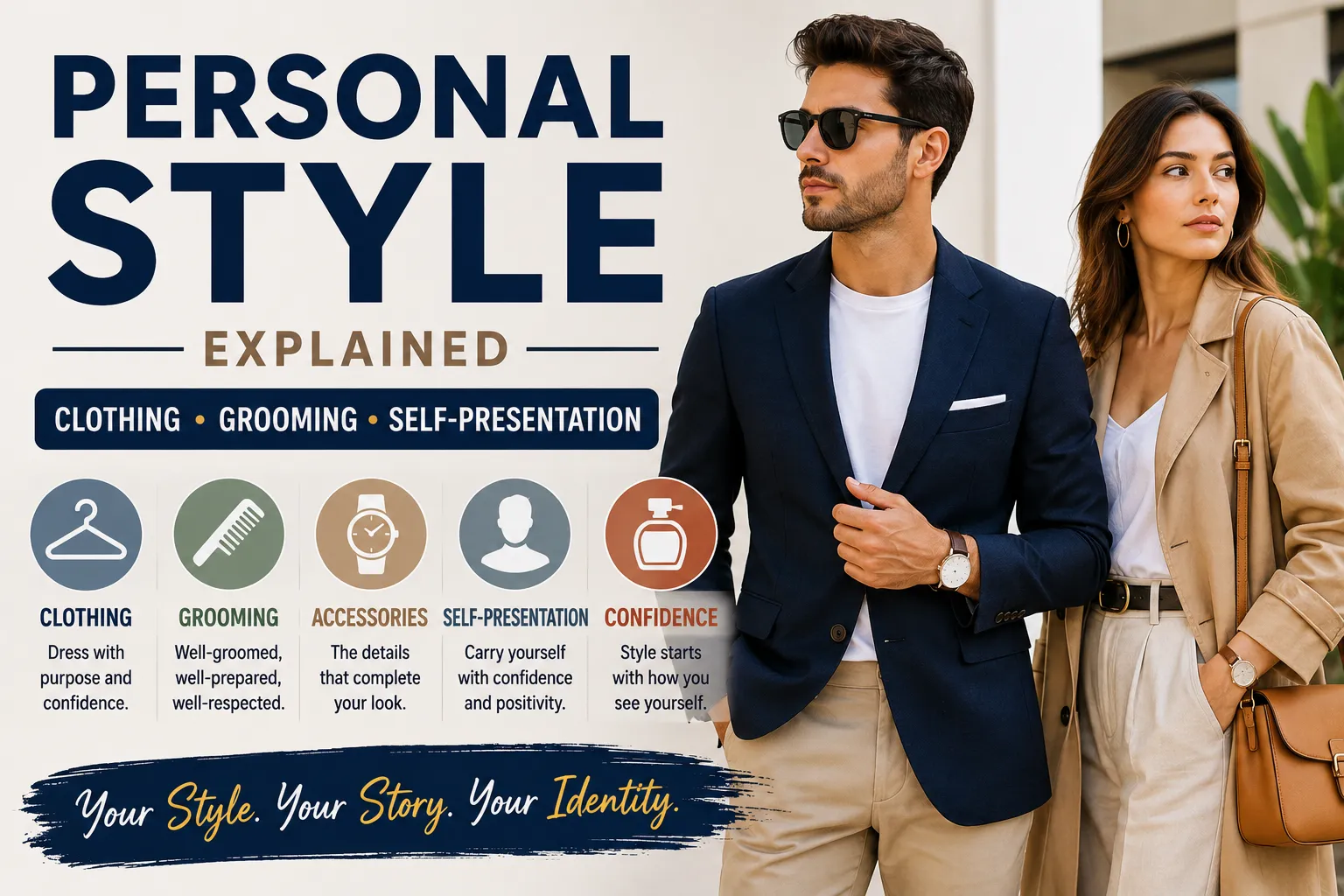
Personal Style Explained: Clothing, Grooming and Self-Presentation
Personal style is often reduced to clothing: the colors someone wears, the brands they prefer or whether their wardrobe follows current trends. In reality, style is much broader.
Personal style is the way people communicate aspects of themselves through clothing, grooming, accessories, body language, presentation and everyday choices. It can influence how someone feels about themselves, how they approach different environments and how other people initially perceive them.
Developing personal style does not require an expensive wardrobe or following fashion trends. It is more about understanding what works for you and creating a consistent appearance that feels comfortable, practical and authentic. It can also be considered as one part of a broader approach to living a balanced lifestyle, where personal presentation supports rather than overwhelms other priorities.
What Is Personal Style?
Personal style is an individual’s distinctive approach to appearance and self-presentation.
It can involve:
- Clothing
- Shoes
- Accessories
- Hair
- Grooming
- Colors
- Fabrics
- Patterns
- Makeup
- Fragrance
- Body language
- Personal presentation
Unlike fashion, which changes over time, personal style can remain relatively consistent.
Someone may prefer simple, neutral clothing regardless of current trends. Another person may enjoy bold colors and expressive accessories. Someone else may build their appearance around practicality and comfort.
There is no single definition of good personal style.
The most effective style is usually one that fits the person’s personality, lifestyle, environment and preferences.
Personal Style and Fashion Are Not the Same
Fashion and personal style are closely connected, but they serve different purposes.
Fashion reflects trends, designers, cultural movements and changing preferences.
Personal style is how an individual chooses to interpret and use those influences.
A person does not need to follow every trend to dress well.
In fact, constantly replacing clothes because trends change can make it harder to develop a recognizable personal style.
Instead, trends can be treated as sources of inspiration.
A person might adopt a new color, silhouette or accessory while keeping the rest of their wardrobe consistent with their established preferences.
Why Personal Style Matters
Appearance is only one part of identity, but it can influence everyday experiences.
Clothing and grooming can affect:
- Confidence
- Comfort
- Professional presentation
- Social interactions
- Self-expression
- First impressions
- Sense of identity
The goal is not to dress for other people’s approval at all times.
Rather, thoughtful self-presentation can help people feel prepared for the environments they enter.
A well-chosen outfit can make someone feel more comfortable at work, more relaxed at home or more confident at a social event.
Style Starts With Understanding Yourself
Before buying new clothes, it helps to understand what you already like.
Ask yourself:
- Which clothes do I wear most often?
- Which outfits make me feel comfortable?
- Which colors do I naturally choose?
- Do I prefer simple or expressive clothing?
- Do I value comfort, formality or versatility?
- What activities dominate my daily life?
- Which clothes do I repeatedly avoid wearing?
- What does my current wardrobe say about me?
These questions can reveal patterns.
For example, someone may discover that most of their favorite outfits consist of simple colors, relaxed silhouettes and versatile pieces.
That observation can become the foundation of a personal style rather than something that needs to be changed.
Your Lifestyle Should Influence Your Wardrobe
A wardrobe should serve the life a person actually lives.
Someone who works in a formal office has different clothing requirements from someone who works outdoors or remotely.
Likewise, a parent with a busy schedule may prioritize washable, comfortable clothing, while someone who frequently attends formal events may need more tailored pieces.
Consider how your time is divided between:
- Work
- Home
- Exercise
- Travel
- Social events
- Outdoor activities
- Formal occasions
- Relaxation
The most useful wardrobe is usually built around those real-life needs.
Understanding this connection between everyday choices, surroundings and personal priorities is also central to lifestyle design and personal living.
Build Around Versatile Clothing
Versatile clothing can make a wardrobe easier to use.
Examples include:
- Well-fitting trousers
- Simple shirts
- Neutral tops
- Comfortable jeans
- Structured jackets
- Lightweight sweaters
- Versatile dresses
- Practical outerwear
- Comfortable shoes
The exact pieces depend on the person’s lifestyle and preferences.
The underlying principle is more important:
A useful wardrobe contains items that can work in multiple combinations.
A single jacket that works with several pairs of trousers can be more valuable than several highly specific pieces that rarely work together.
Fit Often Matters More Than Price
Expensive clothing does not automatically create good personal style.
Fit can have a much greater effect on how an item looks.
Clothing that is significantly too large, too tight or poorly proportioned can look awkward regardless of its price.
This does not mean every garment needs to be professionally tailored.
Simple adjustments such as choosing the correct size, selecting an appropriate length or having basic alterations made can significantly improve the appearance of an outfit.
Learn Your Preferred Colors
Color is one of the easiest ways to create consistency in personal style.
Some people naturally gravitate toward:
- Black
- White
- Navy
- Gray
- Brown
- Beige
- Earth tones
Others prefer:
- Bright reds
- Greens
- Blues
- Yellows
- Purples
- Strong patterns
Neither approach is inherently better.
A useful strategy is to identify a few colors that work well together and build a wardrobe around them.
This makes it easier to combine different pieces without having to rethink every outfit.
Neutrals Can Create a Flexible Foundation
Neutral colors can provide a practical base for many wardrobes.
Black, white, gray, navy, brown, beige and similar shades can often be combined in numerous ways.
That does not mean a neutral wardrobe has to be boring.
Texture, proportions, accessories and occasional accent colors can create visual interest without making outfits difficult to coordinate.
Accessories Can Change an Outfit
Accessories are often small, but they can significantly influence an overall appearance.
Examples include:
- Watches
- Belts
- Bags
- Hats
- Scarves
- Jewelry
- Sunglasses
- Ties
- Pocket squares
Accessories can add personality without requiring an entirely new wardrobe.
A simple outfit can look substantially different when paired with different shoes, bags or jewelry.
Grooming Is Part of Personal Style
Clothing is only one component of presentation.
Grooming can include:
- Hair care
- Skin care
- Nail care
- Facial hair maintenance
- Oral hygiene
- Fragrance
- General cleanliness
Good grooming does not require elaborate routines.
The objective is to maintain a level of care that suits your preferences, lifestyle and environment.
For some people, that may mean a carefully maintained hairstyle and clean-shaven appearance.
For others, it may mean a natural hairstyle and a neatly maintained beard.
Personal style leaves room for both.
Hair Can Become a Defining Style Element
Hair has a significant influence on overall appearance.
A hairstyle should ideally work with:
- Hair texture
- Hair density
- Face shape
- Lifestyle
- Maintenance preferences
- Professional environment
The best hairstyle is not necessarily the one currently trending.
A style that requires extensive daily maintenance may be impractical for someone who prefers a low-maintenance routine.
A good haircut should fit the person rather than forcing the person to constantly adapt to the haircut.
Facial Hair Is Also a Style Choice
For people who grow facial hair, beard and mustache styles can become part of personal presentation.
Options range from:
- Clean-shaven
- Light stubble
- Short beard
- Full beard
- Mustache
- Carefully shaped facial hair
The important factors are maintenance and consistency.
A facial-hair style can look intentional when it is regularly maintained and suits the person’s overall appearance.
Skin Care and Grooming Should Be Practical
A complicated skincare routine is not automatically better.
Basic personal care can include:
- Gentle cleansing
- Moisturizing
- Sun protection
- Appropriate shaving care
- Keeping hands and nails clean
People with specific skin concerns may need advice from a qualified healthcare professional rather than relying entirely on cosmetic trends.
The broader principle remains simple: healthy, well-maintained skin supports overall presentation.
Fragrance Is Part of Self-Presentation
Fragrance can influence how someone is perceived, but it should generally be used with consideration for other people.
A fragrance that is subtle in a personal setting may be inappropriate in a crowded office or enclosed environment.
Personal preference matters, but so does context.
Choosing a scent that fits the occasion and applying it moderately can make fragrance a complementary part of personal style rather than the dominant feature.
Dress for the Environment
One of the most useful style skills is understanding context.
Different environments have different expectations.
A suitable outfit for:
- A job interview
- A wedding
- A beach
- A gym
- A business meeting
- A casual dinner
- A formal ceremony
will naturally differ.
Dressing appropriately does not mean abandoning personal identity.
It means adapting your style to the situation.
Professional Style Requires Context
Workplace expectations vary dramatically between industries and organizations.
A traditional corporate office may expect formal business clothing.
A creative workplace may allow considerably more freedom.
Remote work can introduce another layer of flexibility.
Before developing a professional wardrobe, understand the environment.
Observe what colleagues wear and identify the difference between the organization’s formal expectations and its everyday reality.
Personal Style Does Not Need to Be Expensive
A strong personal style can be developed on almost any budget.
Instead of focusing entirely on brand names, consider:
- Fit
- Condition
- Versatility
- Fabric
- Construction
- Comfort
- Coordination
- Suitability for your lifestyle
A well-fitting, well-maintained affordable garment can look more polished than an expensive item that does not fit properly.
Quality and Quantity Are Different
Buying more clothes does not necessarily create more outfit options.
A wardrobe containing dozens of incompatible pieces can actually make getting dressed more difficult.
A smaller collection of versatile clothing can provide more combinations.
This is one reason minimalist living and simpler living have become useful concepts for some people: they emphasize intentional choices and reducing unnecessary possessions rather than accumulating more.
However, a capsule wardrobe is not mandatory.
Some people genuinely enjoy having a large and varied wardrobe.
The right approach is the one that makes your clothing easier to use and maintain.
Avoid Buying Clothes Only Because They Are Trending
Trends can be enjoyable, but they have a short lifespan.
Before buying a trend-driven item, ask:
Would I still want this if it disappeared from social media tomorrow?
If the answer is yes, it may fit your personal style.
If the answer is no, consider whether renting, borrowing or buying a less expensive version makes more sense.
The goal is not to avoid trends completely.
It is to prevent temporary trends from dominating a wardrobe that should remain useful for years.
Learn to Combine Different Clothing Pieces
Style improves when you understand relationships between garments.
Consider:
- Color
- Proportion
- Texture
- Formality
- Pattern
- Silhouette
For example, a relaxed pair of trousers may work better with a casual shirt than with a highly formal jacket.
Likewise, a heavily patterned piece can often become the focal point of an outfit when paired with simpler items.
Understanding these relationships gives you more flexibility than memorizing specific outfits.
Texture Adds Depth
Two garments can have similar colors while creating completely different impressions because of their textures.
Examples include:
- Cotton
- Linen
- Wool
- Denim
- Leather
- Corduroy
- Knitwear
- Suede
Combining different textures can make simple outfits more visually interesting.
This is particularly useful when wearing mostly neutral colors.
Patterns Need Balance
Patterns can add personality, but combining several strong patterns can make an outfit visually overwhelming.
A practical approach is to allow one patterned item to become the focal point while keeping other pieces relatively restrained.
For example, a patterned shirt can be combined with plain trousers and simple shoes.
The goal is not to eliminate patterns but to give them room to work.
Shoes Matter More Than Many People Expect
Shoes can influence the overall formality and character of an outfit.
A pair of sneakers can make an otherwise structured outfit more casual.
Formal shoes can create a more polished appearance.
Boots can introduce a rugged or practical element.
A versatile shoe collection might include options for:
- Everyday casual wear
- Work
- Exercise
- Formal occasions
- Outdoor activities
Comfort should also be considered.
There is little value in a stylish shoe that makes ordinary movement uncomfortable.
Clothing Maintenance Protects Personal Style
Personal style is easier to maintain when clothing is properly cared for.
Useful habits include:
- Following care labels
- Washing garments appropriately
- Removing stains promptly
- Repairing minor damage
- Storing clothing properly
- Rotating frequently worn pieces
- Cleaning shoes
- Replacing worn-out essentials
Maintenance can extend the useful life of clothing and reduce unnecessary replacement.
Learn Basic Clothing Repairs
Simple repairs can save useful garments.
Basic skills include:
- Replacing a button
- Repairing a small seam
- Fixing a loose hem
- Removing minor stains
- Replacing simple fasteners
Not every repair needs to be done at home.
Tailors and alteration professionals can handle more complicated changes.
Knowing when a garment can be repaired rather than discarded is an important part of sustainable style.
Personal Style and Sustainability
A thoughtful approach to personal style can reduce unnecessary consumption.
Buying fewer pieces, choosing durable garments and wearing clothes for longer can reduce the frequency with which clothing needs to be replaced.
Secondhand shopping can also provide access to distinctive clothing while extending the useful life of existing garments.
Sustainability does not require adopting a particular aesthetic.
It can simply mean buying more intentionally and using what you already own more effectively.
How to Discover Your Personal Style
Developing personal style can take time.
Start by collecting examples of outfits you genuinely like.
Pay attention to recurring characteristics.
You might notice that you repeatedly choose:
- Relaxed silhouettes
- Neutral colors
- Vintage pieces
- Minimalist outfits
- Athletic clothing
- Formal tailoring
- Natural fabrics
- Bold accessories
These patterns can reveal your underlying preferences.
Create a Personal Style Reference
A style reference can be as simple as a folder of saved photographs.
Look for similarities among the outfits.
Ask:
- What colors appear repeatedly?
- What types of clothing dominate?
- What silhouettes do I prefer?
- Which accessories appear frequently?
- How formal are the outfits?
- What aspects would actually work in my daily life?
The final objective is not to copy someone else’s wardrobe.
It is to understand why certain looks appeal to you.
Experiment Without Rebuilding Your Entire Wardrobe
Personal style develops through experimentation.
Try changing one element at a time.
For example:
- Add a different shoe style
- Try a new color
- Change your hairstyle
- Experiment with accessories
- Alter the fit of an existing garment
- Combine familiar pieces differently
Small experiments provide useful information without requiring a major shopping spree.
Confidence Comes From Familiarity
People often assume stylish individuals simply possess an instinct for clothing.
In reality, confidence often comes from familiarity.
When someone knows:
- What fits them
- What colors they like
- What feels comfortable
- What suits their lifestyle
- What works in different settings
getting dressed becomes easier.
That familiarity reduces uncertainty.
The result can look like confidence even when the process behind it is simply experience.
Avoid Turning Style Into a Set of Rules
Personal style should not become another source of anxiety.
Rules such as “never wear this color” or “everyone needs this wardrobe essential” are rarely universal.
People have different:
- Bodies
- Cultures
- Budgets
- Professions
- Preferences
- Lifestyles
- Comfort levels
What works beautifully for one person may be completely inappropriate for another.
Use style advice as a source of ideas rather than a collection of laws.
Self-Presentation Extends Beyond Clothing
The way people present themselves also includes behavior.
Posture, facial expressions, communication style, cleanliness and attentiveness can influence how someone is perceived.
A carefully chosen outfit cannot compensate for consistently poor personal hygiene or disrespectful behavior.
Likewise, someone wearing simple clothing can make a strong impression through confidence, courtesy and thoughtful communication.
Style is therefore partly visual and partly behavioral.
Authenticity Matters
Personal style works best when it feels natural.
If someone dislikes formal clothing but forces themselves into elaborate outfits every day simply because they believe it looks impressive, maintaining that style may become exhausting.
The strongest personal presentation often comes from alignment between:
Who you are + what you do + what you wear + how you care for yourself.
That alignment makes style easier to maintain because it reflects real preferences rather than constant performance.
Common Personal Style Mistakes
Buying Without a Plan
Purchasing attractive individual pieces without considering the rest of the wardrobe can create coordination problems.
Prioritizing Trends Over Fit
A fashionable item that fits poorly may not become a useful part of your wardrobe.
Ignoring Lifestyle
Buying clothes for an imagined lifestyle rather than your actual routine can result in a wardrobe full of unworn pieces.
Neglecting Grooming
Clothing is only one component of overall presentation.
Buying Too Much
More clothing does not automatically mean more style.
Copying Someone Else Completely
Inspiration is useful, but another person’s style may not suit your body, lifestyle or personality.
Forgetting Comfort
If clothing is uncomfortable, you are unlikely to wear it consistently.
A Practical Personal Style Checklist
Before purchasing a new item, ask:
- Does it fit properly?
- Can I combine it with at least several things I already own?
- Does it suit my lifestyle?
- Is it appropriate for the environments I regularly visit?
- Will I actually wear it?
- Is the quality appropriate for the price?
- Do I genuinely like it?
- Would I still want it without the current trend?
- Can I maintain it easily?
- Does it feel like me?
If the answers are mostly yes, the item is more likely to become a useful part of your wardrobe.
Personal Style Changes With Life
Personal style is not permanent.
People change jobs, move to different places, develop new interests, experience changes in their bodies and enter different stages of life.
A wardrobe that worked at university may not work in a corporate career.
A style that suited someone in their twenties may evolve as their priorities change.
This is not a failure of consistency.
It is normal.
The most useful personal style is flexible enough to evolve without losing its underlying identity.
Clothing Should Support the Person Wearing It
The purpose of personal style is not to create a perfect appearance.
It is to make clothing, grooming and self-presentation work together in a way that feels intentional.
That means choosing garments that fit, maintaining them properly, understanding the expectations of different environments and allowing room for personality.
Personal style is ultimately less about having the “right” clothes and more about developing a clear understanding of what makes you feel comfortable, confident and authentically yourself.
When clothing, grooming and self-presentation align with your actual lifestyle, style becomes much easier to maintain—and far more meaningful than simply following whatever happens to be fashionable.