How to Protect and Improve Home Value
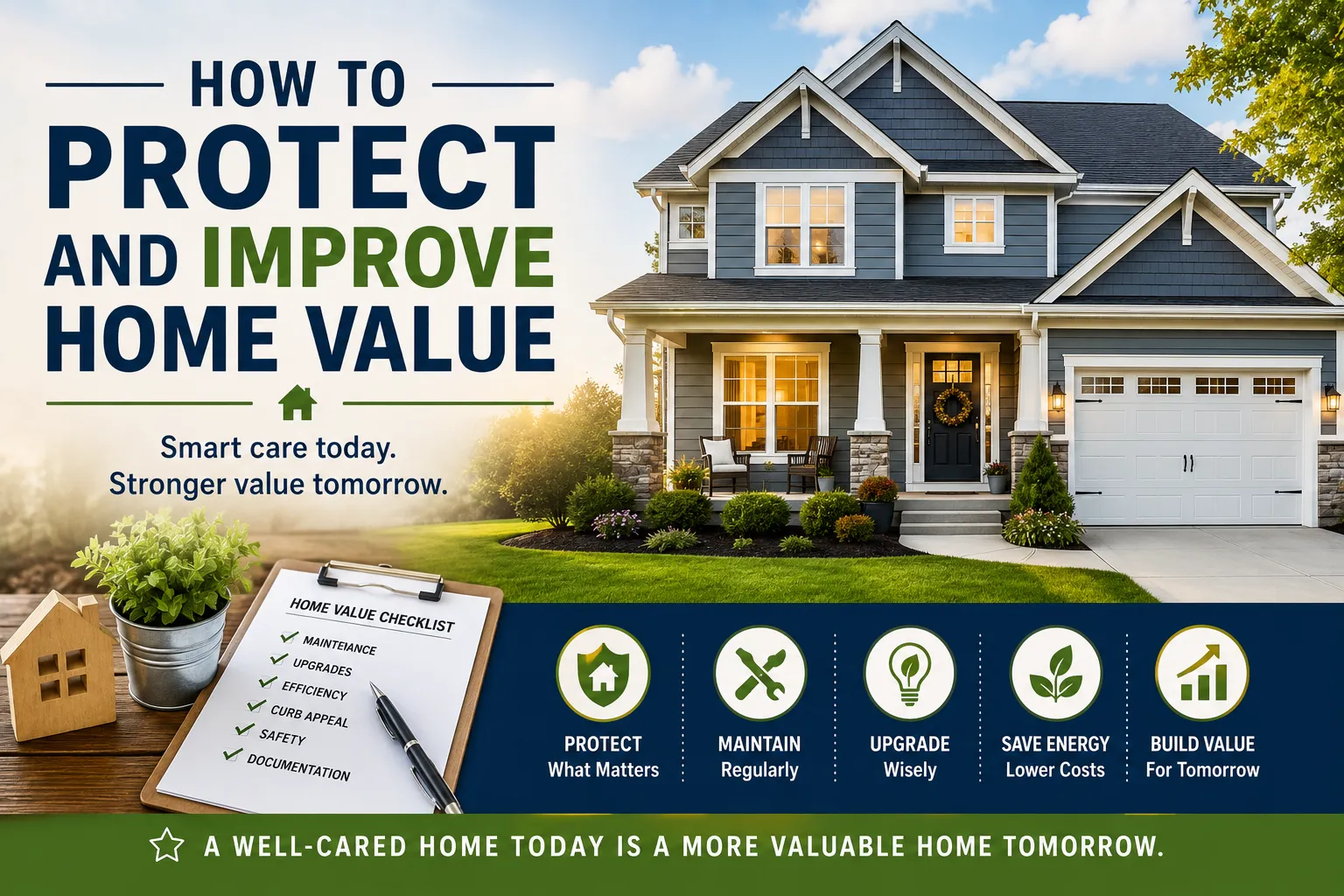
How to Protect and Improve Home Value
A home is more than a place to live. For many homeowners, it is also one of the largest financial assets they will ever own.
That makes protecting and improving its value an important part of long-term homeownership. While no renovation can guarantee that a property will appreciate, homeowners can make practical decisions that preserve the condition of a home, improve its usefulness and make it more attractive to future buyers.
The key is not always spending the most money.
In many cases, regular maintenance, sensible upgrades, energy efficiency, curb appeal and good documentation can do more for a home’s long-term value than expensive projects that simply follow the latest design trend.
For a broader framework covering the maintenance and improvement of a property, see the complete guide to home maintenance projects.
What Determines Home Value?
Home value is influenced by factors both inside and outside a homeowner’s control.
Location, local housing demand, neighborhood development, school access, transportation and broader economic conditions can all affect what buyers are willing to pay.
The condition of the property also matters.
Buyers typically pay attention to:
- Structural condition
- Roof condition
- Plumbing
- Electrical systems
- Heating and cooling
- Kitchen and bathrooms
- Flooring
- Windows and doors
- Exterior appearance
- Energy efficiency
- Storage
- Overall cleanliness and maintenance
A homeowner cannot change the location of a property, but they can often control how well the property is maintained.
Start With Preventive Maintenance
One of the most effective ways to protect home value is also one of the least glamorous: fix small problems before they become expensive ones.
A minor roof leak can eventually damage insulation, ceilings, walls and structural materials.
A slow plumbing leak can lead to moisture damage and mold.
A neglected gutter system can contribute to water problems around the foundation.
A small crack or damaged exterior seal can allow moisture to enter the building envelope.
Regular inspections help homeowners identify these issues while they are still manageable.
Create a Home Maintenance Schedule
Home maintenance becomes easier when it is treated as a routine rather than an emergency response.
A basic schedule can include:
Monthly
- Check for visible plumbing leaks
- Inspect under sinks
- Test smoke and carbon monoxide alarms
- Check HVAC filters where applicable
- Look for signs of moisture
Seasonally
- Clean gutters and downspouts
- Inspect the roof from a safe location
- Check exterior doors and windows
- Inspect outdoor drainage
- Service heating or cooling equipment as appropriate
- Look for damaged exterior finishes
Annually
- Arrange professional inspections when necessary
- Review electrical and plumbing concerns
- Check major appliances
- Inspect the foundation and exterior for significant changes
- Review insurance coverage
- Update maintenance records
The exact schedule will depend on the home’s age, construction, climate and systems.
A practical home repairs guide covering common problems and solutions can also help homeowners recognize issues that deserve attention before they become larger and more expensive repairs.
Protect the Roof
The roof is one of the most important components of a home because it protects nearly everything underneath it.
A neglected roof can allow water to penetrate the structure, potentially causing expensive damage.
Homeowners should watch for:
- Missing or damaged shingles
- Cracked flashing
- Blocked gutters
- Damaged roof vents
- Sagging areas
- Water stains on ceilings
- Moss or excessive organic growth
- Signs of water intrusion
Roof work can be dangerous, so significant inspections and repairs are often best left to qualified professionals.
Replacing a roof before it causes extensive interior damage can protect both the property and its marketability.
For more detail on roof components, warning signs and maintenance, see how residential roofing systems work and require maintenance.
Keep Water Away From the Foundation
Water management around a home is another major priority.
Rainwater should generally be directed away from the foundation rather than allowed to collect against the building.
Gutters and downspouts should remain clear, and downspouts should discharge water appropriately.
Homeowners should also pay attention to grading around the property.
Persistent standing water near the foundation can contribute to moisture problems over time.
A dry, well-maintained exterior is an important part of preserving the structural condition of a home.
Maintain Plumbing Before Problems Escalate
Plumbing problems can quickly become expensive.
A dripping faucet may waste water, but a hidden pipe leak can cause much more serious damage.
Check regularly for:
- Leaking faucets
- Running toilets
- Water stains
- Damp cabinets
- Slow drains
- Corroded pipes
- Loose connections
- Damaged supply hoses
Replacing aging washing machine hoses, dishwasher connections and other vulnerable components before they fail can also reduce the risk of sudden water damage.
Smart leak-detection systems can provide an additional layer of protection by monitoring unusual water flow and alerting homeowners to potential problems.
Understanding the underlying system can make maintenance easier, so homeowners may also benefit from learning how home plumbing systems work.
Keep Electrical Systems Safe and Updated
Electrical problems can affect both safety and property value.
Homeowners should avoid ignoring:
- Frequently tripped breakers
- Flickering lights
- Burning smells
- Warm outlets or switches
- Damaged electrical cords
- Loose outlets
- Improperly installed fixtures
Older homes may also have electrical systems that require professional evaluation.
Electrical work should be handled by appropriately qualified professionals rather than treated as a DIY project when it involves wiring, panels or other significant components.
A safe and properly maintained electrical system can provide confidence to future buyers.
Improve Energy Efficiency
Energy efficiency can improve a home’s everyday comfort while potentially reducing operating costs.
Useful improvements may include:
- Better insulation
- Energy-efficient windows
- Weatherstripping
- Efficient lighting
- Programmable or smart thermostats
- Efficient appliances
- Improved ventilation
- Solar energy systems where appropriate
- Efficient heating and cooling equipment
Not every upgrade will make financial sense in every property.
The best improvements are usually those that address an actual weakness in the home rather than being installed simply because they are fashionable.
Seal Drafts Around Windows and Doors
Small gaps around windows and exterior doors can allow conditioned air to escape.
Weatherstripping and appropriate caulking can be relatively inexpensive ways to improve comfort and reduce unwanted air leakage.
These improvements may not dramatically change the home’s appearance, but they can make it feel better and operate more efficiently.
That can be valuable to both current occupants and future buyers.
Keep the Kitchen Functional
Kitchens frequently receive attention from prospective buyers because they are central to everyday household life.
However, improving a kitchen does not necessarily require a complete luxury remodel.
Practical improvements can include:
- Replacing damaged cabinet hardware
- Repairing doors and drawers
- Improving lighting
- Updating worn countertops
- Replacing outdated fixtures
- Adding useful storage
- Repairing damaged flooring
- Updating appliances when necessary
A functional, clean and well-maintained kitchen can often make a stronger impression than an expensive kitchen filled with features a particular buyer may not want.
Avoid Overpersonalizing Expensive Renovations
Homeowners naturally want their homes to reflect their tastes.
But expensive renovations can become problematic when they are highly personalized.
An unusual bathroom color, highly specialized room or extravagant built-in feature may be perfect for one family and unattractive to another.
If improving resale potential is the goal, homeowners should consider whether an upgrade will appeal to a broad range of buyers.
Neutral does not have to mean boring.
It simply means creating a foundation that allows future owners to personalize the space easily.
Bathrooms Matter Too
Bathrooms are another area where maintenance and sensible improvements can pay off.
Start by addressing problems such as:
- Leaking fixtures
- Damaged grout
- Poor ventilation
- Water stains
- Broken tiles
- Worn caulking
- Faulty exhaust fans
After maintenance issues are addressed, relatively simple cosmetic improvements can refresh the room.
New lighting, mirrors, fixtures, hardware and fresh paint can sometimes make a bathroom feel significantly newer without requiring a full renovation.
Improve Storage Where Possible
Storage is an underrated feature in residential property.
People need practical places for clothing, kitchen equipment, cleaning supplies, tools and everyday belongings.
Useful storage improvements may include:
- Closet organizers
- Pantry shelving
- Garage storage
- Built-in cabinets
- Under-stair storage
- Laundry-room shelving
- Bathroom storage
The goal is not necessarily to add more cabinets everywhere.
It is to make the available space easier to use.
Don’t Ignore the Basement, Attic or Garage
Buyers evaluate the entire property, not just the living room and kitchen.
A garage filled with clutter, a damp basement or an inaccessible attic can make a well-maintained home feel neglected.
Keep these areas:
- Dry
- Clean
- Organized
- Properly ventilated
- Free of unnecessary clutter
- Accessible for inspection
Where applicable, addressing moisture problems in these spaces should be a priority.
Curb Appeal Creates the First Impression
The exterior is often the first part of a home a buyer sees.
That makes curb appeal valuable even when the improvements are relatively simple.
Consider:
- Keeping lawns maintained
- Trimming overgrown vegetation
- Cleaning exterior surfaces
- Maintaining pathways
- Repainting damaged areas
- Updating exterior lighting
- Maintaining fences
- Cleaning gutters
- Keeping the front entrance attractive
A clean, well-maintained exterior signals that the property has been cared for.
Maintain the Landscaping
Landscaping can contribute substantially to how a property feels.
However, expensive landscaping is not necessarily better.
The best approach is usually to create an outdoor environment that is attractive, manageable and appropriate for the local climate.
Native or climate-appropriate plants can reduce maintenance requirements.
Trees should also be monitored because poorly positioned or damaged trees can create risks for roofs, power lines and structures.
Keep Exterior Paint in Good Condition
Paint does more than change appearance.
Exterior coatings can help protect surfaces from moisture and weather exposure.
Peeling, cracked or badly deteriorated paint can make a property appear neglected and may allow underlying materials to deteriorate.
Instead of waiting until every exterior surface needs attention, homeowners can address damaged areas as they appear.
Maintain Windows and Doors
Windows and doors contribute to security, comfort, energy efficiency and appearance.
Check for:
- Broken seals
- Damaged frames
- Drafts
- Difficult operation
- Cracked glass
- Damaged weatherstripping
- Water intrusion
Replacing every window in a home is not always necessary.
Sometimes repairing seals, hardware or weatherstripping can solve the problem at a fraction of the cost.
Keep the Home Clean and Decluttered
Cleaning does not necessarily increase a home’s fundamental market value, but it can dramatically affect how buyers perceive it.
A clean home makes maintenance issues easier to identify and rooms easier to evaluate.
Before showing a property, homeowners may want to:
- Deep-clean kitchens
- Clean bathrooms
- Wash windows
- Remove excessive clutter
- Organize closets
- Clean floors
- Reduce unpleasant odors
- Tidy outdoor spaces
The objective is to allow buyers to focus on the property’s features rather than its mess.
Choose Renovations Carefully
Not every renovation produces the same return.
A homeowner considering an upgrade should ask several questions:
Does the home currently have a problem this project solves?
Will buyers value the improvement?
How long will the improvement last?
Will maintenance become easier or harder?
Does the project fit the neighborhood?
Is the cost reasonable compared with the property’s overall value?
These questions can prevent homeowners from spending heavily on improvements that add little practical value.
Don’t Chase Every Design Trend
Interior design trends change quickly.
A feature that looks contemporary today may appear dated several years later.
That does not mean homeowners should avoid style altogether.
Instead, use durable materials and timeless elements for expensive components while incorporating current trends through easily replaceable accessories.
For example, changing cushions, artwork or lighting is easier than replacing an entire kitchen because a particular color has gone out of fashion.
Preserve Original Features When They Add Character
Older homes sometimes contain architectural details that are difficult to reproduce.
These might include:
- Hardwood floors
- Original doors
- Decorative moldings
- Traditional windows
- Built-in cabinetry
- Historic fireplaces
- Unique architectural details
Replacing such features purely because they are old can sometimes reduce a property’s character.
Where practical, restoration may be a better option than removal.
Document Repairs and Improvements
Good documentation can become valuable when it is time to sell.
Keep records of:
- Roof replacement
- HVAC servicing
- Plumbing repairs
- Electrical upgrades
- Appliance installation
- Renovations
- Waterproofing
- Pest inspections
- Structural work
- Warranties
- Building permits
A well-organized maintenance history can give potential buyers greater confidence in the property.
It can also help homeowners remember when major components were installed and when they may need servicing or replacement.
Don’t Hide Problems
Trying to conceal a defect is rarely a good long-term strategy.
Painting over water stains without fixing the source, covering damaged flooring or ignoring structural concerns can create larger problems later.
A responsible homeowner should investigate significant issues and repair them properly.
Transparency is also important during a sale because property transactions may involve inspections, disclosures and legal obligations depending on the location.
Know the Age of Major Components
Homeowners should know roughly how old the major systems in their property are.
These may include:
- Roof
- Water heater
- HVAC equipment
- Electrical panel
- Plumbing system
- Windows
- Appliances
- Exterior finishes
Knowing the age of these components makes it easier to plan future maintenance rather than being surprised by a major failure.
Home Improvements Should Match the Neighborhood
A home can be improved too much for its surroundings.
For example, an extremely expensive renovation in a neighborhood where comparable properties are much less expensive may not produce a proportional increase in resale value.
Homeowners should consider nearby properties and the expectations of likely buyers.
Improvements should generally make the home competitive without pushing it so far beyond its surroundings that the investment becomes difficult to recover.
Protect the Home From Pests
Termites, rodents and other pests can cause significant property damage.
Regular inspections can be especially important in areas where certain pests are common.
Homeowners can reduce risks by:
- Repairing moisture problems
- Sealing gaps
- Keeping food stored properly
- Maintaining vegetation
- Removing standing water
- Addressing infestations promptly
Evidence of long-term pest damage can concern buyers and potentially affect negotiations.
Improve Indoor Air Quality
A comfortable home should also provide a healthy indoor environment.
Simple improvements can include:
- Maintaining ventilation systems
- Changing HVAC filters
- Controlling moisture
- Fixing water leaks
- Cleaning ventilation areas
- Using exhaust fans
- Addressing persistent mold or dampness
Good ventilation and moisture control can also help protect the building itself.
Safety Improvements Can Add Practical Value
Some improvements may not dramatically change a home’s appearance but can make it safer and more functional.
Examples include:
- Smoke alarms
- Carbon monoxide alarms
- Adequate exterior lighting
- Secure locks
- Handrails
- Non-slip surfaces
- Properly maintained stairs
- Safe electrical outlets
- Child-safe features where appropriate
Safety improvements can benefit current occupants while making the property more appealing to future buyers.
For a broader look at preventing everyday household risks, see how to identify and prevent common safety hazards inside a home.
Consider Smart Home Features Selectively
Smart-home technology can improve convenience and efficiency.
Useful features may include:
- Smart thermostats
- Leak detection
- Smart lighting
- Security systems
- Video doorbells
- Smart locks
- Energy monitoring
- Automated irrigation
But technology should be chosen carefully.
A complicated system that requires subscriptions, specialized maintenance or proprietary hardware may not appeal to every buyer.
Simple, reliable systems with broad compatibility can be easier to maintain and explain during a sale.
Protect Appliances Through Regular Maintenance
Major appliances can be expensive to replace.
Regular maintenance can extend their useful life and help them operate efficiently.
Depending on the appliance, maintenance might include:
- Cleaning filters
- Clearing vents
- Cleaning refrigerator coils
- Inspecting hoses
- Descaling equipment
- Checking seals
- Following manufacturer maintenance schedules
A home full of well-maintained appliances can also make moving in easier for a future buyer.
Insurance and Home Value
Protecting the physical property is only one part of protecting its financial value.
Homeowners should also periodically review their insurance coverage to make sure it reflects major improvements and current circumstances.
Renovations that significantly change the property may affect coverage requirements.
It is worth discussing substantial improvements with the insurer rather than assuming an existing policy automatically accounts for every change.
Build a Maintenance Reserve
Unexpected repairs are part of homeownership.
Setting aside money specifically for maintenance can prevent homeowners from delaying important repairs because they are financially inconvenient.
A maintenance reserve can help cover expenses such as:
- Appliance replacement
- Roof repairs
- Plumbing emergencies
- HVAC servicing
- Exterior repairs
- Electrical work
- Pest control
The amount needed varies by property, age and condition.
Older homes generally require more attention to aging systems.
A guide to budgeting for home maintenance can help homeowners plan for both routine upkeep and larger repair expenses.
Which Improvements Should Come First?
When money is limited, prioritize projects based on risk and practicality.
A useful order is:
- Safety problems
- Water intrusion
- Structural issues
- Roof and exterior protection
- Major mechanical and electrical systems
- Energy efficiency
- Functional improvements
- Cosmetic upgrades
There is little benefit in installing expensive countertops while a leaking roof continues to damage the building.
Protect the structure first.
Improve appearance second.
The Most Valuable Home Is Usually a Well-Cared-for Home
Improving home value is not necessarily about turning a property into a luxury showcase.
It is about making the home safe, functional, durable, efficient and attractive.
Regular maintenance protects the investment.
Thoughtful renovations improve usability.
Energy-efficient upgrades can reduce operating costs.
Good landscaping improves first impressions.
Documentation provides confidence.
And sensible design choices help the property remain appealing as tastes change.
The most effective strategy is therefore not to renovate constantly. It is to understand the condition of the property, address problems early and invest selectively in improvements that provide genuine long-term benefits.
Protect Value Before Trying to Add It
Homeowners often think about value in terms of what they can add: a new kitchen, larger bathroom, finished basement or landscaped yard.
But value can just as easily be lost through neglect.
A leaking roof, unresolved plumbing problem, deteriorating exterior or poorly maintained heating and cooling system can gradually undermine an otherwise valuable property.
That is why maintenance should come before makeover.
A home that is properly cared for provides benefits today while preserving more options for tomorrow. Whether the eventual goal is to sell, refinance, rent out the property or simply enjoy it for many years, protecting the underlying condition of the home is one of the most reliable ways to protect the investment it represents.