How to Improve Everyday Personal Safety and Preparedness
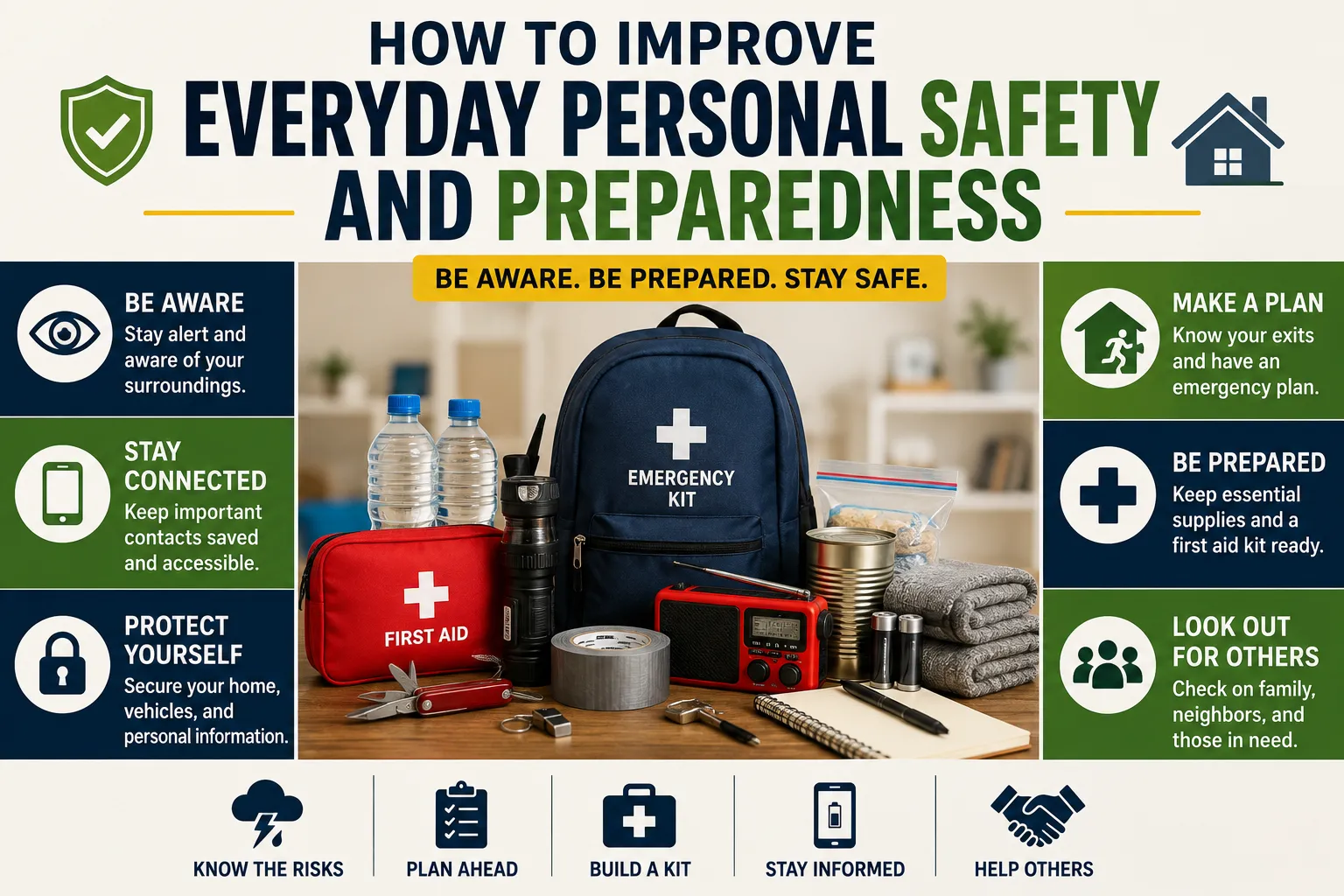
How to Improve Everyday Personal Safety and Preparedness
Personal safety is not about expecting something bad to happen every day. It is about building simple habits that make it easier to prevent common problems, respond calmly when something goes wrong and recover more quickly from unexpected situations.
Everyday preparedness can involve something as simple as keeping emergency contacts accessible, paying attention to your surroundings or knowing how to respond if your phone stops working. At home, it may mean having basic supplies and checking smoke alarms. When traveling, it can mean understanding where you are going and having a backup plan.
The most effective safety habits are usually practical, repeatable and easy enough to become part of normal life.
For a broader approach to maintaining a safer, better-prepared home, see this guide to home maintenance projects.
What Everyday Preparedness Really Means
Preparedness does not necessarily mean maintaining an elaborate emergency kit or planning for every imaginable scenario.
At its core, preparedness means having:
- Basic knowledge of what to do in common emergencies
- Important contact information readily available
- Essential supplies when they are needed
- A way to communicate if normal services are disrupted
- Awareness of potential risks in your environment
- A plan for people who may need additional assistance
The goal is to reduce confusion when circumstances change unexpectedly.
Start With the Risks You Actually Face
Safety planning becomes more useful when it reflects your surroundings and lifestyle.
Someone living in an apartment may need to think about fire evacuation and building access. Someone who regularly drives long distances may need to prepare for vehicle breakdowns. A family with young children may need plans for school pickups and emergency communication.
Potential risks can include:
- Household fires
- Severe weather
- Power outages
- Road accidents
- Medical emergencies
- Lost phones or wallets
- Travel disruptions
- Theft
- Communication failures
- Unexpected separation from family members
The purpose is not to become anxious about these possibilities. It is to identify reasonable precautions.
Keep Emergency Contacts Accessible
Many people rely entirely on their phones for important contact information.
That can become a problem if a phone is lost, damaged or has no battery.
Keep important contacts available in more than one way.
Consider maintaining a short list containing:
- Close family members
- A trusted friend
- Workplace or school contacts
- Healthcare providers
- Insurance information
- Important service providers
- Local emergency services
A physical copy stored somewhere secure can serve as a backup.
Create a Simple Family Communication Plan
Families can become separated during emergencies.
A basic communication plan can answer several questions:
Who should we contact first?
Where should we meet if we cannot return home?
Who can help children if a parent is unavailable?
What should each family member do if normal communication systems fail?
The plan does not need to be complicated.
A household can choose a primary meeting place near home and another location farther away in case the immediate area cannot be accessed.
Children can also be taught important contact information in an age-appropriate way.
Know Your Home’s Emergency Exits
Every household should know how to leave safely if an emergency makes the usual route unavailable.
Walk through the home and identify:
- Main exits
- Alternative exits
- Stairways
- Safe outdoor meeting areas
- Fire extinguisher locations
- Electrical shutoff locations where appropriate
- Water shutoff locations where appropriate
Avoid blocking hallways, stairways and exits with furniture or storage.
In a genuine emergency, a clear path can make evacuation much easier.
A detailed room-by-room approach can also help identify hazards before they become emergencies. See how to identify and prevent common safety hazards inside a home for a more comprehensive household safety inspection.
Check Smoke and Carbon Monoxide Alarms
Smoke alarms provide an important early warning of fire.
Where carbon monoxide is a potential concern, carbon monoxide alarms can also provide an important warning because the gas is colorless and odorless.
Check alarms according to the manufacturer’s instructions and replace batteries or entire units when required.
Do not disable an alarm simply because it produces occasional nuisance alerts. Instead, investigate the cause and address it appropriately.
Keep a Basic Emergency Kit
A household emergency kit does not have to be expensive.
Depending on the household and local risks, useful supplies can include:
- Drinking water
- Shelf-stable food
- Flashlights
- Spare batteries
- First-aid supplies
- Basic hygiene products
- Essential medications
- Phone charging equipment
- Copies of important information
- A battery-powered or hand-crank radio where useful
The exact contents should reflect the needs of the household.
A household with infants, older adults, pets or people with specific accessibility needs may require additional supplies.
Prepare for Power Outages
Power interruptions can affect lighting, communication, refrigeration and other household systems.
Keep flashlights in places that are easy to reach rather than hidden in a drawer somewhere you rarely visit.
Rechargeable lights can be useful, but they should also be checked periodically to ensure they remain charged.
Portable power banks can provide another way to keep phones operational during shorter outages.
For longer disruptions, households should have a plan for water, food, lighting and communication.
Use Generators Carefully
Generators can provide useful backup power, but they can also create a serious carbon monoxide hazard if used incorrectly.
Never operate a fuel-burning generator inside a home, garage or other enclosed or poorly ventilated area.
Follow the manufacturer’s instructions carefully and keep generators positioned safely away from buildings and openings.
Improvised connections to household electrical systems can also be dangerous. Appropriate equipment and professional installation may be necessary for certain backup-power arrangements.
Keep a First-Aid Kit Available
A basic first-aid kit can help with minor injuries while professional care is being arranged when necessary.
A household kit may contain items such as:
- Adhesive bandages
- Sterile gauze
- Medical tape
- Antiseptic supplies
- Disposable gloves
- Scissors
- Tweezers
- A thermometer
- Basic wound-care materials
Check the contents periodically and replace expired or used supplies.
Knowing how to use the items is just as important as having them.
Learn Basic First Aid and CPR
A first-aid kit cannot replace knowledge.
Learning basic first aid and CPR can help people respond more effectively while waiting for emergency medical assistance.
Recognizing situations such as severe bleeding, choking, cardiac arrest or other medical emergencies can make a significant difference.
Formal training from a reputable first-aid organization can provide practical experience that reading instructions alone cannot provide.
Keep Important Medical Information Available
In an emergency, healthcare professionals may need information quickly.
Consider keeping an updated record of:
- Current medications
- Known allergies
- Significant medical conditions
- Emergency contacts
- Relevant healthcare information
The information should be stored securely because medical details are private.
For people who take multiple medications, maintaining an accurate medication list can be particularly useful during unexpected medical visits.
Make Your Home Safer
Everyday safety often begins with preventing accidents.
Simple improvements can include:
- Keeping walkways clear
- Securing loose rugs
- Improving lighting on stairs
- Installing handrails where appropriate
- Storing cleaning products safely
- Keeping sharp objects away from children
- Securing heavy furniture
- Repairing damaged flooring
- Keeping electrical cords in good condition
Many household injuries occur during ordinary activities rather than dramatic emergencies.
Reducing everyday hazards can therefore be one of the most effective forms of preparedness.
For broader guidance on the systems behind many household risks, learn how major home systems work and what homeowners maintain.
Improve Kitchen Safety
The kitchen combines heat, electricity, sharp objects and potentially flammable materials.
Good habits include:
- Staying near cooking food that requires active supervision
- Keeping flammable materials away from heat sources
- Keeping pot handles positioned safely
- Using appropriate cutting techniques
- Cleaning grease buildup
- Keeping appliances in good condition
- Knowing how to respond to a small cooking fire
Never use water on a grease fire.
If a cooking fire cannot be safely controlled immediately, leave the area and seek emergency assistance rather than attempting to fight a growing fire.
Practice Fire Evacuation
Knowing where the exit is in theory is different from practicing how to use it.
Households can occasionally conduct simple fire-escape drills.
Practice:
- Hearing the alarm.
- Leaving through the safest available route.
- Using an alternative exit when necessary.
- Going to the predetermined meeting location.
- Accounting for everyone.
- Calling for emergency assistance from a safe location.
Children should understand that once they leave during a fire, they should not go back inside.
Develop Better Situational Awareness
Personal safety outside the home often begins with paying attention.
Situational awareness means noticing what is happening around you rather than remaining completely absorbed in a phone or other distraction.
When walking or traveling, pay attention to:
- Your surroundings
- Changes in the environment
- Where exits are located
- Whether someone needs assistance
- Traffic and vehicles
- Unexpected hazards
This does not mean assuming that strangers are dangerous.
It simply means remaining aware enough to notice problems early.
Avoid Unnecessary Distractions
Phones can be useful safety tools, but they can also reduce awareness when used at inappropriate times.
Avoid becoming deeply absorbed in a screen while:
- Crossing roads
- Walking through unfamiliar areas
- Driving
- Using stairs
- Operating equipment
Keeping your attention on the immediate environment can help you recognize hazards before they become emergencies.
Make Travel Plans Before Leaving
Preparedness becomes especially valuable when traveling.
Before visiting an unfamiliar location, consider knowing:
- Your accommodation address
- Transportation options
- Important local contacts
- Nearby healthcare facilities
- Meeting points
- How you will access money
- What you will do if your phone is lost
Save essential information offline when possible.
This can be particularly useful when traveling somewhere with unreliable internet access.
Keep Copies of Important Travel Documents
Important documents can be difficult to replace when traveling.
Depending on the trip, consider securely storing copies of:
- Identification
- Passport
- Travel insurance information
- Booking details
- Emergency contacts
- Relevant medical information
Digital copies can be useful, but sensitive documents should be stored securely rather than uploaded indiscriminately to public or shared services.
Protect Your Personal Information
Personal safety also includes digital and financial security.
Avoid unnecessarily sharing sensitive information such as:
- Passwords
- Financial account details
- Identification numbers
- Home-access information
- Private travel plans
Be cautious when responding to unexpected messages asking for money, login credentials or personal information.
Scammers often create urgency to discourage people from verifying requests.
Use Strong, Unique Passwords
Accounts containing financial, personal or work information deserve particular protection.
Using unique passwords for important accounts reduces the damage that can occur if one password is exposed.
A reputable password manager can make it easier to maintain strong, different passwords without having to memorize every one.
Multi-factor authentication can provide another layer of protection where available.
Be Careful With Public Wi-Fi
Public networks can be convenient, but users should avoid treating every Wi-Fi connection as inherently trustworthy.
When using unfamiliar networks:
- Avoid entering sensitive information when unnecessary.
- Confirm that websites use secure connections.
- Keep devices updated.
- Use appropriate account security.
- Avoid connecting automatically to unknown networks.
For particularly sensitive activities, a trusted cellular connection or appropriately secured network may be preferable.
Make Financial Preparedness Part of Personal Safety
Unexpected expenses can quickly become emergencies when there is no financial buffer.
Even a modest emergency fund can provide some protection against events such as:
- Vehicle repairs
- Temporary loss of income
- Urgent household repairs
- Medical expenses
- Emergency travel
- Replacing essential items
The appropriate amount depends on income, household responsibilities and expenses.
The important principle is to build a financial cushion gradually rather than waiting for a crisis.
Planning ahead for household repair costs can also make preparedness more manageable. A guide to budgeting for home maintenance can help put routine repairs and unexpected maintenance into a broader household budget.
Keep Your Vehicle Prepared
For people who drive regularly, vehicle preparedness can prevent minor problems from becoming major inconveniences.
Regularly check:
- Tires
- Brakes
- Lights
- Fluid levels
- Battery condition
- Windshield visibility
- Emergency equipment
A basic vehicle emergency kit may include:
- Flashlight
- Phone charger
- First-aid supplies
- Reflective equipment
- Drinking water
- Basic tools
- Appropriate seasonal supplies
Vehicle requirements vary depending on climate, road conditions and travel distances.
Know What to Do After a Road Accident
If a collision occurs, the first priority is safety.
If possible, move to a safe location without creating additional danger.
Depending on the circumstances, drivers may need to:
- Check for injuries
- Contact emergency services
- Follow local reporting requirements
- Exchange appropriate information
- Document the scene when it is safe
- Notify their insurer
Avoid putting yourself in danger simply to obtain photographs or information.
Prepare for Severe Weather
Weather-related risks differ considerably by location.
Depending on where you live, preparedness may involve planning for:
- Flooding
- Severe storms
- Extreme heat
- Wildfires
- Strong winds
- Heavy rainfall
- Earthquakes
- Cold weather
Follow reliable local warnings and understand what authorities recommend for your area.
A general emergency plan becomes more useful when it reflects the actual hazards a household is likely to encounter.
Know Where to Get Reliable Information
During an emergency, misinformation can spread quickly.
Identify trustworthy sources before you need them.
These might include:
- Local government agencies
- Emergency management authorities
- Weather services
- Utility providers
- Healthcare institutions
- Official transportation authorities
Avoid making major decisions based solely on unverified social-media posts or forwarded messages.
Include Children in Safety Planning
Children can learn practical safety habits without being frightened.
Teach age-appropriate lessons such as:
- Their full name
- A parent’s or caregiver’s name
- How to contact a trusted adult
- What to do if they become separated
- How to recognize safe adults who can help
- What to do when a smoke alarm sounds
- Why they should not play with medicines or dangerous household products
Practice can make these lessons easier to remember.
Consider Older Adults and People With Disabilities
A safety plan should account for everyone in the household.
Older adults or people with mobility, hearing, vision or other accessibility needs may require additional preparation.
This can involve:
- Accessible evacuation routes
- Backup communication methods
- Necessary medical equipment
- Mobility assistance
- Medication supplies
- Trusted contacts who can help
The best emergency plan is one that works for the actual people who need to use it.
Don’t Forget Pets
Pets are part of many households and need emergency planning too.
Consider keeping:
- Food
- Water
- Medication
- Leashes or carriers
- Identification information
- Veterinary contact details
Emergency shelters may have specific rules regarding animals, so understanding local arrangements in advance can be useful.
Review Your Preparedness Plan Regularly
Preparedness is not something that can be completed once and forgotten.
Households change.
People move, phone numbers change, children grow older, medications change and emergency equipment expires.
Review important plans periodically.
Check:
- Emergency contacts
- First-aid supplies
- Batteries
- Food and water
- Important documents
- Vehicle equipment
- Fire alarms
- Communication plans
Small updates can keep a plan useful.
Avoid Turning Preparedness Into Fear
There is a difference between being prepared and constantly expecting something to go wrong.
Effective preparedness should make everyday life feel more manageable, not more frightening.
Focus on practical actions that provide clear benefits.
Knowing where your flashlight is, having emergency contacts saved, keeping your home exits clear and learning basic first aid are useful regardless of whether a major emergency ever occurs.
Build Safety Habits One Step at a Time
Trying to prepare for every possible situation at once can quickly become overwhelming.
Instead, start with a few high-value improvements.
For example:
Week one: Check smoke alarms and emergency contacts.
Week two: Assemble a basic first-aid and emergency kit.
Week three: Create a family communication plan.
Week four: Review home, vehicle and digital safety.
Gradually building these habits can make preparedness feel like ordinary household maintenance rather than a major project.
Everyday Safety Is Mostly About Small Decisions
Personal safety is often portrayed as something dramatic, but much of effective preparedness is surprisingly ordinary.
It is checking the smoke alarm before there is a fire. It is keeping a flashlight where everyone can find it. It is noticing a wet floor before someone slips. It is checking the weather before a long journey. It is keeping important contacts available when a phone fails. It is recognizing when an unfamiliar request for money or personal information deserves verification.
None of these actions guarantees that an emergency will never happen.
They simply improve the odds that when something unexpected does happen, you are less likely to be caught completely unprepared.
The strongest approach is therefore not to live in fear, but to develop practical habits that make home, travel, finances, technology and everyday decisions a little safer.