How Home Exterior Walls and Building Envelopes Protect Against Weather
How Home Exterior Walls and Building Envelopes Protect Against Weather
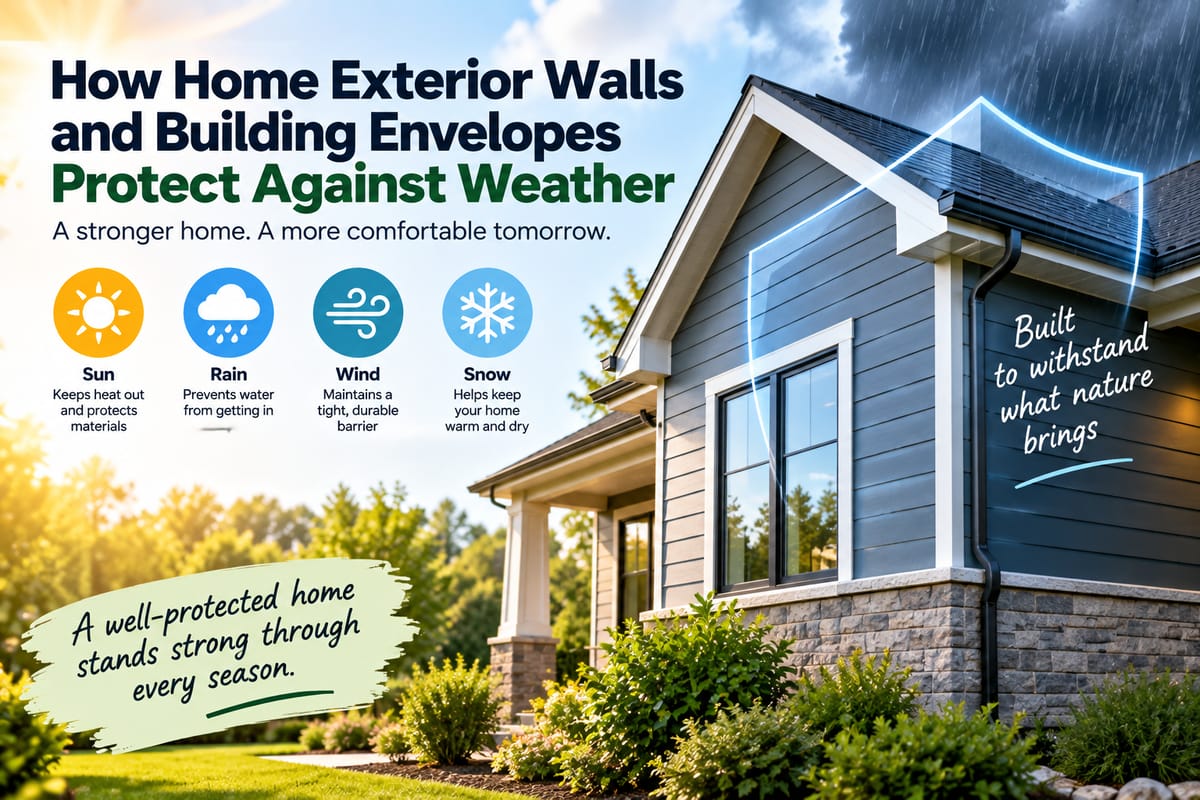
A home’s exterior walls do much more than define its appearance. Together with the roof, windows, doors, foundation, insulation, air barriers, water-resistive layers, and other components, they form a building envelope that separates the indoor environment from the weather outside.
Every day, this envelope helps protect a home from rain, wind, heat, cold, humidity, sunlight, and changing outdoor conditions. When it works properly, it helps keep interior spaces comfortable while reducing the risk of moisture damage, air leakage, structural deterioration, and energy waste.
Understanding how exterior walls and building envelopes work can help homeowners recognize problems earlier and make better decisions about maintenance and repairs.
What Is a Building Envelope?
The building envelope is the collection of components that separates the conditioned interior of a home from the outdoor environment.
Depending on the home’s construction, the envelope can include:
- Exterior walls
- Roofing systems
- Foundations
- Windows
- Exterior doors
- Insulation
- Air barriers
- Water-resistive barriers
- Flashing
- Sealants
- Cladding and siding
- Interior vapor-control layers
- Drainage systems
These components do not operate independently. They work together to control the movement of water, air, heat, and moisture between inside and outside.
A problem in one part of the envelope can sometimes affect another. For example, damaged roof flashing may allow water into a wall assembly, while poorly sealed windows can contribute to air leakage and moisture problems.
Understanding this interconnected approach is useful when learning How Major Home Systems Work and What Homeowners Maintain.
How Exterior Walls Protect a Home
Exterior walls are one of the primary defenses against outdoor conditions.
They may have several layers, each performing a different function.
A typical wall assembly can include:
- Exterior cladding
- A drainage or ventilation space
- A water-resistive barrier
- Sheathing
- Structural framing
- Insulation
- Air-control layers
- Vapor-control materials where appropriate
- Interior wall finishes
The exact arrangement varies according to climate, construction method, materials, and building codes.
The important point is that the wall is not simply a solid barrier. It is a system designed to manage several different forms of environmental exposure.
The Four Major Forces a Building Envelope Controls
A well-designed building envelope generally needs to manage four major flows:
Water
Rain and other sources of moisture need to be kept out or safely drained away.
Air
Uncontrolled air movement can affect comfort, indoor air quality, and energy use.
Heat
The envelope helps slow the movement of heat between the interior and exterior.
Water Vapor
Moisture can move through building materials as vapor, making moisture management an important part of wall design.
These functions overlap, which is why building-envelope problems can sometimes be complicated.
How Walls Deal With Rain
Rain is one of the most obvious threats to an exterior wall.
However, walls are not necessarily designed to prevent every drop of water from ever reaching their outer layers. Instead, many wall systems are designed around the principle of drainage.
If rain passes through small openings in siding or cladding, properly designed layers can help direct that moisture downward and back outside.
This is why components such as flashing, drainage planes, weather-resistive barriers, and carefully designed joints are so important.
The objective is not merely to block water at the outermost surface. It is to make sure water that gets beyond that surface has a controlled path back outside.
Why Flashing Matters
Flashing is a material or system used to direct water away from vulnerable areas.
It is especially important around:
- Windows
- Doors
- Roof intersections
- Wall penetrations
- Deck connections
- Chimneys
- Exterior vents
- Other openings
These locations are vulnerable because the continuous wall surface has been interrupted.
If flashing is missing, damaged, or incorrectly installed, water can enter areas that are difficult to see.
A small exterior defect can therefore eventually lead to much larger problems inside the wall assembly.
Windows Are Part of the Building Envelope
Windows provide natural light and ventilation, but they also create openings in an otherwise continuous exterior wall.
A properly installed window assembly needs to manage:
- Rain
- Wind
- Air leakage
- Heat transfer
- Condensation
- Structural movement
The window itself is only part of the system. The surrounding frame, flashing, sealants, drainage paths, and connection to the wall are equally important.
Water damage around a window may therefore originate from a problem somewhere around the opening rather than from the glass or frame itself.
Exterior Doors Face Similar Challenges
Exterior doors also have to withstand repeated exposure to weather.
Door assemblies can experience:
- Wind-driven rain
- Temperature changes
- Air leakage
- Moisture
- Sunlight
- Repeated opening and closing
Weatherstripping and seals help reduce unwanted air and water movement, while properly designed thresholds and flashing help manage water.
A damaged door seal may seem like a minor maintenance issue, but persistent air or water leakage can contribute to comfort problems and deterioration.
How Siding and Cladding Provide Protection
The visible outer layer of an exterior wall is often called cladding.
Common materials include:
- Vinyl siding
- Fiber-cement siding
- Wood siding
- Brick
- Stone veneer
- Metal panels
- Stucco
- Engineered wood products
Cladding provides an important protective and aesthetic layer, but it should not always be considered the only defense against moisture.
Many wall assemblies rely on multiple layers behind the cladding to manage water that gets past the outer surface.
This layered approach provides redundancy.
Why a Small Crack Can Matter
Small cracks, gaps, holes, and deteriorated joints can create pathways for water and air.
Potential problem areas include:
- Cracked siding
- Failed caulking
- Open joints
- Damaged trim
- Gaps around pipes
- Unsealed electrical penetrations
- Deteriorated mortar
- Damaged flashing
Not every crack represents a serious structural problem, but persistent openings should not automatically be ignored.
The significance depends on the location, size, cause, and whether water is reaching vulnerable materials behind the surface.
How the Building Envelope Controls Air Leakage
Air naturally moves from areas of higher pressure toward areas of lower pressure.
Wind and differences in indoor and outdoor temperature can create pressure differences across a home.
If the building envelope contains uncontrolled gaps, outside air can enter and conditioned indoor air can escape.
Common leakage locations include:
- Around windows
- Around exterior doors
- Electrical penetrations
- Plumbing penetrations
- Wall-to-floor connections
- Wall-to-ceiling connections
- Attic access points
- Duct and utility openings
Reducing unwanted air leakage can improve comfort and may reduce the amount of energy needed for heating or cooling.
However, homes also require intentional ventilation. The objective is controlled air exchange rather than making a home completely airtight without an appropriate ventilation strategy.
Insulation Helps Control Heat Transfer
Exterior walls also help regulate indoor temperatures.
Insulation slows the movement of heat through the wall assembly. In cold conditions, it helps reduce heat escaping from the home. In hot conditions, it can slow heat entering from outside.
The effectiveness of an insulation system depends on several factors, including:
- Insulation type
- Insulation thickness
- Installation quality
- Gaps and compression
- Thermal bridges
- Air leakage
- Moisture conditions
Insulation therefore works best as part of the complete building envelope rather than as an isolated material.
What Are Thermal Bridges?
A thermal bridge occurs when heat can move more easily through part of a building assembly than through surrounding insulated areas.
Structural components, metal elements, fasteners, openings, and other construction details can create pathways for heat transfer.
Thermal bridges can contribute to:
- Uneven interior temperatures
- Higher heating or cooling demand
- Cold interior surfaces
- Condensation under certain conditions
- Reduced overall envelope performance
Modern construction approaches increasingly consider thermal bridging during design because simply adding insulation does not eliminate every pathway for heat transfer.
Moisture Is One of the Biggest Threats
Water and moisture can cause some of the most persistent building-envelope problems.
Moisture can enter through:
- Roof leaks
- Damaged siding
- Failed flashing
- Window openings
- Plumbing leaks
- Foundation problems
- Condensation
- Poor drainage
- Groundwater
- Air movement carrying water vapor
Once moisture enters an enclosed wall cavity, it may not dry quickly.
Persistent moisture can contribute to:
- Wood deterioration
- Corrosion
- Mold growth
- Damaged insulation
- Interior staining
- Unpleasant odors
- Reduced material performance
This is why moisture management is one of the central responsibilities of a building envelope.
Why Ventilation and Drying Matter
A wall assembly does not necessarily need to remain completely free of moisture.
Some building materials can tolerate occasional moisture exposure if the assembly is designed to drain and dry properly.
The ability to dry is therefore an important part of moisture control.
Problems can arise when a wall is constructed in a way that traps moisture between materials with limited drying potential.
Good building-envelope design considers not only how moisture enters but also how it can leave.
How Wind Affects Exterior Walls
Wind creates pressure against the outside of a home.
During severe weather, strong winds can place substantial stress on exterior cladding, roofing, windows, doors, and structural connections.
Wind can also drive rain into small openings that might not allow water to enter during calm weather.
This makes proper sealing, flashing, fastening, and structural connections particularly important in areas exposed to storms or high winds.
Sunlight Can Slowly Damage Exterior Materials
Sunlight is another environmental force that affects exterior walls.
Ultraviolet radiation and repeated temperature changes can gradually degrade some materials.
Over time, homeowners may notice:
- Fading paint
- Brittle sealants
- Cracked finishes
- Deteriorated wood coatings
- Warped materials
- Surface degradation
The rate of deterioration depends on material type, exposure, climate, installation quality, and maintenance.
Regular inspection can identify deterioration before it develops into a larger problem.
Temperature Changes Cause Expansion and Contraction
Building materials respond differently to changes in temperature.
Some materials expand when heated and contract when cooled. Because different materials can move at different rates, exterior assemblies need to accommodate movement.
Joints, fasteners, sealants, flashing, and other details help manage these changes.
Repeated expansion and contraction can eventually contribute to cracked sealants or other signs of deterioration.
This is one reason exterior maintenance is an ongoing process rather than a one-time task.
How the Roof Connects to the Walls
The roof and exterior walls form connected parts of the building envelope.
Water flowing down a roof needs to be directed away from vulnerable wall areas.
Roof-to-wall intersections therefore require careful detailing.
Problems involving roofing, flashing, gutters, or drainage can allow water to reach wall assemblies.
Homeowners can learn more about this relationship in How Residential Roofing Systems Work and Require Maintenance.
Gutters Help Protect Exterior Walls
Gutters and downspouts play an important role in directing roof runoff.
Without effective drainage, large amounts of water can fall directly beside exterior walls and foundations.
Poor drainage can contribute to:
- Soil erosion
- Foundation moisture
- Basement or crawl-space problems
- Splashback onto siding
- Landscape damage
- Persistent damp conditions around the home
Keeping gutters clear and ensuring downspouts discharge water appropriately can therefore support the overall building envelope.
Foundations Are Part of the Weather-Protection System
Although foundations are below or partly below ground, they remain connected to the building envelope.
They must deal with:
- Soil moisture
- Groundwater
- Rainwater
- Temperature changes
- Drainage conditions
Water management around the foundation is especially important because moisture can move into basements, crawl spaces, and wall systems when drainage or waterproofing is inadequate.
Common Signs of Building-Envelope Problems
Homeowners should pay attention to changes in both the exterior and interior of the property.
Possible warning signs include:
- Water stains on walls or ceilings
- Peeling or bubbling paint
- Cracked siding
- Damaged exterior finishes
- Rotting wood
- Persistent musty odors
- Mold growth
- Drafty rooms
- Condensation
- Damaged window trim
- Deteriorated caulking
- Unexplained increases in energy use
- Damp basements or crawl spaces
None of these signs automatically identifies the exact cause.
A water stain, for example, could originate from a roof, window, plumbing system, or another source.
Why Interior Symptoms Can Point to Exterior Problems
One of the challenges of building-envelope maintenance is that the visible symptom may not appear where the problem began.
Water can travel through building materials before becoming visible.
For example, moisture entering around a roof-to-wall connection could travel along framing before producing an interior stain farther away.
This is why simply repairing the visible stain may not solve the underlying problem.
The source of moisture needs to be identified before the affected area can be properly repaired.
Maintenance Can Protect the Building Envelope
Preventive maintenance is often easier and less expensive than dealing with extensive damage.
Homeowners should periodically inspect:
- Siding
- Exterior paint and finishes
- Window seals
- Door weatherstripping
- Caulking
- Flashing
- Roof edges
- Gutters
- Downspouts
- Exterior vents
- Foundation drainage
- Areas around decks and other attachments
The frequency of inspection depends on the home’s age, materials, climate, exposure, and previous problems.
Be Careful With Caulking and Sealants
Caulking can help seal joints and openings, but applying more caulk is not always the correct solution.
A failed joint may indicate:
- Movement
- Poor surface preparation
- Incorrect sealant selection
- Water behind the joint
- Structural movement
- Improper installation
Covering a damaged area with new sealant without understanding why the original failed can provide only a temporary fix.
When a Repair Needs Professional Attention
Some exterior problems can be handled as routine maintenance, while others require qualified professional assessment.
Professional assistance may be appropriate when there is:
- Significant water intrusion
- Extensive wood deterioration
- Structural movement
- Large foundation cracks
- Repeated roof leaks
- Persistent mold or moisture
- Major storm damage
- Extensive siding deterioration
- Serious window or door leakage
Homeowners should avoid assuming that every visible defect is merely cosmetic.
A good starting point for understanding common household problems is the Home Repairs Guide: Common Problems and Solutions.
Exterior Maintenance Also Has a Safety Dimension
Building-envelope problems can sometimes create safety hazards.
Loose exterior materials can fall. Persistent moisture can weaken certain materials. Damaged stairs, decks, railings, windows, and doors can create physical risks.
Inside the home, moisture and deterioration may also contribute to other hazards.
Homeowners looking at overall property safety can use How to Identify and Prevent Common Safety Hazards Inside a Home as part of a broader home-maintenance approach.
A Building Envelope Is a System, Not a Single Product
One of the most useful concepts for homeowners to understand is that there is rarely one product responsible for protecting a house from the weather.
A wall may rely on cladding, flashing, a water-resistive barrier, sheathing, insulation, air-control layers, structural framing, and interior finishes.
Each component has a role.
When these components are properly designed, installed, connected, and maintained, they work together to keep unwanted water, air, and heat movement under control.
When one component fails, the effects can sometimes spread to other parts of the home.
Protecting the Home Starts Outside
Exterior walls and building envelopes quietly perform some of the most important work in a house. They shield occupants from rain, wind, temperature extremes, sunlight, and moisture while helping maintain a stable indoor environment.
The best protection comes from a combination of good design, appropriate materials, quality installation, effective drainage, proper ventilation, and regular maintenance.
For homeowners, the practical lesson is straightforward: small exterior problems deserve attention before they become interior problems.
Regularly inspecting walls, windows, doors, roofs, gutters, and drainage areas can reveal early signs of deterioration and give homeowners an opportunity to address them while repairs remain manageable.
A well-maintained building envelope does more than make a home look good. It helps protect the structure itself, preserve indoor comfort, control moisture, and extend the useful life of one of the largest investments most people will ever make.