1980s Style Is Back—but Designers Are Doing It Differently
1980s Style Is Back—but Designers Are Doing It Differently
The 1980s are back in interior design—but this time, the decade is getting a much more sophisticated makeover.
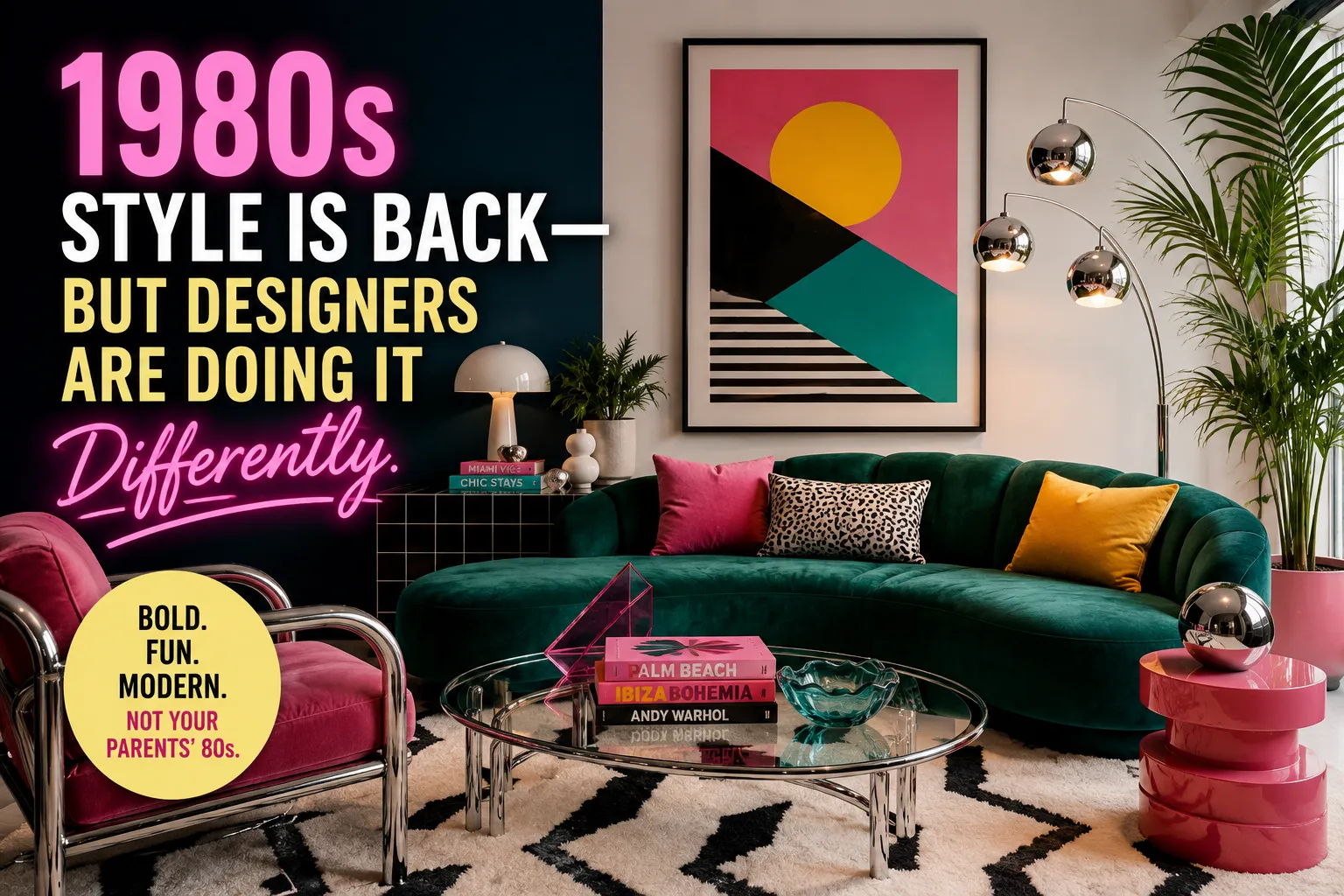
Bold colors, sculptural furniture, glossy surfaces, geometric patterns and dramatic lighting are finding their way into contemporary homes. But instead of recreating an entire 1980s living room, today’s designers are taking individual elements from the era and combining them with modern materials, quieter palettes and more refined proportions.
The result is a look that feels nostalgic without becoming a time capsule.
Rather than bringing back everything associated with the decade, designers are asking a more interesting question: Which parts of 1980s design still work today?
Why 1980s Design Is Returning
Interior design tends to move in cycles.
Styles that once seemed dated eventually become interesting again as a new generation discovers them. The 1980s are particularly appealing because the decade offered something that many contemporary interiors have lacked: personality.
For years, minimalist interiors dominated many design trends, with neutral colors, simple silhouettes and understated decoration becoming common.
The renewed interest in 1980s aesthetics represents a shift toward interiors that feel more expressive.
People are becoming more comfortable with:
- Stronger colors
- Decorative furniture
- Curved shapes
- Pattern
- Metallic details
- Statement lighting
- Layered textures
- More individualistic spaces
But today’s interpretation is considerably more restrained.
Today’s 1980s Look Is Not a Time Capsule
The biggest difference between authentic 1980s interiors and their modern interpretation is restraint.
A room from the decade might have combined several strong elements at once: bold wallpaper, colorful upholstery, patterned carpeting, shiny finishes, oversized furniture and dramatic accessories.
Modern designers are more likely to choose one or two of those elements and allow them to become focal points.
For example, a contemporary living room might feature:
- A sculptural curved sofa
- Neutral walls
- A colorful occasional chair
- A geometric rug
- A chrome or glass side table
The references are recognizable without making the room look like a movie set from 1986.
This more selective approach fits within the broader movement toward warmer, more expressive and intentionally layered interiors explored in Layered Comfort Is Taking Over.
Curves Are Making a Strong Comeback
Curved furniture is one of the easiest ways to introduce an 1980s influence without overwhelming a room.
Sofas, armchairs, coffee tables and cabinets with rounded edges can soften a space while creating a more sculptural appearance.
The appeal of curves also fits comfortably into contemporary interiors.
Instead of sharp, boxy furniture being used throughout a room, a designer might combine a curved sofa with a rectangular coffee table or a rounded lamp with straight architectural lines.
That contrast keeps the design from feeling overly themed.
The Memphis Influence Is Being Reinterpreted
When people think about bold 1980s design, the Memphis movement often comes to mind.
The Memphis design movement emerged in Milan in the early 1980s and became known for unconventional furniture, geometric shapes, vivid colors and playful combinations of patterns and materials.
Its original aesthetic was intentionally provocative.
Today’s designers are generally taking a less literal approach.
Instead of filling an entire room with bright geometric shapes, they might use a Memphis-inspired side table, lamp, artwork or patterned accent.
A single playful piece can provide the visual energy of the movement without dominating the room.
Color Is Coming Back
One of the clearest differences between contemporary interiors and the minimalist styles that became popular in previous years is the renewed willingness to use color.
1980s-inspired spaces can incorporate shades such as:
- Cobalt blue
- Emerald green
- Burgundy
- Mustard yellow
- Terracotta
- Mauve
- Dusty pink
- Deep teal
The modern approach, however, often pairs stronger colors with quieter backgrounds.
A saturated blue chair might sit against warm cream walls. A burgundy sofa could be balanced by natural wood. A colorful piece of artwork might provide contrast in an otherwise restrained room.
This creates a sense of energy without visual overload.
The renewed preference for richer, earthier palettes is also visible in Warm Earth Tones Continue to Dominate Interior Design.
Mauve and Dusty Tones Are Getting a New Life
Some of the colors associated with the 1980s have developed complicated reputations.
Mauve, dusty pink, peach and muted purple were once everywhere, from carpets to bathrooms.
Rather than reproducing those combinations exactly, contemporary designers are giving them more sophisticated partners.
A dusty pink might be paired with:
- Dark walnut
- Aged brass
- Cream
- Charcoal
- Natural stone
That changes the character of the color completely.
What once looked dated can suddenly feel warm, intentional and contemporary.
Chrome Is Returning Too
Chrome and polished metal surfaces were important elements of many 1980s interiors.
They are finding renewed relevance today, particularly in lighting, furniture and decorative accessories.
A chrome lamp or side table can add reflection and visual contrast to a room filled with softer materials.
The modern approach tends to use metallic finishes selectively.
Instead of making every surface reflective, designers might introduce one chrome coffee table, a sculptural lamp or a few metallic details.
This allows the material to function as an accent rather than a dominant theme.
Glass Blocks Are Having Another Moment
Glass blocks are another unmistakable feature associated with late-20th-century interiors.
They were frequently used to divide spaces while allowing light to pass through.
Their renewed popularity is partly connected to a broader interest in translucent and semi-transparent materials.
Modern applications tend to be more deliberate.
Glass blocks can appear in:
- Shower walls
- Room dividers
- Kitchen features
- Entryways
- Interior partitions
- Decorative walls
Used carefully, they can provide privacy and light without completely closing off a space.
Statement Lighting Is Becoming More Important
Lighting has always been an opportunity to make a design statement, and 1980s-inspired interiors are bringing that idea back.
Sculptural lamps can function almost like pieces of artwork.
Designers may use:
- Oversized pendants
- Geometric table lamps
- Globe lights
- Colored glass fixtures
- Chrome lamps
- Sculptural floor lamps
The important difference is that contemporary lighting tends to combine dramatic form with better integration into the overall room.
A statement lamp can become the focal point without competing with every other object.
Furniture Is Becoming More Sculptural
The return of 1980s influence is also visible in furniture shapes.
Instead of furniture being designed solely around function, contemporary pieces increasingly incorporate strong visual forms.
Think:
- Rounded armchairs
- Tub chairs
- Low sofas
- Pedestal tables
- Geometric cabinets
- Chunky side tables
- Sculptural benches
These pieces can give a room character even when the surrounding decoration is relatively simple.
Minimalism Is Not Disappearing
The return of 1980s style does not mean minimalist design is finished.
Instead, the two approaches are increasingly being combined.
A room can have:
- Minimal architectural lines
- Neutral walls
- Limited clutter
- Simple flooring
while also featuring:
- A bold chair
- A colorful artwork
- A sculptural lamp
- A geometric rug
This combination creates what could be described as controlled maximalism.
The room has personality, but every object does not have to compete for attention.
Natural Materials Keep the Look Grounded
One way designers prevent bold 1980s references from becoming overwhelming is by pairing them with natural materials.
Wood, stone, linen, wool and ceramics can soften highly polished or colorful elements.
Imagine a curved velvet chair next to a warm wooden table.
Or picture a chrome lamp sitting on a stone console.
The contrast between polished and natural materials creates depth.
It also makes the nostalgic elements feel more contemporary.
The preference for combining natural textures with expressive design is part of the broader movement toward more tactile interiors.
Velvet Adds Softness and Drama
Velvet has strong associations with glamorous interiors from previous decades, and it remains useful in contemporary spaces.
A velvet sofa or accent chair can introduce:
- Rich color
- Texture
- Visual depth
- A sense of luxury
But today’s interiors often use velvet strategically.
One statement piece can be enough.
A burgundy velvet armchair in a neutral room, for example, can create a strong focal point without making the entire space feel overly formal.
Patterns Are Returning—But With More Control
Patterns are another area where designers are becoming more adventurous.
Geometric prints, abstract shapes, stripes and expressive wallpapers can introduce personality into a room.
However, rather than covering every surface with competing patterns, contemporary designers often create a hierarchy.
One pattern becomes dominant.
Smaller patterns support it.
Solid colors provide visual breathing room.
This approach allows patterns to make an impact without creating chaos.
Wallpaper Is Becoming a Design Tool Again
Wallpaper has experienced several cycles of popularity, but its renewed use fits naturally with the return of expressive interiors.
A bold wallpaper can transform a room without requiring new furniture.
Modern interpretations of 1980s-inspired wallpaper may include:
- Abstract geometry
- Oversized floral designs
- Graphic patterns
- Muted retro colors
- Metallic accents
For homeowners who do not want a full room of pattern, wallpaper can be limited to one accent wall, hallway, powder room or ceiling.
Bathrooms Are Getting More Personality
Bathrooms are particularly suitable for retro-inspired design because they are smaller spaces where bolder choices can work.
A contemporary 1980s-inspired bathroom might combine:
- Colored tile
- Chrome fixtures
- Geometric mirrors
- Sculptural lighting
- Terrazzo
- Glass blocks
- Bold wallpaper
The key is choosing elements that work together.
A bathroom does not need to reproduce an entire decade to capture its visual energy.
Kitchens Can Borrow Retro Details Without Looking Dated
Kitchens can also incorporate subtle 1980s references.
Instead of installing an obviously retro kitchen, homeowners might introduce:
- Colored cabinetry
- Rounded hardware
- Checkerboard flooring
- Sculptural stools
- Chrome accents
- Glass-front cabinets
- Bold pendant lights
Modern appliances and contemporary worktops can keep the room functional while the decorative details provide the nostalgic connection.
The Return of Terrazzo
Terrazzo is another material with strong historical associations that fits comfortably into modern interiors.
Its combination of stone or aggregate fragments within a cementitious or resin-based surface creates a distinctive speckled appearance.
Contemporary terrazzo can be used for:
- Floors
- Countertops
- Bathroom surfaces
- Tables
- Decorative objects
The material works particularly well with minimalist furniture because its pattern provides visual interest without requiring additional decoration.
Retro Does Not Mean Cheap-Looking
One of the most important changes in today’s interpretation of 1980s style is the quality of materials.
Contemporary versions often emphasize craftsmanship and tactile finishes.
A designer might pair a bold color with natural stone, high-quality wood, handmade ceramics or carefully finished metal.
That combination elevates the nostalgic reference.
The result is less about reproducing the past and more about extracting its strongest design ideas.
Mixing Eras Makes a Room Feel More Authentic
A room rarely needs to belong entirely to one decade.
In fact, mixing periods can make an interior feel more natural.
An 1980s-inspired room might include:
- A contemporary sofa
- A vintage side table
- Modern artwork
- A mid-century chair
- A retro lamp
- Traditional architectural details
This prevents the space from looking like a showroom designed around a single theme.
The most interesting interiors often feel collected rather than manufactured.
Vintage Pieces Can Add Character
Authentic vintage furniture can be particularly effective when used sparingly.
A genuine 1980s chair, lamp or cabinet can introduce a level of character that is difficult to reproduce with mass-produced products.
But vintage shopping requires attention to:
- Condition
- Construction quality
- Dimensions
- Comfort
- Electrical safety
- Upholstery condition
Not every old piece deserves a place in a modern home.
The goal is to find something that has both visual appeal and practical value.
Don’t Recreate the Decade Literally
The easiest way to make a retro-inspired room feel dated is to use too many obvious references at once.
A room containing bold wallpaper, colorful carpet, chrome furniture, geometric patterns, mirrored surfaces and several neon accessories may look more like a themed set than a contemporary home.
Instead, select a few references.
For example:
One color + one sculptural piece + one retro material.
That may be enough.
Use Nostalgia as Inspiration, Not a Rulebook
Interior design trends work best when they are adapted to the people living in the space.
If you love 1980s color, use it.
If you prefer subtle references, choose a lamp or chair.
If you dislike the decade’s brighter colors, you can still borrow its curves, materials and geometry.
There is no requirement to follow a trend completely.
The goal is to create a home that feels personal.
How to Add 1980s Style Without Redesigning Everything
You do not need a complete renovation to experiment with the trend.
Start with smaller changes.
Add a Sculptural Lamp
A distinctive lamp can instantly change the character of a room.
Introduce One Bold Color
Try a colorful chair, cushion, artwork or rug rather than repainting the entire room.
Bring in Chrome
A small chrome side table or lamp can create a subtle retro reference.
Experiment With Geometry
A geometric mirror, artwork or rug can introduce the aesthetic without overwhelming the space.
Try a Vintage Piece
One authentic 1980s object can give a contemporary room a surprising amount of personality.
Balance Boldness With Breathing Room
A successful retro-inspired room needs visual balance.
If the furniture is colorful, keep the walls relatively calm.
If the wallpaper is dramatic, use simpler furniture.
If the lighting is sculptural, avoid filling the ceiling with competing fixtures.
This principle is particularly useful when working with 1980s influences because the decade was famous for visual experimentation.
Modern design can borrow that confidence while applying greater restraint.
Why This Version of the 1980s Feels Different
The return of 1980s style is not really about going backward.
It is about rediscovering design ideas that were once considered excessive and finding ways to make them relevant again.
Curves can soften modern spaces.
Color can make neutral interiors more personal.
Chrome can add contrast.
Pattern can create energy.
Sculptural furniture can turn everyday objects into visual focal points.
And vintage pieces can give new interiors a sense of history.
The difference is that today’s designers are using these elements with greater selectivity.
The New Retro Is About Personality
The most interesting thing about the return of 1980s style may not be the specific colors, materials or furniture shapes.
It is the willingness to make interiors feel more personal again.
A home does not have to be perfectly neutral to feel sophisticated. It does not have to follow a minimalist formula to look modern.
A curved sofa, a dramatic lamp, a colorful painting or a vintage cabinet can introduce character without overwhelming the room.
The modern revival of 1980s design works because it takes the decade’s confidence rather than copying all of its excesses. Designers are borrowing the curves, color, geometry, shine and playfulness, then combining them with contemporary proportions, natural materials and cleaner spaces.
The result is not a return to the past.
It is a new version of retro—one that remembers where it came from but is clearly designed for how people live today.