How Smart Water Systems Detect Leaks and Save Water
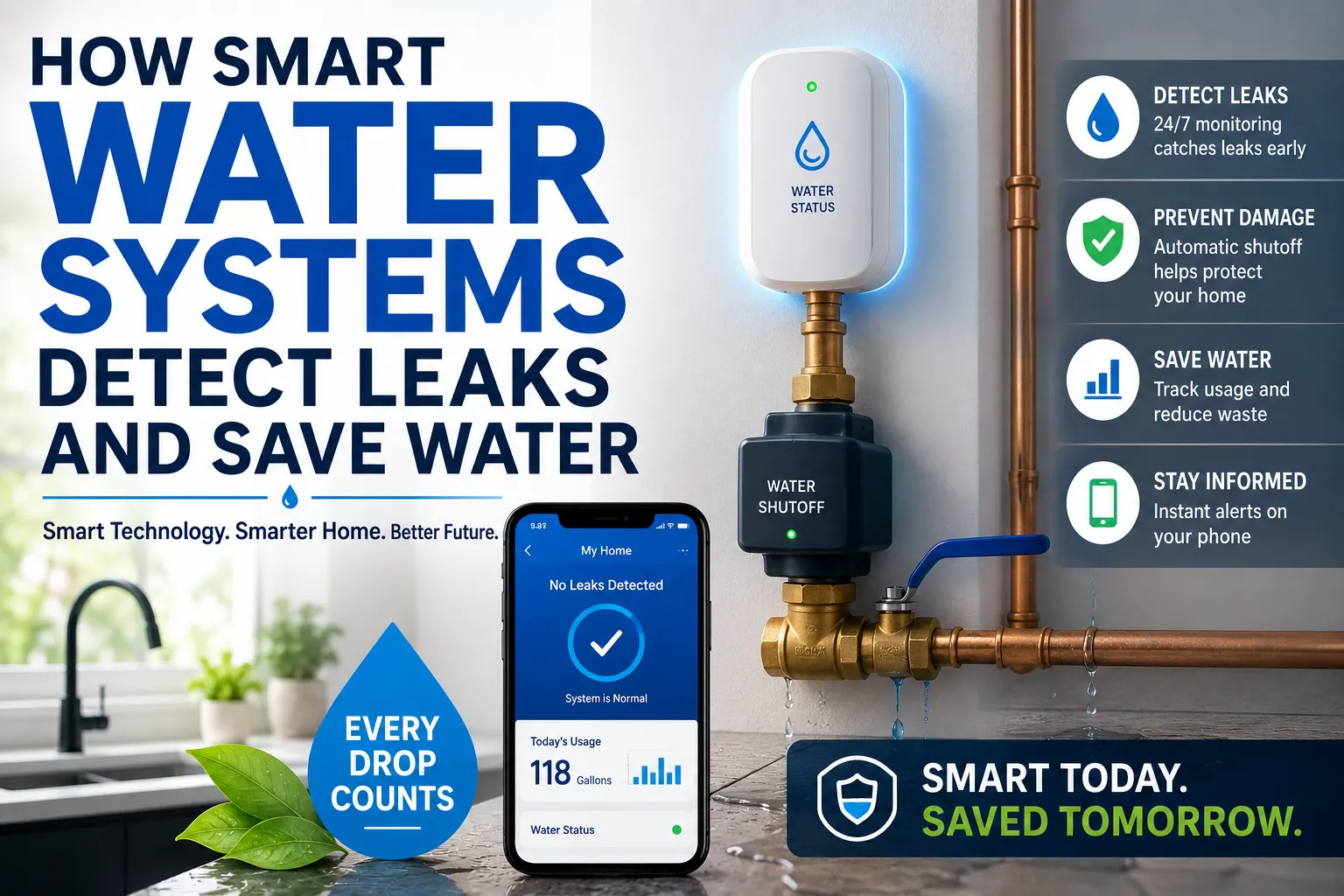
How Smart Water Systems Detect Leaks and Save Water
Water leaks are among the easiest household problems to overlook and some of the most expensive to ignore.
A dripping faucet may seem insignificant. A leaking toilet can quietly waste water for weeks. A damaged pipe hidden behind a wall can cause structural damage long before anyone notices visible moisture.
Smart water systems are designed to address this problem by combining sensors, flow monitoring, automatic shutoff valves and connected apps. Instead of waiting for a homeowner to discover a leak, these systems can monitor water use continuously and identify unusual activity in real time.
For households looking to reduce water waste, protect their property and gain better control over plumbing, smart water technology is becoming an increasingly useful part of the connected home.
As part of the wider connected-home ecosystem, smart water systems can also interact with other technologies. The Complete Guide to Smart Homes provides a broader overview of how connected devices can work together throughout a home.
What Is a Smart Water System?
A smart water system is a connected collection of devices that monitors and manages water use in a home.
Depending on the system, it may include:
- Water-flow sensors
- Leak-detection sensors
- Smart shutoff valves
- Pressure sensors
- Temperature sensors
- Water meters
- Mobile applications
- Connected home platforms
- Automated alerts
Some systems simply detect unusual water activity and notify the homeowner.
More advanced systems can automatically shut off the home’s water supply when they determine that a serious leak may be occurring.
The goal is to move household plumbing from a largely passive system to one that can provide information and respond to potential problems.
Why Traditional Leak Detection Can Fail
Traditional plumbing systems generally rely on people noticing a problem.
A homeowner might hear a dripping faucet, see water pooling under a sink or notice an unusually high water bill.
Unfortunately, many leaks are not obvious.
A toilet can leak silently.
A pipe beneath a floor can develop a small leak without immediately producing visible water.
A washing machine hose can fail while nobody is home.
A slow leak can also continue for a long time before its effects become noticeable.
Smart water monitoring provides another layer of protection by looking at water activity rather than relying entirely on visual inspection.
How Smart Water Monitoring Works
At the center of many smart water systems is a device capable of measuring water flow through a home’s plumbing.
The system learns or records patterns in water consumption.
For example, it may recognize that a household typically uses water in the morning, during meal preparation, when showers are taken and when appliances such as washing machines or dishwashers operate.
If water suddenly flows continuously at an unusual time, the system can flag the activity.
Some systems use algorithms to distinguish between normal water use and potential leaks.
The more information the system collects, the better it may become at recognizing the household’s typical patterns.
Detecting Abnormal Water Flow
One of the most useful features of smart water monitoring is its ability to identify unusual flow.
Imagine a home where nobody is using water at 3 a.m.
If the system detects continuous water movement through the plumbing, it may recognize that something is wrong.
The system could then send an alert to the homeowner.
Depending on the setup and the severity of the detected event, it may also activate an automatic shutoff valve.
This can be particularly valuable when residents are away from home.
Point Sensors Detect Water Where It Appears
Not every smart water system relies on monitoring the main water line.
Some use small sensors positioned near areas where leaks are likely to occur.
These may include:
- Under sinks
- Near water heaters
- Behind washing machines
- Near dishwashers
- In utility rooms
- Around toilets
- Near pumps
- In basements or other vulnerable areas
When water reaches the sensor, it can trigger an alert.
This approach can provide localized detection that complements whole-home flow monitoring.
Smart Shutoff Valves Can Stop Water Automatically
Detection is useful, but stopping a leak can be even more valuable.
A smart shutoff valve is installed on a home’s main water supply or another appropriate section of plumbing.
When the system identifies a potentially serious leak, the valve can close automatically.
Instead of allowing water to continue flowing until someone physically reaches the property, the system can interrupt the supply within a short period.
Automatic shutoff can be especially useful for homes that are empty during working hours, vacations or extended trips.
Not Every Alert Means There Is a Leak
Smart water systems must make judgments about what constitutes abnormal behavior.
That means false alarms are possible.
For example, an unusually long shower, filling a swimming pool or running several appliances at once could produce water-flow patterns that resemble a leak.
Modern systems may use algorithms and historical data to reduce unnecessary alerts, but no monitoring technology is perfect.
Homeowners should therefore view smart detection as an additional layer of protection rather than an absolute guarantee against water damage.
How Smart Systems Learn Household Behavior
Some systems establish a baseline for normal water consumption.
Over time, the system can observe patterns such as:
- Typical nighttime flow
- Shower duration
- Toilet usage
- Appliance cycles
- Gardening schedules
- Household occupancy
- Daily consumption
- Changes in water pressure
Once a baseline exists, unusual activity becomes easier to identify.
For example, a short burst of water may be completely normal.
Continuous low-level flow for several hours may be much more suspicious.
The ability to compare current activity with historical patterns is one of the features that distinguishes intelligent monitoring from a simple water alarm.
Smart Systems Can Help Identify Slow Leaks
Not every leak produces a dramatic burst of water.
Slow leaks can be particularly difficult to notice because they may produce only small amounts of water at a time.
Over weeks or months, however, that water can add up.
Smart monitoring can identify persistent low-level flow that might otherwise be overlooked.
A homeowner might receive an alert indicating that water is being used continuously or that consumption is higher than expected.
That information can prompt an inspection before the problem becomes more serious.
Water Bills Can Reveal Hidden Problems
Smart water systems can also help homeowners understand their consumption.
Instead of receiving a single monthly figure, some systems provide more detailed information about when and how water is being used.
A sudden increase in consumption can indicate:
- A leaking toilet
- A damaged pipe
- An irrigation problem
- A malfunctioning appliance
- A faucet that has been left running
- A change in household behavior
Not every increase represents a plumbing problem, but unusual consumption can provide an early reason to investigate.
Saving Water Through Better Awareness
Leak prevention is only one part of water conservation.
Smart monitoring can also help people understand their everyday consumption.
A household may discover that certain activities use substantially more water than expected.
That information can encourage behavioral changes.
For example, residents might shorten showers, repair dripping fixtures, change irrigation schedules or avoid unnecessary water use.
The technology does not save water simply because it is connected to the internet.
Its value comes from providing information that allows households to make better decisions.
Smart Irrigation Can Reduce Outdoor Water Waste
Smart water technology is not limited to indoor plumbing.
Smart irrigation controllers can adjust watering schedules based on factors such as weather conditions, soil moisture and seasonal changes.
A conventional irrigation timer may continue watering according to a fixed schedule even after substantial rainfall.
A smarter system can use environmental information to determine whether additional watering is necessary.
This can reduce unnecessary irrigation while helping landscapes receive water when it is actually needed.
Weather Data Can Influence Watering
Connected irrigation systems may use weather information to modify watering schedules.
If rain is expected, irrigation can potentially be reduced or delayed.
During unusually hot or dry periods, the system may adjust watering accordingly.
This is more efficient than treating every day as though weather conditions were identical.
However, homeowners should still ensure that automated settings are appropriate for their particular plants, soil and climate.
Smart Water Systems Can Help Protect Against Frozen Pipes
In colder climates, some connected water systems can monitor temperature around vulnerable plumbing.
A significant drop in temperature can trigger an alert.
In certain installations, the system may also provide information that allows homeowners to take preventive action before pipes freeze.
Frozen pipes can expand and rupture, creating substantial water damage when the ice melts.
Temperature monitoring therefore provides another potential use for connected plumbing technology.
Pressure Monitoring Can Provide Additional Clues
Water pressure can provide useful information about a home’s plumbing system.
Unexpected changes in pressure may sometimes indicate a plumbing problem.
Some advanced water monitoring systems incorporate pressure measurements alongside flow data.
When multiple signals are evaluated together, the system may be able to identify unusual conditions more effectively than relying on a single measurement.
Pressure monitoring can also provide information that may help a plumber diagnose certain problems.
Alerts Make Remote Monitoring Possible
One of the biggest advantages of smart water technology is remote access.
A homeowner can receive a notification on a smartphone even when they are away from the property.
An alert might indicate:
Unusual water flow detected.
Or:
Possible leak detected. Water supply has been shut off.
This can make a significant difference during an emergency.
A traditional leak may continue until someone returns home.
A connected system can provide information almost immediately.
Smart Water Technology Can Be Useful for Vacation Homes
Properties that remain empty for long periods can be particularly vulnerable to plumbing problems.
A small leak that would be noticed within minutes in an occupied home could continue for days in an empty property.
Remote monitoring and automatic shutoff can provide an additional layer of protection.
Some homeowners may choose to shut off their water manually whenever they leave for an extended period.
Others may use a smart valve that allows them to control the supply remotely.
Integration With Smart Home Platforms
Some water-management devices can integrate with broader smart-home ecosystems.
This may allow water alerts to appear alongside notifications from security systems, thermostats and other connected devices.
For example, a homeowner could potentially receive a notification about a leak through the same platform used to manage other household systems.
Integration can make the technology easier to manage, although compatibility varies between products and platforms.
Understanding how connected products communicate and share functionality is important when building these setups. Understanding Smart Home Integration and Compatibility provides more information about the role of compatibility in a connected home.
What Happens When a Leak Is Detected?
The exact response depends on the system.
A basic setup might:
- Detect abnormal water activity.
- Send an alert.
- Allow the homeowner to inspect the plumbing.
A more advanced setup might:
- Detect abnormal flow.
- Analyze the pattern.
- Determine that the activity is likely to represent a leak.
- Shut off the water supply.
- Send a notification.
- Record the event for later review.
The homeowner can then inspect the property or contact a plumber.
Smart Water Systems Are Not a Replacement for Plumbing Maintenance
Connected technology can detect problems, but it cannot prevent every plumbing failure.
Regular maintenance remains important.
Homeowners should still inspect:
- Flexible supply hoses
- Water heaters
- Faucets
- Toilets
- Visible pipes
- Washing machine connections
- Irrigation systems
- Sump pumps where applicable
Old or damaged plumbing components may need to be replaced regardless of whether a smart monitoring system is installed.
Technology should complement maintenance rather than replace it.
Installation Matters
The effectiveness of a smart water system depends partly on how it is installed.
A whole-home flow monitor or automatic shutoff valve generally interacts directly with the plumbing system and may require professional installation.
Poor installation can lead to:
- Incorrect readings
- Unreliable shutoff operation
- Plumbing damage
- Reduced system performance
Homeowners should follow manufacturer requirements and use a qualified professional when the installation involves significant modifications to the water supply.
Privacy Is Worth Considering
Smart water systems can collect detailed information about household water use.
That data can potentially reveal patterns about when people are home, when they shower, when appliances operate and when the property may be vacant.
For that reason, homeowners should consider the privacy practices of the manufacturer.
Before purchasing a connected water system, it is worth reviewing:
- What data is collected
- Where the data is stored
- Whether data is shared
- How long records are retained
- Whether accounts use strong authentication
- Whether software receives security updates
- What happens if the service is discontinued
A device that protects the plumbing should not create unnecessary privacy or cybersecurity risks.
Internet Connectivity Can Affect Smart Features
Some smart water systems depend on an internet connection for remote notifications and cloud-based services.
If the internet goes down, certain functions may become unavailable.
However, systems with local sensors and automatic shutoff capabilities may continue performing some functions without cloud connectivity.
This distinction is important when comparing products.
A homeowner should understand which features work locally and which depend on internet access.
Battery Backup Can Matter
A power outage can occur during the same storms or emergencies that create plumbing problems.
Some smart water devices include battery backup or other measures designed to maintain operation during outages.
When evaluating a system, homeowners should consider how it behaves when:
- Electricity is unavailable
- Internet connectivity is lost
- Batteries are depleted
- The smart-home platform is offline
The most useful system is one that continues providing essential protection under reasonable failure conditions.
How Much Water Can Be Saved?
The amount of water saved varies enormously from household to household.
A home without leaks may see little direct savings from automatic shutoff.
A property with a significant undetected leak could potentially prevent substantial waste and damage once the problem is detected.
Similarly, households that use smart irrigation and actively monitor consumption may reduce unnecessary outdoor water use.
The technology itself does not guarantee a particular percentage of savings.
Its effectiveness depends on the household’s plumbing, behavior, climate, irrigation practices and how the system is configured.
Smart Water Technology Can Save More Than Water
The financial benefit of leak detection may extend beyond the water bill.
A significant leak can damage:
- Flooring
- Walls
- Cabinets
- Furniture
- Electrical systems
- Insulation
- Structural materials
- Personal belongings
Mold and other secondary problems can also develop when moisture remains unnoticed.
Stopping a leak early may therefore reduce both water waste and the cost of repairing the resulting damage.
What to Look for When Choosing a System
Homeowners considering smart water technology should compare systems based on their actual needs.
Important features can include:
**### **Whole-home flow monitoring**
Useful for identifying unusual water activity throughout the plumbing system.
**### **Automatic shutoff**
Allows the system to stop water flow when certain conditions are detected.
**### **Point leak sensors**
Useful around specific appliances and vulnerable areas.
**### **Mobile notifications**
Provide alerts when homeowners are away.
**### **Historical consumption data**
Helps identify changes and understand household water use.
**### **Pressure monitoring**
Can provide additional information about plumbing conditions.
**### **Battery backup**
Helps maintain protection during certain power outages.
**### **Smart-home compatibility**
Allows the system to work with other connected devices where supported.
**### **Local operation**
Can be valuable if internet connectivity is lost.
Smart Water Technology Is Becoming More Preventive
Traditional plumbing has largely been reactive.
Something goes wrong, someone notices it and repairs it.
Smart water systems introduce a more preventive model.
Sensors continuously collect information.
Software analyzes patterns.
Alerts provide early warnings.
Automatic valves can respond to certain emergencies.
The result is a plumbing system that can potentially identify problems before they become obvious to the homeowner.
The Future of Connected Water Management
As smart-home technology develops, water systems are likely to become increasingly sophisticated.
Future systems may combine more detailed flow measurements with machine learning, appliance recognition, pressure analysis, environmental data and broader home automation.
Instead of simply reporting that water is flowing, a system could potentially become better at determining why the water is flowing and whether the behavior is normal.
That could eventually allow households to manage water use with greater precision.
The most important advances, however, may not be the most complicated ones.
A simple system that reliably detects a leak and shuts off the water can provide enormous practical value.
Turning Plumbing Into a Smarter Part of the Home
Smart water systems represent a shift in how homeowners think about household plumbing.
Water is usually taken for granted until something goes wrong. By continuously monitoring flow, detecting moisture, recognizing unusual patterns and, in some cases, automatically shutting off the supply, connected technology can make hidden plumbing problems easier to identify.
The greatest benefit may not come from watching water consumption statistics every day.
It may come from receiving an alert when something is wrong before a small problem becomes a major one.
For homeowners trying to conserve resources and protect their property, smart water technology offers a practical combination of monitoring, automation and early warning. It does not eliminate the need for good plumbing maintenance, but it can give households another valuable layer of protection—one that keeps watch even when nobody is standing next to the pipes.